jules-app: A Self-Hosted Workbench for Google's Jules AI Agent
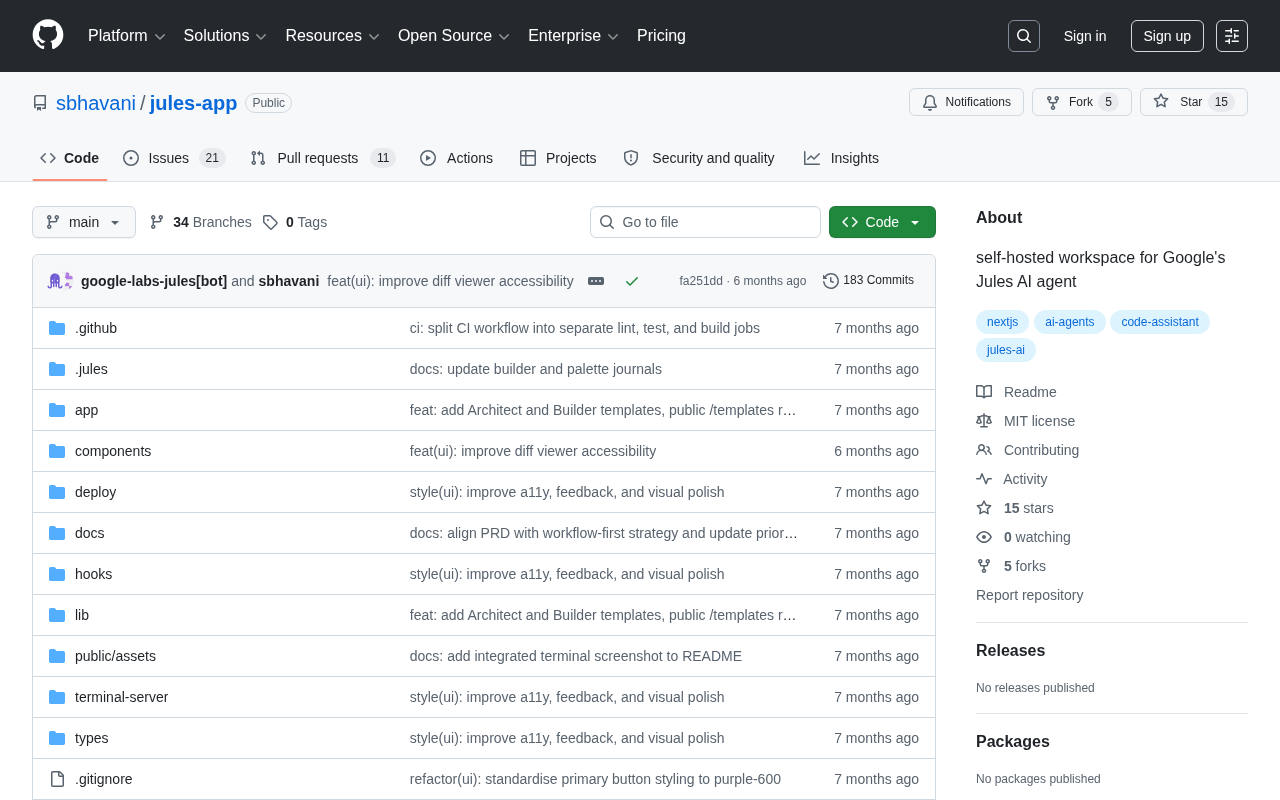
jules-app is an open-source TypeScript workbench for self-hosting Google's Jules AI coding agent.
jules-app is an early-stage open-source project on GitHub that provides a self-deployable workbench interface for Google's Jules AI coding agent. The official hosted solution comes with limitations — data flows through third-party servers and deep integration with internal toolchains is difficult. jules-app takes a self-hosted approach to address these issues, letting developers invoke AI agent capabilities within their own environment while satisfying data privacy, compliance, and customization needs. Built with TypeScript, the stack is well-suited to the interactive demands of a web-based workbench. Currently small in scale (13 Stars, 6 Forks), it's best treated as a learning reference or development starting point rather than a production-ready tool — but it signals a broader trend of open-source ecosystems organically forming around major AI agents.
An Open-Source Project That Fills a Gap
Google's Jules is an AI coding agent built for developers, designed to automate code-related tasks. The jules-app project on GitHub, maintained by sbhavani, aims to add a missing piece to this AI agent — a self-hosted workspace that developers can deploy on their own terms.
Built with TypeScript, the project is still in its early stages (13 Stars, 6 Forks). While the community remains small, its direction is worth paying attention to: taking cloud-based AI agent capabilities and putting them inside a runtime environment that developers actually control.
Why a Self-Hosted Workbench?
For developers, the real value of an AI agent depends on how seamlessly it fits into daily workflows. Official hosted solutions typically mean data flowing through third-party servers, features constrained by the vendor's interface, and difficulty integrating deeply with internal toolchains.
Self-hosting addresses exactly these pain points:
- Data control: Code and context stay within your own environment — a significant advantage for teams with compliance or privacy requirements.
- Customizability: The TypeScript stack makes it straightforward to extend; teams can tailor the interface and integration logic to their specific needs.
- Workflow integration: Connect the AI agent to existing CI/CD pipelines, code repositories, and internal systems, rather than passively adapting to a cloud product's constraints.
jules-app is positioned as a bridge between AI agents like Jules and a developer's local environment.
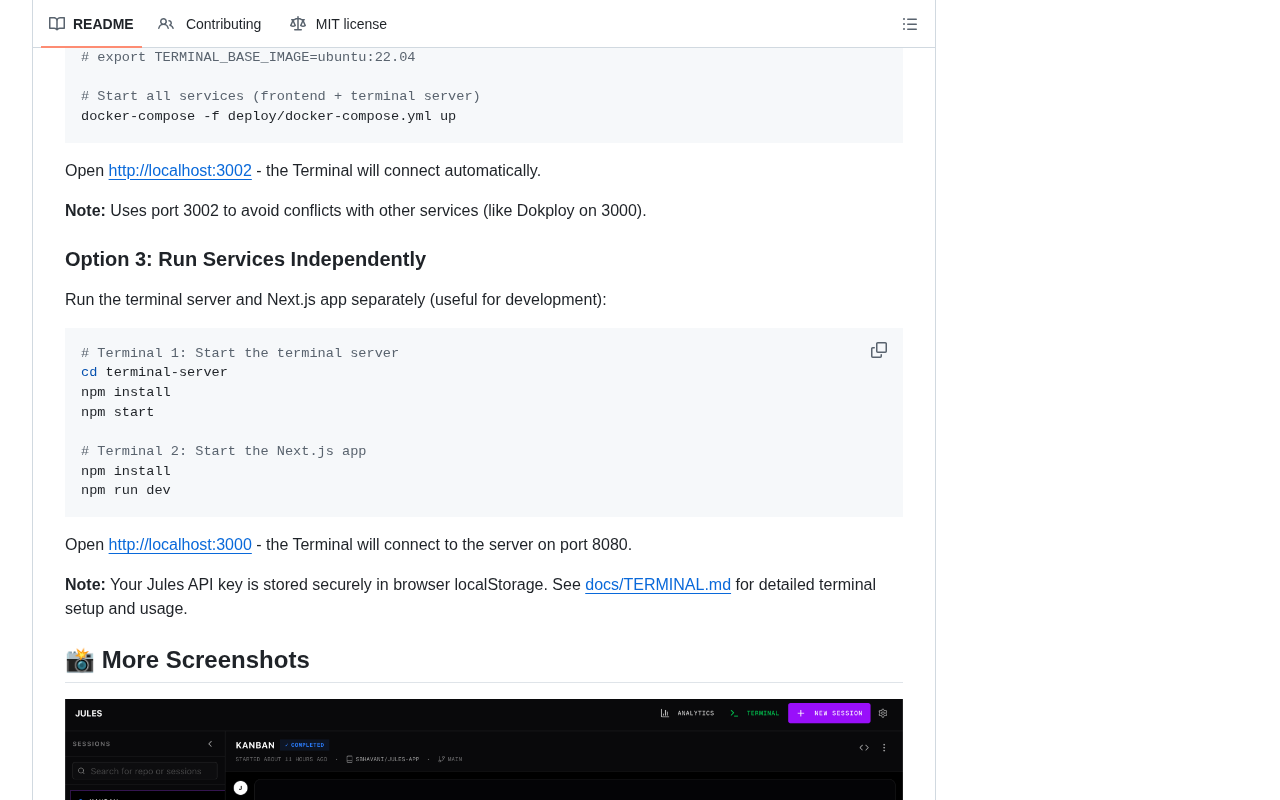
Google Jules itself is an asynchronous AI coding agent designed to integrate deeply with GitHub. It can accept natural language task descriptions and autonomously handle code changes, run tests, and submit Pull Requests. It runs inside sandboxed environments on Google's cloud infrastructure — each task executes in an isolated virtual machine. What this means in practice: your code is uploaded to and runs on Google's infrastructure during task execution, and task triggering and monitoring can only be done through the official interface. For teams with strict data compliance requirements (finance, healthcare, government, etc.) or enterprises that want to connect an AI agent to internal systems, this fully managed model creates a real barrier — and that's precisely the boundary self-hosted solutions aim to break through.
The Trade-offs of a TypeScript Stack
Choosing TypeScript as the primary language aligns with mainstream trends in frontend and full-stack tooling. The benefits include type safety, a mature ecosystem, and natural compatibility with web interfaces — a "workbench" product almost always needs an interactive, visual UI, which is exactly where the TypeScript/frontend ecosystem excels.
That said, it's important to be realistic about the project's maturity. With 13 Stars and 6 Forks, it's still in a very early exploratory stage. Feature completeness, documentation quality, and long-term maintenance are all open questions. For developers who want to try it out, it's better suited as a learning reference or a starting point for further development rather than something you'd deploy directly to production.
An Industry Trend It Reflects
jules-app is a small project, but it reflects a trend that's taking shape: an open-source tooling ecosystem is organically emerging around major AI agents. When companies like Google and Microsoft release their AI coding agents, the community tends to fill in the gaps that official products leave uncovered — self-hosting, private deployment, deep customization.
The significance of these projects goes beyond the code itself. They represent a path toward not being completely dependent on vendors. For teams that prioritize data sovereignty and engineering freedom, open-source workbenches like this are a direction worth watching.
This pattern closely mirrors what happened with GitHub Copilot — open-source alternatives like Tabby and Continue emerged — and the local deployment tools that grew up around the OpenAI API, like LocalAI and Ollama. It follows the same community evolution logic: a major company releases an AI product with clear capability boundaries → the open-source community identifies uncovered use cases → peripheral tools appear to fill the gaps → a tooling ecosystem gradually forms around the original product. As AI agents penetrate deeper into software development, demand for this kind of "agent infrastructure" will keep growing. jules-app is one early signal pointing in that direction.
Summary
jules-app is a self-hosted workbench project targeting Google's Jules AI agent, built with TypeScript, and currently in its early stages. Its core value lies in moving cloud-based AI agent capabilities into an environment that developers control — addressing needs around data privacy, customization, and workflow integration. Developers exploring private deployment of AI agents can treat it as a worthwhile starting point, though expectations about its maturity should be kept in check.
Related articles
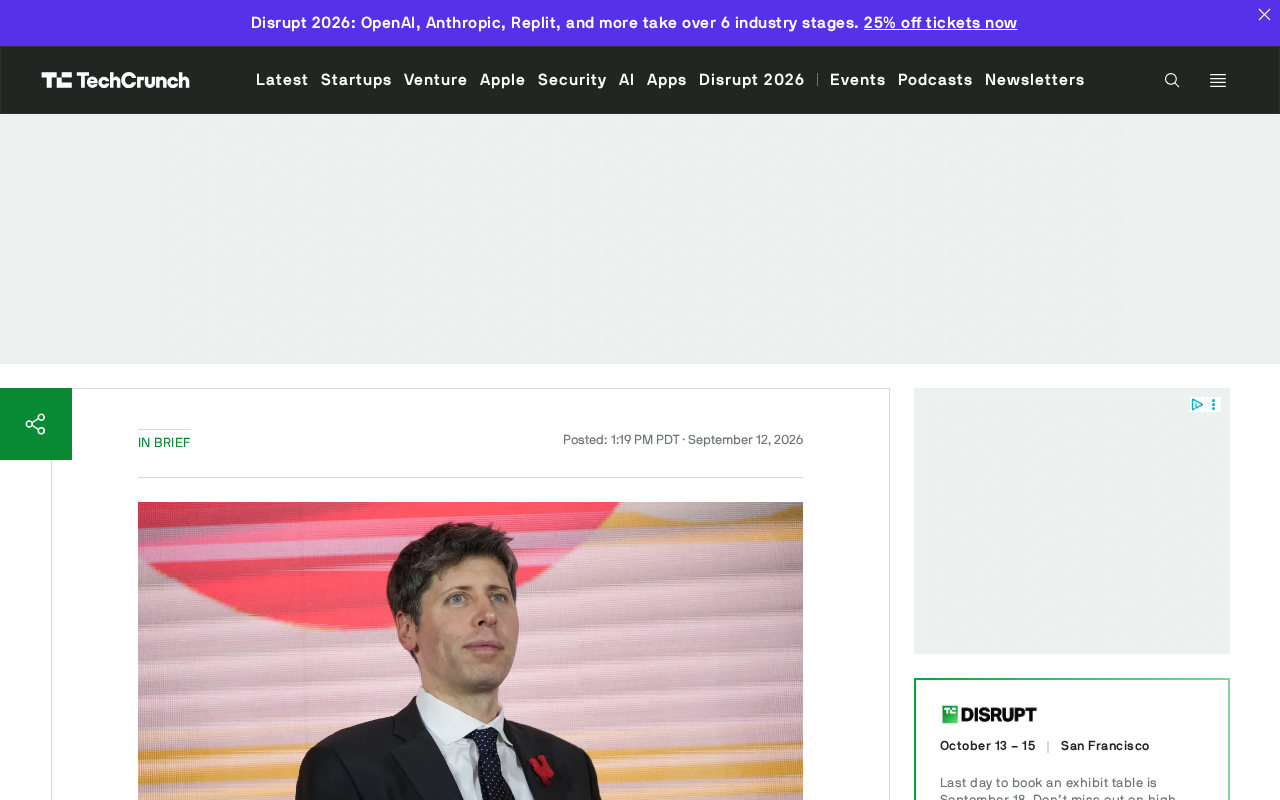
Altman: Taking OpenAI Public This Year Would Be 'Ill-Advised'
OpenAI CEO Sam Altman says going public this year would be 'ill-advised,' even as the company has confidentially filed IPO paperwork. Here's what it means for AI.
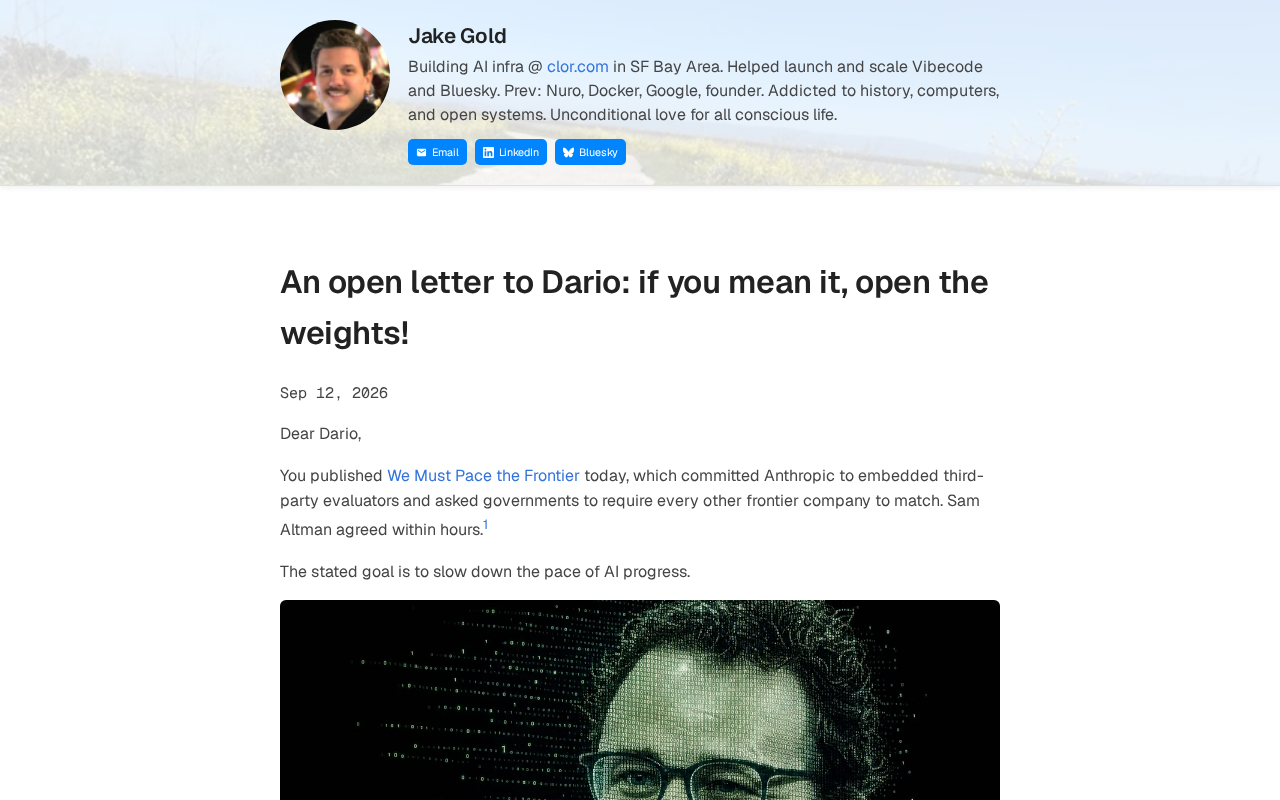
An Open Letter to Dario: If AI Safety Is Real, Open the Model Weights
Developer Jacob's open letter to Anthropic CEO Dario Amodei went viral on Hacker News, challenging the contradiction between AI safety rhetoric and closed-source models: if safety truly matters, why not open the weights?
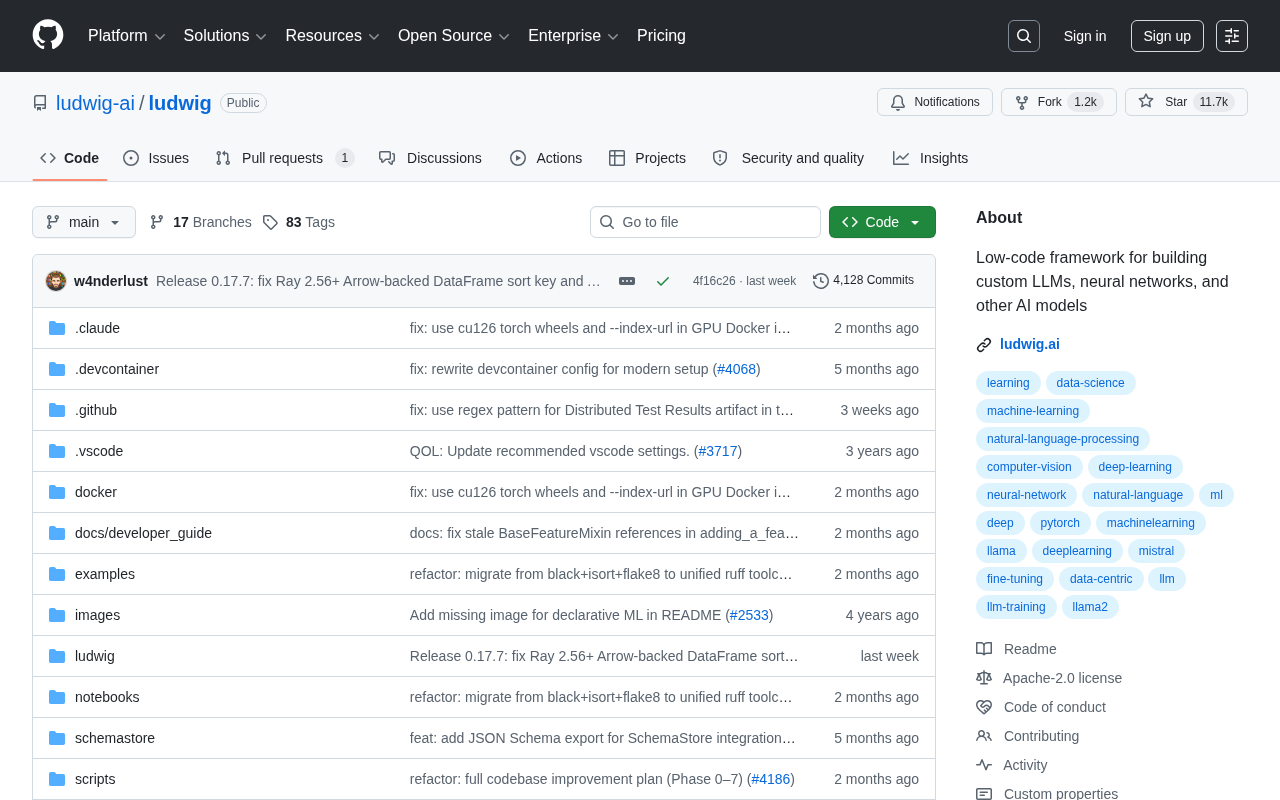
Ludwig: Building Custom LLMs and Neural Networks with Declarative Low-Code Configuration
Ludwig is an open-source low-code ML framework that builds custom LLMs and neural networks via declarative YAML config — no boilerplate training code required.