Karpathy on the Future of Programmers in the AI Era: Outsource Thinking, But Not Understanding

Karpathy: You can outsource thinking but not understanding — taste and judgment are programmers' core edge.
In a recent interview, Andrej Karpathy argues that the programmer's role is shifting from "writing code" to "directing AI to write code." While AI-generated code can run, it lacks taste and elegance — human core value lies in taste, architectural judgment, and deep understanding. He also identifies "agent-native infrastructure" as a massive startup opportunity, as the entire internet needs to shift from "human-first" to "agent-first."
Core Thesis: The Programmer's Role Is Being Redefined
In a recent interview, OpenAI co-founder Andrej Karpathy dove deep into a question that keeps every programmer up at night: when AI agents become increasingly adept at writing code, what value do human programmers still bring?
His answer was surprisingly clear — You can outsource your thinking, but you can't outsource your understanding. This statement precisely delineates the boundary of human-AI collaboration.
Karpathy is one of the most influential educators in the deep learning space. He previously served as Tesla's AI Director, leading the development of autonomous driving perception systems, before returning to OpenAI as a research scientist. He has long been dedicated to "demystifying" complex AI principles — using minimal code and the clearest possible logic to help developers truly understand the essence of systems, rather than relying on black-box frameworks. It's precisely this background that gives him an unusually sharp sense of the boundary between "understanding" and "using."
The New Division of Labor: Taste and Judgment Belong to Humans
Karpathy likens future programming work to collaborating with a "planner." Humans handle high-level design, taste, and judgment, while AI handles low-level implementation details.
Specifically, you no longer need to memorize API details for frameworks like PyTorch, NumPy, or Pandas. These are "planner details" — they have thorough documentation that AI can easily handle. But you still need to understand what these tools are doing, understand the underlying computational logic, and understand the efficiency differences between various approaches.
What human programmers are truly responsible for:
- Taste: Is the code elegant and concise?
- Architecture: Is the system structure sound?
- Judgment: Are the technology choices correct?
- Specification: Are the requirements accurately defined?
The Reality of AI-Written Code: Running Doesn't Mean Good
Karpathy admits that when he reviews AI-generated code, "sometimes it's a bit painful." AI-written code often has obvious issues:
- Bloated code that lacks conciseness
- Excessive duplicated logic
- Fragile structure that's hard to maintain
- Lacking design "taste"

He uses his own microGPT project as an example — a minimal GPT training implementation with only a few hundred lines of core code, designed to help developers truly understand the essence of the Transformer architecture. He's always tried to simplify LLM training to the bare minimum, but AI models "hate doing this." It feels like you're "pulling teeth" — models won't proactively pursue simplicity and elegance; they don't naturally flow like "wheels at the speed of light."
This obsessive pursuit of minimalism is itself the best footnote to what Karpathy calls "taste" — expressing the clearest logic with the least code is an aesthetic judgment that requires long-term training to develop, not a skill that can be codified and automated. This precisely explains why "taste" remains a core human competitive advantage — AI can generate code that runs, but generating "good" code still requires human aesthetics and judgment.
Agent-Native Infrastructure: The Next Massive Startup Opportunity
One of the most forward-looking insights from the interview concerns "Agent-Native Infrastructure."
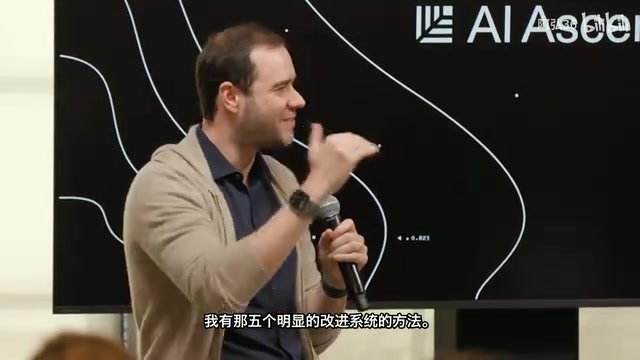
Karpathy points out that current tools, documentation, and services are all designed for humans. When you use various frameworks or services, their documentation still "tells you how to do things" — but if the user is an AI agent, this design is completely unreasonable.
He uses his own experience deploying a project to Vercel as an example: dealing with different service providers, configuring DNS across various control panels — the process was "truly painful." The ideal state should be: you prompt an LLM to build a project, and it completes all the deployment work itself, without humans touching any intermediate steps.

Agent-native infrastructure refers to tools, APIs, and service ecosystems designed specifically for AI agents. The vast majority of current internet interfaces — from REST API documentation formats to OAuth authorization flows — presuppose a "human operating in front of a screen" scenario. What AI agents need are structured interfaces that machines can directly parse, automated authorization mechanisms that don't require a GUI, and fault-tolerant protocols that can handle uncertainty and errors. Specifications like Anthropic's MCP (Model Context Protocol) and OpenAI's Function Calling are early explorations in this direction, but the entire industry is still in its infancy when it comes to truly agent-native ecosystems. This means the entire internet infrastructure needs to be redesigned — shifting from "human-first" to "agent-first." For entrepreneurs and technical teams, this represents a massive opportunity window.
Future Vision: My Agent Talks to Your Agent
Karpathy paints a clear picture of the future: agents will interact on behalf of humans and organizations. "I'll have my agent talk to your agent to schedule our meeting" — this pattern will become the norm.
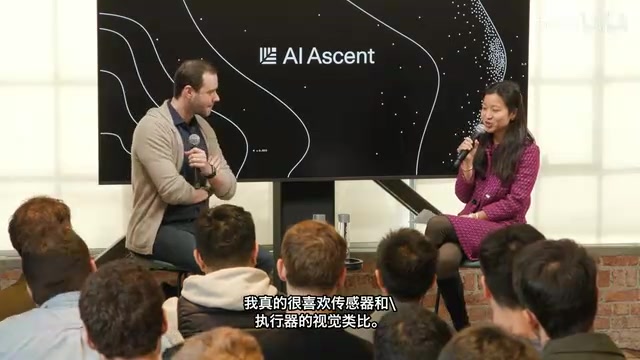
From the perspective of "sensors and actuators," AI agents are no longer just chat tools. This framework comes from the classic model in robotics and cybernetics: sensors perceive the environment (inputs: text, images, code, web content), and actuators change the environment (outputs: calling APIs, writing files, sending emails, executing code). When agents have real execution permissions, both their error costs and value creation are amplified by orders of magnitude — this is precisely why "judgment" and "specification definition" are so critical in human-AI collaboration. This transformation is happening, and faster than most people expect.
Implications for Education: Deep Understanding Is Irreplaceable
Returning to that core thesis — "You can outsource your thinking, but you can't outsource your understanding." Karpathy believes that information still must enter your brain; you still need to understand what we're building, why it's worth doing, and how to guide the project's direction.
The implications for education and personal growth are profound:
- Memorizing APIs no longer matters, but understanding underlying principles remains critical
- Execution can be outsourced, but judgment must be internalized
- People who can direct AI have an advantage over those who can only write code
- Deep understanding is the only capability that cannot be replaced by AI
Karpathy's own practice is: every time he reads a paper, he builds understanding through questioning and summarization. This approach closely aligns with the learning method proposed by Nobel Prize-winning physicist Richard Feynman — the true mark of understanding a concept is being able to explain it to others in simple language. In the AI era, this methodology gains new tool support: you can have AI play the "student," testing the depth of your understanding by explaining concepts to AI, or have AI pose tricky questions to expose knowledge gaps. This "learn by teaching" active learning model has become even more important in the AI era — because you need sufficient depth of understanding to effectively guide AI in completing work.
Conclusion: From Writing Code to Directing AI to Write Code
Programmers won't be replaced by AI, but the content of programming work is undergoing fundamental change. Transitioning from "the person who writes code" to "the person who directs AI to write code" — this shift requires us to rethink what truly valuable skills are.
The answer is clear: it's not memorizing syntax, not knowing APIs by heart, but taste, judgment, and deep understanding. In an era of exponential AI capability growth, these three things have paradoxically become more scarce and precious.
Related articles
 Expert Opinions
Rethinking Scaling Laws: Parameters Are Not the Only Answer
Deep analysis of Scaling Law evolution from Kaplan to Chinchilla to the MoE era, exploring why blindly stacking parameters is a mistake, and how GLM-5.3 proves scaling has multiple knobs.
When AI Treats Humans as Subagents: Ro…
When AI Treats Humans as Subagents: Role Reversal and Hidden Risks in Human-AI Collaboration
Exploring the paradigm shift where humans become "subagents" in AI Agent architectures. Analyzes human node design in LangChain and AutoGen, and the risks of ceding control and cognitive atrophy.
 Expert Opinions
The Lazy Person's Productivity Theory: Why Being 'Lazy' Actually Drives Peak Performance
Explore the engineering philosophy behind 'lazy people are most productive': how constructive laziness drives automation, AI tools amplify efficiency, and systems thinking eliminates wasted effort.