KDE Documentary Released: An Open-Source Desktop Community Tells Its Own Story

KDE's self-made documentary gains HN attention, highlighting the value of filmed oral history for open-source community memory.
KDE community's self-produced documentary received 270 points and 51 comments on Hacker News, drawing tech-world attention. The article notes that the documentary fills the gap left by release blogs and conference talks in showing the collaborative journey, presenting diverse perspectives from early developers, translators, and designers on the real trade-offs of maintaining collaboration without commercial employment. Choosing PeerTube aligns with open-source decentralization. HN's discussion heat and comment ratio indicate depth, with concerns centering on sustainability, design disagreements, and volunteer attrition. As community memory infrastructure, the documentary offers a replicable approach to organizing history for other open-source projects.
A documentary about KDE, and why the tech world should pay attention
On Hacker News, a post titled "KDE: The documentary" received 270 points and 51 comments, linking to a documentary self-produced by the KDE community and hosted on the PeerTube instance tube.kockatoo.org. The material itself is just a collection of links—no subtitles, no interview excerpts—but the signal is clear enough: an open-source desktop project that has existed for decades has chosen to tell its own origin story through film.
For long-time Linux desktop users, KDE is not just "another desktop environment." It represents an open-source path that brings the desktop experience close to commercial-product quality, and it also carries a great deal of debate around community governance, design decisions, and developer culture. A documentary as a medium can present the real trade-offs behind these controversies better than a release announcement.
KDE (K Desktop Environment) is a free-software desktop environment project initiated by Matthias Ettrich in 1996, originally built on the Qt library. A dispute over the Qt license later led to the GNOME fork, making it one of the two main camps in the Linux desktop world. KDE is known for its highly customizable Plasma desktop, a rich application suite (such as Konqueror, KMail, and Krita), and an international community. Its technology stack covers three major modules: KDE Frameworks, Plasma, and Applications. KDE uses a community governance model, with core decisions negotiated by contributors through mailing lists and Sprint meetings rather than led by a single company. This model has kept it independent for nearly three decades, but it also faces challenges such as disagreements over design direction and volunteer attrition.
Why open-source projects make their own documentaries
The public narrative of open-source projects has long relied on two types of material: release blogs and conference talks. The former leans toward feature lists, the latter toward technical details, and neither can clearly explain "why a group of people can keep maintaining a desktop environment for over a decade." A documentary fills exactly this gap—it can juxtapose the perspectives of early developers, translators, designers, and distribution maintainers, showing how a project sustains collaboration without direct employment by a commercial company.
From a communications perspective, video is also an effective way to reach non-core users. The source material comes from a PeerTube instance rather than YouTube, and this choice itself reflects the self-consistency of the open-source community: releasing a documentary about decentralized collaboration on a decentralized video platform keeps the narrative and the tools aligned.
PeerTube is an open-source federated video platform built on the ActivityPub protocol for decentralized video hosting and interconnection, developed by the French nonprofit Framasoft. Unlike centralized platforms such as YouTube, PeerTube instances are independently operated by different organizations or individuals, and users can follow channels on other instances to form a federated network. It was created to reduce dependence on large video platforms, emphasizing content autonomy and data sovereignty. KDE's choice to release its documentary on a PeerTube instance not only avoids platform algorithms and advertising interference but also reflects the open-source community's trust in its own toolchain, creating an intertextual relationship with the documentary's theme.
What the HN discussion reveals about community concerns
Although the material only provides post metrics, the combination of 270 points and 51 comments suggests a certain depth of discussion—the ratio of comments to points is not low, which usually means the topic prompted experience sharing or exchanges of views rather than mere information forwarding. Discussions around KDE tend to focus on several directions: the long-term sustainability of the desktop environment, internal disagreements over design direction, relationships with downstream distributions, and the loss of volunteer maintainers. These are precisely the topics on which a documentary might provide first-hand material.
A note: at present, the specific content of the documentary, the list of interviewees, and the production timeline cannot be obtained from the material. These information gaps mean this article can only discuss the significance framework of the film and cannot judge the quality of its content.
Hacker News (HN) is a technology news aggregation community operated by Y Combinator, where users can submit links and vote. The number of comments usually reflects the controversial nature or depth of a topic. 270 points is moderately high popularity, and 51 comments means roughly one comment for every five upvotes—a relatively high interaction rate, commonly seen in posts involving history, culture, or values discussions. HN's discussion style tends toward technical details and experience sharing; comments around KDE may involve desktop environment comparisons, developer burnout, community governance cases, and so on, providing an external perspective for observing the open-source ecosystem.
Implications for the open-source desktop ecosystem
KDE's documentary reminds us that the "infrastructure" of an open-source project is not only code repositories and CI but also memory. As early contributors gradually leave, if the project's history is scattered only across mailing list archives and IRC logs, new joiners will find it hard to understand the origins of certain design decisions. Filmed oral history is a low-cost but high-density way of transferring knowledge.
For other open-source projects, this offers a replicable idea: there is no need to wait until a project's twentieth anniversary to organize its history—documentaries, podcasts, and interview archives can all be part of community assets. They do not directly produce code, but they affect the cultural continuity of a project.
Viewing and further exploration
The original documentary link was posted on tube.kockatoo.org, and the Hacker News comment section (item 50496976) gathers the community's immediate reactions. For KDE users and open-source community observers, watching the film together with the comment section yields higher information density: the former provides an internal project perspective, while the latter provides feedback and challenges from external users.
One-line Summary
KDE's self-produced documentary drew HN attention, highlighting the value of filmed oral history for community memory in open-source projects.
Paragraph Summary
A documentary self-produced by the KDE community received 270 points and 51 comments on Hacker News, drawing attention from the tech world. The article notes that the documentary fills the gap left by release blogs and conference talks in presenting the collaborative journey, using diverse perspectives from early developers, translators, and designers to show the real trade-offs of maintaining collaboration without commercial employment. Choosing PeerTube for distribution aligns with the open-source philosophy of decentralization. The discussion heat and comment ratio on HN indicate the topic has depth, with community concerns centering on sustainability, design disagreements, and volunteer attrition. As infrastructure for community memory, the documentary offers other open-source projects a replicable approach to organizing their history.
Related articles
Gemini 4 Neon Hands-On: Value King or Confident Catastrophe?
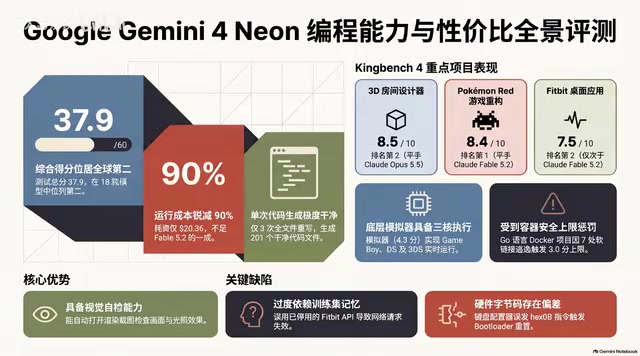
Gemini 4 Neon review: 1M-token context, four thinking levels, 201 files in one KingBench4 pass at one-tenth Fable 5.2's cost—but it hallucinates fake data, leaves 7 symlink escapes, and bricks keyboards.
Google Gemini 4 Neon Hands-On: 6 3D Works That Impress and Fail
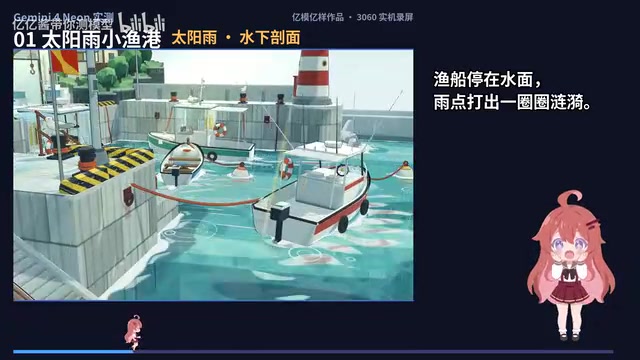
Hands-on with Google Gemini 4 Neon on a 3060 laptop: 6 3D works tested. Sunshower Fishing Harbor and mechanical keyboard impress; soft-body physics and faces fall short.
Gemini 4 Neo Web Novel Writing Test: Faint AI Flavor, Textured Dialogue
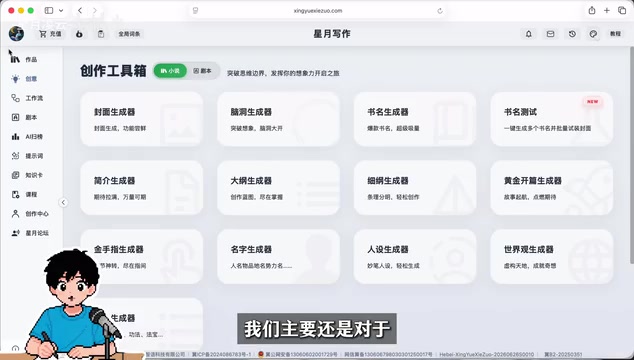
Bilibili creator's first-look review of Gemini 4 Neo for Chinese web novel writing: testing a Three Kingdoms transmigration opening with faint AI flavor, emotionally textured dialogue, and strong crisis building, plus comparison of 4A/4H/4C models and full workflow demos.