Kevin Roose's New Book 'The AGI Chronicles': Why He Believes AGI Is Already Here
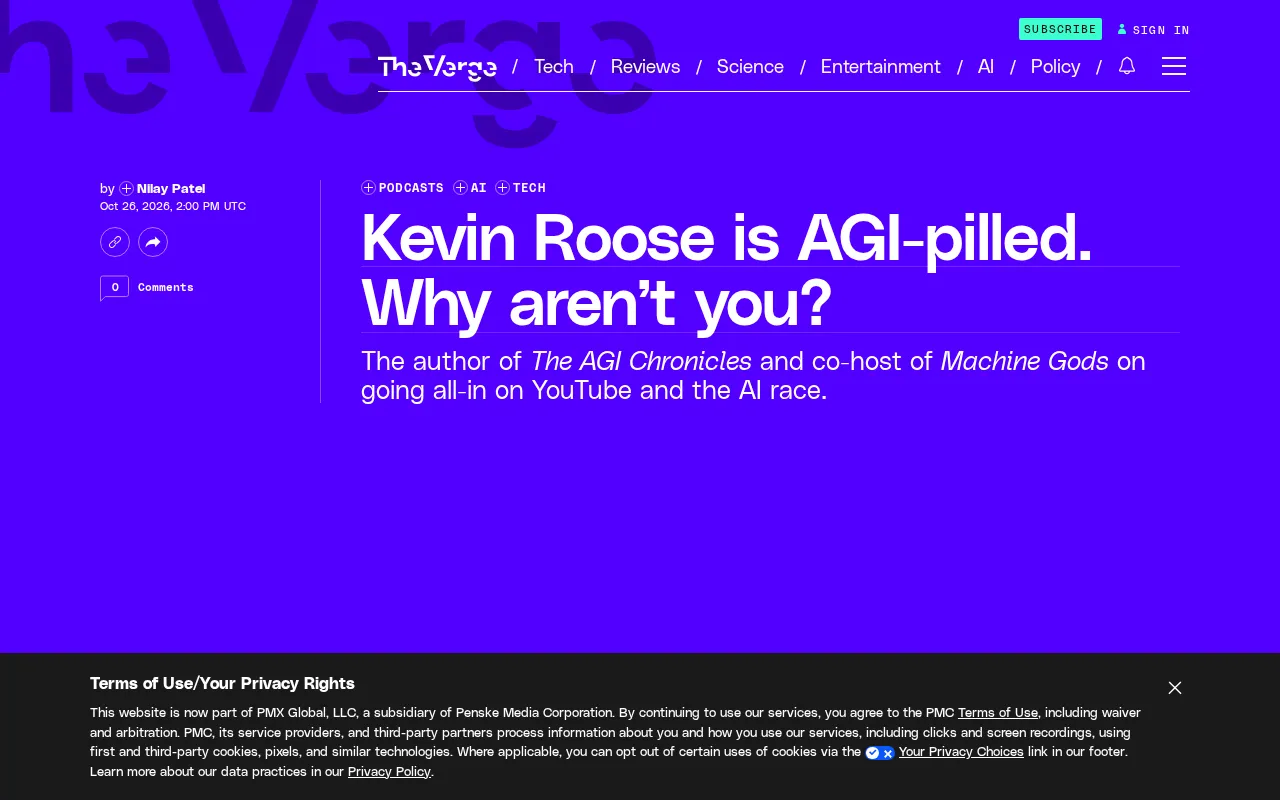
Kevin Roose's new book 'The AGI Chronicles' makes him an AGI believer, asking skeptics why they aren't taking it seriously.
Veteran tech journalist Kevin Roose has published 'The AGI Chronicles,' documenting the AI industry's explosive transformation. A former New York Times reporter and Hard Fork podcast host, he recently left the show with Casey Newton. In the interview, Roose shares how he became 'AGI-pilled,' becoming a believer in AGI, and asks skeptics 'Why aren't you?' He believes skeptics often focus on technical details while ignoring AI's potential impact on social structures, employment, and the information ecosystem. After leaving Hard Fork, Roose turned to independent writing and commentary, with the new book aiming to provide a systematic record for ordinary readers. He notes that public participation in the AGI debate is limited and that social preparation may be far from sufficient.
From Hard Fork to 'The AGI Chronicles': Kevin Roose's AGI Faith
Veteran tech journalist Kevin Roose has recently published a new book, 'The AGI Chronicles,' which documents in detail the explosive transformation of the AI industry. Roose was a longtime reporter at The New York Times and a host of the popular podcast Hard Fork. Recently, he and his co-host Casey Newton both left that role. In this interview, Roose shares his process of becoming 'AGI-pilled' and why he thinks skeptics need to re-examine their positions.
The term 'AGI-pilled' derives from the internet slang 'red-pilled,' meaning a person shifts from skepticism or neutrality to a firm belief that artificial general intelligence (AGI) is imminent and will profoundly change the world. Roose makes it clear that he has become a believer in AGI.
Hard Fork is a tech podcast launched by The New York Times in 2022, co-hosted by Kevin Roose and Casey Newton, focusing on in-depth discussions of AI, social media, and the tech industry. The show breaks down tech news from a journalist's perspective and frequently invites frontline practitioners for conversations, giving it considerable influence in tech media circles. Roose and Newton's departure is seen as a reflection of the limitations of traditional media platforms in AI coverage, and also reflects how veteran tech journalists are seeking more independent and in-depth channels of expression.
Why Was Roose Won Over by AGI?
Although the interview excerpt does not elaborate on technical arguments in detail, Roose's career trajectory shows that he has long observed the AI industry up close—from early reporting on deep learning progress to frequently engaging with frontline researchers, entrepreneurs, and policymakers while hosting Hard Fork. His 'faith' did not come out of nowhere; it is based on continuous tracking of the exponential growth of AI capabilities.
In the book, Roose traces the key moments in the AI industry's recent explosive transformation. These changes are reflected not only in improvements in model capabilities but also in the acceleration of capital investment, public attention, and industrial adoption. Roose believes that these signals, stacked together, constitute strong evidence that AGI is approaching.
AGI (artificial general intelligence) refers to AI systems with broad cognitive abilities comparable to or surpassing humans, capable of performing any intellectual task, as opposed to 'narrow AI' that excels only at specific tasks. There is no consensus on its definition in academia or industry, often using the vague standard of 'surpassing humans in most economically valuable work.' Timelines for AGI are highly contested, ranging from a few years to a century, and this uncertainty is precisely the root of the divide between skeptics and believers.
'AGI-pilled' derives from the internet slang 'red-pilled' (originally meaning awakening as in The Matrix, later broadly referring to a fundamental shift in viewpoint), and in tech circles has come to mean shifting from skepticism or neutrality to a firm belief that AGI is imminent and will profoundly change the world. Similar usages include 'AI-pilled' and 'crypto-pilled,' reflecting a stance shift that is almost akin to faith. Roose calling himself 'AGI-pilled' means he no longer agonizes over whether AGI can be achieved, but focuses on the social impact once it arrives.
The Blind Spot of Skeptics: Why You Shouldn't Take It Lightly
Roose's core question in the interview is: 'Why aren't you?' This is not a provocation but a hope to push more people to take the possibility of AGI seriously. Common skeptical arguments include: current models lack true reasoning ability, the definition of AGI is vague, and commercial hype is excessive. Roose does not deny that these problems exist, but he believes these doubts are often used to evade a more fundamental question—even if AGI takes a different form than expected, its impact may far exceed the adaptive capacity of existing social institutions.
Roose also points out that many skeptics focus on technical details while ignoring the potential shock of improving AI capabilities on social structures, the job market, and the information ecosystem. This misalignment between 'technological optimism' and 'social pessimism' is precisely what he hopes to bridge through his book.
After Leaving Hard Fork: What Roose Wants to Do
The news that Roose and Casey Newton left Hard Fork caused quite a stir in tech media circles. Hard Fork is one of The New York Times' most popular tech podcasts, known for sharp, in-depth discussions of AI topics. Their departure has been interpreted by outsiders as a response to the limitations of traditional media platforms in AI coverage.
According to the interview, Roose is now devoting more energy to writing and independent commentary. 'The AGI Chronicles' is the core output of this phase, aimed at providing ordinary readers with a systematic record of the dramatic changes in the AI industry. He did not disclose whether he will launch a new podcast in the future, but said he will continue to track AGI's development as an independent voice.
The Next Step in the AGI Debate
Roose's position represents an increasingly common mindset: rather than agonizing over whether AGI will arrive, think about what to do once it does. This pragmatic turn is influencing more tech practitioners and policy discussions. However, Roose also admits that public discussion about AGI is still highly concentrated among a small number of tech elites and media figures, with limited participation from the general public.
For those following the AI industry, Roose's new book and this interview offer a perspective worth heeding: if AGI progresses faster than most people expect, current preparations—whether in personal skills or social institutions—may be far from sufficient.
Important note: This article is based on publicly available interview information and does not constitute any investment or decision-making advice.
The misalignment between 'technological optimism' and 'social pessimism' that Roose mentions refers to a common mindset: believing that technology will continue to advance, yet being pessimistic about the adaptive capacity of social institutions, the job market, and the information ecosystem. This misalignment leads people to underestimate the impact of AI on structural problems, and Roose hopes to bridge this cognitive gap and promote more pragmatic discussion of social preparation.
One-line Summary
Kevin Roose publishes 'The AGI Chronicles,' becomes an AGI believer, and asks skeptics why they aren't taking it seriously.
Paragraph Summary
Veteran tech journalist Kevin Roose has published 'The AGI Chronicles,' documenting the explosive transformation of the AI industry. A former New York Times reporter and Hard Fork podcast host, he recently left the show with Casey Newton. In the interview, Roose shares how he became 'AGI-pilled,' becoming a believer in AGI, and asks skeptics 'Why aren't you?' He believes skeptics often focus on technical details while ignoring AI's potential impact on social structures, employment, and the information ecosystem. After leaving Hard Fork, Roose turned to independent writing and commentary, with the new book aiming to provide a systematic record for ordinary readers. He notes that public participation in the AGI debate is limited and that social preparation may be far from sufficient.
Related articles
One Year of Dioxus Fullstack in Production: Gains and Pain Points
A developer shares a year of real-world experience running the Dioxus fullstack framework in production, covering type-safety gains in fullstack Rust, plus pain points like compile times and ecosystem maturity, as a reference for technology selection.

The Hidden Faith of AGI Leaders: Humans Are Nothing Special?
Vergecast podcast reveals the hidden belief within AGI leadership circles: humans are nothing special, consciousness is just computation. Exploring how computational functionalism shapes the worldview of tech elites and the future of AI.
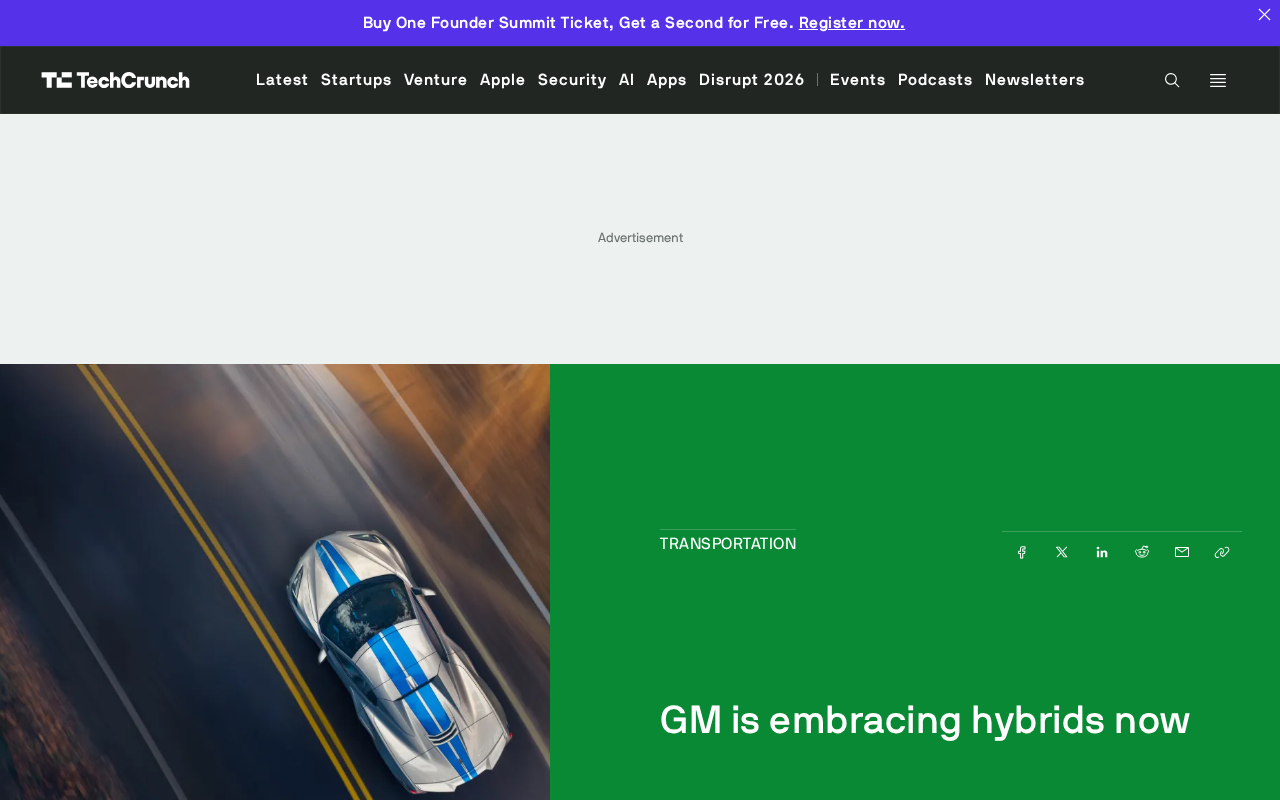
GM Shifts Toward Hybrids: From an All-Electric Bet to a Pragmatic Parallel Strategy
GM once skipped hybrids to bet on pure EVs; now it plans hybrid SUV versions. This article analyzes the strategic shift, its significance for SUVs, and consumer impact.