Kim Kardashian and Three Other Stars Take On the Pizza Interview, Drawing Attention with Playful Interactions

Four actresses join a New York Times interview set around pizza-making, showing down-to-earth interactions.
The article introduces a New York Times-produced interview program called "#PizzaInterview," set around pizza-making and featuring Kim Kardashian, Sarah Paulson, Niecy Nash-Betts, and Naomi Watts. The stars interact lightheartedly and share taste preferences—some favor a simple mix of tomato sauce, mozzarella, and herbs, while others make spicy pizza. The article argues that this lightweight content combining star power and food is suited to social media and short-video platforms, reflecting The New York Times' push to expand its video business.
Stars Cross Into Food: A Fun Opening to a Pizza Interview
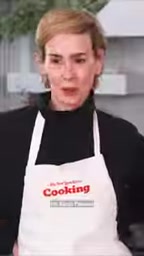
According to video content on YouTube, four well-known actresses—Kim Kardashian, Sarah Paulson, Niecy Nash-Betts, and Naomi Watts—appeared together in a program called "#PizzaInterview." At the start of the video, Naomi Watts introduces herself first: "Hi, I'm Naomi Watts." Then Kim Kardashian says: "And I'm Kim Kardashian, and we're here with the New York Times, and we're making pizzas." This indicates that the interview was produced by The New York Times and unfolds against the backdrop of making pizza.

The interactions among the four stars revolve around pizza-making. When asked whether they have made pizza before, one replies "Nope," while another says, "Yes. I make pizzas with my kids almost every weekend." This detail offers a glimpse into the everyday side of the stars' family life and adds a down-to-earth atmosphere to the interview.
Pizza Flavors and Making Details: A Clash of Simplicity and Creativity
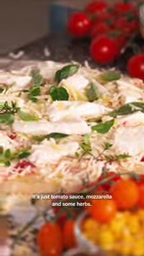
During the making process, Kim Kardashian shows off her pizza, prompting exclamations from her companions: "Guys! Look at Kimberly's pizza!" As for toppings, one says, "I don't like too much on my pizza. It's just tomato sauce, mozzarella, and some herbs," emphasizing a minimalist style, while another pizza is described as "Wow. It's spicy and delicious." In the video, the word "Herbs." is mentioned on its own, suggesting that herbs are an important ingredient.
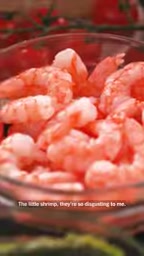
The interview also includes playful reactions such as "It's a little shake. That's so disgusting to me," as well as exchanges like "Did everyone try it with each other or do you want to? No." These moments reveal a relaxed and even slightly teasing conversational atmosphere. This informal food-interview format allows the stars to show more authentic personalities in a cooking setting.
Cross-Verification Across Sources and Dissemination Effect
According to the YouTube video content, the clip comes from an interview series by The New York Times, using pizza-making as a medium to bring stars closer to viewers. Although there is currently only one source, the self-introductions and interactions of the four stars in the video are clearly identifiable. Judging from the content, this is not a serious news interview but rather light entertainment and lifestyle content, consistent with The New York Times' efforts to expand its video business.
The combination of star power and a food theme gives this kind of content a natural ability to spread on social media. The use of the "#PizzaInterview" hashtag in the video also suggests that it is positioned for distribution on short-video platforms. Each of the four actresses has a broad fan base, and their participation undoubtedly brings more attention to the content.
The New York Times' video business (often presented under the name "Times Video" or "NYT Video") is an important part of its digital transformation, covering short news documentaries, interviews, and food and lifestyle content. Unlike traditional text reporting, this kind of video content places greater emphasis on scene-based and personality-driven expression, and is adept at using celebrity influence and light formats to attract younger audiences, distributing through social platforms such as YouTube and Instagram.
The use of topic hashtags such as "#PizzaInterview" reflects the content creators' adaptation for dissemination on short-video platforms: hashtags make it easier to aggregate related content and also lower the cost for users to search for and re-share it. The combination of celebrity interviews and food-making is a typical "light content" strategy—that is, exchanging a lower production threshold for higher social dissemination efficiency.
Conclusion
This pizza interview uses food as an entry point to show a private side of the stars. From the simple combination of tomato sauce, mozzarella, and herbs to praise for spicy pizza, the details reveal personal taste preferences. Exclamations such as "Look at Kimberly's pizza!" let viewers feel the genuine on-site reactions. This lightweight, life-oriented content format may well be a new trend for celebrity interviews in the streaming era.
One-line Summary
Four actresses take part in a New York Times interview set around making pizza, showing down-to-earth interactions.
Paragraph Summary
The article introduces a New York Times-produced interview program called "#PizzaInterview," set against the backdrop of making pizza, featuring four well-known actresses: Kim Kardashian, Sarah Paulson, Niecy Nash-Betts, and Naomi Watts. In the interview, the stars engage in lighthearted interactions around pizza-making and share their taste preferences—some prefer the simple combination of tomato sauce, mozzarella, and herbs, while others make spicy pizza. When Kim Kardashian shows off her creation, her companions react with exclamations, creating a teasing yet authentic atmosphere. The article suggests that this lightweight content combining star power with a food theme is well suited for dissemination on social media and short-video platforms, and reflects The New York Times' attempt to expand its video business and connect with viewers through life-oriented formats.
Related articles

Abnormal Error Rate Spike in Claude Mythos 5.2 and Fable 5.2
Claude Mythos 5.2 and Claude Fable 5.2 show an abnormal spike in request error rates, marked as investigating on the official status page. This article covers the incident overview, practical impact on developers, and recommended responses.

ReAct Runtime Context Trimming: Why Claude Code Acts at 70%
A deep dive into ReAct runtime context trimming: why Claude Code compresses at ~70% usage, why tool calls dominate, why messages must be dropped in pairs, and why codebases don't need RAG.

AI Agent vs LLM: How Cursor and Claude Code Actually Work
An in-depth analysis of the essential difference between AI Agents and LLMs: LLMs generate code suggestions, while Agents modify files and run tests via tool calls. Using a Spring Boot bug fix as an example, it breaks down the workflows, permission control, and verification mechanisms of Cursor and Claude Code.