Kiri: A New Choice for Modern Container Runtimes
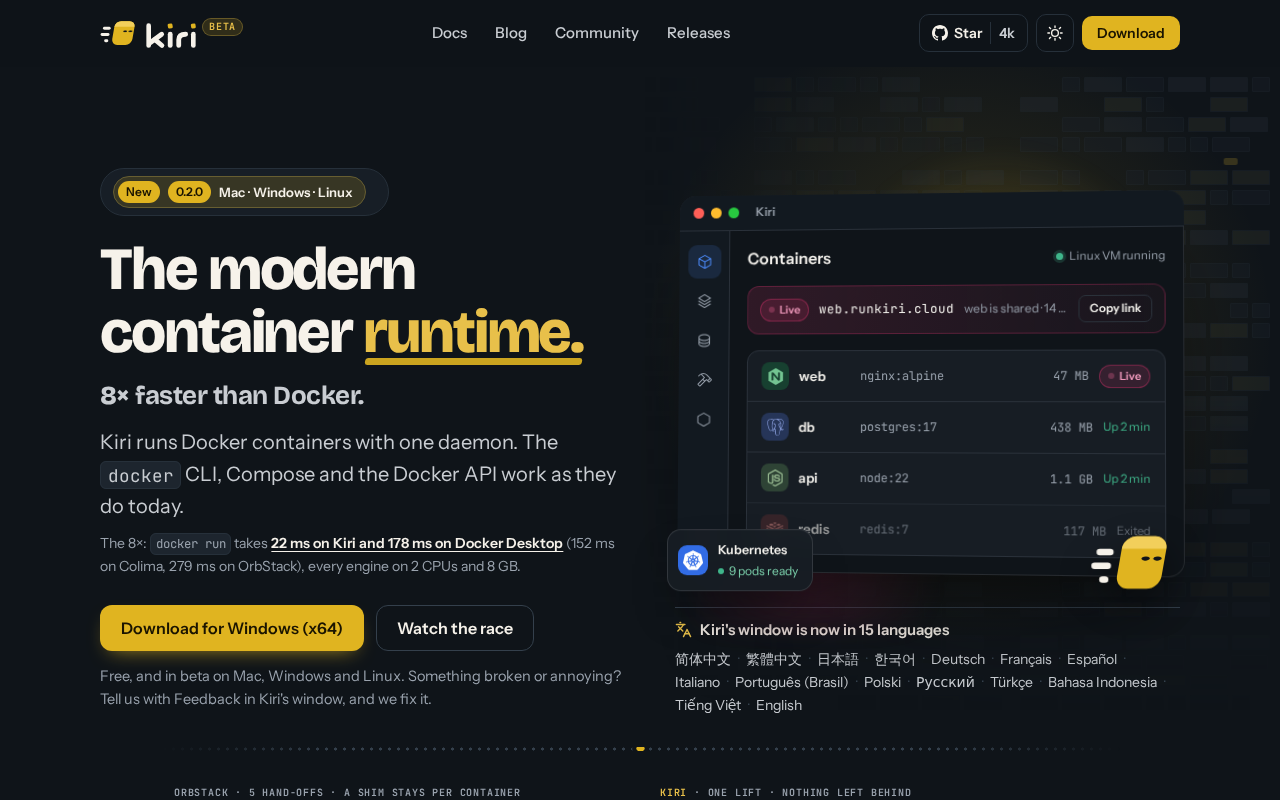
Kiri debuts on Hacker News as a "modern container runtime," focused on lightweight architecture, fast startup, and secure defaults.
Kiri is a new project on Hacker News positioning itself as a "modern container runtime," currently at a very early stage with minimal traction. The article analyzes how, after a decade of evolution toward containerd, CRI-O, and Podman, container runtimes face renewed trade-offs in large clusters, edge, and hybrid cloud—startup latency, resource overhead, security isolation, and CRI coupling—and infers that Kiri may focus on a lighter architecture, faster startup, stricter secure defaults, and loose orchestration coupling. Lacking public details and production validation, it's best treated as a watch-list project rather than a production replacement.
The container runtime space has a new player—Kiri. A project called "Kiri – The Modern Container Runtime" recently sparked discussion on Hacker News. Although it's still early (8 points, 1 comment), its positioning targets several core pain points in today's container infrastructure.
Why Does the Container Runtime Space Still Need "Modernization"?
Over the past decade, container technology has evolved from Docker's dominance to a multipolar landscape of containerd, CRI-O, Podman, and others. Most of these runtimes are built around the OCI standard, solving the basic problems of image distribution, isolation, and lifecycle management. But as use cases expanded from single-machine development to large-scale clusters, edge computing, and hybrid cloud, some trade-offs in older designs began to surface: startup latency, resource overhead, the way they couple with the Kubernetes CRI, and the evolution of security isolation models all push the runtime layer to rethink its foundations.
Kiri, with "modern" in its name, is a response to this backdrop. It attempts to preserve OCI compatibility while simplifying and restructuring for the needs of next-generation infrastructure.
The OCI standard (Open Container Initiative) is fundamental to understanding the container runtime landscape. OCI was launched in 2015 by Docker, CoreOS, and other companies to standardize container image formats and runtime interfaces, avoiding ecosystem fragmentation. It mainly produces two specifications: the image specification (image-spec), which defines the layer, configuration, and manifest formats of images; and the runtime specification (runtime-spec), which defines how to launch and manage container processes based on configuration. Runtimes such as containerd, CRI-O, and Podman all implement the OCI runtime specification, so images are portable across different runtimes. However, OCI only standardizes the low-level interfaces—it does not prescribe daemon architecture, startup performance, or secure defaults. This is exactly where runtimes diverge and where new projects like Kiri have room to redesign.
The Kubernetes CRI (Container Runtime Interface) is the gRPC interface protocol between Kubernetes and container runtimes. Before CRI existed, Kubernetes supported containers through an embedded Docker integration, which was tightly coupled and made swapping runtimes difficult. CRI decouples the orchestration layer from the runtime: kubelet calls the runtime via CRI to create, start, stop containers, and so on. Both containerd and CRI-O natively implement CRI. For a new runtime, implementing CRI is a prerequisite for joining the Kubernetes ecosystem, but CRI itself introduces an extra abstraction layer and inter-process communication overhead. How to stay lightweight while remaining CRI-compatible is a trade-off that projects like Kiri must weigh.
Several Directions Kiri May Focus On
Given the limited public information, we cannot draw conclusions about implementation details, but the phrase "modern container runtime" allows reasonable inferences about its design priorities:
- A lighter architecture: Fewer resident daemons and layered abstractions, reducing idle resource consumption—especially critical for edge nodes and dense deployment scenarios.
- A faster startup path: Compressing cold-start time by simplifying image unpacking and optimizing namespace setup ordering, meeting the sub-second or second-level response requirements of Serverless and elastic scaling.
- Clearer security boundaries: Stricter defaults for rootless containers, user namespaces, and seccomp policies, reducing the risk of being "insecure out of the box."
- Loose coupling with orchestration systems: Serving not only Kubernetes but also other schedulers or custom control planes directly.
These directions are not unique to Kiri, but combined they form a differentiated positioning worth watching.
Rootless containers refer to running the container daemon and container processes as a non-root user, relying on Linux user namespaces to map root inside the container to an ordinary user on the host. Traditional containers run as root, so a container escape immediately grants an attacker host root privileges. Rootless mode significantly reduces this attack surface but introduces limitations in networking configuration, storage drivers, and port binding. Seccomp (secure computing mode) is a Linux kernel system-call filtering mechanism; container runtimes can use seccomp profiles to restrict the set of system calls available to processes inside a container, reducing the kernel attack surface. Docker enables a relatively permissive seccomp policy by default, while stricter default policies (such as allowing only whitelisted system calls) can further improve isolation but may affect application compatibility. The combination and default choices of these security mechanisms are key decision points in modern runtime design.
Early Community Signals and Limitations
Eight points and one comment on Hacker News indicate that Kiri is still at a very early stage. This means both that the project has not been validated at large-scale production and that discussion around it is still thin. For infrastructure projects, the quality of community feedback often says more than star counts—a single comment might point out an architectural flaw, or it might just be casual curiosity.
That said, container runtimes are inherently a "slow-burn" category. Both containerd and CRI-O took years to become default choices. For Kiri to gain a foothold, it needs to prove not just a feature list but stability, interoperability with the existing ecosystem, and performance under real workloads.
What It Means for Developers and Ops Teams
In the short term, Kiri is better suited as an object of technical observation than as a default production replacement. If your team is evaluating runtime options, watch whether it provides reproducible benchmark data in the following areas: image pull and startup time, memory footprint, and Kubernetes CRI compatibility test results. These metrics are more convincing than the "modern" label.
In the medium to long term, Kiri's emergence is itself a positive signal: competition in container runtimes has not stopped, and new design ideas are still being explored. For infrastructure practitioners, keeping an eye on such early-stage projects costs little and may yield meaningful benefits.
Summary
Kiri positions itself as a "modern container runtime" and has just made its debut on Hacker News. Whether it can deliver substantive improvements still needs to be verified through code, benchmarks, and the community. But the room for innovation in the container runtime layer is far from exhausted, and Kiri is worth adding to your watch list.
One-line Summary
Kiri debuts on Hacker News as a "modern container runtime," focused on lightweight architecture, fast startup, and secure defaults.
Paragraph Summary
Kiri is a new project that appeared on Hacker News positioning itself as a "modern container runtime," currently with very low traction (8 points, 1 comment) and at a very early stage. The article argues that after a decade of development, container runtimes have formed a multipolar landscape of containerd, CRI-O, Podman, and others, but in large-scale clusters, edge computing, and hybrid cloud scenarios, old trade-offs around startup latency, resource overhead, security isolation, and CRI coupling are beginning to surface—and Kiri is a response to this. The article infers that Kiri may focus on a lighter architecture, faster startup paths, stricter secure defaults, and loose coupling with orchestration systems. Due to a lack of public details and production validation, in the short term it is better suited as an object of technical observation than as a default production replacement.
Related articles
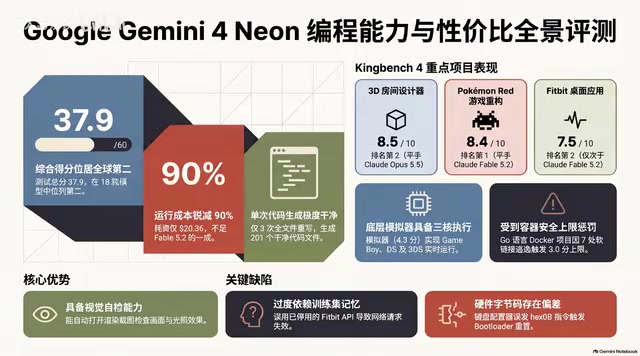
Gemini 4 Neon Hands-On: Value King or Confident Catastrophe?
Gemini 4 Neon review: 1M-token context, four thinking levels, 201 files in one KingBench4 pass at one-tenth Fable 5.2's cost—but it hallucinates fake data, leaves 7 symlink escapes, and bricks keyboards.
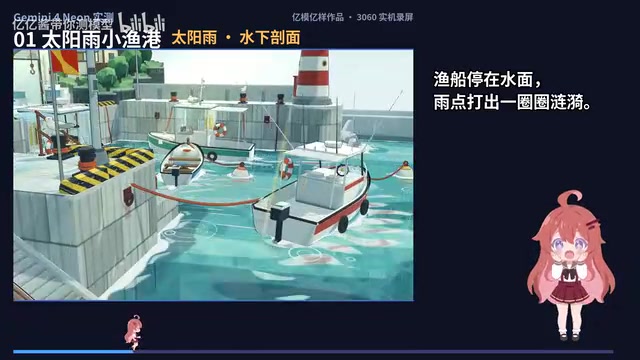
Google Gemini 4 Neon Hands-On: 6 3D Works That Impress and Fail
Hands-on with Google Gemini 4 Neon on a 3060 laptop: 6 3D works tested. Sunshower Fishing Harbor and mechanical keyboard impress; soft-body physics and faces fall short.
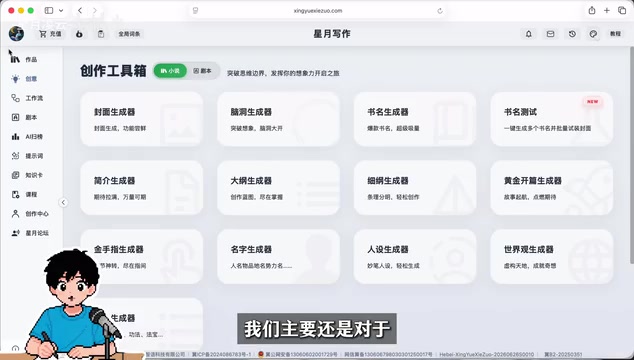
Gemini 4 Neo Web Novel Writing Test: Faint AI Flavor, Textured Dialogue
Bilibili creator's first-look review of Gemini 4 Neo for Chinese web novel writing: testing a Three Kingdoms transmigration opening with faint AI flavor, emotionally textured dialogue, and strong crisis building, plus comparison of 4A/4H/4C models and full workflow demos.