Korean Retail Investors Blown Up by AI Investments: A Painful Lesson in Leveraged FOMO

Korean retail investors face devastating losses after leveraged bets on AI stocks collapse amid valuation corrections.
Korean retail investors who aggressively chased AI concept stocks with heavy leverage are now facing catastrophic losses as valuations correct sharply. This article analyzes how Korea's high-leverage trading culture, FOMO-driven herd behavior, and the disconnect between AI's long-term value and short-term overvaluation created a perfect storm for retail devastation, offering critical risk management lessons for all investors.
When AI Mania Collides with Reality
"My life's screwed" — this desperate confession comes from a Korean retail investor who went all-in on the AI investment craze and now faces devastating losses. According to international media reports, as AI concept stocks have experienced severe valuation corrections, large numbers of Korean individual investors have fallen into serious financial and psychological distress.
This is not an isolated incident, but rather a highly representative snapshot of the global AI investment mania cycle. Over the past two years, from NVIDIA to various AI concept companies, capital markets' obsession with artificial intelligence once pushed related assets to historic highs. However, when market sentiment shifts from "greed" to "fear," retail investors who entered at peaks with leverage often bear the greatest impact.

Why Korean Retail Investors Were So Aggressive in AI Investments
A High-Leverage Culture That Plants the Seeds of Liquidation
Korea's retail investment market has always been known for its high risk appetite. Local investors not only chase domestic tech stocks enthusiastically but also heavily bet on U.S. AI leaders through leveraged ETF products and overseas brokerage accounts. This "all-in plus leverage" approach can amplify returns in bull markets but equally multiplies losses during downturns.
Specifically, Korean retail investors heavily invested in leveraged ETF products (such as TQQQ, a 3x leveraged ETF tracking the Nasdaq index), which use financial derivatives to amplify daily returns by a multiple. This means that when the underlying index drops 10% in a single day, a 3x leveraged product loses approximately 30%. An even more insidious risk lies in the "volatility decay" effect — even if the underlying asset returns to its original level over a period of time, the leveraged ETF's net asset value may experience permanent erosion due to its daily compounding mechanism. Furthermore, Korea's margin trading system allows investors to borrow funds to purchase stocks with relatively low margin requirements (typically 40%-60%), further amplifying actual leverage multiples.
Behind the phrase "my life's screwed" often lies a reality where investors have not only lost their entire principal but may also be carrying margin debt. When stock prices hit the forced liquidation threshold, leveraged positions are automatically closed out, leaving investors no opportunity to wait for a rebound. The margin call trigger mechanism works as follows: when the account's maintenance margin ratio falls below the broker's minimum threshold (typically a 140% collateral maintenance ratio in the Korean market), the system automatically sells holdings to repay borrowed funds. During rapid market declines, the concentrated flood of forced liquidation orders further intensifies selling pressure, creating a death spiral of "decline → forced liquidation → even steeper decline."
FOMO Fueling the Chase for All-Time Highs
During the most frenzied phase of the AI narrative, social media and investment communities were flooded with rhetoric like "miss this and you'll regret it for life." This FOMO (Fear of Missing Out) sentiment drove large numbers of ordinary people lacking risk awareness to enter the market at peak valuations. They often viewed AI as a "can only go up" certainty, ignoring the fundamental principle that all assets experience cyclical corrections.
FOMO has deep theoretical foundations in behavioral finance. Nobel laureate Daniel Kahneman's Prospect Theory demonstrates that humans perceive the pain of "potential losses" at approximately 2.5 times the pleasure of equivalent "potential gains" — but in bubble environments, this mechanism becomes distorted: when everyone around you is profiting, "not participating" is re-encoded by the brain as a "loss," triggering irrational chase behavior. Korea's investment community ecosystem amplifies this effect even further. Naver Stock, KakaoTalk investment groups, and YouTube financial channels form a highly active information echo chamber where success stories are infinitely amplified and disseminated, while those who lose money remain silent. This "survivorship bias" creates the illusion that everyone is making money, forming a classic herding behavior pattern — where individual investors abandon independent judgment and instead mimic group behavior in their decision-making.
Are AI Concept Stocks a Bubble?
A Severe Disconnect Between Long-Term Technological Value and Short-Term Valuations
An important point to clarify: "AI bubble bursting" does not equate to AI technology itself failing. Artificial intelligence, as a foundational technological revolution, still has its long-term value widely recognized. What's actually bursting are the excessively high valuation expectations that markets assigned to AI-related companies in the short term.
This dilemma of "technology has value but valuations are too high" can be precisely described using the Gartner Hype Cycle. This theory divides new technology development into five phases: Technology Trigger, Peak of Inflated Expectations, Trough of Disillusionment, Slope of Enlightenment, and Plateau of Productivity. The current AI industry is transitioning from the "Peak of Inflated Expectations" toward the "Trough of Disillusionment" — market expectations have run far ahead of actual commercial implementation. Measured by valuation metrics, some AI concept stocks reached Price-to-Sales (P/S) ratios exceeding 40x during the 2024 peak, meaning that even with sustained high growth, investors would need to wait decades to recoup their investment through revenue alone. For comparison, at the peak of the 2000 dot-com bubble, Cisco's P/S ratio was approximately 31x, after which its stock price fell over 80% and has still not returned to its former high.
Historical parallels are not uncommon. When the 2000 internet bubble burst, countless internet companies collapsed, stock prices were halved, and the Nasdaq index fell from 5,048 to 1,114 — a decline exceeding 78%. Yet the internet itself completely transformed the world over the following twenty years — Amazon's stock price fell to single digits in 2001, but by persisting to the present has become a trillion-dollar market cap giant. The current AI wave will very likely replay this script: technology remains promising long-term, but short-term valuations must endure a painful deleveraging process. The critical issue is that most retail investors neither have sufficient capital to survive the trough period nor the professional ability to identify the ultimate "survivors" among the many AI companies.
Why Retail Investors Always Pay the Highest Price When Bubbles Burst
What's worth noting is that the cost of burst bubbles is typically borne by retail investors — those with the greatest information asymmetry and weakest risk tolerance. Institutional investors usually have more comprehensive risk management systems and disciplined stop-loss protocols, while individual investors are prone to chasing rallies and panic-selling under emotional influence, ultimately cutting losses in fear.
From an economic theory perspective, this phenomenon can be explained using George Akerlof's information asymmetry theory. Institutional investors, through professional research teams, primary market due diligence, and high-frequency data monitoring, can detect overvaluation signals earlier and reduce positions in advance. They commonly employ quantitative tools like VaR (Value at Risk) models to set maximum acceptable losses and strictly execute stop-loss discipline — once holdings hit preset loss thresholds, positions are mechanically reduced regardless of how bullish the outlook. By contrast, retail investors are deeply afflicted by the "Disposition Effect" — a concept proposed by behavioral finance scholars Hersh Shefrin and Meir Statman in 1985, describing investors' tendency to sell winning positions too early to "lock in profits" while holding losing positions too long to "wait for recovery." This psychological bias causes retail investors to continuously average down during declines, ultimately being forced to capitulate near the bottom, completing a full "buy high, sell low" cycle.
Risk Warnings for Ordinary Investors
Respect Leverage, Respect Market Cycles
The most direct lesson from this event is: leverage is a double-edged sword. Using leverage to bet on a single sector without adequate risk awareness is no different from staking your entire net worth on a one-directional gamble. Market volatility far exceeds most retail investors' expectations, and any thought that "this time is different" deserves skepticism.
From a mathematical perspective, the danger of leverage lies in its nonlinear and asymmetric loss profile. With 2x leverage, a 50% decline in the underlying asset means total loss of principal; and to recover from a 50% loss, the asset needs to rise 100% — this is the irreversibility risk of leverage. Renowned investor Howard Marks profoundly articulated the nature of market cycles in his book Mastering the Market Cycle: markets perpetually oscillate between excessive optimism and excessive pessimism, and the extreme positions of cycles are precisely the moments of highest risk (at tops) and greatest opportunity (at bottoms). The Kelly Criterion — an optimal position-sizing formula derived from information theory — tells us that even for positive expected value investment opportunities, over-betting causes the probability of ruin to approach 100%. The formula's recommended optimal bet size is typically far smaller than investors' intuitive judgment, mathematically proving that a "full leverage" strategy inevitably leads to ruin over the long term.
Learn to Distinguish Long-Term Trends from Short-Term Bubbles
For long-term trends like AI, the rational approach is to share in technology dividends through diversified allocation and long-term holding, rather than going all-in at emotional peaks. A true technological revolution doesn't complete itself in one or two years — what investors need is patience, not the short-term euphoria that leverage provides.
Specifically, diversified allocation means keeping AI investment positions within a reasonable proportion of total assets (typically recommended not to exceed 20%-30%), while also diversifying within the AI industry chain — covering chips, infrastructure, application software, and data services rather than betting on a single stock. Dollar Cost Averaging (DCA) strategy is particularly suitable for such high-volatility assets, as it smooths costs through continuous purchases at different price levels, avoiding the risk of building a full position at a single high point. Historical data shows that even investors who began dollar-cost averaging into a Nasdaq index fund at the absolute peak of the 2000 internet bubble broke even within approximately 5-7 years and ultimately achieved substantial returns.
Conclusion
The plight of Korean retail investors is a thought-provoking wake-up call within the global AI investment frenzy. It reminds us that a technology's bright prospects and short-term market risks can coexist simultaneously. When a technology is elevated to a pedestal, that is often precisely when risks accumulate fastest. For ordinary investors, staying clear-headed, managing risk, and resisting the temptation of leverage may be the most important abilities for navigating bubble cycles.
As Warren Buffett's classic warning states: "Only when the tide goes out do you discover who's been swimming naked." In the great tide of AI investing, leverage is that swimsuit that can disappear at any moment — it makes you look magnificent when the tide is rising, but leaves you completely exposed when it recedes.
Related articles
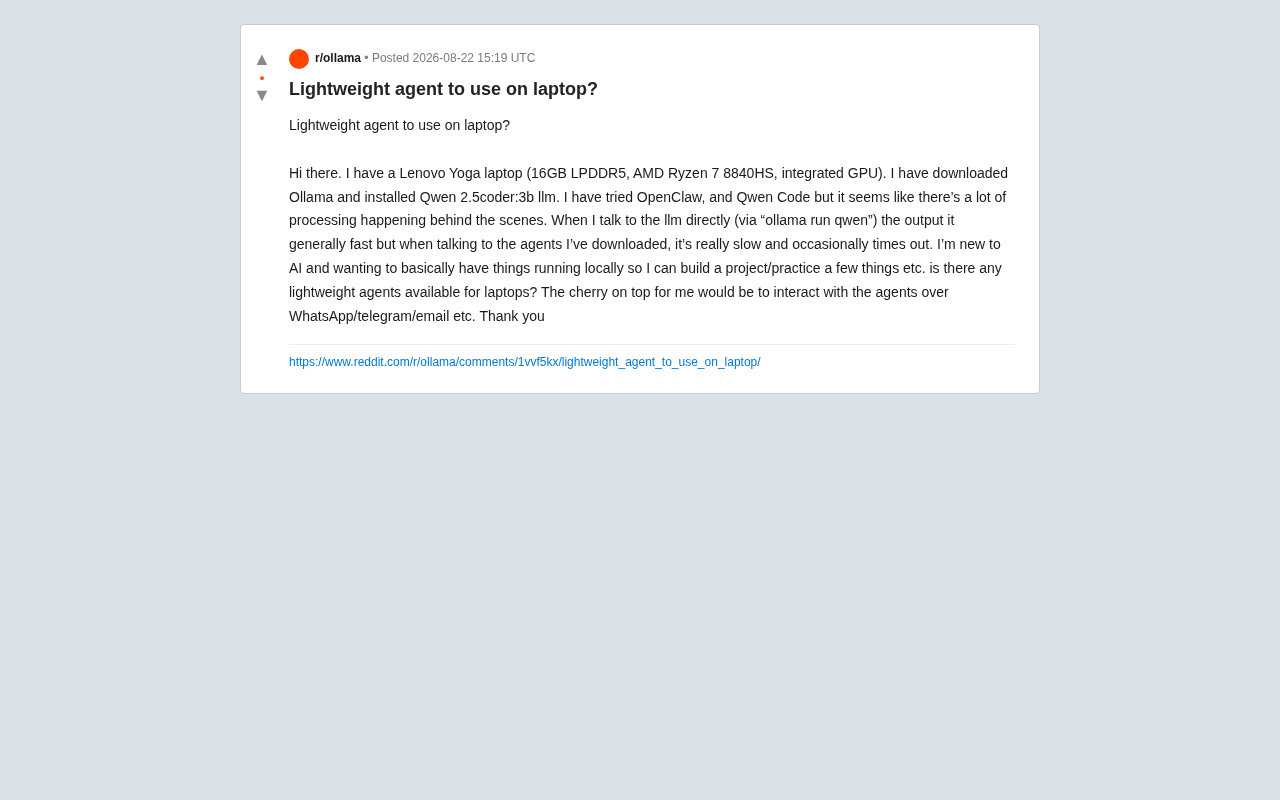
Local AI Agent Deployment Too Slow? A Lightweight Optimization Practical Guide
Local AI Agent deployment slow and timing out? This guide covers Agent framework overhead, hardware bottlenecks, and practical optimizations including context trimming, quantization, and Telegram Bot integration.

Choosing a Laptop for AI Studies: MacBook vs NVIDIA Laptop — An In-Depth Comparison Guide
In-depth analysis for AI students choosing laptops: MacBook Air M5 with remote GPU vs NVIDIA laptop, comparing CUDA support, portability, battery life, and value.

Self-Hosted LLM Tech Stack: A Complete Guide to Managing Your Local AI Cluster from the Terminal
A deep dive into self-hosting LLM tech stacks: inference engines, model management, vector databases, and how to manage your local AI cluster from the terminal.