Krea 2 Real-World Test: RTX 3060 Generates 1080P Images in Under 2 Minutes

RTX 3060 generates 1080P images in under 2 minutes with Krea 2 Turbo FP8 quantization.
A Reddit user's real-world test shows that the RTX 3060 12GB can generate 1080P images in 1–2 minutes using Krea 2's Turbo and FP8 quantization techniques. This article breaks down the technical reasons behind this feat, offers workflow tuning advice, and explores the LoRA and ControlNet ecosystem that could shape Krea 2's future.
AI Image Generation on Consumer GPUs: A New Frontier
In the world of AI image generation, hardware requirements have long been a barrier for everyday enthusiasts. High-quality models typically demand expensive professional-grade GPUs, leaving most users' consumer cards struggling with high-resolution outputs and complex models. Recently, however, a Reddit user's hands-on experience with Krea 2 has opened up a new possibility for this landscape.
Krea 2 is a next-generation image generation model from Krea AI. Founded in 2023, Krea AI focuses on bringing generative AI tools into the daily workflows of creative professionals. Their early products became known for Real-time Generation — a paradigm where users sketch on a canvas and the system instantly renders corresponding AI output, a stark departure from the traditional "submit-wait-review" approach and much closer to an extension of creative intuition. Krea 2 builds on this foundation with improved baseline generation quality, offline batch inference capabilities, and VRAM-friendly optimizations for local deployment, making it one of the first new-generation models to receive widespread real-world validation on consumer-grade GPUs.
The Reddit user in question was running an RTX 3060 12GB — a mainstream, relatively affordable card. It's worth noting that the RTX 3060 12GB is an Ampere-architecture mid-range GPU released by NVIDIA in 2021. Built on Samsung's 8nm process, Ampere introduced third-generation Tensor Cores and second-generation RT Cores, representing a significant leap in NVIDIA's consumer-grade AI compute capabilities. The 12GB VRAM configuration was unusually generous for its tier — even exceeding the flagship RTX 3080's 10GB version at the time. This unconventional design stemmed from a rare misalignment in NVIDIA's product lineup: typically, a GPU's memory bandwidth and capacity closely match its compute positioning, but the 3060 12GB broke that pattern, partly to differentiate itself from the simultaneously released RTX 3060 Ti (8GB). It inadvertently aligned well with AI inference's appetite for large VRAM, earning it a reputation as one of the most beloved "accidental powerhouse" cards in the AI art community. While its CUDA core count and bandwidth fall far short of high-end GPUs, the generous VRAM allows it to load larger models and handle higher-resolution inference tasks — a key reason it has long been considered the "best value" pick for local AI image generation. Test results showed that Krea 2 can generate 1080P images in 1 to 2 minutes on this card — an impressive result for a mid-range GPU with only 12GB of VRAM.

From Frustration to Amazement: The Real Learning Curve
Interestingly, the user admitted that the initial experience wasn't smooth: "needed some tweaks to do in the workflow." This actually reflects a universal reality in AI image generation tools — the model's raw capability matters, but how you configure the workflow and tune the parameters is equally decisive in determining final output quality.
After some adjustments, his verdict was "amazing." This arc from trial-and-error to mastery is a familiar story for many AI tool users — a tool's potential needs to be unlocked through practice, not assumed out of the box.
Technical Configuration Breakdown
According to the post, the user employed a standard T2I (Text-to-Image) workflow using the Krea2 Turbo FP8 variant. Several technical points are worth unpacking:
-
Turbo version: Turbo models typically leverage techniques such as Consistency Distillation or Flow Matching to compress the dozens of denoising inference steps required by standard diffusion models down to just 4 to 8 steps or fewer. Standard diffusion models (like DDPM) require tens to hundreds of iterative denoising steps, each demanding a full neural network forward pass — computationally expensive by design. Consistency Distillation, proposed by OpenAI in 2023, trains a "consistency model" so that its output at any point along the denoising trajectory maps directly to the final clean image, enabling single-step or few-step generation. Flow Matching takes a different approach, learning a deterministic continuous flow from noise to data as an alternative to traditional stochastic differential equation frameworks, yielding significant improvements in both training stability and inference efficiency. Early implementations like Stable Diffusion Turbo and SDXL Turbo proved the viability of this path — generation speed increased 5 to 10 times while retaining most image quality. Krea 2 Turbo follows this same direction and is central to achieving fast outputs on mid-range GPUs.
-
FP8 quantization (8-bit floating point precision): FP8 is a major breakthrough in large model inference acceleration in recent years. Traditional deep learning inference typically stores model weights in FP32 (32-bit single precision) or FP16 (16-bit half precision), while FP8 can reduce VRAM usage by approximately 50% compared to FP16. FP8 is not simply a matter of halving FP16's bit count — the core challenge lies in the extremely limited dynamic range of 8-bit floats, and how to appropriately allocate numerical range across different layers is critical to preserving precision. NVIDIA first introduced hardware-level FP8 Tensor Core support in the Hopper architecture (H100), followed by the Ada Lovelace architecture (RTX 40 series). The RTX 30 series (Ampere architecture) relies on software emulation for FP8 support, with some efficiency trade-offs, but the VRAM savings remain substantial — a model with billions of parameters can be compressed from roughly 20GB in FP16 to under 10GB, which directly determines whether it can even be loaded on a consumer GPU. Modern quantization algorithms (such as GPTQ and AWQ) can keep precision loss virtually imperceptible to the human eye, dramatically lowering the hardware barrier while maintaining output quality.
The combination of these two technologies — Turbo drastically reducing inference steps and FP8 significantly compressing VRAM usage — is precisely why a consumer card like the RTX 3060 can smoothly run Krea 2.
It's also worth noting that the choice between local deployment and cloud API involves an important trade-off. With cloud API mode, each generation call transmits image prompts and intermediate data to third-party servers, posing potential risks in confidentiality-sensitive scenarios such as commercial design or film concept art, and per-call costs can accumulate rapidly under heavy usage. Local deployment requires an upfront hardware investment but has near-zero marginal cost per generation and keeps the entire process offline and under user control. The real-world validation on the RTX 3060 12GB effectively establishes an economically viable hardware benchmark for this type of "private deployment" use case.
Community Ecosystem: Anticipating LoRA and ControlNet
Beyond raw performance, the user also expressed excitement about the community ecosystem — eager to see "the community make new LoRAs and ControlNets for it."
This touches on the core question of whether an AI image generation model can achieve lasting popularity. A model's native capabilities are just the starting point; the ecosystem built around it is the real competitive moat:
-
LoRA (Low-Rank Adaptation): Proposed by Microsoft Research in 2021, LoRA's mathematical foundation draws from matrix decomposition theory. For a pre-trained weight matrix W of dimension d×k, its fine-tuning update ΔW can be decomposed into the product of two low-rank matrices B (d×r) and A (r×k), where rank r is much smaller than d and k. During training, the original weights W are frozen, and only A and B participate in gradient updates, reducing the number of trainable parameters from d×k to r×(d+k) — shrinking the total trainable parameter count to just 0.1% to 1% of the full model. In AI image generation contexts, r typically ranges from 4 to 128, and a typical SDXL LoRA file is only 100–300MB in size, trainable on an RTX 3060 in a matter of hours. This enables the base model to reliably generate specific character faces, particular artistic styles, or specific object forms. This low-barrier personalization capability has given rise to tens of thousands of community creations on platforms like Civitai (now exceeding 100,000 community LoRAs), allowing users to endow models with specific styles, characters, or concepts without retraining the entire model.
-
ControlNet: Proposed by Stanford researcher Lvmin Zhang in 2023, ControlNet features a brilliantly elegant architecture: it replicates the encoder portion of the diffusion model's UNet and connects to the original UNet through "zero convolutions" (1×1 convolutional layers initialized with zero weights). The zero convolution design ensures that during early training, the control network does not interfere with the original model's generation capability; as training progresses, control signals gradually influence the generation process. This design allows ControlNet to undergo conditional control training without modifying the base model's weights — at a fraction of the cost of fine-tuning the entire diffusion model from scratch. Users can supply condition images such as line art (Canny edges), human pose skeletons (OpenPose), or depth maps, allowing the model to strictly follow compositional constraints while preserving content semantics. This tool dramatically improved the controllability and practical utility of AI image generation, evolving it from a "random art generator" into a creative assistant capable of integrating into professional design workflows — widely regarded as a landmark milestone in the AI art ecosystem.
Looking at the trajectory of the Stable Diffusion series, it was the massive volume of community-contributed LoRAs and ControlNet plugins that transformed it from a base model into a sprawling creative ecosystem. If Krea 2 hopes to replicate that path, the flourishing of its community ecosystem will be the key metric to watch.
A Measured Perspective on This Real-World Test
As a single user's Reddit post, this experience is vivid and authentic — but it deserves to be viewed with appropriate objectivity. Phrases like "life-changing" carry obvious personal emotional weight, and actual results will vary based on individual needs and configurations.
For users considering getting started with Krea 2, here are a few practical recommendations:
- VRAM threshold: 12GB VRAM is a reasonably comfortable lower bound for running Turbo models. Cards with less VRAM may need to reduce resolution further or adopt more aggressive quantization schemes (such as INT4) to fit within memory constraints. It's worth noting that INT4 quantization compresses each weight to a 4-bit integer — reducing VRAM usage to just one-quarter of FP16 — but with more noticeable precision loss, making it better suited to scenarios prioritizing speed over quality.
- Workflow tuning is unavoidable: Don't dismiss a model based on poor initial results. Experiment with different parameter configurations, including sampler selection, CFG guidance strength, and prompt phrasing. For Turbo-class models, dedicated samplers (such as LCM Sampler) typically outperform general-purpose samplers (like DPM++) because Turbo models are optimized during training for specific sampling paths. CFG (Classifier-Free Guidance) strength controls how closely the model follows the text prompt — too low causes drift from the prompt, too high can produce oversaturation or artifacts, with the optimal balance typically found between 5 and 12. Tuning these two dimensions together is the core of what the user described as "tweaking the workflow."
- Stay plugged into community developments: As more users adopt the model, best practices, optimizations, and companion tools will accelerate in availability.
Conclusion: A Snapshot of AI Art's Democratization
Krea 2 achieving rapid 1080P image generation on an RTX 3060 is a small but telling snapshot of AI image generation's ongoing democratization. Through Turbo consistency distillation acceleration and FP8 quantization, tasks that once required high-end hardware are steadily becoming accessible to everyday users.
A single user's amazing experience doesn't represent the full picture, but it does send a positive signal: the hardware barrier for AI creative work continues to fall. What will truly determine whether this model thrives is the age-old truth — ecosystem determines the future. LoRA's low-rank matrix decomposition mechanism enabling flexible style customization, combined with ControlNet's zero-convolution-based precise spatial control, will together form the core infrastructure of the Krea 2 ecosystem. What possibilities the community will unlock for Krea 2 is well worth watching.
Related articles
Alibaba Launches Happy Shrimp: AI-Powered One-Click Complete Song Generation
Alibaba launches Happy Shrimp, an AI music generation tool that creates complete songs with lyrics, melody, arrangement, and vocals from natural language descriptions. In-depth analysis of its core features, differentiation from competitors like Suno, and industry impact.

GPT Sol Ultra vs Grok 4.6: Real-World Task Completion Benchmark in Reasoning Mode
Developer benchmark reveals GPT Sol Ultra completes draw.io scientific diagrams in one iteration while Grok 4.6 fails to converge despite maximum reasoning mode, exposing that reasoning depth ≠ task delivery capability.
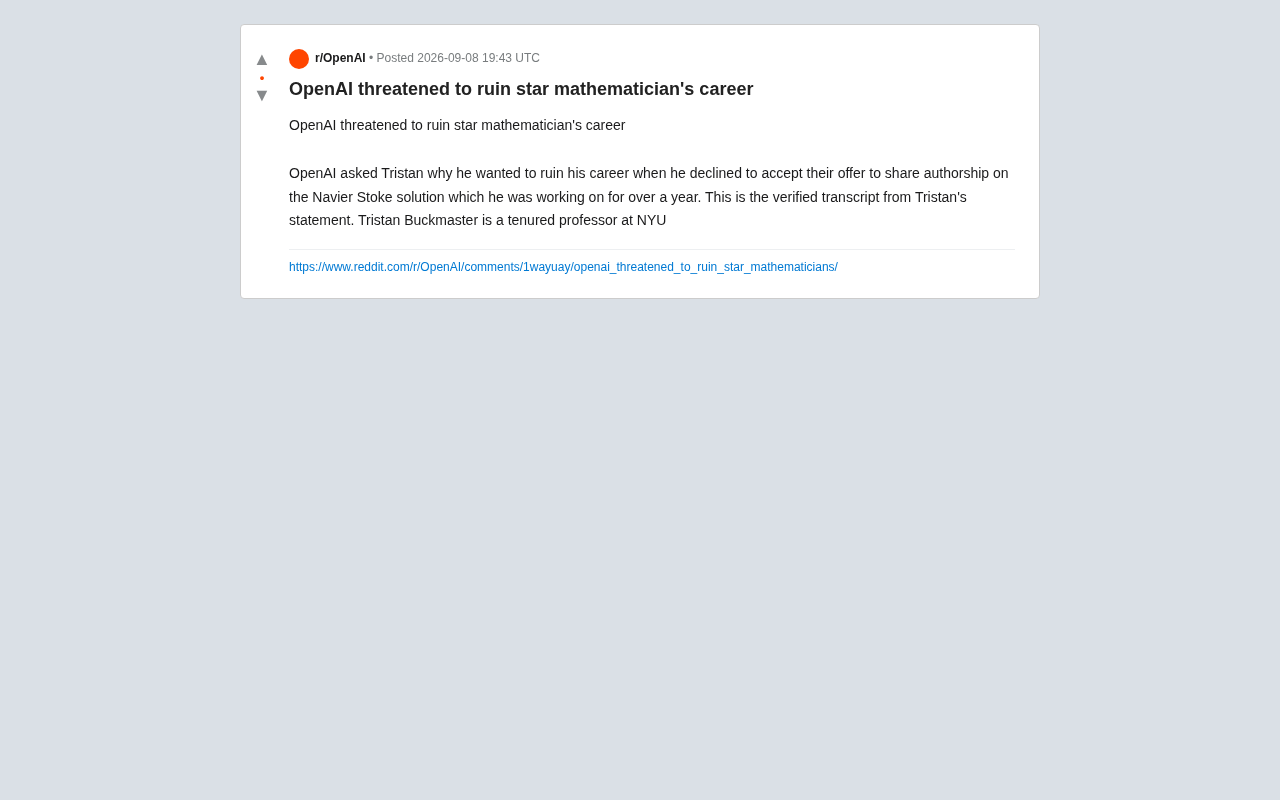
OpenAI Authorship Dispute: The Battle Over Academic Boundaries in the AI Era
OpenAI disputes authorship with mathematician Tristan Buckmaster over Navier-Stokes research, raising ethical questions about AI involvement in science.