KrillinAI: An LLM-Powered Video Translation and Dubbing Tool with One-Click Deployment for 100 Languages
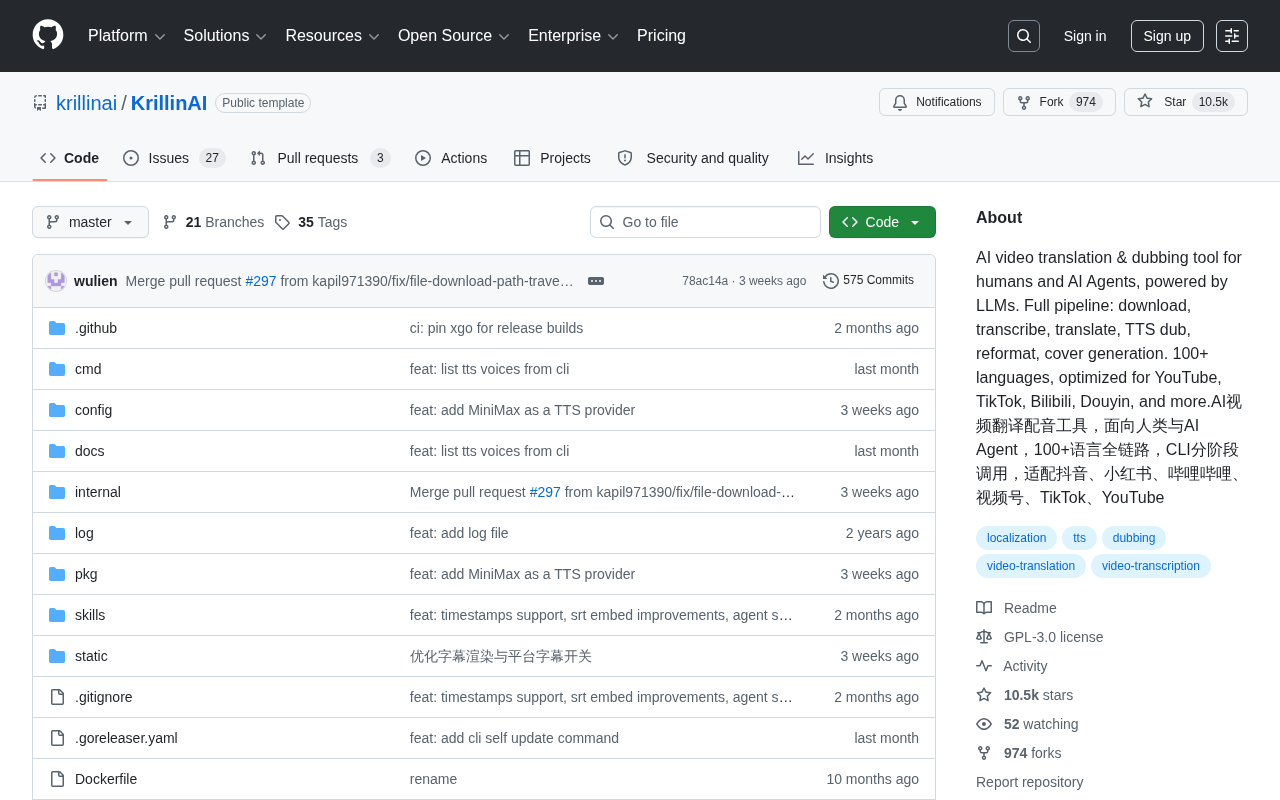
KrillinAI is an open-source, LLM-powered tool for automated video translation and AI dubbing across 100 languages.
KrillinAI is an open-source tool built in Go that fully converts videos from one language to another, covering both subtitle translation and AI dubbing across 100 languages. Powered by LLMs for natural, context-aware translations, it supports output optimized for platforms like Douyin, Bilibili, YouTube, and TikTok. Its one-click, fully automated pipeline replaces the need to manually stitch together ASR, translation, TTS, and video editing tools. The project has surpassed 10,000 GitHub Stars and targets content creators going global, multilingual ops teams, and developers.
Why Has This Open-Source Project Crossed 10,000 Stars?
KrillinAI is a video translation and dubbing tool powered by large language models (LLMs). Built with Go, it has accumulated over 10,000 GitHub Stars and 924 Forks. Its core value proposition is straightforward: fully convert a video from one language to another — including subtitle translation and AI dubbing — with output optimized for short-video platforms.
For content creators, cross-language distribution has always been a high-friction task. It requires handling subtitle translation, dubbing, timeline alignment, and platform-specific formatting — all in one go. KrillinAI aims to compress this entire workflow into a single "one-click, fully automated" pipeline, which is a key reason it gained traction so quickly.
Core Capability: Bidirectional Translation Across 100 Languages
The project's standout feature is support for bidirectional translation across 100 languages. Whether your source video is in Chinese, English, or a less common language, it can be translated into any target language while maintaining consistency between subtitles and dubbing.
Leveraging LLMs' semantic understanding, the translation goes beyond word-for-word conversion — it produces output that's contextually natural. This matters especially for video content, where colloquialisms, slang, and technical jargon translated literally often leave international audiences confused. LLM-powered translation produces more fluent, idiomatic results in the target language.
Beyond text translation, the tool also includes AI dubbing capabilities, generating synthesized speech in the target language so the translated video doesn't just carry subtitles — it can actually "speak," further lowering the barrier to cross-language distribution.
AI dubbing is typically built on Text-to-Speech (TTS) engines. Leading AI TTS solutions today (such as OpenAI TTS, ElevenLabs, and Azure Speech) can already achieve near-human levels of intonation, rhythm, and emotional expression. The real challenge in video dubbing isn't just speech synthesis — it's timeline alignment. Translated text is often longer or shorter than the original, causing the generated audio to fall out of sync with on-screen lip movements and scene pacing. KrillinAI addresses this to a degree by binding subtitle timing data with TTS output throughout the pipeline, though for fast-paced content or strict lip-sync requirements, results can still vary depending on the language pair and speaking rate differences.
Output Optimization for Major Platforms
KrillinAI explicitly supports output adapted for multiple content platforms, covering both domestic Chinese and international ecosystems:
- Chinese platforms: Douyin, Xiaohongshu, Bilibili, WeChat Channels
- International platforms: YouTube, TikTok
This platform adaptation goes beyond simple format compatibility — it accounts for each platform's preferences around aspect ratio, subtitle styling, and video length. For creators and teams aiming to distribute content globally, the ability to produce "one video, multiple platform outputs" can significantly boost production efficiency.
A Full-Pipeline, One-Click Design
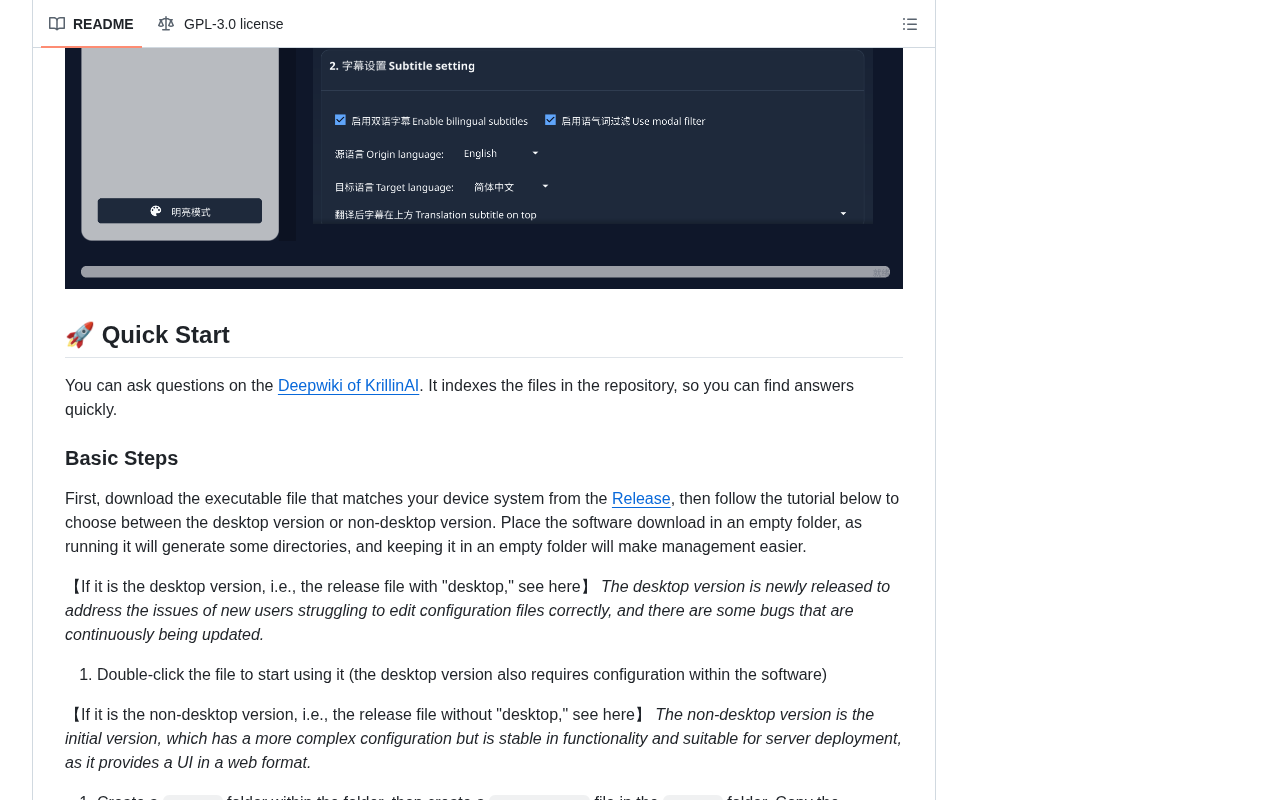
The project emphasizes "one-click full-process deployment" — completing the entire workflow from translation to dubbing to final video output in a single step. Compared to traditional workflows that require stitching together multiple tools (translation software + TTS engine + video editor), this integrated design dramatically lowers the barrier to entry.
Using Go also brings deployment advantages — Go compiles to a single binary, runs cross-platform with minimal dependencies, and starts quickly, making it easy to set up on a server or locally.
A complete video translation and dubbing pipeline typically involves several independent modules: ASR (Automatic Speech Recognition) first converts the original audio track into timestamped text subtitles; an LLM then handles translation; a TTS engine synthesizes speech in the target language; and finally, a video processing library (such as FFmpeg) embeds the new audio track and subtitles into the video. Each stage can introduce latency or errors, and each tool comes with its own interfaces and formats. KrillinAI's value lies in encapsulating this entire chain into a unified workflow, sparing users the manual effort of wiring together Whisper, DeepL/GPT, ElevenLabs, FFmpeg, and other tools — and significantly reducing the complexity for non-technical users.
Who Is It For?
KrillinAI has a well-defined target audience:
- Creators going global: Those who need to batch-translate and dub Chinese-language videos for distribution on YouTube, TikTok, and other international platforms.
- Multilingual operations teams: Teams that need to efficiently adapt a single piece of content for multiple language markets.
- Developers: Those looking to build on the open-source foundation and integrate it into their own content production pipelines.
An Open-Source Tool Worth Watching
The numbers speak for themselves: over 10,000 Stars and nearly 1,000 Forks signal genuine community demand for this kind of all-in-one "LLM + video translation and dubbing" solution. KrillinAI bundles translation, dubbing, and platform adaptation into a single deployable tool, hitting the core pain points of cross-language content creation.
For teams working on global content distribution or multilingual operations, this is an open-source project worth evaluating and adding to your toolkit. That said, actual translation quality, dubbing naturalness, and support for specific language pairs will still need to be tested against your own use cases.
Related articles
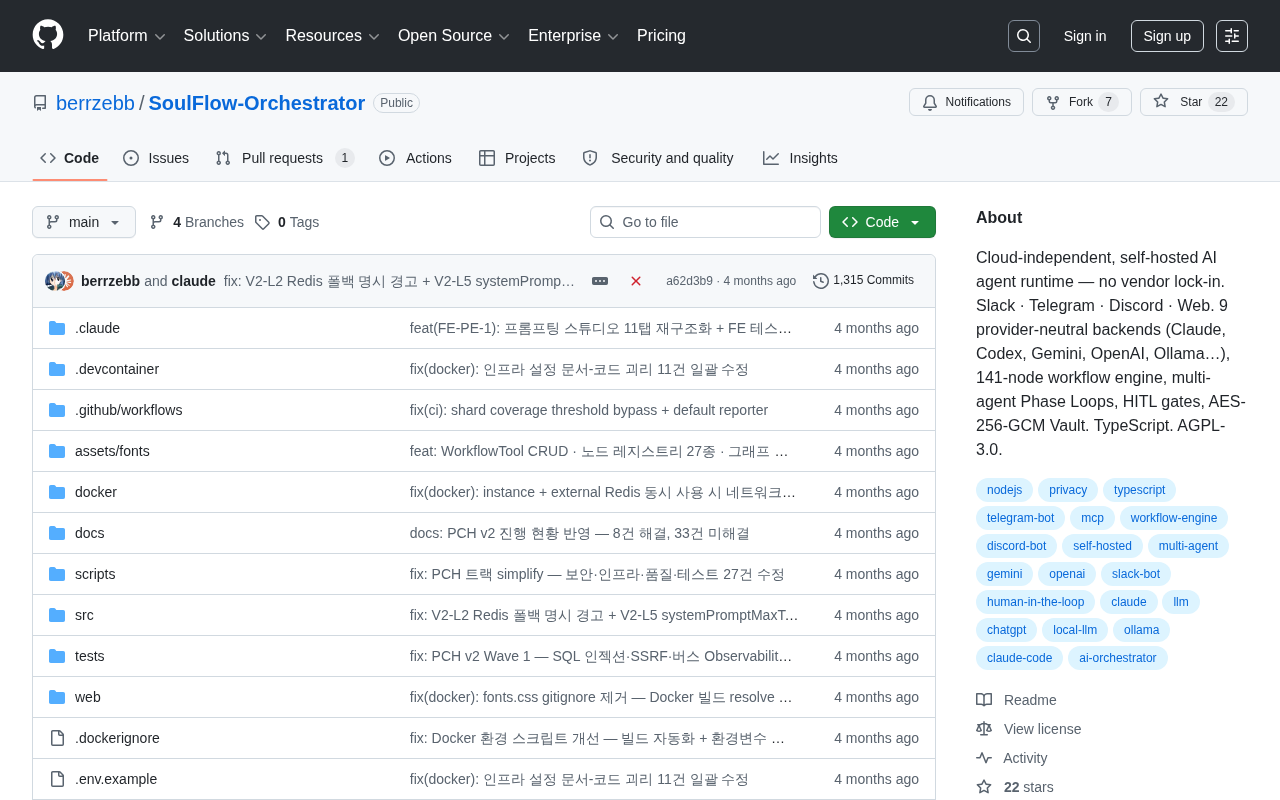
SoulFlow-Orchestrator: A Self-Hosted, Vendor-Lock-In-Free AI Agent Runtime
SoulFlow-Orchestrator is an open-source, self-hosted AI agent runtime with no vendor lock-in. Supports 9 neutral backends (Claude, OpenAI, Ollama), 141-node workflow engine, multi-agent loops, and HITL gates.
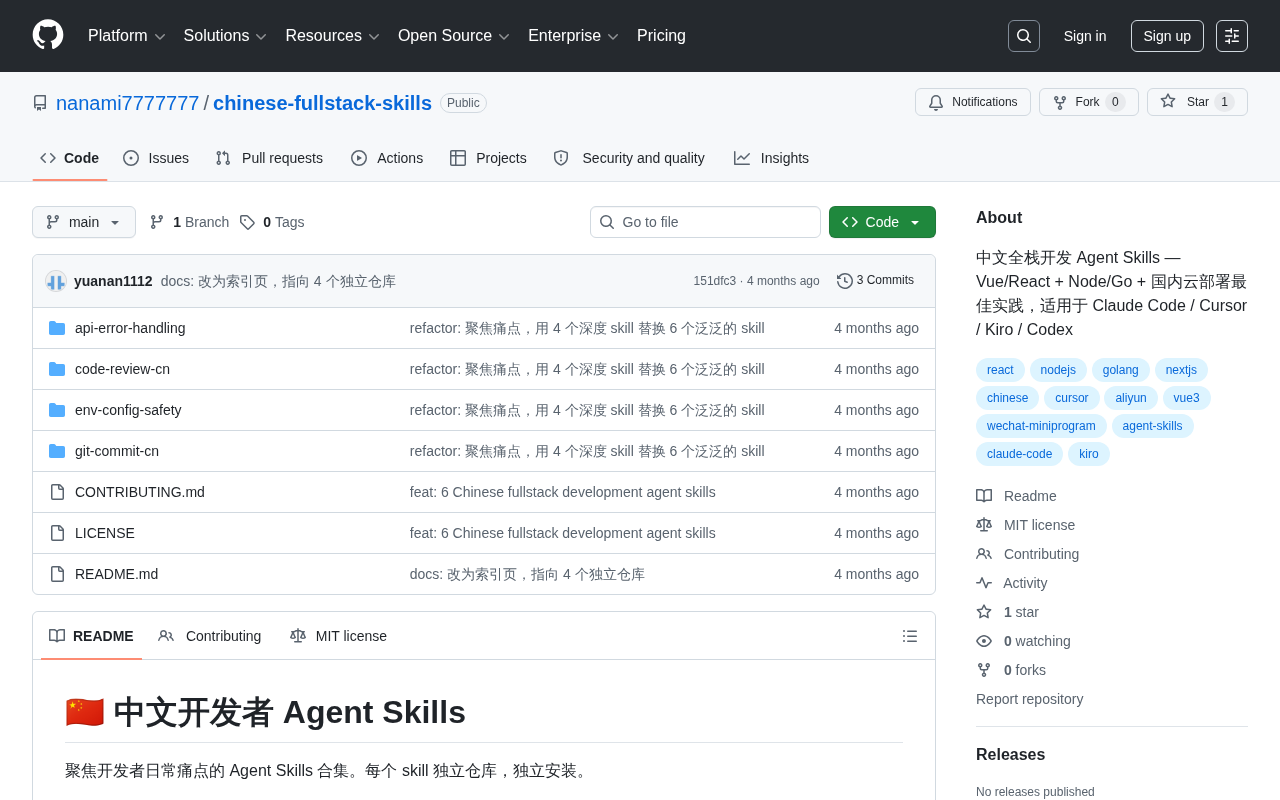
Chinese Full-Stack Agent Skills: A Skill Library Tailored for Domestic AI-Assisted Development
chinese-fullstack-skills is an Agent Skills library for Chinese full-stack development, covering Vue/React, Node/Go, and domestic cloud deployment best practices. Compatible with Claude Code, Cursor, Kiro, and Codex.
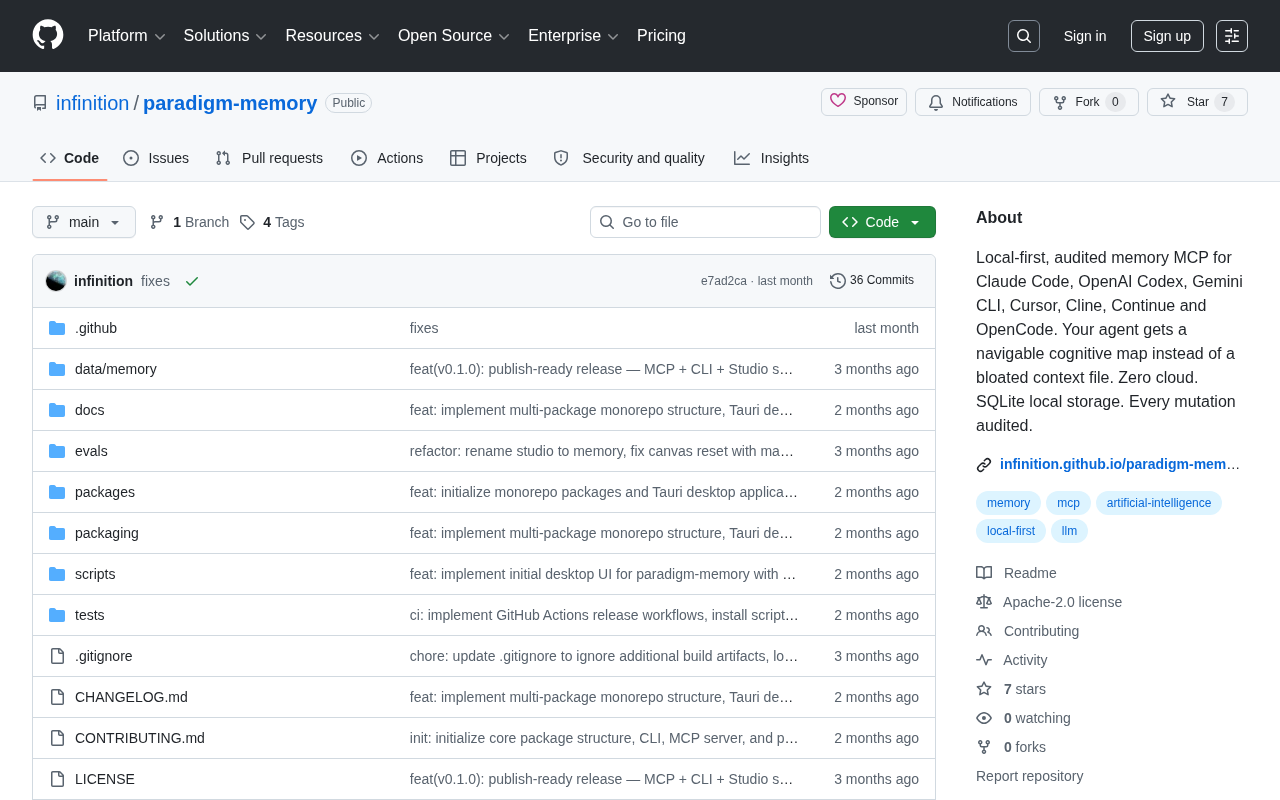
Paradigm Memory: A Local-First Memory System for AI Coding Assistants
paradigm-memory is a local MCP memory tool for Claude Code, Cursor, and Cline. It uses SQLite local storage, zero cloud, full audit trails, and a navigable cognitive map instead of bloated context files.