LabAgent: Building Reproducible AI Agent Systems for Research Laboratories
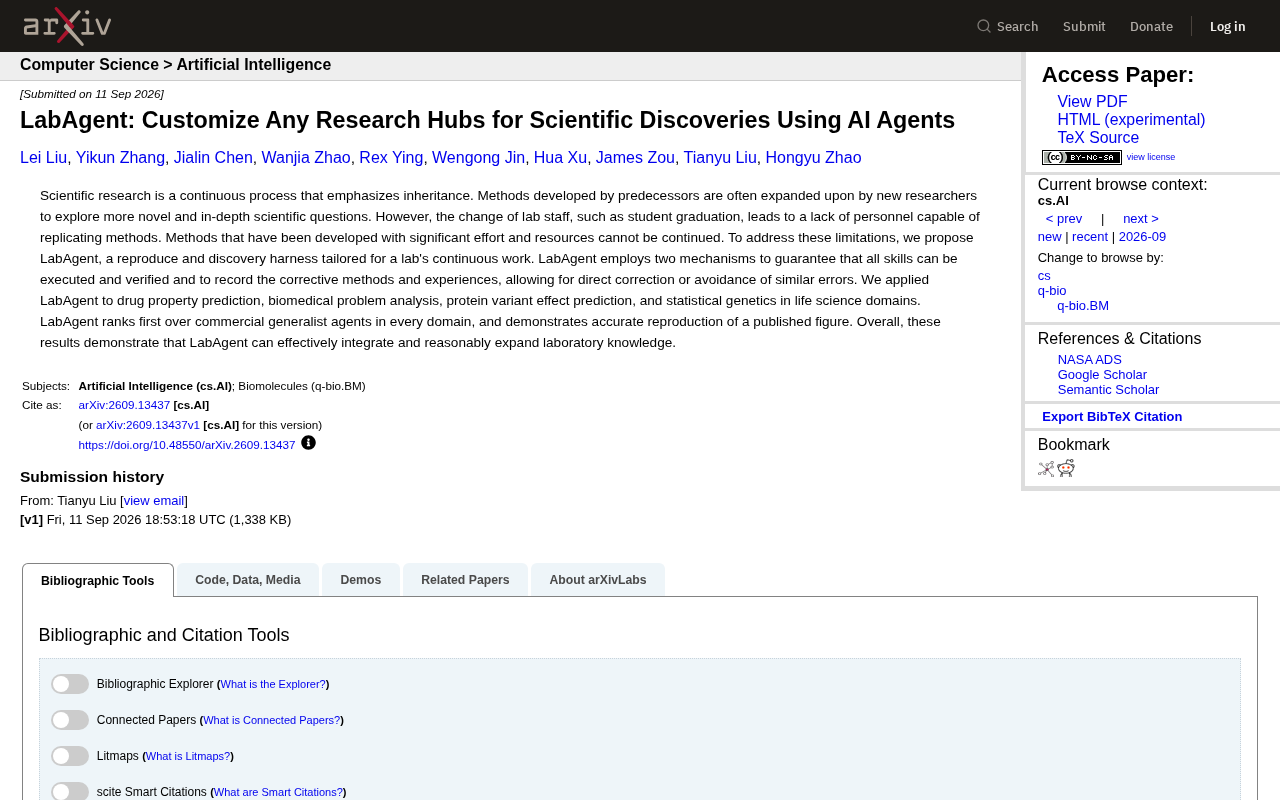
LabAgent uses AI agents to preserve and verify lab methods, solving the knowledge loss caused by researcher turnover.
Research laboratories have long faced a structural problem: core methods and expertise are tied to specific individuals and often cannot be reproduced after they leave. A new arXiv paper proposes LabAgent, an AI agent system that addresses this through two mechanisms — encapsulating lab skills as executable, verifiable units, and continuously logging error-correction experiences as collective institutional memory. Tested across drug property prediction, biomedical analysis, protein variant effect prediction, and statistical genetics, LabAgent outranked commercial generalist agents in every domain and successfully reproduced figures from a published paper.
The Problem of Scientific Continuity
Scientific research is a continuous process built on inheritance. Methods developed by predecessors are extended by those who follow, enabling researchers to explore newer and deeper scientific questions. In practice, however, the turnover of laboratory personnel — such as students graduating and moving on — frequently creates an awkward situation: methods developed at great cost in time and resources simply cannot be reproduced by anyone who remains, leaving them to wither away. A new paper on arXiv proposes a system called LabAgent, which aims to use AI agents to address this scientific knowledge transfer problem.
The Knowledge Gap in Research Labs
Every active research laboratory faces the same underlying anxiety: core methods are tied to specific individuals. An experimental workflow, data processing pipeline, or hyperparameter tuning strategy that a PhD student spent three or four years refining may exist only in their head and in a collection of scattered scripts. When they graduate and leave, the next person to take over often has to start from scratch — or may be completely unable to reconstruct the original work at all.
This "knowledge gap" not only wastes resources but significantly slows the cumulative pace of scientific discovery. The paper targets this exact pain point — asking how a laboratory's methods and expertise can be reliably preserved, validated, and passed on. LabAgent is therefore positioned with a clear purpose: it is a "reproduce and discovery harness" for the continuous work of a research laboratory.
LabAgent's Two Core Mechanisms
According to the paper's abstract, LabAgent ensures its reliability through two key mechanisms.
Executable and Verifiable Skills
The first mechanism ensures that all "skills" can be executed and verified. This means that the methods accumulated in a laboratory are no longer just descriptions on paper or legacy code that nobody can run — they are encapsulated into executable units that an agent can invoke and automatically check for correctness. This is critical for scientific reproducibility: only methods that can actually be run and produce checkable results carry any value as transferable knowledge.
In AI agent systems, a "skill" typically refers to an encapsulated, callable functional module — similar to a function or tool in software engineering. Popular agent frameworks (such as AutoGPT and Voyager) commonly employ a skill library design: as an agent completes tasks, it automatically generates and stores new skills that can be reused when similar tasks arise later, without requiring replanning. LabAgent's requirement for "verifiability" takes this a step further — skills must not only be callable, but must also have explicit success/failure criteria (such as unit tests or result comparisons) to ensure that each skill is scientifically correct and trustworthy. This design directly addresses the core need of research settings: code that runs is not the same as code that produces correct results. Only methods whose outputs have been independently verified hold transferable value across laboratory generations.
Recording Corrective Methods and Experience
The second mechanism handles the recording of "corrective methods and experience." When the agent makes an error during execution, the system saves the correction process and the associated lessons learned. This allows future encounters with similar problems to draw directly on existing fixes — or to proactively avoid the same class of errors altogether. In effect, this simulates the ability of an experienced researcher to "learn from their mistakes," converting personal hard-won knowledge into the system's collective memory.
Together, these two mechanisms address the two types of assets most easily lost in scientific knowledge transfer: methods that actually work and experience that helps avoid pitfalls.
Validation Across Multiple Life Science Domains
The research team tested LabAgent in four specific life science domains:
- Drug property prediction
- Biomedical problem analysis
- Protein variant effect prediction
- Statistical genetics
The results are compelling: across every one of these domains, LabAgent outperformed commercial generalist agents, ranking first in each. The paper also demonstrates that LabAgent can accurately reproduce figures from a published paper — a direct test of its reproducibility capabilities and an important marker of scientific credibility.
Its lead over generalist agents is particularly noteworthy. While general-purpose AI agents offer broad coverage, they often lack the domain depth and verifiability required for highly specialized research tasks. By structuring and operationalizing laboratory knowledge, LabAgent establishes a clear advantage in vertical domains.
Protein variant effect prediction refers to predicting how amino acid mutations in a protein sequence will affect the protein's function, stability, or binding affinity with other molecules. This task is of significant value in drug design and disease mechanism research — for example, determining whether a given genetic mutation will produce a pathogenic protein or alter the activity of a drug target. Statistical genetics, meanwhile, is the discipline that uses statistical methods to analyze associations between genetic variants and traits or diseases; genome-wide association studies (GWAS) are a classic application. Both fields require large numbers of specialized computational tools and data processing workflows, making them challenging for generalist agents — and therefore ideal testing grounds for LabAgent's vertical domain advantages.
Implications for AI-Assisted Research
From a broader perspective, LabAgent represents a new direction for AI in scientific research: rather than simply helping researchers write code or search literature, it takes on responsibility for knowledge management and continuity. The problem it addresses is not one of point-in-time efficiency, but of laboratory-level sustainability.
If systems like this mature and reach widespread deployment, laboratory methodologies will no longer be lost to personnel turnover. Instead, they will accumulate, iterate, and be passed down in a verifiable way. For fields like the life sciences that depend on long-term knowledge accumulation, this could meaningfully accelerate the pace of scientific discovery.
Of course, as a newly released preprint, LabAgent's validation remains concentrated in a few sub-domains of life science. Its ability to generalize across a broader range of disciplines — and its performance when actually deployed in real laboratory settings — remains to be seen. But the core idea it proposes — using AI agents to carry the continuous institutional knowledge of a research laboratory — undeniably touches on a long-overlooked yet critically important pain point in scientific work.
Related articles
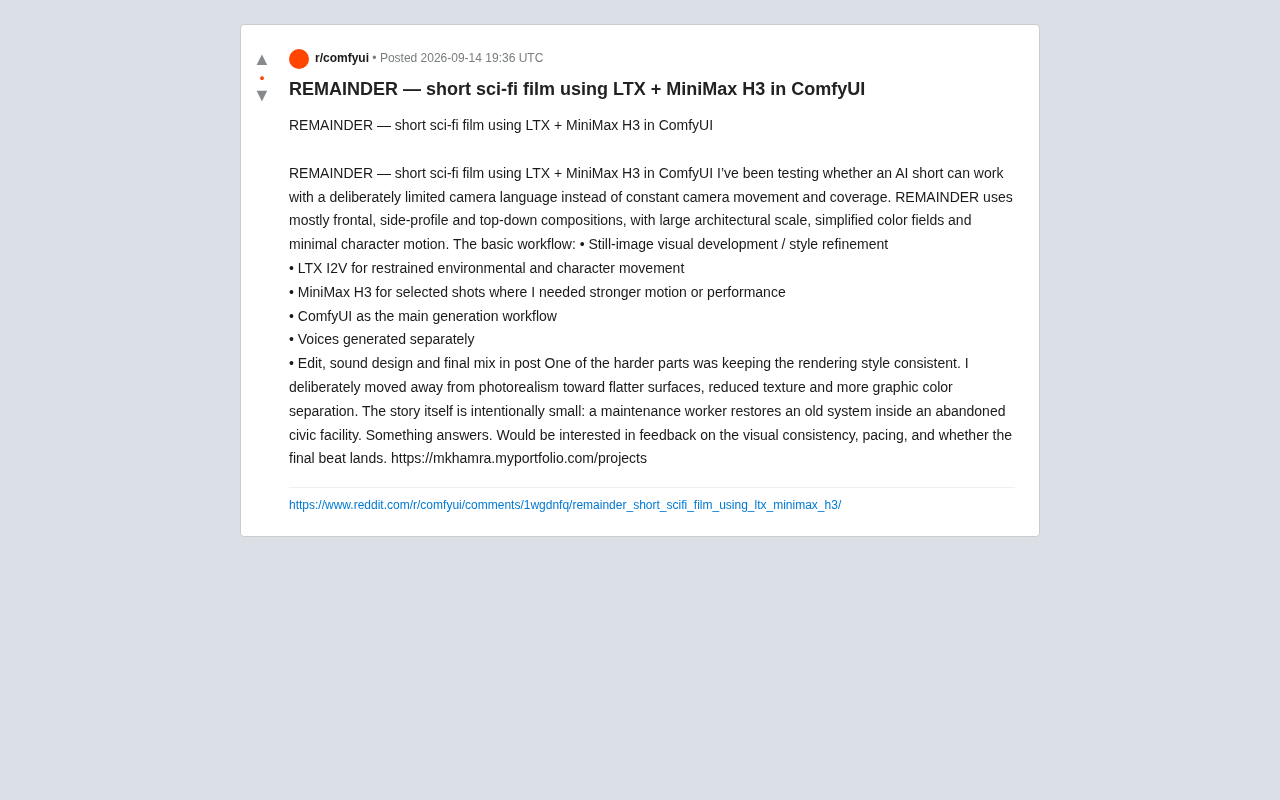
Building an AI Sci-Fi Short with LTX + MiniMax H3: Restrained Cinematography in ComfyUI
Sci-fi short REMAINDER uses LTX, MiniMax H3, and ComfyUI with restrained cinematography and flat aesthetics to solve visual consistency in AI filmmaking.
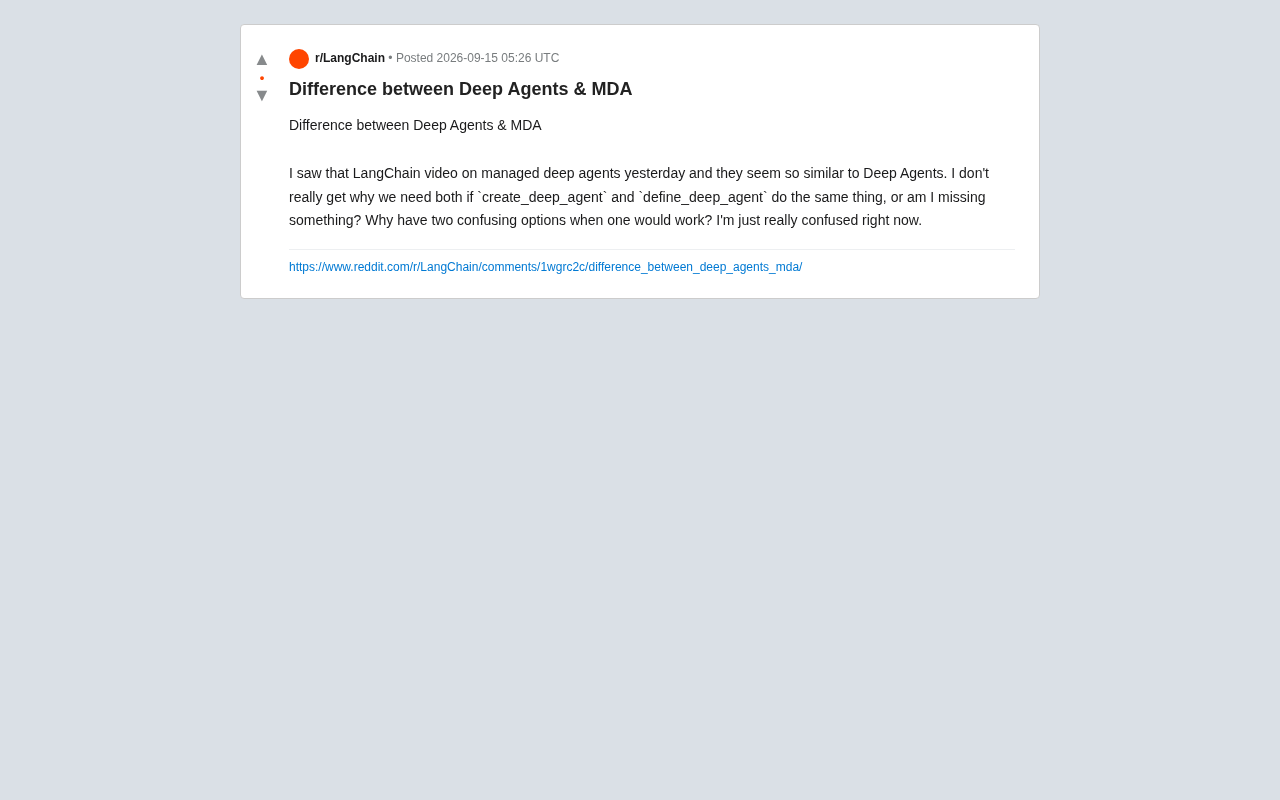
LangChain Deep Agents vs. MDA: Clearing Up the Confusion for Developers
What's the difference between LangChain's Deep Agents and MDA (Managed Deep Agents)? We break down create_deep_agent vs. define_deep_agent and help developers choose.
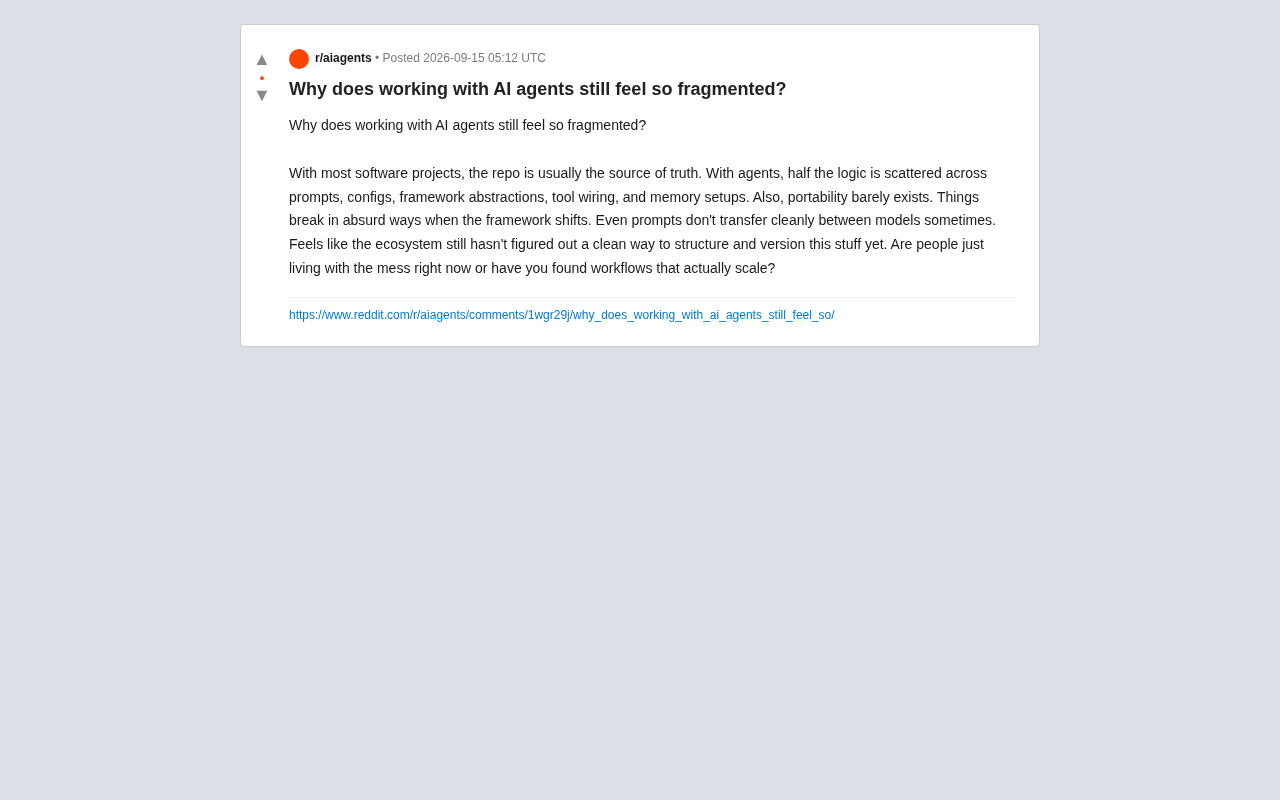
Why Is AI Agent Development So Fragmented? The Real Causes and How to Work Around Them
Why does AI Agent development feel so fragmented? Logic scattered across prompts, configs, and frameworks makes portability nearly impossible. Here's why — and how to cope.