LangChain Practical Guide: From RAG Applications to Intelligent Agent Development
A practical guide to LangChain covering RAG, Agents, architecture, and career paths for LLM developers.
LangChain is a core AI engineering framework that connects large language models with external tools, databases, and APIs. This guide covers LangChain's role in system architecture, the difference between foundational LLM research and application development, RAG and Agent development essentials, version selection strategy (0.3 vs 1.0), and the right mindset for learning the framework efficiently.
What Is LangChain: The Bridge Between LLMs and the External World
As AI application development heats up rapidly, LangChain has become an unavoidable core framework. It was created by Harrison Chase in October 2022, built on open-source large language models — notably, about a month before ChatGPT's official launch, which speaks to its founder's sharp foresight into the engineering challenges of deploying LLMs in production. At its core, LangChain is an AI engineering framework that chains large language models together with other components.
A large language model on its own is just a black box that takes text in and produces text out. To make it genuinely solve business problems, it needs to be orchestrated with external tools, databases, APIs, memory systems, and more. That's precisely where LangChain delivers value: it standardizes concepts like Prompt Templates, Memory, Chains, Agents, and Tools, so developers don't have to build this infrastructure from scratch and can focus on business logic instead.
Breaking down the name: "Lang" refers to Large Language Models, and "Chain" means a chain or pipeline — positioning LangChain as a "connector" or "middleware." A familiar analogy: just as a Java application needs JDBC to connect to a MySQL database, a business service needs a connection layer to interact with an LLM — and LangChain is precisely that framework.
Python, with its natural advantages in the AI ecosystem, forms a powerful pairing with LangChain. For the Java community, there's also LangChain4j, giving developers across different tech stacks a corresponding option.
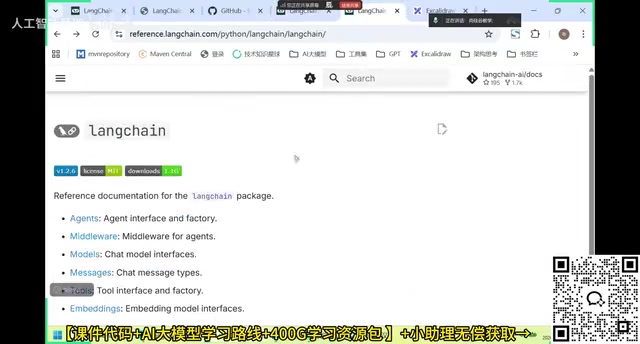
Two Levels of LLM Development: The 2% and the 98%
For developers coming from zero experience, or transitioning from Java or big data backgrounds, a critical question is: can I actually work in LLM development? To answer that, you first need to distinguish between two very different levels.
The 2%: Foundational General-Purpose LLM Research
This is a battlefield for a tiny minority. Foundational general-purpose models refer to the underlying research behind base models like Alibaba's Qwen, Baidu's ERNIE, and ByteDance's Doubao. Working in this space means contributing to low-level architecture work across codebases that can run into tens of millions — or even hundreds of millions — of lines.
The bar for these roles is exceptionally high — typically requiring a master's or PhD from a top-tier institution, with work spanning deep algorithmic areas like Encoder/Decoder decoding, hierarchical optimal combinations, and end-to-end generation estimation. The Encoder and Decoder concepts originate from Google's landmark Transformer architecture introduced in 2017: the Encoder maps input text into high-dimensional vector representations to capture semantic information, while the Decoder autoregressively generates output text token by token based on those encoded representations. The GPT series uses a pure Decoder architecture, BERT uses a pure Encoder architecture, and models like T5 use the full Encoder-Decoder structure. Compensation is excellent, but for the vast majority of developers, this path simply isn't realistic.
The 98%: LLM Application Development and Vertical Industry Deployment
This is where the real opportunity lies for most developers, and it breaks down into three categories:
- LLM Application Development: Wrapping LLM capabilities in code to build deployable products. For example, a parent helping their child with homework can photograph a problem and have a model like Doubao generate multiple solution approaches — this is already a reality.
- Vertical Domain LLMs: Taking a general-purpose base model and fine-tuning it for specific industries like law, healthcare, insurance, finance, or securities — think models like "Tongyi Law" that specialize in industry regulations and case law.
- Agent Development: Building intelligent assistants for specific business scenarios — supply chain management, financial invoicing, tax reporting, and more — like a "Jarvis"-style personal AI agent. This is considered one of the most important opportunity windows for developers right now.
Agent development is one of the most valuable directions to master deeply. Unlike simple chain-based calls, an Agent can autonomously decide which tools to invoke and in what order. It relies on the ReAct (Reasoning + Acting) paradigm under the hood: at each step, the LLM first reasons through the problem (Thought), then decides on an action to take (Action), observes the result (Observation), and iterates until the task is complete — giving AI systems human-like problem-solving capabilities such as decomposing tasks, querying databases, and calling external APIs.
Fresh graduates with LangChain4j (Java agents) or LangChain (Python agents) skills — even before receiving their diploma — can command starting salaries of 15K+ RMB per month in Tier-1 cities, giving them a strong competitive edge in the job market.

LangChain's Role in System Architecture
The most intuitive way to understand LangChain is to think of it as the Spring Boot of LLM application development. In traditional Java development, the familiar call chain is:
Controller → Service → DAO
In the world of LLM applications, the architecture evolves into:
UI Layer → Service Layer (LangChain) → Model Layer → Storage Layer
The concrete flow works like this: the frontend sends a request, which triggers the LangChain layer to execute business logic; LangChain then calls large models like Qwen, ERNIE, or Doubao; the response data is partially rendered on the frontend and partially stored in vector databases like Redis or Qdrant.
Vector databases are a key component in this architecture and deserve special attention: they're purpose-built for storing and retrieving high-dimensional vector data. The core principle is converting text into floating-point vectors via an Embedding model, then finding semantically similar content at query time by computing cosine similarity. This capability forms the foundation of RAG (Retrieval-Augmented Generation) — a technique that injects retrieved relevant context into the prompt, effectively addressing LLMs' knowledge cutoff limitations and hallucination problems. RAG is currently the most mainstream technical approach for enterprise LLM deployment, and it's one of LangChain's most central use cases.
LangChain's role in the overall development stack mirrors that of Spring Boot in the Java ecosystem — a core service framework that bridges everything together.
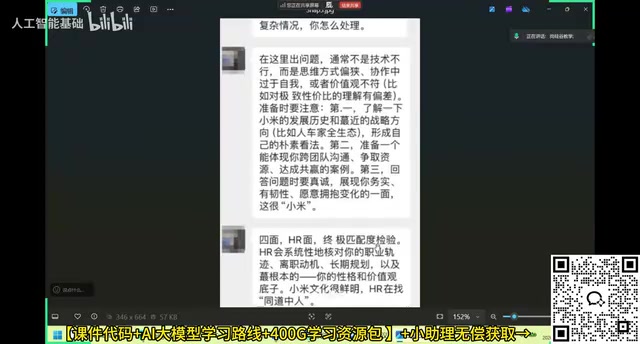
Official Documentation and Recommended Learning Resources
Essential Official Resources
For any technical learning, official documentation is the primary source of truth. Focus on the following:
- LangChain Official Docs: Make sure to select the Python version. The first two items in the core menu (core concepts) are the most important.
- Bilingual Documentation: The official Chinese version (
.cndomain) is available for side-by-side reading, helping overcome slow access and English reading barriers. - GitHub Issues: When you encounter bugs, search the LangChain repository's Issues — problem reports from developers worldwide often contain the answers you need.
- API Reference: Similar to looking up a Java API, LangChain splits functionality into individual modules like LangCore.
Version Selection: 0.1, 0.3, and 1.0
Here's the recommended strategy for choosing a version:
- Version 0.1: Worth knowing for context — focus on understanding its historical background and evolution.
- Version 0.3: Must master. It almost single-handedly laid the foundation for 1.0 and is the most stable and essential version. Understanding the 0.3 architecture diagram is as critical as understanding the JVM memory model.
- Version 1.0: Primarily API-level updates that black-box the underlying implementation. If you're working purely at the API call level, learning 1.0 is sufficient. But if you want to handle deep technical questions in interviews and become a true LLM application engineer, you must thoroughly understand 0.3's three-layer architecture.
The emphasis on version 0.3 comes down to one thing: it introduced LCEL (LangChain Expression Language) — a declarative syntax for composing chains that makes component orchestration clearer and more observable. Understanding how LCEL works internally is what enables you to handle performance tuning and debugging in real projects. While version 1.0 lowers the barrier to entry, it sacrifices some of that customizability and transparency.
LangChain's overall architecture consists of three layers: Core Infrastructure → Components → Deployment, with a monitoring system on the side. Additionally, the Integrations layer — which runs alongside LangChain — determines which LLM providers, tools, retrievers, and text splitters the framework supports. When browsing the official site, read LangChain, LangGraph, and Integrations together as a cohesive system.
The Right Learning Approach: Treat LangChain as a Toolbox
Here's a critical mindset to emphasize: don't try to memorize every LangChain API and feature. That's neither possible nor necessary.
The right approach follows the "minimum viable knowledge" principle — just understand the underlying logic of the six core modules, then look up whatever you need as you go. Treat LangChain as a toolbox, not a textbook to memorize from cover to cover.
The complete learning path covers: Building RAG Applications with LangChain → Local LLM Deployment with Ollama → Agent Development. RAG (Retrieval-Augmented Generation) is the most practical starting point — it combines vector database retrieval with LLM generation capabilities and is the standard solution for enterprise private knowledge base Q&A, document analysis, and similar use cases. Ollama lets developers run open-source models like Llama and Mistral locally, enabling full end-to-end debugging without relying on cloud APIs. The entire progression is built around LangChain's six core components — establishing a high-level mental model first, then practicing hands-on with each piece. The "macro overview before code" approach is the most effective way to get up to speed with any unfamiliar framework.
Key Takeaways
Related articles

Disaster and Glory of the Apollo Program: The History We Must Revisit Before Returning to the Moon
From the fatal Apollo 1 fire to Apollo 8's daring lunar orbit to Apollo 11's successful landing—revisiting the disasters, fears, and compromises of the Apollo program and their lessons for today's return to the Moon.
Netflix Trust Exercise Turns Into Firing Trap: Where Are the Boundaries of Corporate Trust?
A Netflix employee was fired after sharing private info in a trust exercise. We analyze the risks of corporate trust exercises and how employees can protect themselves.

AMD CDNA5 Architecture Deep Dive: Technical Evolution and the AI Computing Competition Landscape
Deep analysis of AMD's CDNA5 architecture covering Chiplet packaging upgrades, HBM memory evolution, and low-precision compute optimization, examining how AMD challenges NVIDIA's AI chip dominance.