LangChain4J in Practice: Building Enterprise-Grade Agents and RAG Applications from Scratch

LangChain4J lets Java developers connect LLMs to enterprise private data and business systems via a unified abstraction layer.
Based on a Bilibili tutorial, this article outlines the Java AI framework LangChain4J's core concepts and implementation path. It explains why LLMs cannot access enterprise private data, then introduces the three core components—Components (a JDBC-like unified model abstraction), Chains (orchestrating components into RAG pipelines), and Agents (interacting with external systems via TextToSQL)—followed by a four-step enterprise Agent deployment path and common pitfalls to avoid.
Enterprise AI application development is shifting from "calling APIs" to "building frameworks." LangChain4J, a highly regarded AI framework in the Java ecosystem, enables large language models to truly connect with enterprise private data and business systems. Based on a Bilibili tutorial, this article outlines LangChain4J's core concepts and practical pathways, helping developers with zero prior experience understand how to build privately deployed intelligent Agents in Java.
Why LangChain4J Is Needed: The Capability Boundaries of LLMs
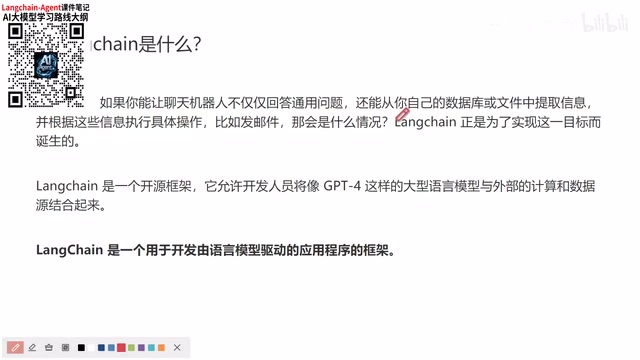
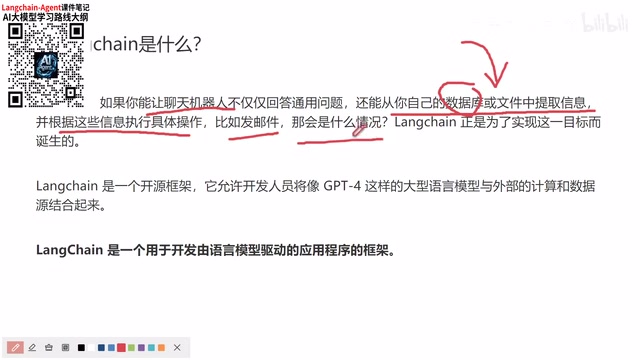
Writing a chatbot directly with the OpenAI or domestic LLM APIs can indeed handle basic conversations. But enterprise scenarios go far beyond that—you want AI to read internal company databases, parse local files, and even automatically send emails or invoke external tools based on instructions. These requirements cannot be fulfilled by LLM APIs alone.
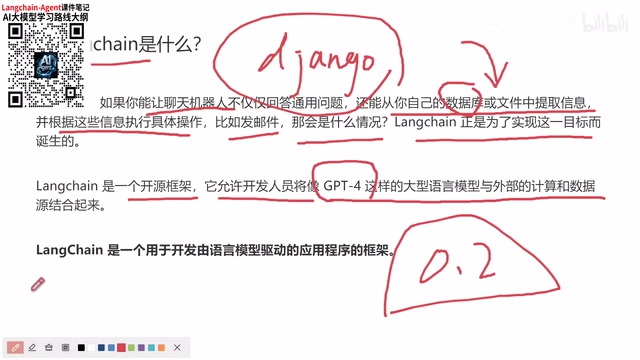
The root cause lies in data sources. LLM training data comes from publicly available internet information, whereas enterprise internal business data, customer records, and proprietary documents have never been exposed to the public internet. LLMs "cannot see" this data and therefore cannot answer questions or perform actions based on it. LangChain4J is an open-source framework born to bridge this gap—it allows developers to combine large language models with external computing resources and data sources.
According to the case in the Bilibili tutorial, a typical augmentation scenario is: provide the LLM with 100 industry papers, then ask continuous questions about these papers, and finally ask the AI to organize the Q&A history into an email and send it to a specified address. This kind of AI product—"with data, with memory, with actions"—is what enterprises truly need.
The Three Core Components of LangChain4J
LangChain4J achieves capability augmentation through three core concepts: Components, Chains, and Agents. Understanding these three is the foundation for subsequent hands-on practice.
Components: A Unified Model Abstraction Layer
The component layer provides interface encapsulation for LLMs. There are many LLMs on the market—OpenAI, Google, domestic GLM, etc. If you had to rewrite code every time you switch models, development costs would be extremely high. LangChain4J provides a set of abstract drivers that work similarly to JDBC drivers: developers program against a unified interface, while the underlying implementation can switch between different LLMs.
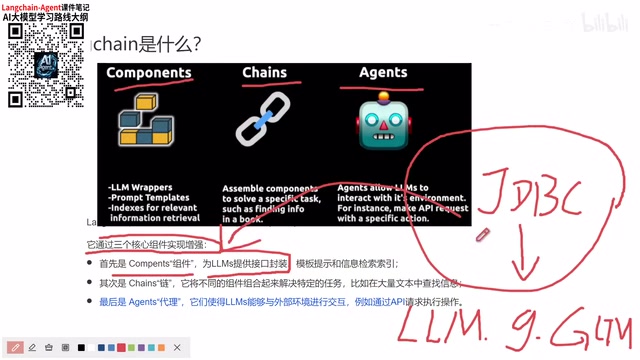
This means your business code barely needs to change to switch from a foreign model to a domestic one. The tutorial specifically emphasizes that this compatibility has been further expanded after framework upgrades, with mainstream LLMs both domestic and international now supported. For enterprises requiring private deployment or facing stricter compliance requirements, this flexibility is crucial.
JDBC (Java Database Connectivity) is the standard Java API for accessing relational databases. Developers program against unified Connection, Statement, and ResultSet interfaces, while specific database vendors (MySQL, Oracle, PostgreSQL) implement these interfaces through their respective drivers. When switching databases, business code barely needs to change—only the driver dependency and connection configuration. LangChain4J's model abstraction layer adopts exactly the same design philosophy: defining unified interfaces such as ChatLanguageModel and EmbeddingModel, with each model vendor providing corresponding implementation modules. Developers inject interfaces rather than concrete implementations, gaining the same decoupling benefits as JDBC—this is also the technical basis for the statement that "switching LLMs barely requires changing business code."
Chains: The Orchestrators of Components
The role of a chain is to combine different components to accomplish specific tasks. An AI product may simultaneously need an LLM, a relational database, a vector database, an Embedding model, and more. Chains connect these scattered components into an executable pipeline—this is also the origin of the framework's name "Chain."
In real projects, the RAG (Retrieval-Augmented Generation) process is a typical chain structure: document loading → vectorization → storage → retrieval → prompt assembly → LLM invocation. LangChain4J abstracts these steps into reusable chains, so developers only need to focus on business logic rather than low-level glue code.
RAG (Retrieval-Augmented Generation) is currently the most widely adopted LLM augmentation paradigm in enterprise deployments. Its core idea is: before calling the LLM to generate an answer, first retrieve the most relevant text fragments from the enterprise knowledge base, and splice these fragments into the prompt as context—so the model "answers while looking at the materials" rather than relying solely on training memory. This brings three direct benefits: first, answers can be based on private data, breaking through the boundaries of training corpora; second, it significantly reduces model "hallucinations" because answers are grounded in retrieved source text; third, knowledge updates require no model retraining—just update the documents in the vector library. Vectorization (Embedding) is a key step—it maps text into high-dimensional vectors, bringing semantically similar content closer together in vector space, thereby enabling retrieval by semantics rather than keywords.
Agents: Executors That Connect to the External World
Agents enable LLMs to interact with the external environment. For example, if you want the AI to analyze Django's official documentation, the agent can first scrape the document content and then hand it to the LLM for processing. Here, "external" includes both public websites and enterprise internal databases, CRM systems, and ticketing systems.
The tutorial gives an e-commerce scenario: provide JD.com product data to the AI to build an intelligent customer service or sales agent. The agent is responsible for acquiring data from external systems, while the LLM is responsible for understanding and generation—together they accomplish complex business actions. TextToSQL is a typical application of this capability—the agent converts natural language questions into SQL queries, extracts results from the database, and then the LLM organizes them into natural language answers.
TextToSQL (natural language to SQL) is a typical technical pathway for letting LLMs operate on structured data. The basic process is: provide the target database's schema information (table names, field names, field types, foreign key relationships, etc.) as context to the LLM, which translates the user's natural language question into an executable SQL statement; after execution, the query results are returned to the model to be organized into a natural language answer. The value of this approach lies in enabling non-technical staff to query business data in everyday language, but there are several key constraints in practice: schema information must be carefully trimmed to control context length, generated SQL must undergo syntax validation and permission restrictions to prevent accidental deletion or modification, and accuracy for complex multi-table join queries remains limited—typically requiring few-shot examples and human review mechanisms.
From Zero to One: The Implementation Path for Enterprise-Grade Agents
Combining the tutorial's approach, a privately deployed enterprise-grade Agent project roughly follows this path:
- Environment and dependencies: Introduce the LangChain4J core library and configure access credentials for the chosen LLM. The tutorial recommends that beginners first get the simplest conversation example running before gradually adding components.
- Data integration: Load enterprise documents and database schemas into formats the framework can recognize. For RAG scenarios, a vector library is needed to store document embeddings; for TextToSQL scenarios, the database schema must be provided as model context.
- Chain and agent orchestration: Combine components according to business needs. Customer service Q&A uses RAG chains, data queries use TextToSQL agents, and multi-step tasks use agents to schedule tools.
- Private deployment: Choose locally deployable open-source models or compliant domestic APIs to ensure data does not leave the enterprise boundary. The tutorial emphasizes that the framework's abstraction layer makes model switching extremely low-cost.
On a detail note, the tutorial likens LangChain4J to JDBC or the Spring framework—it is not the LLM itself, but infrastructure that integrates LLMs into the software engineering system. For Java developers, this lowers the barrier to entering AI application development: no need to master the Python ecosystem—you can build production-grade AI products with familiar engineering thinking.
Practical Advice and Common Pitfalls
When learning LangChain4J from scratch, it's easy to fall into two pitfalls. First, over-focusing on model tuning while neglecting engineering structure—in real enterprise projects, the model is just one link in the chain, and data pipelines and error handling often affect usability more. Second, skipping the basics and jumping straight to Agents—agent debugging complexity is far higher than ordinary chains, so it's advisable to master Components and Chains before entering the Agent stage.
One viewpoint that repeatedly appears in the tutorial deserves attention: the number of AI products deployed in the US is limited, with much effort concentrated on the models themselves; the real opportunity lies in combining AI with enterprise-specific data to accomplish concrete, human-centric tasks. This is precisely where LangChain4J's value lies—it turns LLMs from "chat toys" into "business tools."
For developers ready to get hands-on, it's recommended to start with the official documentation's introductory examples, first implementing a small RAG application that can read local Markdown files and answer questions, then gradually expanding to vector libraries and TextToSQL capabilities. The framework's abstract design makes each expansion step relatively smooth.
One-line Summary
LangChain4J enables Java developers to connect LLMs to enterprise private data and business systems through a unified abstraction layer, building privately deployed Agents.
Paragraph Summary
Based on a Bilibili tutorial, this article systematically outlines the core concepts and implementation paths of the Java AI framework LangChain4J. It begins by pointing out that LLMs, whose training data comes only from public internet information, cannot access enterprise private data or perform external actions—this is the pain point LangChain4J addresses. The framework augments capabilities through three core concepts: Components provide a unified model abstraction layer similar to JDBC, so switching between domestic and international LLMs barely requires changing business code; Chains orchestrate components such as LLMs, databases, vector libraries, and Embedding models into executable pipelines like RAG; Agents enable models to interact with external websites, enterprise databases, and CRM systems, with TextToSQL as a typical scenario. The article then presents a four-step implementation path for enterprise-grade Agents—environment setup, data integration, chain and agent orchestration, and private deployment—and warns learners to avoid two pitfalls: over-focusing on tuning and skipping the basics to jump straight to Agents. It recommends starting with a small RAG application that reads local Markdown files.
Related articles

JobRunner MCP Server: AI Agents Can Now Fix Failed Java Jobs
JobRunner launches an open-source MCP server enabling AI agents to view cluster status, diagnose failures, and recover Java jobs—incident response from any cloud coding environment or existing agent.

MLAI Digital Launches 9 Security Agents: MCP Server Safeguards the Full Lifecycle of Agentic AI
MLAI Digital launches Security MCP Server with nine built-in specialized security agents covering vulnerability discovery, attack simulation, prompt injection detection, API and infrastructure assessment, and accelerated remediation—embedding security validation across the full Agentic AI lifecycle from development to production.

Running Isaac Lab on H100 GPUs: Exploring Better Approaches
Exploring optimization methods for running Isaac Lab on NVIDIA H100 GPUs, including MIG configuration, mixed precision, TensorRT acceleration, and community experience to improve robotics simulation and reinforcement learning efficiency.