Leaked Images of Motorola's Wide-Screen Foldable Razr Flex Surface

Leaked images of the Motorola Razr Flex surface, with its wide-screen design potentially becoming a new consensus for foldables.
Leaked images of the Motorola Razr Flex shared by SammyGuru show two colorways and multi-angle views, corroborating earlier wide-screen design clues from a single Reddit leak. The two independent sources match on body proportions, boosting the credibility that wide-screen will become the default foldable design. The wide-screen ratio is closer to mainstream bar phones and more practical for video viewing and split-screen multitasking, suggesting the foldable category is moving from form-factor innovation to practical experience.
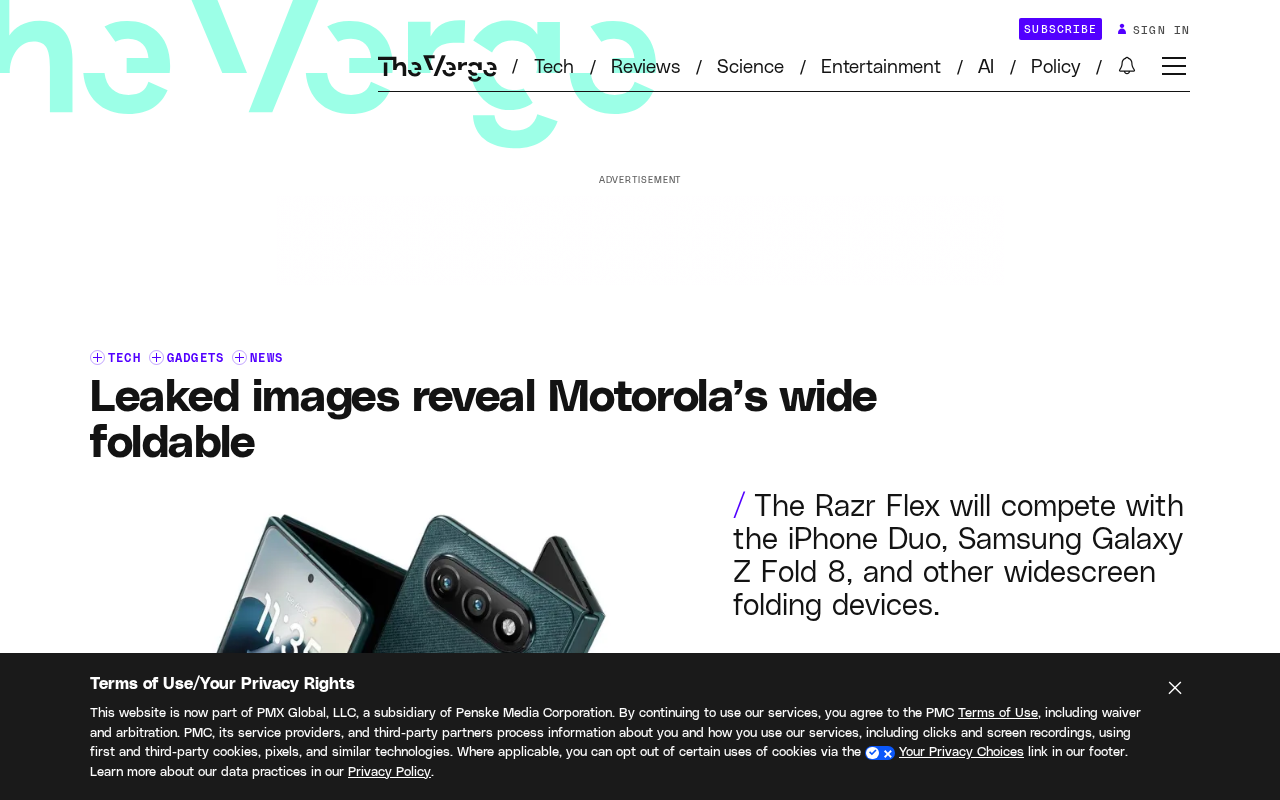
The design direction of foldable phones appears to be undergoing a collective shift. According to the latest leaked images shared by SammyGuru, Motorola's next-generation foldable phone, the Razr Flex, is shown from multiple angles in two colorways. This further corroborates speculation sparked by an earlier single leaked image on Reddit: that a wide-screen design may become the mainstream form factor for future foldables.
Wide-Screen Design: A New Consensus for Foldables?
Judging from the leaked images, the most notable change in the Razr Flex is its body proportions. Unlike traditional clamshell-style devices with their elongated form, this device unfolds into a wide-screen ratio closer to that of a tablet. SammyGuru's images show two different colorways, presenting the hinge, outer screen, and body contours from multiple angles.
This design direction is not unique to Motorola. A single photo previously circulating on Reddit had already sparked discussion about wide-screen folding, and SammyGuru's new images provide supporting evidence from more viewpoints. The leaked information from two independent sources corroborates each other on the core design, significantly raising the credibility of the judgment that "wide-screen will become the default foldable design."
Clamshell foldables (such as the Samsung Galaxy Z Flip series and Motorola Razr series) typically have an unfolded screen ratio close to 21:9 or even more elongated, in order to maintain the grip width of a traditional bar phone when folded. Wide-screen foldables (or "passport-style" foldables) adopt a horizontal folding approach similar to the Samsung Galaxy Z Fold series, with an unfolded screen ratio close to 4:3 or 16:10—closer to a tablet's visual proportions. The core difference between the two form factors lies in the folding axis direction and usage logic: clamshell emphasizes portability and a retro look, while horizontal wide-screen folding focuses on large-screen productivity and content consumption after unfolding. Understanding this form-factor classification helps assess the product positioning shift implied by the Razr Flex leaks.
Multi-Source Cross-Validation of Leaked Information
The Complete Image Set from SammyGuru
The images shared by SammyGuru this time cover the front, back, and sides of the Razr Flex, and show two color schemes. The images reveal the outer screen's form when the device is folded, as well as the noticeably wider screen ratio when unfolded. These details are crucial for judging the device's positioning—a wide screen means a user experience closer to that of a traditional smartphone, rather than merely "a foldable tablet."
"Cross-validation" in tech product leaks refers to the method of increasing information credibility by having multiple independent sources point to the same design detail. A single leaked image may come from an early engineering prototype, a misattributed render, or even a deliberately released decoy, so the industry typically uses the consistency of information across different sources (such as tipsters, supply chain, and certification databases) as a basis for judgment. The match in body proportions between SammyGuru and the single Reddit image means the leaked information has been corroborated by at least two independent channels, which is more valuable than a single piece of evidence. However, cross-validation still cannot rule out the possibility that both parties referenced the same original leak source, and the final design must still be subject to the official release.
Early Clues from the Single Reddit Image
The single leaked photo previously circulating on Reddit, though limited in information, had already hinted at a wide-screen design. SammyGuru's new image set is consistent with this early photo in body proportions, forming cross-validation. In tech product leaks, images from a single source often carry the risk of misjudgment, but when multiple independent sources point to the same design direction, the reliability of the information increases significantly.
What Wide-Screen Folding Means
A wide-screen design has a substantial impact on the use cases of foldable phones. The elongated screen of clamshell devices after unfolding has inherent limitations for watching videos and split-screen multitasking, while a wide-screen ratio is closer to the visual experience of mainstream bar phones, offering advantages in both content consumption and productivity scenarios.
If wide-screen truly becomes the default design direction for foldables, it means the entire category is transitioning from "form-factor innovation" to "practical experience." Early foldable phones sold themselves on the folding action itself, whereas wide-screen designs place the emphasis on the actual value of use after unfolding. The Motorola Razr series previously distinguished itself by recreating the classic Razr look; if the Razr Flex's wide-screen shift is real, it will be a significant adjustment for the product line.
Split-screen multitasking (Multi-window) is one of the core software selling points of foldable phones, referring to running two or more app windows simultaneously on the same screen. The elongated screen of clamshell devices after unfolding offers limited width per app in vertical split-screen, compromising the video playback and document editing experience; a wide-screen ratio, however, can provide a column layout closer to a tablet in horizontal split-screen, with a larger usable area for app adaptation. This is also why wide-screen foldables are considered more conducive to productivity scenarios—the physical screen ratio sets the upper limit of split-screen efficiency, and software optimization can only work within that given ratio.
Position in the Competitive Landscape
Competition in the foldable market is intensifying, with manufacturers exploring different form-factor approaches. Motorola's choice of the wide-screen route differentiates it from other foldable products on the market. The two colorways shown in the leaked images also indicate that Motorola continues the Razr series' stylized approach in industrial design.
Currently, leaked information about the Razr Flex remains focused on appearance; key details such as specific screen specifications, hinge durability, and software adaptation have not yet been disclosed. But judging from design trends, the race for wide-screen foldables has begun, and whether Motorola can seize the initiative in this direction with the Razr Flex depends on the level of polish when the product is ultimately delivered.
The hinge of a foldable phone is the key mechanical component determining durability and crease control, and it is also the core of technical differentiation among manufacturers. Current mainstream solutions include water-drop hinges (which allow the screen to form a water-drop curve when folded, reducing creases) and multi-link hinges (which support multi-angle hovering). The number of hinge parts, material strength, and tolerance control directly affect the device's opening feel and lifespan, and are also among the hardest information to obtain during the leak stage. If the Razr Flex adopts a wide-screen form, its hinge design will need to withstand a larger screen area and a different folding radius, placing higher demands on structural engineering—an important observation point for judging product maturity.
One-line Summary
Leaked images of the Motorola Razr Flex surface, with the wide-screen design potentially becoming a new consensus for foldables.
Paragraph Summary
Leaked images of Motorola's next-generation foldable phone, the Razr Flex, were shared by SammyGuru, showing two colorways and multi-angle views and corroborating earlier wide-screen design clues from a single Reddit leak. The two independent sources corroborate each other on body proportions, raising the credibility of the judgment that "wide-screen will become the default foldable design." The article argues that a wide-screen ratio is closer to mainstream bar phones and more practical for video viewing and split-screen multitasking, meaning the foldable category is transitioning from form-factor innovation to practical experience. If the Razr Flex's wide-screen shift is real, it will be an important adjustment for the Razr product line from recreating a classic look to practical experience. Currently, leaked information remains focused on appearance, and key details such as screen specifications, hinge durability, and software adaptation have not yet been disclosed.
Related articles

From 0 to 1: Vibe Coding an AI Knowledge Base — A Practical Retrospective and Tech Stack Breakdown
A retrospective on building the AI knowledge base OilBook from scratch with Vibe Coding: Next.js+Neon stack, Oil Dev Skill workflow, Stripe paywall security, interview-style writing, AI-flavor control, and Vercel deployment.

GLM-5.4 Hands-On: Native Vision Meets a New Vibe Coding Workflow
Hands-on with Zhipu GLM-5.4: native vision tested across a 3D product demo, pure-code video generation, and remote-control Vibe Coding, compared with GPT-6.2 and Gemini Neon.

AI and Humans Claim to Prove the Riemann Hypothesis: Machine-Verified, Yet Nobody Can Understand It
Anthropic mathematician and AI Claude claim to prove the Riemann Hypothesis with 17 million lines of Lean code, machine-verified but unreadable by humans. This article analyzes the event, the zero proportion record from 41.6% to 67.2%, and the gap between machine verification and human understanding.