Learning AI Agent Development from Scratch: An Open-Source Tutorial Worth Bookmarking
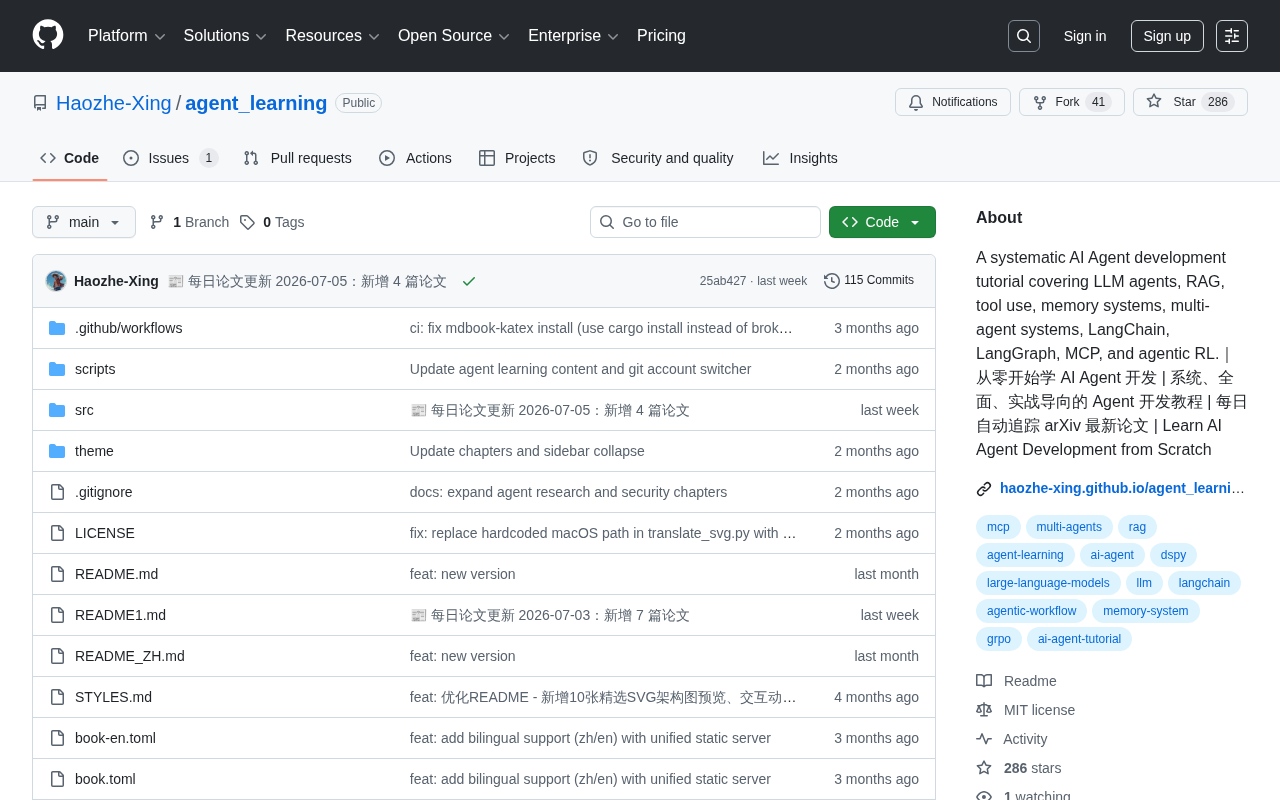
GitHub project agent_learning offers a structured AI Agent dev tutorial with daily arXiv paper tracking.
`agent_learning` is a GitHub open-source project positioned as a systematic, comprehensive, and practice-oriented tutorial for learning AI Agent development from scratch, available in both Chinese and English. Its standout feature combines a structured learning path with daily automated arXiv paper tracking, creating a closed loop for both building fundamentals and staying current with research. With 142 stars and 19 forks, it's in an early growth stage — best suited for beginners seeking a structured path and developers who prefer learning by doing. Pair it with official docs for LangChain, LlamaIndex, or other frameworks for best results.
AI Agents are rapidly becoming the core paradigm for deploying large language model applications in the real world. Yet for developers, there's a significant gap between grasping the concept and actually building something that works. An open-source project on GitHub called Haozhe-Xing/agent_learning aims to bridge that gap — positioning itself as a systematic, hands-on tutorial for learning AI Agent development from scratch. It also comes with a distinctive feature: daily automated tracking of the latest papers on arXiv.
The project has accumulated 142 stars and 19 forks so far. Its primary language is listed as HTML, which typically means the tutorial content is organized and presented as web-based documentation.
A Practical Learning Path for AI Agent Development
For anyone looking to get started with AI Agent development, the biggest challenge is rarely a lack of resources — it's that there are too many scattered resources with no clear progression. The core value proposition of agent_learning is being "systematic, comprehensive, and practice-oriented." It aims to consolidate fragmented knowledge into a coherent, step-by-step learning path.
Rather than stopping at theory, the project emphasizes hands-on practice. This means learners don't just understand the architectural principles behind Agents (such as planning, memory, and tool use) — they also translate that understanding into working code. For beginners, this learn-by-doing approach tends to build a more complete mental model than reading theory alone.
The project also provides bilingual titles in both Chinese and English ("Learn AI Agent Development from Scratch"), suggesting it's designed with an international audience in mind, not just the Chinese-speaking community.
The core architecture of an AI Agent typically consists of four modules: Planning breaks complex tasks into executable sub-steps, with common implementations including reasoning paradigms like ReAct and Chain-of-Thought; Memory covers both short-term memory (conversation history within the context window) and long-term memory (external storage such as vector databases); Tool Use enables the Agent to call external capabilities like search engines, code interpreters, and APIs; and Action is the execution layer where the Agent translates decisions into real operations. Understanding how these four modules work together is the key leap from "calling an LLM API" to "building a real Agent system." Popular frameworks today — such as LangChain's AgentExecutor, AutoGen's multi-agent collaboration, and OpenAI's Function Calling mechanism — are all engineering implementations built on top of this foundational architecture.
Daily arXiv Tracking: Combining Learning with Staying Current
The most interesting differentiating feature of this project is its built-in daily automated tracking of the latest arXiv papers. AI Agents are an extremely active area in both academia and industry, with new papers appearing almost every day. For learners, mastering the fundamentals isn't enough — knowing how to stay on top of the latest research is equally important.
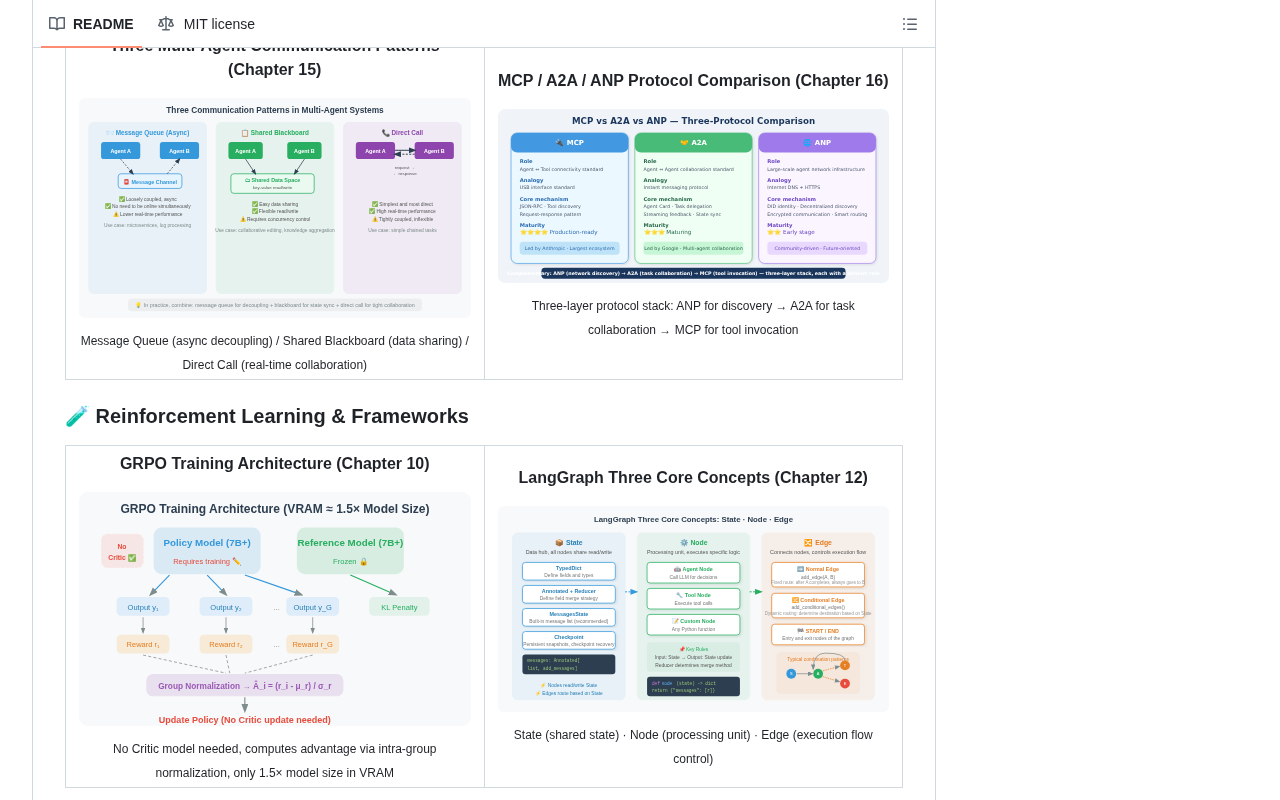
Combining a structured tutorial with paper tracking in the same project creates an interesting closed loop: systematic tutorials build a solid foundation, while the automated paper feed keeps learners sensitive to cutting-edge developments. This design reduces the effort required to manually search and filter papers, making "continuous learning" far more actionable.
That said, the quality and relevance of automatically tracked papers depends heavily on the filtering mechanism. Simple keyword-based scraping can introduce a lot of noise; but if intelligent filtering and summarization are involved, the practical value increases significantly. This is something readers will need to evaluate through hands-on use.
arXiv is a preprint server maintained by Cornell University. The vast majority of cutting-edge AI research gets uploaded here before formal publication, making it the go-to channel for researchers tracking the field. For AI Agent-related work, papers are typically found under cs.AI (Artificial Intelligence), cs.CL (Computation and Language), and cs.LG (Machine Learning). Common technical approaches for automated tracking include: scheduled keyword-based fetching via the arXiv official API, daily automation through GitHub Actions, and using LLMs to score or filter abstracts by relevance. The practical value of such tools hinges on the precision of their keyword strategy and their ability to filter out noise — keywords like "AI Agent," "LLM Agent," "Tool Use," and "Agentic" each have different coverage, and how they're combined directly determines the quality of what gets surfaced.
A Realistic Assessment: Current State and Target Audience
Objectively speaking, 142 stars and 19 forks puts this in the early-growth stage — it hasn't yet become a top-tier community resource. This means the content may still be actively evolving and not fully mature, but it also means there's room for continuous improvement through community feedback.
This project is worth paying attention to for a few specific types of people:
- AI Agent beginners: Those who need a structured learning path rather than a patchwork of scattered tutorials;
- Developers who want hands-on practice: The project's emphasis on practical application suits a learn-by-doing approach;
- Researchers or engineers who need to stay current: The built-in arXiv tracking can reduce the overhead of manually searching for new papers.
For seasoned practitioners who already have extensive Agent development experience, the marginal value of an introductory-level tutorial is likely limited — it may be more useful as a knowledge refresher or paper-tracking tool.
The Value and Limitations of Open-Source Tutorial Projects
In recent years, GitHub has seen an explosion of "learn X from scratch" open-source tutorial projects, with AI Agents being just the latest hot topic. The value of these projects lies in their low barrier to entry and free accessibility — they help more people clear that first hurdle when getting into a new technical domain.
But they also share a common set of challenges: keeping content up to date, ensuring example code is reproducible, and avoiding becoming obsolete as LLM and Agent frameworks evolve rapidly. agent_learning addresses the "staying relevant" challenge head-on by integrating daily arXiv tracking — and that's a genuine differentiator compared to similar projects.
For developers looking to get started with AI Agent development, it's worth treating this as one reference resource within a broader learning plan — ideally used alongside official framework documentation for tools like LangChain, LlamaIndex, and other mainstream Agent frameworks. The greatest appeal of any open-source tutorial has never been just the content itself, but the community ecosystem behind it — one that can keep contributing and improving over time.
Related articles

Spotit: Turn Every Mac App into a Real-Time Interactive Tutorial
Spotit is an AI-powered interactive tutorial tool for Mac. Press a shortcut, ask in plain language, and it highlights exactly where to click next — guiding you through any Mac app as you learn by doing.
OpenCode: The Open-Source Coding Agent That Hit 150K GitHub Stars
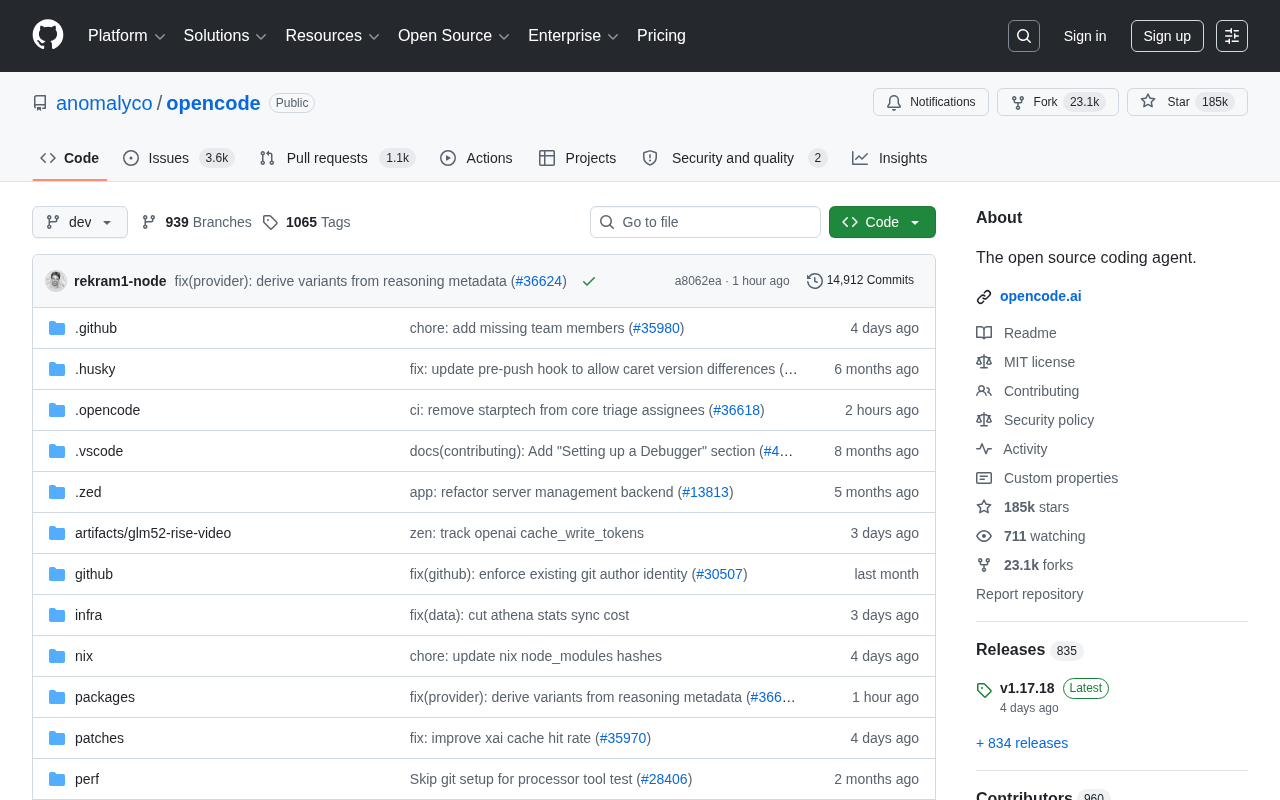
OpenCode is an open-source TypeScript coding agent with 150K+ GitHub stars. Learn about its features, advantages, and use cases for AI-powered development.
Altman Speaks Out: OpenAI IPO Won't Happen Before 2027 at the Earliest
Sam Altman tells Fortune that OpenAI won't IPO before 2027. We break down why, what the capped-profit structure means, and what it signals for AI capital markets.