Learning AI Large Language Models from Scratch: A Systematic Learning Path from Principles to Practice

A structured learning path for mastering AI large language models from zero to production-ready.
This article outlines a systematic approach to learning AI large language models from scratch, organized into three progressive stages: Fundamentals (principles, local deployment, Prompt Engineering, RAG, fine-tuning), Intermediate (Agent development, MCP protocol, multi-Agent collaboration, Context Engineering), and Hands-On Practice (enterprise knowledge base Q&A, intelligent customer service, automation Agents). It emphasizes avoiding fragmented learning, understanding underlying principles, and taking a project-driven approach.
Why Most AI Tutorials Are Hard to Follow Through
Recently, a systematic AI large language model (LLM) course designed for absolute beginners has attracted significant attention. In the course introduction, the creator raised a thought-provoking observation: roughly 85% of AI tutorials on the market suffer from obvious structural problems — fragmented content, teaching only API calls without explaining underlying principles, and poor logical organization. This causes beginners to frequently fall into one of two extremes.
The first extreme is staying on the surface. Many courses repeatedly teach students how to write prompts, yet never explain why models respond differently to different prompts. After completing such courses, learners can only "copy the pattern" and feel helpless when facing new scenarios. To understand the reason behind this, you need to grasp the underlying mechanism of Prompt Engineering: large language models are essentially predicting the next most probable token based on the input context. Different prompts activate different knowledge pathways within the model's parameters, so subtle changes in wording, structure, and examples can significantly affect output quality. Common techniques like Zero-shot prompting, Few-shot prompting, and Chain-of-Thought prompting are all fundamentally helping the model better understand task intent and invoke relevant internal knowledge representations. Without understanding these principles, you can only mechanically imitate rather than flexibly apply.
The second extreme is the opposite — jumping straight into Transformer architecture math formulas and attention mechanism derivations, instantly scaring off beginners who were initially excited about AI. Transformer is a revolutionary neural network architecture proposed by Google's team in the 2017 paper Attention Is All You Need. Its core innovation — the Self-Attention mechanism — allows the model to simultaneously attend to all other positions in a sequence when processing each position, assigning weights based on relevance. Virtually all mainstream large language models today (the GPT series, Claude, LLaMA, Qwen, etc.) are built on the Transformer architecture. Understanding its basic working principles is indeed an essential step toward deeply mastering LLM technology, but starting directly with complex mathematical derivations is clearly not suitable for beginners.
This dilemma of "either too shallow or too deep" essentially stems from the lack of a complete learning path from beginner to practitioner. For newcomers looking to enter the AI field, finding a course with a coherent knowledge system and reasonable difficulty progression is often far more valuable than blindly bookmarking dozens of scattered videos.
Systematic Reorganization: A Three-Phase Learning Framework — Fundamentals, Intermediate, and Hands-On
The core approach of this course is to "systematically reorganize" LLM knowledge, linking scattered technical concepts into a complete knowledge chain divided into three progressive stages: Fundamentals, Intermediate, and Hands-On Practice.

Fundamentals: Building a Solid Foundation in LLM Principles and Tools
The fundamentals phase starts with how large models work and local deployment, covering core concepts including Prompt Engineering, LLM API calls, RAG (Retrieval-Augmented Generation), fine-tuning, and distillation. The logic behind this arrangement is sound: first help learners understand "what the model is and how to get it running," then learn how to interact with it, and finally explore advanced model customization techniques. This sequence follows natural cognitive patterns and avoids the frustration that comes from dumping formulas upfront.
Among these, RAG (Retrieval-Augmented Generation) is one of the most important technical paradigms in current AI applications. Its core idea is: before the LLM generates an answer, first retrieve document fragments relevant to the user's question from an external knowledge base, then feed these retrieved results as context into the model so it generates answers based on real data. RAG addresses two core pain points of large models — the knowledge cutoff date limitation and the hallucination problem. A typical RAG system involves document chunking, vector embedding, vector database storage, semantic retrieval, and prompt assembly — making it the mainstream technical solution for enterprise knowledge base Q&A and intelligent customer service scenarios.
Fine-tuning and distillation represent two important paths for model customization. Fine-tuning involves further training a pre-trained large model using domain-specific data. Common methods include full-parameter fine-tuning and parameter-efficient fine-tuning (PEFT) represented by LoRA (Low-Rank Adaptation), where the latter dramatically reduces computational costs by training only a small number of newly added parameters. Distillation uses the output of a large "teacher model" to train a smaller "student model," enabling the smaller model to retain most capabilities while reducing parameter count and inference cost — the open-source distilled versions of DeepSeek-R1 are a classic application of this technique. Mastering these two techniques is key to transforming general-purpose LLMs into vertical domain-specific models.
One noteworthy detail: the fundamentals phase places "local deployment" early in the sequence. This is a pragmatic choice — being able to get a model running with your own hands gives learners strong positive feedback and lays the environmental groundwork for subsequent hands-on practice.
Intermediate: From Calling Models to Building AI Agents
The intermediate phase shifts focus to Agent development, including the MCP protocol, multi-Agent collaboration, workflow orchestration, and other trending topics, while also covering advanced features such as Context Engineering and Function Calling.
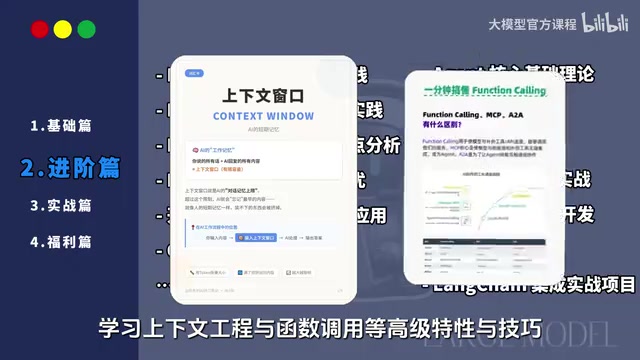
An AI Agent refers to an AI system capable of autonomously perceiving its environment, making plans, calling tools, and executing tasks. Unlike simple conversational AI, Agents possess goal decomposition, multi-step reasoning, and autonomous decision-making capabilities. Their system architecture typically includes three core components: a Planning module, a Memory module, and a Tool Use module. MCP (Model Context Protocol) is an open standard protocol proposed by Anthropic in late 2024, designed to provide a unified interface specification for connections between LLMs and external data sources and tools — its design philosophy is similar to what USB-C is for hardware devices, allowing developers to avoid writing custom adapter code for each tool and thereby greatly simplifying Agent tool integration complexity.
Function Calling is the critical bridge connecting LLMs to the external world. It allows models to recognize user intent during conversations and output the external function names and parameters to be called in structured JSON format, with the application layer executing the actual operations and returning results to the model. This mechanism enables LLMs to evolve from "only generating text" to "being able to operate on the external world." Context Engineering is a concept that emerged in 2025, going a step beyond Prompt Engineering. It focuses on how to systematically manage the complete context fed to the model — including system prompts, conversation history, retrieved knowledge, tool descriptions, user profiles, and other types of information — and is considered a core competency for building production-grade AI applications.
Multi-Agent collaboration refers to distributing complex tasks among multiple AI agents with different roles and capabilities to work together. For example, in a content production system, you could set up a "Researcher Agent" for information gathering, a "Writer Agent" for content generation, and an "Editor Agent" for review and optimization. Workflow Orchestration handles designing and managing the task flow, conditional logic, and exception handling between these Agents. Current mainstream Agent development frameworks like LangGraph, CrewAI, and AutoGen all provide related capabilities.
This section reflects the current mainstream trend in AI application development: simply calling LLM APIs is no longer sufficient. How to orchestrate multi-agent collaboration, design stable and controllable workflows, and enable models to interact with external tools through function calling — these are the key capabilities for building deployable AI applications. The course emphasizes the goal of developing applications that are "more stable, elegant, and production-ready," which is precisely where most AI projects stumble when transitioning from demo to production — error handling, state management, cost control, and output consistency all require careful design.
Hands-On Practice: Turning Skills into Output Through Real Projects
The hands-on phase involves practicing through concrete projects, including enterprise knowledge base Q&A, intelligent customer service, office automation Agents, and data analysis and mining. These scenarios represent the areas where enterprise demand for AI deployment is currently strongest, with strong career and monetization orientation.
Notable Highlights in Learning Design
Beyond the knowledge framework, this course also features some instructional design approaches worth noting.

First, each lesson is kept under 30 minutes. This pursues "information density" while avoiding cognitive overload. For self-learners, concise chapters are easier to stick with and convenient for studying during spare moments. This design aligns with cognitive science research showing that spaced learning is more effective than massed learning.
Second, knowledge explanation is tightly integrated with hands-on practice. The course emphasizes engaging presentation paired with real-world cases, rather than pure theoretical output. When learning AI LLM technology, the importance of hands-on practice cannot be overstated.
Finally, comprehensive supporting resources are provided. The course offers study mind maps, Prompt templates, model installation packages, lecture notes, and e-books. Mind maps help build a holistic view of the knowledge landscape, while Prompt templates and installation packages significantly lower the barrier to getting started.
An Objective Perspective: Seize Opportunities but Stay Rational
A word of caution: any course that claims "job-ready upon completion" or "the most comprehensive on the internet" should be viewed rationally. The AI LLM field evolves at breakneck speed, and no pre-recorded course can cover all the latest developments. Learners still need to continuously follow industry trends, read official documentation, and study primary research papers.
That said, the learning path philosophy embodied in this course is genuinely worth referencing for beginners: first build intuitive understanding of the principles, then master interaction capabilities like prompts and APIs, then learn application-layer technologies like Agents and workflows, and finally solidify everything through real projects. This path from "understanding models" to "using models" to "orchestrating models" is far more robust than chasing scattered tips and tricks.
For readers looking to get started with AI large language models, whether or not you choose this specific course, you can draw on its framework to plan your own learning roadmap: avoid fragmentation, prioritize underlying principles, commit to hands-on practice, and take a project-driven approach. These four points may well be the key to cutting through the noise and truly mastering AI LLM skills.
Key Takeaways
Related articles
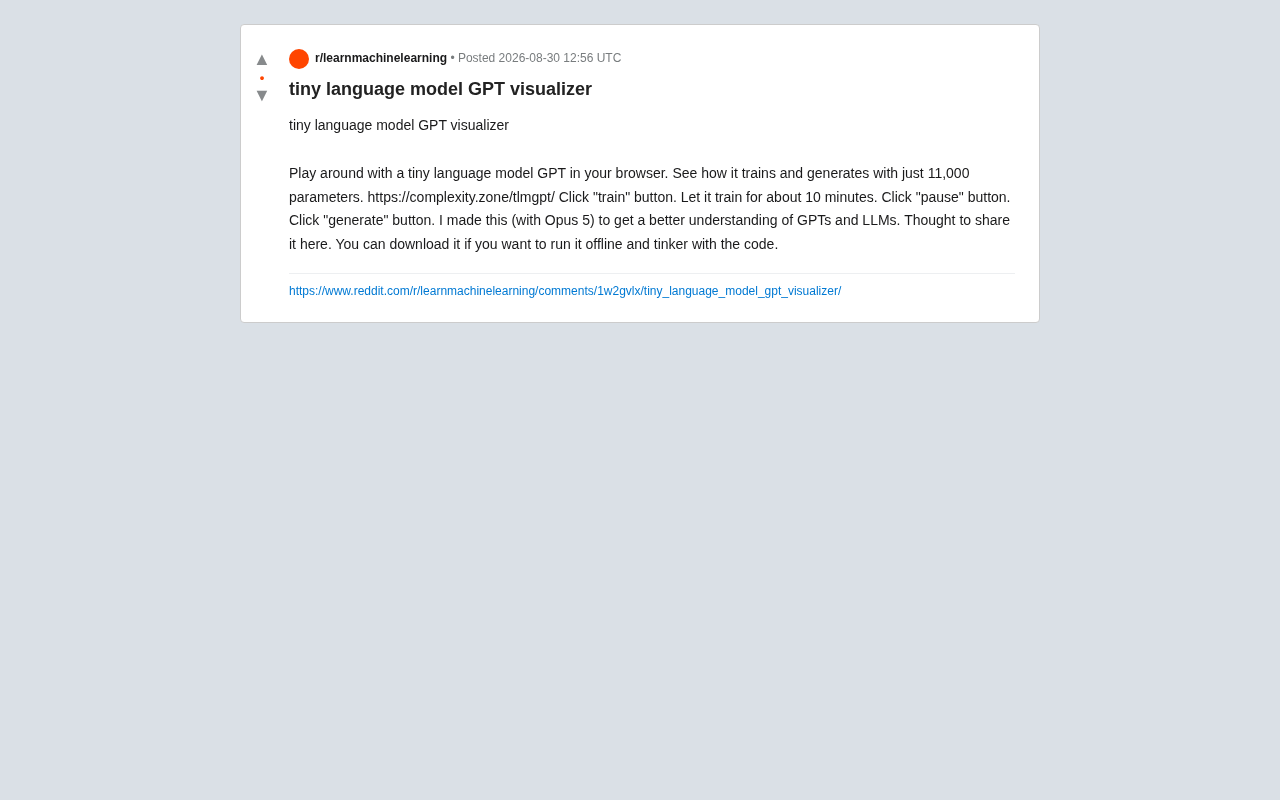
Mini GPT Visualizer with 11,000 Parameters: Train and Understand LLM Fundamentals Right in Your Browser
A mini GPT visualizer with just 11,000 parameters lets you train a language model in your browser and watch the entire process — understand embeddings, attention, and more in 10 minutes.

What Projects Should You Build After One Month of Learning to Code? Recommended Projects for Beginners Ready to Level Up
Not sure what to build after one month of learning to code? This guide offers project recommendations for beginners ready to level up through project-based learning.
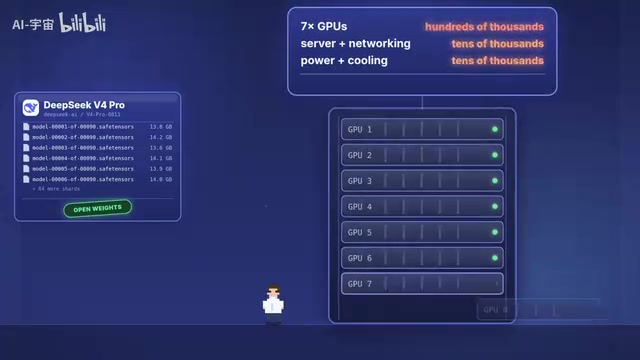
DeepSeek V4 Pro In-Depth Analysis: How Open-Source Weights Are Disrupting the Closed-Source LLM Landscape
DeepSeek V4 Pro releases with MIT license, achieving capability leap through specialized expert training, knowledge distillation, and multi-token prediction with 78% speed boost. Analysis of post-training techniques and open-source impact on closed models.