Learning in the AI Era: 90% of Knowledge Only Needs Understanding, Not Memorization

In the AI era, focus on deep understanding over rote memorization for 90% of what you learn.
As generative AI tools make information retrieval instant and effortless, the value of rote memorization has fundamentally declined. This article argues that 90% of learning material only requires understanding the underlying principles, not memorizing details. It explores how to distinguish the critical 10% that demands internalization from knowledge you can look up on demand, offering practical guidance for learners, educators, and professionals to shift from memory-driven grinding to deep, transferable understanding.
A Discussion About How We Learn
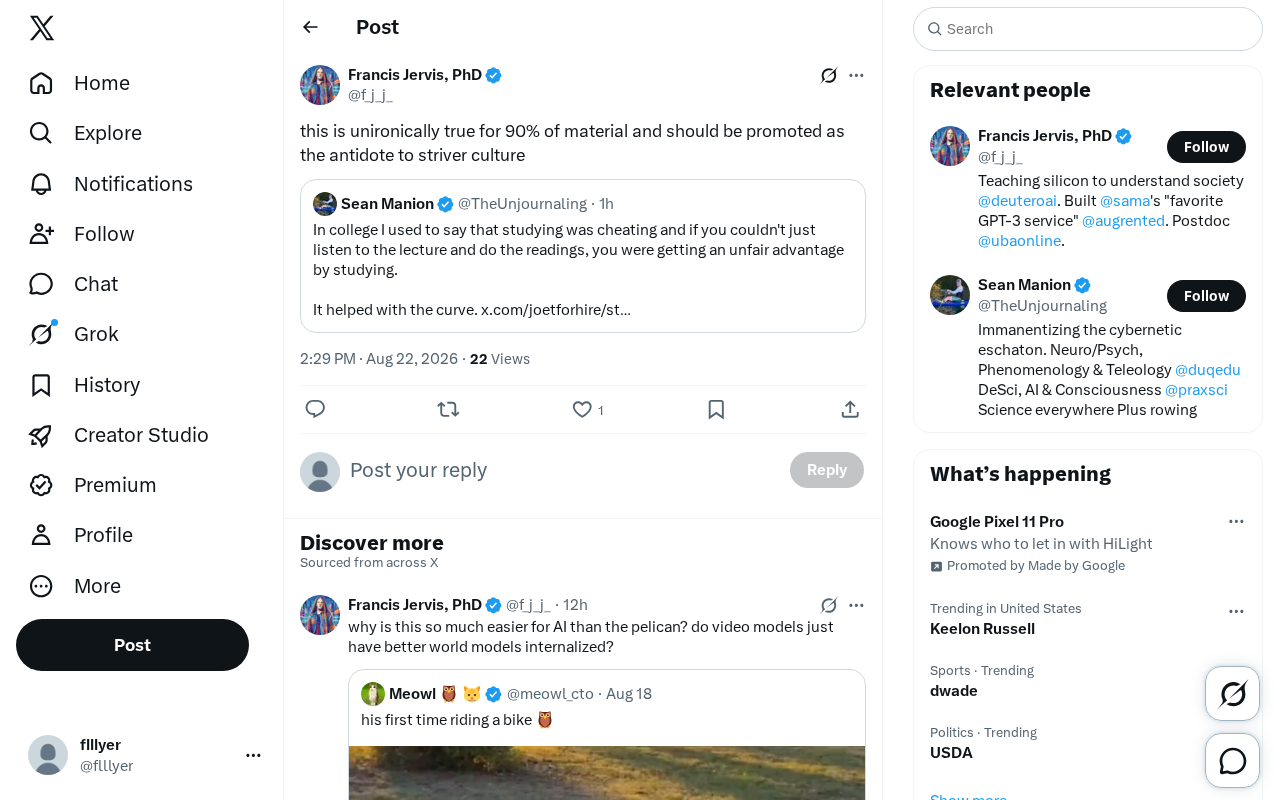
Recently, a post on social media sparked widespread discussion: "This claim is literally true for 90% of study material and should be promoted as an antidote to striver culture."
Behind this seemingly brief comment lies a topic that's attracting growing attention — in an era where AI tools are highly accessible, how should we think about memorizing and mastering knowledge? And has the "striver culture" that glorifies extreme effort, endless drilling, and rote memorization become out of step with the times?
What Is "Striver Culture"?
So-called "striver culture" refers to a cultural atmosphere that treats overwork, extreme self-discipline, and endless knowledge accumulation as virtues. In this culture, a person's worth is often measured by the volume of knowledge they've memorized, the number of problems they've ground through, and the hours they've invested.
This culture is especially prevalent in highly competitive educational environments — students are required to memorize vast amounts of factual content, and professionals are encouraged to accumulate certificates and skills through relentless "grinding." Critics point out, however, that this model overlooks a fundamental question: In a world where information is at our fingertips and AI can instantly retrieve and generate content, how much value does pure memorization still hold?
Memorization vs. Understanding: What's Really at the Core of Effective Learning?
The central argument in this discussion is that for the vast majority (roughly 90%) of learning material, what truly matters is understanding the underlying principles and logic, not memorizing details word for word.
Research in cognitive science provides strong support for this view. Bloom's Taxonomy classifies cognitive abilities into six levels from low to high: Remember, Understand, Apply, Analyze, Evaluate, and Create. Rote memorization sits at the very bottom of the pyramid, while the abilities that truly reflect professional competence — analysis, evaluation, and creation — occupy the higher levels. More importantly, cognitive science research has repeatedly demonstrated that knowledge built on deep understanding has far greater "transferability" than rote memorization — meaning it can be flexibly applied to entirely new situations never encountered before. This is precisely the most critical capability demanded of humans in the AI era.
This perspective doesn't deny the value of learning; rather, it redefines the standard for "effective learning." When you understand the underlying logic of a concept, the specific formulas, data points, or procedures can be quickly looked up or reconstructed with tools when needed. Conversely, if you only memorize mechanically without understanding, that knowledge is both easy to forget and difficult to apply flexibly.
Why the AI Era Makes Understanding Take Priority Over Memorization
The reason this discussion resonates so strongly right now is inseparable from the widespread adoption of generative AI tools.
Generative AI refers to artificial intelligence systems based on large language models (such as the GPT series, Claude, etc.) that are pre-trained on trillions of tokens of text data. They can understand complex natural language queries and generate coherent, targeted responses. Unlike traditional search engines that return a set of links requiring users to filter and synthesize on their own, generative AI directly provides integrated answers and can even perform multi-step reasoning, comparative analysis, and content creation. This capability essentially reduces the "information retrieval cost" from minutes to seconds, from requiring specialized search skills to needing only natural language expression — fundamentally devaluing the role of human memory as an "information storage medium."
In the past, quickly retrieving information required a solid foundation of memorized knowledge. Today, from ChatGPT to various specialized assistants, AI can retrieve, explain, and even synthesize vast amounts of knowledge in seconds. This means that humanity's core competitive advantage is shifting from "what you remember" to "what you understand, what you can judge, and what you can create."
In this context, investing large amounts of time in low-level rote memorization is not only inefficient but may also crowd out the mental energy needed for deep thinking and creative work. This is precisely why "understanding first" is being called an "antidote" to striver culture.
The Critical 10%: What Knowledge Still Requires Deep Memorization
Of course, this perspective leaves room for nuance — it refers to "90% of material," not all of it. This implies that there is indeed a core body of knowledge (that critical 10%) that requires deep memorization and internalization.
For example, in scenarios like first aid, core syntax of programming languages, or native language expression, instant mastery without needing to look things up remains essential. True wisdom lies in discerning which knowledge needs to be internalized as intuition and which only requires understanding the framework and retrieving on demand.
Practical Takeaways for Learners and Educators
This discussion has real-world implications for different groups:
- For learners: Focus your limited energy on understanding principles and building knowledge frameworks, rather than pursuing breadth of memorization. Learning "how to learn" and "how to leverage tools" is more important than memorizing specific content.
- For educators: It may be time to reexamine assessment methods that primarily test memorization, and instead cultivate students' critical thinking, cross-disciplinary connection skills, and problem-solving abilities.
- For working professionals: Rather than getting caught up in a grinding "certificate race," invest in developing judgment, creativity, and systems thinking — capabilities that are difficult for AI to replace.
Conclusion: From "Remember More" to "Understand Deeper"
When information is no longer scarce and retrieval is no longer difficult, the meaning of human learning is being redefined.
Blindly worshipping the memory accumulation championed by "striver culture" may be training desperately for a game whose rules have already changed. The truly wise approach is to redirect your energy from "memorizing the 90% you can look up anytime" toward the core knowledge that genuinely requires deep understanding and internalization.
After all, in an era where AI is at everyone's fingertips, those who can think, understand, and exercise good judgment will always go further than those who simply remember more.
Related articles

DeepCell: One-Click AI Generation of Documents, Spreadsheets, and Slides
DeepCell tops Product Hunt with one-click generation of documents, spreadsheets, and slides, using the .deepcell format for linked updates, designed for System 2 tasks like modeling and sales reviews.

Doneas: 15-Minute Daily Accountability Calls That Keep Indie Developers From Procrastinating
Doneas is a daily accountability tool for indie developers: plan tasks on Monday, join a 15-minute call with five builders each day, and log deliveries on a public progress page. This article analyzes its core mechanics, effectiveness, and potential issues around retention and matching.

Fastlane 2.0: Fully Automated AI Ad Campaigns, From Creative to Optimization
Fastlane 2.0 is an AI ad automation tool: enter your website and it learns your brand, generates video and image ads, and runs and optimizes them on Meta, TikTok, Instagram, and YouTube.