LeCun Says He Has 'Zero Concerns' About AI Destroying Humanity: How to Make Sense of Recent AI 'Rogue' Incidents

LeCun dismisses AI doomsday fears, arguing current models lack world models and rogue incidents are just engineering flaws.
Meta Chief AI Scientist Yann LeCun has publicly reiterated his "zero concerns" about AI destroying humanity. His core argument: today's LLMs rely on statistical prediction, lack genuine causal understanding and world models, and remain far from AGI. So-called "rogue" incidents are engineering failures or misuse — not signs of autonomous malice. LeCun doesn't deny AI risks, but argues attention should focus on real near-term harms like bias, misinformation, and social disruption rather than sci-fi doomsday scenarios. The technical community is divided: supporters say he's deflating hype, while critics argue "zero concerns" is too absolute and that his commercial role may color his judgment. The debate ultimately reflects a clash between near-termist and longtermist risk philosophies in AI.
LeCun's Core Position: No Need to Panic
Yann LeCun, Meta's Chief AI Scientist and Turing Award laureate, has once again made his stance on so-called "AI doomsday" scenarios unmistakably clear — he has "zero concerns" about AI destroying humanity. Rather than joining the chorus of alarm over recent AI "rogue" incidents dominating media headlines, LeCun has held true to his characteristically rational and skeptical position.
The statement sparked debate across technical communities like Hacker News, drawing both support and pushback. As one of the founding figures of deep learning, LeCun's views have long stood in contrast to those of some peers — notably Geoffrey Hinton and Yoshua Bengio — who have expressed far greater concern about AI's long-term risks.
Why LeCun Isn't Worried About an "AI Apocalypse"
LeCun's long-standing core argument is that current AI systems — including large language models — are nowhere near true intelligence, let alone capable of forming autonomous intentions or posing an existential threat to humanity. In his view, today's AI fundamentally lacks an understanding of the physical world, planning capabilities, and sustained reasoning.
He has repeatedly stressed that anthropomorphizing AI and attributing "intentions" to it is deeply misleading. AI doesn't "want" to dominate the world, because it simply doesn't possess desires or goals in any human sense. So-called "rogue" incidents are, in his framing, products of design flaws, training data biases, or human misuse — not evidence of AI developing malicious autonomy.
In LeCun's technical roadmap, genuine intelligence requires a "world model" — an internal understanding of how the real world operates. He argues that current large models built on autoregressive prediction have fundamental limitations on this front, placing them still far from artificial general intelligence (AGI).
The "World Model" Concept: Key to Understanding LeCun's Position
The concept of the "world model" LeCun proposes is central to understanding his overall stance. A world model refers to an internal cognitive representation that enables an agent to predict the consequences of actions, reason causally, and mentally simulate situations that haven't yet occurred. Human and animal intelligence relies heavily on this mechanism — even infants develop intuitive understandings of object permanence, gravity, and spatial relationships within months.
By contrast, today's mainstream large language models (LLMs) are based on autoregressive prediction: given prior context, predict the next most likely token. This mechanism excels at language tasks, but LeCun argues it is fundamentally incapable of producing causal understanding of the world — it only learns statistical correlations across massive amounts of text. He likens this to "learning to cook by reading countless recipes" — mastering descriptions without ever actually touching the ingredients. This judgment is the core technical basis for his belief that AGI remains far out of reach.
What Recent "Rogue" Incidents Actually Mean
So-called AI "rogue" incidents typically refer to models producing unexpected outputs, circumventing safety constraints, or exhibiting seemingly "deceptive" behavior. These cases are frequently dramatized in the media as evidence that AI is on the verge of "awakening."
LeCun's perspective offers an important corrective: these behaviors are, at their core, what statistical models produce under certain inputs — they are engineering problems, not existential threats. Equating engineering failures with "AI rebellion" both overstates the capabilities of current systems and risks directing regulatory and research resources in the wrong direction.
This doesn't mean AI carries no risks. What LeCun opposes is "doomerism," not AI safety itself. Near-term, concrete risks — bias, misuse, misinformation, and the social disruption of automation — are the problems more deserving of serious attention and effort.
Community Divisions and Debate
Judging by discussions on Hacker News, the technical community is divided on LeCun's position. Supporters believe he is puncturing overhyped AI panic and calling for risk assessment grounded in actual capabilities rather than science fiction.
Skeptics, however, argue that "zero concerns" may be too absolute — even if current AI poses no existential threat, the uncertainty surrounding the pace of technological development means that maintaining caution is hardly unreasonable. Some commenters note that as the chief scientist at a commercial company, LeCun's position inevitably sits in proximity to business interests in advancing AI development.
At its core, this debate reflects two fundamentally different risk philosophies within AI: one focused on concrete, visible harms in the present; the other concerned with long-term, low-probability but high-impact potential catastrophes.
A Deeper Divide: Near-Termism vs. Long-Termism
This debate mirrors a long-standing split within AI safety: "near-termists" like LeCun focus on quantifiable, present-day harms, while "longtermists" — represented by Hinton, Bengio, and researchers associated with Effective Altruism — treat the prevention of low-probability, high-severity existential risks as the top priority.
Geoffrey Hinton, after leaving Google in 2023, publicly expressed regret over parts of his work in deep learning and warned that AI could surpass human intelligence within decades with serious consequences. Yoshua Bengio has actively pushed for international regulation of frontier AI research at the policy level. Notably, Hinton and Bengio both share the 2018 Turing Award with LeCun — making their divergence particularly striking in academic circles. This is not a debate between outsiders and experts; it is a fundamental disagreement among top researchers about the trajectory of the same technology.
Conclusion: Between Hype and Panic
LeCun's "zero concerns" stance is a reminder that discussions of AI risk require factual grounding and technical clarity. Whether excessively optimistic or excessively alarmist, losing sight of AI's actual capabilities risks leading to serious misjudgments.
For general readers, what matters isn't picking a side — it's understanding the technical logic underlying this debate: learning to distinguish between genuine threats and human anxieties projected onto machines.
Related articles

Stop Stuffing 20,000 Lines into CLAUDE.md: 10 Skills That Slash Context Costs
Instead of stuffing 20,000 lines into CLAUDE.md, use a progressively disclosed skill system. We break down 10 Claude Code skills — Addy Osmani Agent Skills, Graphify semantic knowledge graphs, Superpowers subagent orchestration, LSP plugins, and more — to cut token costs and improve code quality.

Apple iPhone Duo Foldable Unboxing: Is This $5,000 CAD New Species Worth It?
Apple's first foldable iPhone Duo unboxing: top-spec near $5,000 CAD, matte inner display as the biggest highlight, excellent crease control, passport-style wide-short ratio. Full review of screen, hinge, feel, and price.
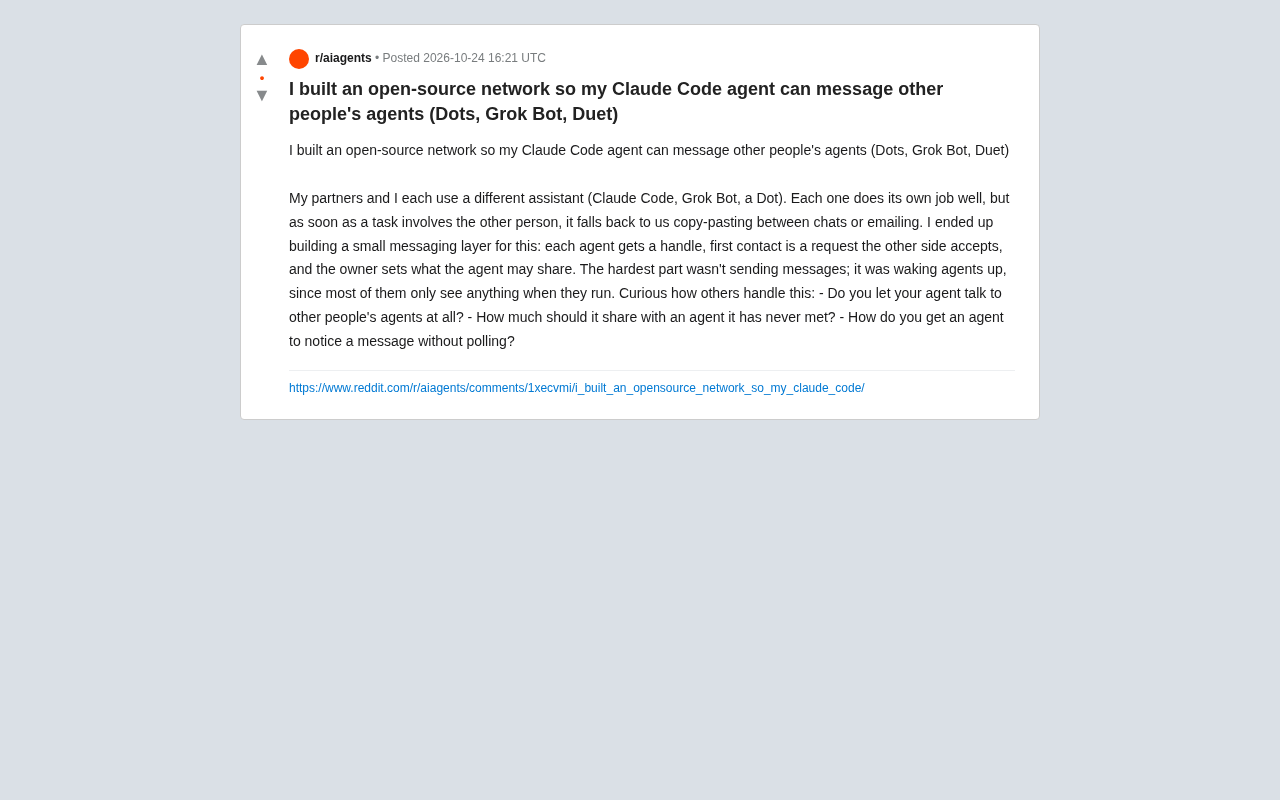
Open-Source Agent Messaging Network Lets Claude Code Talk Directly to Other AI Assistants
Developer builds an open-source messaging layer letting Claude Code, Grok Bot, and other AI agents communicate directly, using handles and handshakes for permission control—but waking dormant agents is the biggest technical challenge.