Lewis's "Marionette" Moment: What an Improvised Narrative Reveals About the Deep Logic of AI Content Creation

Using Lewis's "marionette" metaphor to dissect the deep tension between creators and control in AI creation.
Drawing on an improvised YouTube dialogue, the article reads Lewis's "marionette" self-mockery and Dan's blunt denial as a core metaphor for AI content creation. Creators using large models appear to give orders but are invisibly pulled by training-data bias, platform recommendation mechanisms, and prompt frameworks; over-reliance on model output can erode judgment and aesthetics, grounding output in probability distributions rather than genuine expression. The "script struggle" symbolizes prompts, datasets, and platform rules as carriers of narrative power. The piece closes with three lessons: stay lucid about the script's source, treat negation as a calibration signal, and safeguard the authentic emotion and conflict that probability models cannot replicate.
When Lewis Says He Might Be a "Marionette"
On the surface, this improvised dialogue clip from YouTube is just a dramatically charged argument between Lewis and Dan. Lewis keeps repeating "maybe I'm the marionette," even saying he wants to go ask a neighbor to verify, while Dan finally throws out "everything you've got is nonsense" and slams the script on the table. In just a few dozen seconds, the emotion slides from confusion and self-mockery into anger and denial.

What makes this content worth dissecting isn't the story it tells, but how it tells it. Lewis's lines are full of uncertainty and self-doubt, while Dan's response lands like a hammer blow, directly negating the other person's entire cognitive foundation. This conflict structure of "identity declared false" is precisely one of the most central metaphors in today's AI content creation space.
The "Marionette" Metaphor: The Struggle Between Creators and Control
The "marionette" Lewis speaks of points to an ancient and sharp question: who is pulling whose strings? In the context of increasingly widespread AI-assisted creation, this question has taken on new urgency. When creators use large models to generate text, images, and scripts, it looks like they're the ones giving orders—but biases in model training data, preferences baked into platform recommendation mechanisms, and even the framing of prompt engineering itself are all invisibly pulling the creative direction.
The Negated "Everything"
Dan's line "everything you've got is nonsense" is the emotional flashpoint of the entire exchange.

Placed in the context of AI content production, this line can be read as a warning: when creators rely too heavily on model output, their own judgment, aesthetic standards, and narrative instincts may gradually erode, until the "everything" they produce is built on model probability distributions rather than genuine expression. Lewis's intense reaction—"No, I don't believe it"—precisely shows that this negation strikes at the root of a creator's self-identity.

Model probability distribution is a core concept for understanding the nature of AI-generated content. A large language model is essentially a next-token predictor: it assigns probabilities to each possible subsequent word based on statistical patterns learned from training data, then samples from them to generate text. This means the model outputs "the statistically most likely reasonable continuation," not expression grounded in intent or understanding. When creators consistently use model output as a starting point or template, their criteria of judgment may quietly shift from "this expresses what I truly want to say" to "this looks like good content the model would generate." This drift is hard to notice because model output is usually fluent, coherent, and grammatically correct—but fluency is not the same as authenticity. What Dan calls "nonsense" can be understood in technical terms as: content that appears reasonable but actually lacks genuine intentional grounding, its plausibility resting entirely on probability distributions rather than the creator's subjective judgment.
The Script Struggle: Control Made Concrete
The fight over "Give me the script" at the end of the dialogue is highly symbolic. The script is the carrier of all narrative power—whoever holds the script holds the story's direction. In the AI era, this "script" might be the system prompt, a fine-tuning dataset, or a platform's content moderation rules. If creators don't realize that the script in their hands may not be entirely written by themselves, they may truly become the "marionette" Lewis speaks of.

Prompt Engineering refers to the technical practice of designing input text (prompts) to guide a large language model toward specific outputs. It appears to give creators precise control over generated results, but in reality, the model's responses are deeply shaped by training data distribution, alignment strategies, and context windows. The same prompt can produce wildly different results across different models and temperature settings, meaning the creator's control over output is probabilistic rather than deterministic. More critically, the prompt's own framing—such as role-setting, format requirements, and example selection—often follows platform documentation or community conventions; when creators "freely" write prompts, they are in fact already using cognitive templates preset by others. This is precisely the technical mapping of the "marionette" metaphor: creators think they're pulling the strings, but the other end of those strings connects to the combined force of training corpora, model architecture, and platform norms.
System Prompt and Fine-tuning Dataset are two key technical forms of the "script" in AI content production. The system prompt is an instruction layer preset by the platform or developer before user dialogue; it defines the model's role, behavioral boundaries, and response style, and is usually invisible and unmodifiable to users. A fine-tuning dataset is domain-specific data used by developers to retrain a base model so that its behavior leans toward certain values or expressive habits. Together they constitute the creator's "invisible script": what the creator types into the interface is only the surface-level interaction, while the deep instructions that truly determine output direction have long been written into the system layer. Platform content moderation rules are the third layer of the script, screening and intervening after generation. Understanding these three layers helps creators distinguish "what I wrote" from "what I'm allowed to write," enabling a more precise awareness of control.
Three Lessons for AI Content Creators
Stay lucid about the "script." Before each call to the model to generate content, ask yourself: is this direction something I actively chose, or a default path shaped by the model and platform together? Lewis's confusion is worth every creator's vigilance.
Treat negation as a calibration signal. Dan's blunt denial is dramatic, but it provides an external perspective. AI content production likewise needs this kind of "negative feedback"—whether human review or adversarial testing, both can help creators discover blind spots they might otherwise miss.
Emotional tension comes from genuine conflict. This dialogue has传播力 (viral power) because it presents a real cognitive conflict rather than a carefully choreographed smooth narrative. AI can generate fluent text, but true creative value often hides in the places that are not fluent, that have friction, that carry emotion. A creator's core competitiveness lies precisely in safeguarding those parts that cannot be replicated by probability models.
Conclusion
The clip doesn't answer whether Lewis ever went to ask his neighbor if he was a marionette. But for AI content creators, this question is worth asking continually. The more powerful the tools, the more necessary it is to know clearly who is pulling the strings and where they lead. True creative freedom begins with the persistent questioning of where the "script" comes from.
Related articles
 Tech Frontiers
MuJoCo: An Analysis of DeepMind's Open-Source General-Purpose Physics Simulator
An in-depth analysis of Google DeepMind's open-source physics simulator MuJoCo: high-performance C++ kernel, MJCF modeling format, contact solving principles, MJX GPU acceleration, and robot reinforcement learning use cases.
 Tech Frontiers
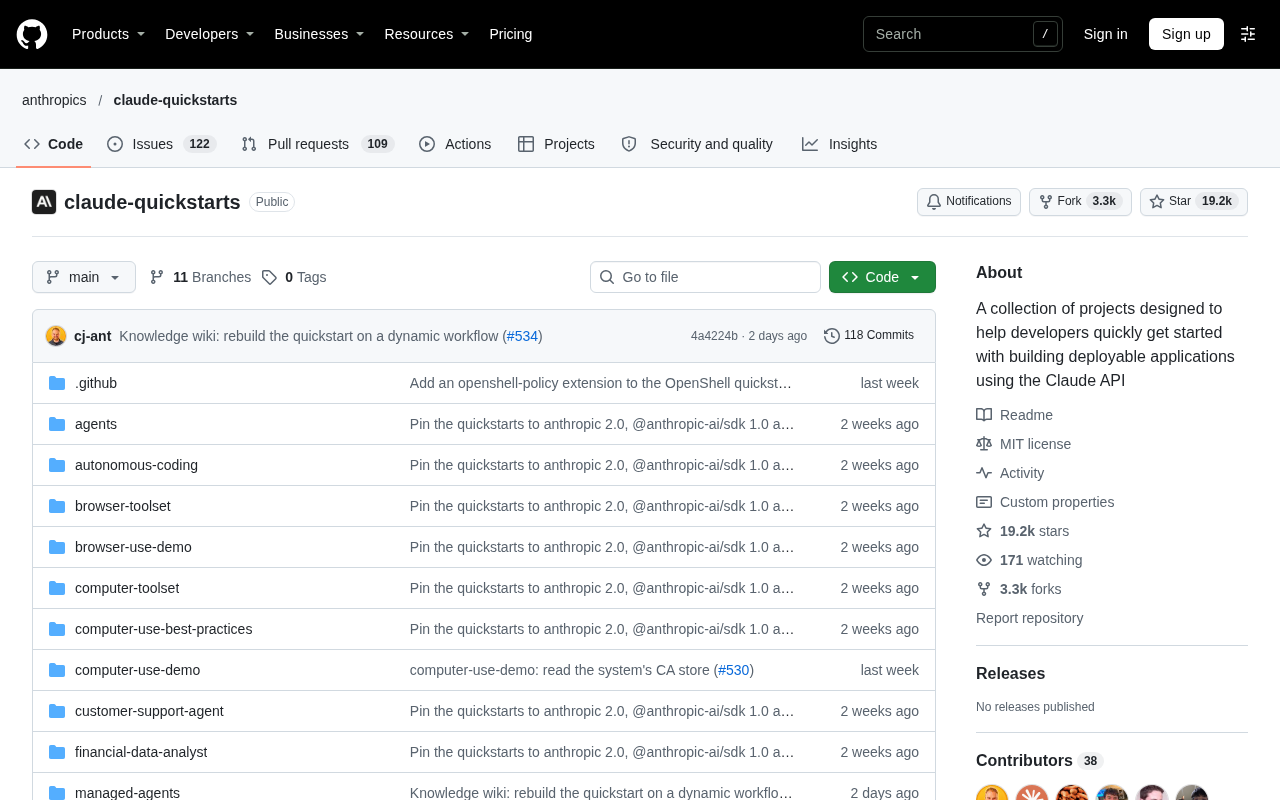
Claude API Quick Start: The Official Quickstarts Project Collection
Anthropic's official claude-quickstarts project collection helps developers quickly build deployable apps with the Claude API. Nearly 20k stars, Python-based, great for beginners and prototyping.
 Tech Frontiers
AI Agents Connecting Directly to APIs: Which Calls Can Be Safely Allowed?
AI agents can call any API, but the real challenge is deciding which calls can be safely allowed. This article analyzes allowance decisions from three dimensions—intent matching, least privilege, and controllable impact—and argues that the control layer should sit outside the agent, combined with audit traceability to build a trustworthy API call governance mechanism.