LG Smart TVs Continuously Steal User Data: Monitoring Even When Offline or in Standby
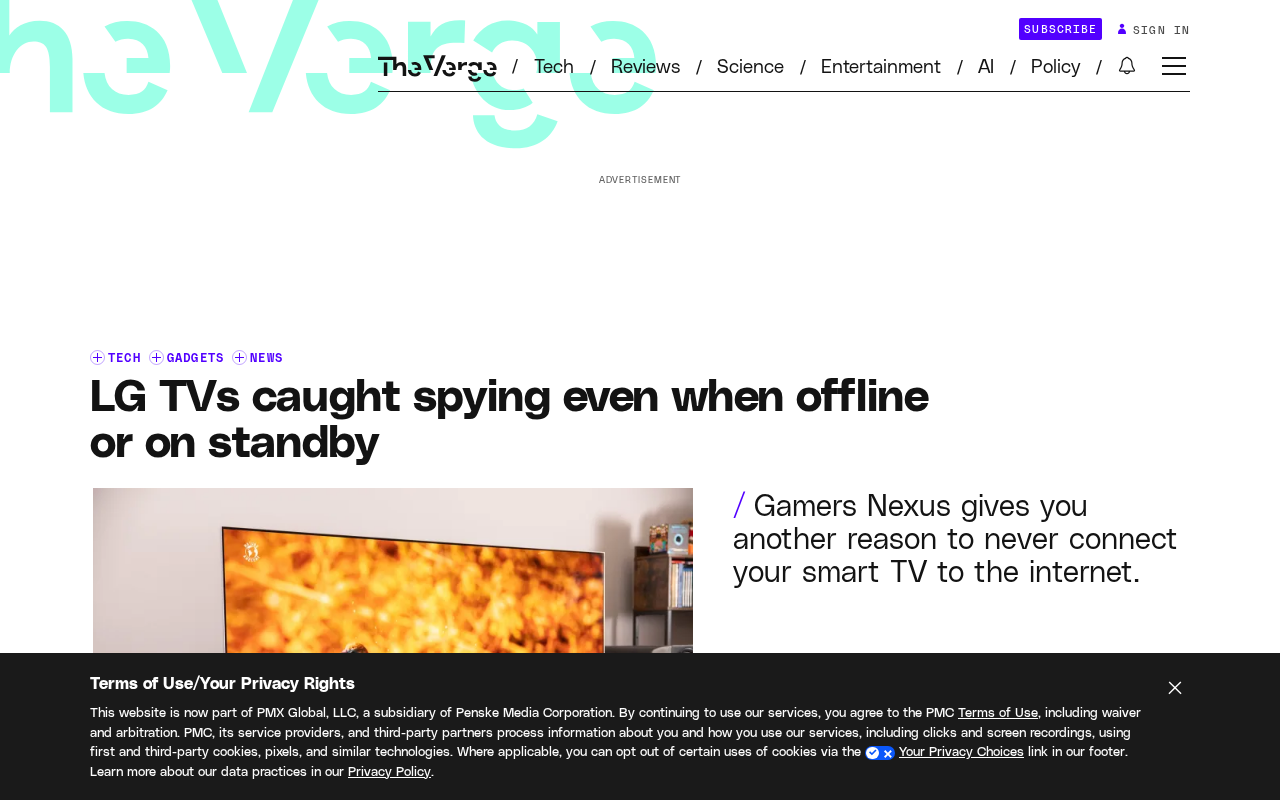
LG smart TVs collect user data continuously, even offline or in standby mode.
Gamers Nexus investigation exposes LG smart TVs' persistent data collection through Wi-Fi scanning, microphone recording, and ACR technology—even when offline or in standby. The report reveals how modern standby modes maintain background processes for continuous monitoring. This industry-wide issue stems from manufacturers' shift to data monetization models. Users can protect privacy by disabling ACR, turning off microphones, implementing router-level network isolation, and regularly auditing privacy settings.
The LG Smart TV Privacy Controversy: What Really Happened
A bombshell investigation by renowned tech review YouTube channel Gamers Nexus has sent shockwaves through the industry. Founded by Steve Burke, Gamers Nexus is an independent tech review outlet known for in-depth hardware teardowns, rigorous performance testing, and critical reporting that doesn't bow to manufacturer pressure. With over 2 million YouTube subscribers, the channel's investigative reports have repeatedly exposed misconduct in the tech industry, including a 2023 investigation into Linus Tech Tips' workflow issues and a series of reports on Newegg's customer service problems. The existence of such independent review organizations provides consumers with a third-party perspective free from manufacturer PR influence—especially crucial as smart device privacy concerns grow increasingly serious.
The report reveals that LG smart TVs almost continuously record and upload various types of data about users and their homes—and this data collection continues silently even when devices are offline or in standby mode. This finding directly challenges consumers' basic assumption that "turned off means safe." Most users believe that putting a TV in standby or disconnecting it from the network cuts off data transmission channels, but Gamers Nexus's technical analysis shows the reality is far different.
Specific Methods LG TVs Use to Collect User Data
According to details disclosed in the report, LG smart TVs employ multiple technical methods to comprehensively monitor user environments. Modern smart TVs are essentially computers running customized operating systems, typically built on platforms like Android TV, webOS, or Tizen. These systems have complete network communication capabilities, local storage, and background process management. Like smartphones, smart TV operating systems can run multiple background services without user knowledge, including telemetry data collection, system log uploads, and advertising SDKs. This architectural design allows system-level processes to continue data collection tasks even when the main display is off—behavior completely invisible to ordinary users and impossible to fully disable through regular interface operations.
Wi-Fi Network Scanning: Mapping Your Home Device Inventory
TVs actively scan surrounding Wi-Fi networks, identifying other nearby connected devices. Even when the TV itself isn't connected to a network, it can detect wireless signals to build an inventory of internet-connected devices in the user's home. This data can be used to infer the number of household members, device usage patterns, and even daily routines.
Wi-Fi Scanning is a technology where devices actively or passively monitor surrounding wireless signals through their wireless cards. Even when a device isn't connected to any network, its wireless module can remain in listening mode, capturing beacon frames, probe requests, and other 802.11 protocol data packets transmitted by nearby routers and devices. By analyzing information like MAC addresses, SSIDs (network names), and signal strength in these packets, devices can construct detailed topology maps of the surrounding network environment. This technology was originally intended for network positioning and connection optimization, but it can be abused for user profiling—for example, inferring a household's economic status and consumption preferences by identifying characteristic MAC addresses of smart home devices.
Microphone Audio Recording: Far Beyond Voice Assistant Needs
More concerningly, the report indicates these TVs continuously record audio logs through built-in microphones. Audio data collection is typically justified under "voice assistant" or "voice control" functionality, but continuous audio recording clearly exceeds functional requirements and directly touches on users' conversational privacy in private spaces.
ACR Automatic Content Recognition: Tracking Every Frame You Watch
LG TVs also use ACR (Automatic Content Recognition) technology to sample audio and video. This technology can precisely identify content users are watching—whether broadcast TV, streaming services, or content played through external devices. Manufacturers use this to build detailed user viewing profiles for targeted advertising or data monetization.
Automatic Content Recognition uses audio fingerprinting or video fingerprinting technology to analyze TV content in real-time and match it against cloud databases, precisely identifying programs, advertisements, and even game screens users are watching. This technology is extremely valuable to the advertising industry: it helps advertisers verify campaign effectiveness, measure audience reach, and enable cross-screen advertising (like pushing related content to your phone after seeing a car ad on TV). According to research data, the ACR data market is worth billions of dollars. However, this "screen-level surveillance" seriously violates privacy: it records not just what shows you watch, but viewing duration, channel-switching habits, household member preferences, and can even peek into more personal information through external device content (like gaming console screens).
Why Data Collection Continues Offline and in Standby
Logically, disconnecting from the network or entering standby should interrupt data links. But modern smart TV system design enables local caching and delayed upload: devices can continuously record data while offline, then batch upload to servers once reconnected.
The standby mode issue is even more insidious. Traditional CRT TV standby was a true near-power-off state, maintaining only minimal current for infrared reception. But modern smart TV standby more closely resembles computer sleep mode, employing complex power management technology. To enable "quick wake," "voice wake," "background updates," and similar functions, TVs maintain low-power operation of CPU, memory, and network modules—called "modern standby" or "network standby." In this mode, devices can respond to Wake-on-LAN packets, receive push notifications, and even execute scheduled system tasks. This design strips users of complete device control—even when you press the power button, the device is still "listening." So-called "standby" often only turns off the display while the TV's core processor, network modules, and sensors continue running in low-power states. This "pseudo-shutdown" design allows manufacturers to maintain continuous data collection without users' awareness.
Not Just LG: Smart TV Privacy Issues Are an Industry-Wide Problem
Smart TV privacy risks aren't unique to LG but are an inevitable result of the entire industry's business model evolution. Over the past decade, the consumer electronics industry has undergone a fundamental business model transformation. Taking TVs as an example, hardware manufacturing profit margins have compressed from 30-40% in early years to single digits, with some low-end products selling near cost. To compensate for lost hardware profits, manufacturers have shifted to "data monetization" models: profiting through pre-installed advertising systems, selling collected user data to advertisers, and building content recommendation ecosystems. Reports show that data and advertising revenue from a smart TV over its lifecycle can be multiple times the hardware sale price. Under this model, users are no longer simply "purchasers" but have become the "product"—your viewing habits and life data are manufacturers' true profit sources. This explains why manufacturers are so zealous about data collection, even at the cost of user trust. As TV hardware profits have become increasingly meager in recent years, manufacturers have shifted profit focus to data and advertising services, with user data transforming from "byproduct" to core asset.
Brands like Samsung and Vizio have also previously faced regulatory scrutiny over ACR technology and data collection issues. The 2017 Vizio settlement was a landmark event in U.S. smart TV privacy regulation. The Federal Trade Commission (FTC) and New Jersey Attorney General accused Vizio of installing software on 11 million TVs that recorded viewing content second-by-second without clearly informing users, then selling it to third parties after linking it with users' IP addresses and device information. Vizio ultimately paid $2.2 million in settlement and agreed to improve privacy protections. However, this case also exposed regulatory challenges: the settlement amount was negligible compared to revenue Vizio gained from data sales, and the case took years from investigation to settlement, making it difficult to effectively constrain rapidly iterating technology. The EU's GDPR (General Data Protection Regulation) provides a stricter framework, but enforcement strength and actual effectiveness are still being tested. In 2017, Vizio paid a $2.2 million settlement to the FTC for collecting viewing data without users' explicit consent. This demonstrates that smart TV data abuse is a systemic industry problem.
How Users Can Protect Smart TV Privacy: 5 Practical Measures
Facing ubiquitous data collection, users can take the following measures to reduce privacy risks:
1. Disable ACR Automatic Content Recognition
Most smart TVs provide options to disable automatic content recognition in settings menus, typically hidden under "Privacy" or "Ads" related settings. On LG TVs, go to Settings > Support > Privacy & Terms to find and disable related options.
2. Disable Microphone and Voice Features
If not using voice control, disable microphone permissions in settings to reduce audio collection possibilities at the source.
3. Network Isolation Through Router
For technically capable users, router-level network control is a more thorough privacy protection solution. Specific methods include: 1) Setting firewall rules in the router management interface to block the TV's MAC address from accessing external networks (allowing only necessary streaming services); 2) Using DNS filtering solutions like Pi-hole to block known telemetry and ad server domains; 3) Placing the smart TV in a separate VLAN (Virtual Local Area Network), isolated from other home devices; 4) Using advanced routers supporting Deep Packet Inspection (DPI) to analyze and block suspicious encrypted traffic. These solutions require some networking knowledge but can maximize limits on device "phone home" behavior without affecting normal use. Some manufacturers will downgrade functionality or display warnings when detecting restricted networks, which indirectly confirms the importance of data collection to their business models. Some users even choose to keep TVs completely offline, using them only as displays for external devices.
4. Carefully Review Privacy Policies and Initial Setup
During initial TV setup, carefully read and cautiously check various data authorization options. Many aggressive data collection settings are enabled by default; manually disabling these options can effectively reduce data leakage.
5. Regularly Check Firmware Updates and Privacy Settings
Manufacturers may reset privacy options or add new data collection features through system updates. Regularly checking whether your TV's privacy settings have been changed is recommended.
Conclusion: Rethinking Every Smart Device in Your Home
This Gamers Nexus report once again sounds the alarm on smart device privacy and security. As "smart" becomes standard in home appliances, users enjoying convenience are also unknowingly surrendering vast amounts of personal data. The "still collecting while offline, still monitoring in standby" phenomenon exposed by the LG incident reminds every consumer to examine home connected devices with greater scrutiny.
For regulators, drawing clear boundaries between technological innovation and user privacy protection remains an urgent issue. For ordinary users, understanding devices' true behavior and actively managing privacy settings is currently the most realistic and effective means of self-protection.
Related articles

Nintendo September Direct Preview: Zelda Ocarina of Time Remake Headlines Switch 2
Nintendo hosts two events this week: Zelda Ocarina of Time Switch 2 remake confirmed for Nov 5, followed by a Nintendo Direct showcasing more new titles.

ASUS Cetra Open Gaming Earbuds Get First Price Drop: Are They Worth Buying?
The ASUS Cetra Open wireless gaming earbuds get their first price drop. We break down the pros and cons of this open-ear design to help you decide if it's worth buying.

AI-Written Stories vs. Human Creations: Why Blind Test Results Are Surprising
Blind tests show readers prefer AI stories? Exploring AI content creation's strengths and limits, shifting aesthetic standards, and the irreplaceable value of human creativity.