Li Auto Switches Entire Lineup to In-House Batteries: The Industrial Logic Behind the ¥2.65 Billion Stake in Sunwoda

Li Auto's ¥2.65B stake in Sunwoda Power secures certainty for its non-standard in-house batteries.
Li Auto is injecting ¥2.65 billion into Sunwoda Power for a combined ~11.17% stake, becoming its second-largest shareholder, while its in-house 5C battery expands from the L8, L6, and i8 to the MEGA, i9, and i6. Li Auto insists on in-house development because non-standard batteries require deep vehicle-level coordination. The partnership has Sunwoda handling engineering manufacturing while Li Auto defines the product—securing R&D, quality, and delivery certainty without going 100% self-manufactured.
Li Auto is turning "in-house development" from a research capability into a stable industrial capability. In early September, Li Auto announced a ¥2.65 billion capital injection into Sunwoda Power. Upon completion of the transaction, Li Auto will hold a combined stake of approximately 11.17%, making it the second-largest shareholder. At the same time, its in-house 5C battery is expanding from a handful of models to the entire product lineup. Viewed together, these two developments point to the same question: as batteries become increasingly "non-standard," what kind of industrial relationships do automakers need?
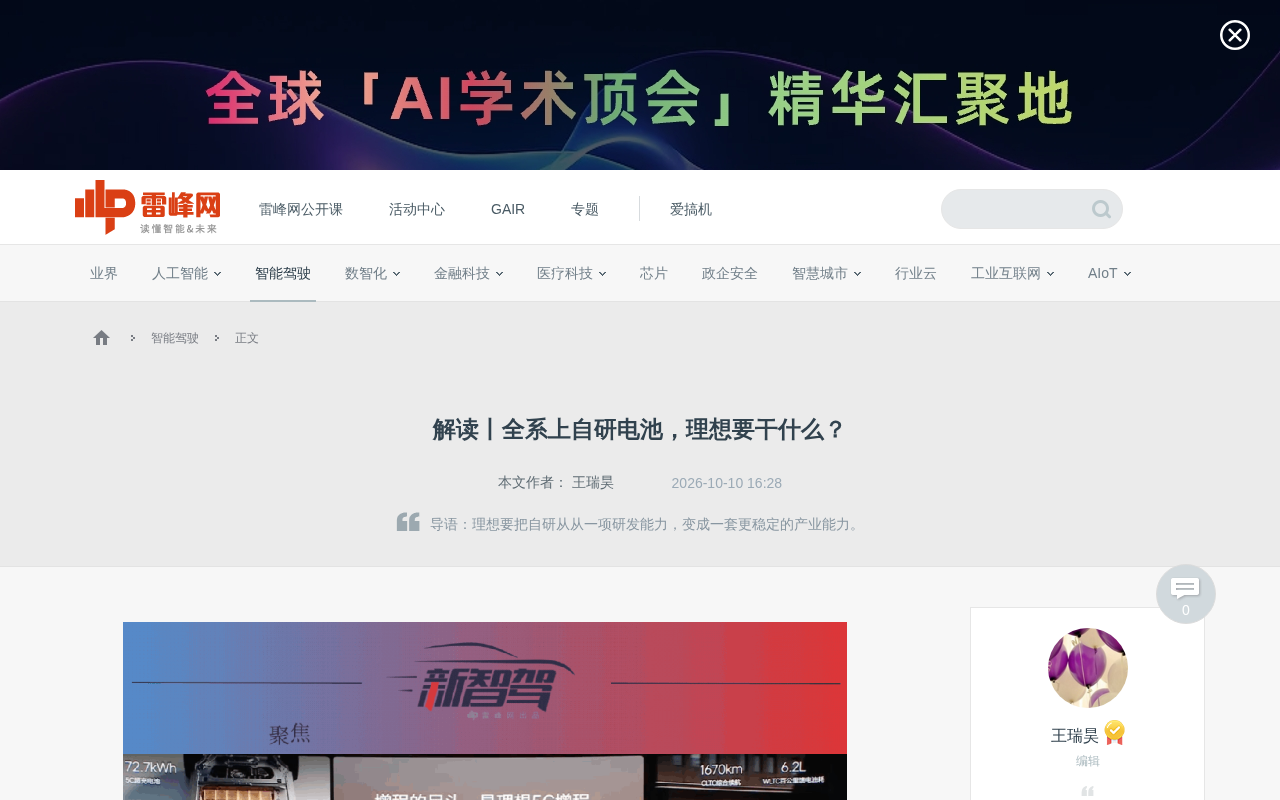
The Timeline Starting from MEGA: In-House Batteries Go Full Lineup
Li Auto has drawn a clear dividing line for new-generation MEGA customers. Users who locked in orders before 3:00 PM on September 7 will receive vehicles equipped with CATL's 5C ternary lithium batteries in the first batch. Those who lock in orders after 3:00 PM will enter the delivery batch equipped with Li Auto's in-house 5C ternary lithium battery, with deliveries expected to begin in November.
This marks the first time the in-house battery has completed a switchover on a flagship model like the MEGA. According to official plans, the in-house battery is already equipped on the new Li L8, L6, and i8. The all-new Li i9 will still use CATL's 5C ternary lithium battery in its first batch, with a switchover once the in-house battery completes production ramp-up. The 2026 Li i6 will be equipped directly with the in-house 5C battery.
From "validation on select models" to "rollout across the entire lineup," this shift in pace means the center of gravity in the battery supply system is being adjusted. As the installed base of in-house batteries continues to expand, manufacturing-side certainty is becoming more important than ever before.
Why Does Li Auto Insist on Developing Its Own Batteries?
When many people first hear about Li Auto's in-house batteries, a question easily arises: since CATL and Sunwoda have already made battery cells so mature, why would Li Auto make its own?
Li Auto's answer is clear: it was never after just an ordinary battery.
Li Auto established a battery R&D team from the very beginning. When developing the SEV model in 2015, the battery system was entirely self-developed and self-manufactured, with the team developing multiple Pack solutions around a portable in-cabin battery layout. Although the SEV was ultimately canceled due to strategic adjustments, the battery R&D team was retained.
What truly pushed battery R&D to a deeper level was the range-extender (EREV) route. Around 2015, the industry had no high-power, high-capacity battery truly suitable for range-extender vehicles. The Li ONE ultimately chose joint development with CATL and launched the industry's first range-extender large battery in 2019. By the second generation of range-extender models, Li Auto began pursuing both joint development and in-house development simultaneously: proposing 4C ultra-fast charging goals in 2018, forming a full-stack in-house team in 2019, and initiating a 5C ultra-fast charging battery project in 2020 with in-house cell R&D.
Liu Liguo, Senior Vice President of Vehicle and Electric Powertrain R&D at Li Auto, previously told Leiphone's 《新智驾》 that a battery is not a standard part that can simply be purchased and installed. It needs to be co-developed with the vehicle's chassis, body, thermal management, charging system, and software algorithms—only then can it truly meet users' needs for range, charging speed, and safety.
Liu Liguo also stated bluntly that if cost were the only concern, simply buying standard batteries on the market would be the easiest approach. But what Li Auto wants to solve is users' real charging anxiety.
5C Ultra-Fast Charging and LFP Range-Extenders: The Technical Depth of Non-Standard Batteries
A 5C battery is not simply about increasing charging current several times over. Liu Zhimin, Senior Director of Power Batteries at Li Auto, told Leiphone's 《新智驾》 that it requires simultaneously solving a series of issues including cell materials, electrode design, thermal management, structural safety, and lifespan degradation. If any single link is not done well, it can affect the vehicle's safety and long-term user experience.
When Li Auto initiated the 5C battery project in 2020, mainstream industry solutions were still around 2C, and no mature 5C solution existed on the market. After years of R&D, Li Auto achieved mass production of 5C high-density ultra-fast charging batteries in 2024. The in-house 5C battery equipped on the all-new Li L8 achieves 72.7 kWh capacity and 430 km of pure electric range, while supporting peak 5C ultra-fast charging—10 minutes to 80%.
For a range-extender SUV, the significance of these numbers is not just faster charging, but pushing the pure electric experience of range-extender vehicles further forward. Liu Zhimin explained that the battery for a range-extender model cannot simply copy a pure electric solution. It must meet the energy needs of daily pure electric driving while also adapting to complex operating conditions such as engine intervention, frequent charge-discharge cycles, and high-power output. It has its own technical challenges in power, lifespan, thermal management, and SOC estimation.
The same logic applies to lithium iron phosphate (LFP) batteries. The industry long believed that LFP was unsuitable for range-extenders, with one of the core difficulties being SOC estimation. Through its in-house ATR algorithm, Li Auto sought to solve the challenge of estimating state of charge caused by LFP's flat mid-range voltage curve, making LFP application in range-extender models possible.
From the Li ONE's range-extender large battery, to 5C ultra-fast charging, to LFP range-extenders, Li Auto's 11 years of battery R&D has actually been doing the same thing all along: not accepting off-the-shelf answers from the market, but redefining answers around the vehicle and user needs.
The "C" in 5C is the industry unit for charge-discharge rate. 1C means a battery fully charges or discharges its rated capacity in 1 hour; 5C theoretically means full charge in 12 minutes. In practice, considering charging curves and battery protection, peak rate is usually calibrated using the "10%–80% range." Rate improvement is a systemic challenge for battery cells: the intercalation speed of lithium ions between cathode and anode, electrode coating thickness, and electrolyte wetting efficiency must all be matched simultaneously—otherwise lithium plating, localized overheating, and accelerated capacity degradation can occur. Therefore, high-rate batteries often require thinner electrodes, higher-conductivity material systems, and thermal management requirements far exceeding those of ordinary batteries. Around 2020, the industry mainstream was still at 2C–3C; 5C meant there were virtually no mature solutions available for direct procurement at the time, which is an important reason Li Auto chose in-house development and deep binding with manufacturing partners.
SOC (State of Charge) estimation refers to the BMS's assessment of remaining battery capacity, similar to a "fuel gauge." LFP batteries have an extremely flat voltage plateau—voltage changes very little in the 20% to 80% range, making it extremely difficult to infer capacity from voltage alone. When compounded by the frequent charge-discharge cycles and engine intervention of range-extender vehicles, errors are further amplified. The core idea of Li Auto's in-house ATR algorithm is to fuse multi-dimensional data including current integration, voltage characteristics, temperature, and historical operating conditions for dynamic correction, thereby providing reliable capacity estimation even within LFP's flat voltage range. Inaccurate SOC estimation directly affects range display, power output strategy, and battery lifespan management—which is one of the key reasons LFP was long considered "unsuitable for range-extenders."
What Does the ¥2.65 Billion Buy? Threefold Certainty
Multiple investors told Leiphone's 《新智驾》 that this capital injection contains one most important keyword: certainty.
After the capital increase is completed, Li Auto will directly hold 8.79% of Sunwoda Power's shares. Adding the 2.60% previously held through Chongqing Chezhiyuan Venture Capital Co., Ltd., the Li Auto system will hold a combined stake of approximately 11.17%, becoming Sunwoda's second-largest shareholder. The transaction references a pre-investment valuation of ¥27.4848 billion, with pricing consistent with Sunwoda Power's previous Series C capital increase.
This ratio does not mean Li Auto wants to control Sunwoda Power. Li Auto has previously made clear that in-house development and external procurement are not an either-or choice—CATL and Sunwoda are both important partners, and a diversified supply chain strategy will be maintained for now.
R&D certainty. Li Auto's batteries are becoming increasingly non-standard, meaning each generation of products requires redefining cells, Packs, BMS, and vehicle integration solutions. After the strategic investment, both parties can introduce next-generation product R&D requirements to the manufacturing side earlier. Liu Liguo said that battery R&D and manufacturing cannot be separated. The higher the rate and energy density of a battery, the more necessary it is to consider manufacturing processes, equipment capabilities, and quality control at the design stage. If a solution is handed to a supplier only after R&D is complete, it often increases the difficulty of mass production ramp-up.
Quality certainty. Li Auto has always emphasized that it is ultimately Li Auto that bears responsibility to users for performance, safety, lifespan, and after-sales service. To this end, Li Auto has set extremely high quality requirements for its in-house batteries, establishing numerous quality control points from cells to Packs and incorporating manufacturing data into its own systems. Liu Zhimin stated that battery quality is not guaranteed by any single inspection step, but must run through the entire process of materials, cells, modules, Packs, and vehicle validation.
Capacity and delivery certainty. This may be the most practical value of this investment. As Li Auto's in-house batteries begin entering more models including the MEGA, i9, and i6, battery demand will continue to expand. Since Li Auto insists on a non-standard approach, its cells cannot simply share standard production lines with other customers—in many cases, dedicated lines are required.
Li Auto and Sunwoda: From Supplier to Strategic Binding
Li Auto's relationship with Sunwoda did not begin with this ¥2.65 billion. According to Li Auto, the two parties have engaged in deep cooperation for nearly 6 years. Over the past few years, one important role Sunwoda has played is helping Li Auto truly bring its in-house battery technology into mass production.
Here it is necessary to clarify an easily misunderstood point: Li Auto's in-house batteries do not mean Sunwoda is manufacturing batteries under Li Auto's brand. The division of labor between the two parties is closer to Li Auto defining the product and Sunwoda completing engineering manufacturing. Li Auto is responsible for product definition—from cell-level material formulations and structural systems to underlying development of Packs and BMS, all led by Li Auto. Sunwoda leverages its capabilities in cell manufacturing, engineering, and supply chain to turn Li Auto's technical solutions into products that can be delivered at scale.
Liu Zhimin stated that Sunwoda has accumulated deep experience in high-power batteries, manufacturing processes, and mass production ramp-up. Sunwoda's long-accumulated HEV battery technology needs to handle operating conditions such as high-frequency charge-discharge and high-power output, which aligns strongly with the technical direction Li Auto pursued in advancing 5C ultra-fast charging early on. What Li Auto needs is not a factory that merely handles contract manufacturing, but a manufacturing partner capable of participating in engineering and jointly solving mass production problems.
Sunwoda also has experience serving top-tier customers including Apple, Tesla, and Xiaomi, and can provide not just capacity, but also high-standard manufacturing, quality management, supply chain coordination, and large-scale delivery capabilities.
The evolution of the relationship can be seen in three stages: initially a supplier relationship, then a joint development relationship, and now entering a strategic binding relationship. What Li Auto gives Sunwoda is also not just capital—as an automaker, Li Auto can provide sustained product demand, a clear technology roadmap, and real vehicle application scenarios. Sunwoda, in turn, gains a stable, long-term customer from Li Auto while participating in the development of next-generation high-rate, high-safety, long-life battery technologies.
The Boundaries of In-House Development: Why Not Make 100% In-House
Li Auto did not choose to make 100% of its batteries in-house. Li Auto itself acknowledges that the battery industry already has a mature manufacturing system. Rather than investing substantial resources into cell factories, equipment, and production lines, it is better to concentrate R&D resources on the parts that can truly create product differentiation.
As a result, Li Auto ultimately formed a rather interesting model: core technologies are self-defined, cells can be co-developed or contract-manufactured, and Packs can be self-made or manufactured through joint venture systems. Li Auto is responsible for designing what this battery is; industrial partners are responsible for manufacturing it stably and at scale.
The key to this model is that Li Auto controls the definition rights and key technologies of the battery product, rather than bringing all manufacturing processes back in-house. As in-house batteries enter the full-lineup rollout stage, whether this model can remain stable at a larger scale will determine the ultimate quality of Li Auto's "non-standard battery" route.
Background Supplement
The division of labor among Pack, cells, and BMS is key to understanding an automaker's battery role. The cell is the smallest energy unit; the module integrates cells into a manageable unit; the Pack integrates modules, BMS, thermal management system, structural components, and high-voltage connections into a complete vehicle-installable battery pack. Even if an automaker does not build its own cell production lines, it often intervenes deeply at the Pack level, because the Pack directly determines vehicle chassis layout, crash safety, cooling efficiency, and charging performance—it is the link most prone to differentiation. Cell manufacturing, by contrast, is a typical heavy-asset segment, with a single production line requiring investments often in the billions of yuan, and yield ramp-up depending on long-term process accumulation. This explains why Li Auto chose the division of labor of "core technology in-house, cell cooperation, Pack self-manufacturing" rather than taking on all manufacturing processes.
One-line Summary
Li Auto injects ¥2.65 billion into Sunwoda Power, trading strategic binding for certainty in its non-standard in-house batteries.
Paragraph Summary
Li Auto is injecting ¥2.65 billion into Sunwoda Power, holding a combined stake of approximately 11.17% to become the second-largest shareholder, while its in-house 5C battery expands from the L8, L6, and i8 to the MEGA, i9, and i6—marking a shift in its battery supply focus from partial validation to full-lineup rollout. Li Auto insists on in-house development because non-standard batteries like 5C ultra-fast charging and LFP range-extenders require deep coordination with the vehicle, thermal management, and BMS—off-the-shelf standard parts cannot solve charging anxiety. The division of labor with Sunwoda is that Li Auto defines the product while Sunwoda completes engineering manufacturing, rather than simple contract manufacturing. This investment is essentially about obtaining threefold certainty in R&D, quality, and capacity delivery, while Li Auto retains a diversified supply chain with CATL, Sunwoda, and in-house development running in parallel—without going 100% self-manufactured.
Related articles

Workbuddy for Absolute Beginners: How a Desktop AI Agent Fits Into Real Workflows
A beginner's guide to the Workbuddy desktop AI agent: installation, claiming credits, file management, and building automated workflows—compared with CodeX for fit and cost, helping professionals shift from AI question-askers to AI managers.

OpenAI's New Agent Stack: Computer Use, Decisions API, and Ultra-Fast Workflows
OpenAI Dev Day unveiled a new agent stack: Computer Use outperforms humans, Decisions API delivers ultra-low-latency classification via Luna, Agents API opens the same Computer Use capabilities, and GPT-6.1 Sol costs only one-seventh of Astra. Core updates, benchmark data, and developer insights.

Liang Wenfeng Open-Sources DeepInfo Inference Framework, Takes On U.S. Ban
DeepSeek open-sources its DeepInfo inference framework after its models, featuring GPU/CPU cross-pipelining, small-model prediction with large-model verification, and full Huawei Ascend and NVIDIA chip support—facing the U.S. federal ban head-on. This article analyzes its significance for AI deployment and open-source strategy.