Liang Wenfeng and DeepSeek: How an Idealist Is Disrupting Global AI with Algorithmic Efficiency

How DeepSeek's founder Liang Wenfeng used algorithmic efficiency and open-source strategy to disrupt global AI.
DeepSeek stands out in China's AI landscape for being fully open-source and built by a ~300-person team. Founder Liang Wenfeng, a quantitative finance veteran with financial independence, prioritizes algorithmic efficiency over raw compute, runs an ultra-flat three-layer organization, and leverages the MIT License to challenge closed incumbents like OpenAI — achieving GPT-4-level results at a fraction of the cost.
Two Anomalies: What Makes DeepSeek So Different
In China's AI startup landscape, DeepSeekAd has always been an outlier. From V1, V2, V3 to DeepSeek R1, and now DeepSpark — which just launched with inference speeds up to 85% faster — this company has consistently held to a path the outside world struggles to understand: open-source and free.
Building large language models is notoriously capital-intensive, often requiring tens or even hundreds of millions of dollars. Isn't the whole point of running a company to turn a profit? DeepSeek had every opportunity to monetize its leading technology, yet chose to open everything up. That's the first anomaly.
The second anomaly is team size. DeepSeek started with just over a hundred people, and even by its most recent releases had only grown to around three hundred. Set against AI giants with thousands of employees, that's a tiny team — so how did it achieve such formidable technical results? To understand both anomalies, you have to start with the founder: Liang Wenfeng.
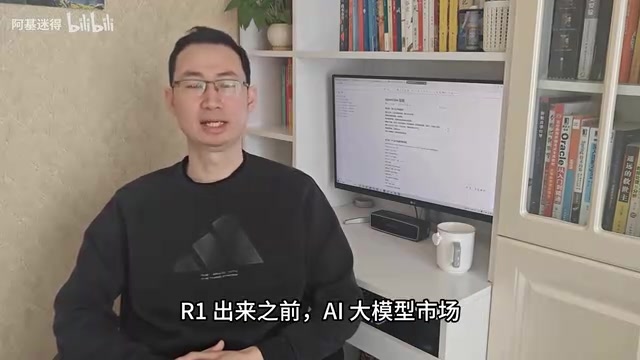
Liang Wenfeng: A Financially Free Technical Idealist
Nearly every key decision at DeepSeek is made by Liang Wenfeng alone, so understanding his underlying logic is essential.
Before founding DeepSeek, Liang had already achieved considerable success. His firm High-Flyer Quant (幻方量化), founded in 2015, is a quantitative private equity fund that trades entirely through mathematical models and AI algorithms. The firm grew rapidly: assets under management surpassed 10 billion RMB in 2019, then hit 100 billion RMB in 2021, earning it recognition as one of China's "Big Four" quant firms.
What's worth noting is the deep technical DNA shared between quantitative trading and large language models. Quant trading is, in essence, an early application of machine learning in finance — relying on statistical models, high-frequency data processing, and reinforcement learning strategies for automated trading. This overlaps substantially with training large language models at a foundational level: both require massive data processing, efficient algorithm optimization, and distributed computing infrastructure. What Liang accumulated at High-Flyer wasn't just capital — it was an entire mindset of being acutely sensitive to algorithmic efficiency. That background made him instinctively focused on "doing more with less compute," rather than defaulting to the resource-stacking approach typical of traditional internet companies.
This means Liang Wenfeng wasn't a greenhorn entrepreneur — he was a seasoned veteran at the intersection of finance and AI, and had long since achieved financial independence. Abundant cash flow is the foundation of everything, and that security is something ordinary AI startups simply don't have.
So if High-Flyer Quant was performing so well, why start DeepSeek? Liang himself has admitted that if you're looking for a profit motive, you won't find one. The return on investment for fundamental research is too low.
The real driver was a sense of unwillingness to accept the status quo. For years, Chinese companies had grown accustomed to letting others innovate and simply adopting the results — as if that were the natural order of things. But Liang refused to accept that Chinese AI would forever trail behind others. When he realized he had the money, the compute, and the technical judgment — why wait? Just go do it.
This character has a bit of Elon Musk about it — obsessively technical, pragmatic, and driven by a sense of mission. If he were purely in it for the money, without a trace of ambition, he never would have gotten this far.
Three-Layer Flat Structure: Letting Top Talent Thrive Without Bureaucracy
Money and ideals aren't enough — you also need an organizational model that works for elite talent. The way DeepSeek operates internally is another secret to its technical strength.
DeepSeek has only three layers: founder, team leads, and frontline engineers. No middle management, no slide-deck presentations, no laborious cross-departmental coordination. If someone has an idea and it's technically sound, they can directly requisition compute resources to test it — no need to navigate layers of approval. A fresh graduate with a good enough idea can get access to hundreds of GPUs on the spot.
This stands in sharp contrast to big tech companies. At a large firm, running an experiment means writing a proposal, sitting through a review meeting, and queuing for resources — by the time it's approved, the moment has passed. Big tech companies aren't short on talent; their systems are what drain that talent. Organizational friction can grind a genius into mediocrity.
Liang's hiring philosophy is also distinctive:
- He doesn't idolize AI experts — many established experts have calcified thinking and tend to tinker within existing frameworks rather than rethink from scratch;
- He favors top young talent with backgrounds in physics and mathematics — they're more likely to rebuild algorithms from the ground up.
Even as DeepSeek has grown, it remains a small team compared to the thousands employed at OpenAI or Anthropic. Its approach resembles the martial arts concept of "inch power" (寸劲) from Wing Chun — concentrating all force into a single point to deliver maximum impact.
The Freedom to Open-Source: What OpenAI Cannot Do
To understand the significance of DeepSeek's open-source strategy, you have to look back at the industry landscape at the time. After ChatGPT burst onto the scene, Silicon Valley giants held a lock on the most powerful models — Claude Opus was priced at $75 per million input tokens, and GPT-4 was in the same range. It was purely a seller's market.
There's an ironic contrast worth noting here. OpenAI is called "Open" because it was founded with genuinely nonprofit, open-access goals. But after accepting tens of billions in investment from Microsoft and converting to a for-profit entity, its models grew more powerful — and more closed. Starting with GPT-3, OpenAI went fully proprietary.
You can't entirely blame Sam Altman — it's a structural outcome. Once you've taken billions from investors, shareholders expect returns and the board demands profits. Open-sourcing becomes essentially impossible.
DeepSeek is the polar opposite. Liang Wenfeng is the controlling shareholder and doesn't answer to anyone — if he says open-source, it's open-source; if he says MIT License, it's MIT. The MIT License is one of the most permissive open-source licenses available, allowing anyone to freely use, modify, and distribute the code — even in commercial products — with the only requirement being that the original copyright notice is retained. This contrasts sharply with the GPL's "copyleft" provisions (which require derivative works to also be open-sourced). Choosing MIT means companies can embed DeepSeek's models directly into commercial products at zero cost, dramatically lowering the barrier to adoption. Strategically, this mirrors the logic of Android being made available to phone manufacturers, or the Linux kernel being freely available to cloud providers — use ultra-low access costs to rapidly build ecosystem scale, ultimately gaining influence over standards and talent attraction. "OpenAI wants to be open but can't; DeepSeek wants to be open and can" — these two kinds of freedom are fundamentally different.
Algorithmic Efficiency: Overtaking on the Overlooked Track
Large model development is a money-burning game. How do three hundred people compete with several thousand and hundreds of billions of dollars? The answer: don't compete on the same track. Liang Wenfeng identified a neglected gap: algorithmic efficiency.
The prevailing industry logic at the time was "more is better": buy more GPUs, build bigger clusters, burn more compute. Liang had a sharp counter-view: "If capital accumulation alone could drive technological progress, large companies would have monopolized all innovation long ago." DeepSeek chose to pursue breakthroughs at the level of algorithmic architecture instead.
The most illustrative example is DeepSeek R1. Its most stunning feature wasn't accuracy — it was publicly exposing the full chain of reasoning. OpenAI's o1 had reasoning capabilities at the time, but kept them hidden, citing "safety concerns." Behind that was a very specific technical threat: knowledge distillation. Distillation involves training a smaller "student" model on the outputs of a larger "teacher" model, enabling the student to approximate the teacher's performance with far fewer parameters. If the reasoning chain is fully public, competitors can use it directly as training data to replicate similar capabilities at minimal cost. This is a kind of "intelligence warfare within an arms race." DeepSeek R1 voluntarily gave up this moat in exchange for broader academic influence and community trust — and R1's paper promptly became one of the most downloaded AI papers in the world, with returns far exceeding expectations.
Under that pressure, OpenAI was compelled to update o3-mini less than a month after R1's release, beginning to display reasoning processes — though still as curated summaries with half the picture hidden.
Three Core Innovations Behind DeepSeek R1
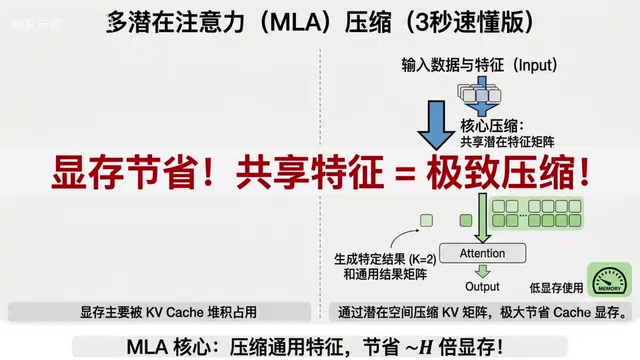
R1's rise came down to three things done right:
-
Finer-grained MoE architecture — The core idea of Mixture of Experts (MoE) is to split a large neural network into multiple "expert" sub-networks, with a gating network dynamically selecting a small number of experts to participate in each inference pass. This allows the total parameter count to be large (improving expressive capacity) while the number of parameters actually activated at any time remains small (reducing compute). DeepSeek's innovation was to make expert granularity finer and to optimize the expert routing algorithm for more balanced load distribution and higher GPU memory utilization, significantly improving throughput on the same hardware;
-
MLA memory optimization — Context memory is compressed into lower dimensions, dramatically reducing GPU memory usage while preserving key information;
-
Pure reinforcement learning training strategy — Traditional large model training relies heavily on RLHF (Reinforcement Learning from Human Feedback) with extensive human annotation — an extremely costly process. DeepSeek R1 explored a "pure reinforcement learning" path: enabling the model to autonomously learn reasoning strategies through reward signals from environment interaction, without large amounts of human annotation — similar to how AlphaGo Zero learned to play Go from scratch. This approach not only drastically reduced annotation costs, but unexpectedly caused the model to spontaneously develop chain-of-thought capabilities — which is precisely the technical reason R1 can display its full reasoning process. Combined with rock-solid engineering optimization and a thorough commitment to open-source, training became more stable and reproducible.
Even more striking is the cost: the base model V3 cost only $5.58 million to train, and the subsequent reinforcement learning phase cost just $290,000. By comparison, OpenAI's training of GPT-4 cost, in Sam Altman's own words, "well over $100 million." DeepSeek fired its first shot directly at training costs. DeepSpark fires the second — at inference costs. The playbook never changes: compete on algorithmic efficiency, not raw compute muscle.
Open Source: The Only Winning Card Left to Play
When all is said and done, open source is the only disruptive card Liang Wenfeng could play. "You profit from closed models — I'll price mine at one-tenth. You make money through monopoly — I'll let every developer in the world use it for free." This strategy transformed DeepSeek from an obscure challenger into a force systematically shaking the entire global AI landscape.
DeepSeek recently completed a 50 billion RMB funding round, with Liang Wenfeng personally contributing 20 billion. What he bought wasn't equity — it was absolute control, free from capital interference — precisely what OpenAI has always wanted but never been able to secure.
When you strip it all back, DeepSeek's rise isn't a business miracle. It's a man worth billions choosing to do things the way he believes is right. Liang is famously low-key — reportedly once donating 138 million RMB anonymously under the alias "an ordinary little pig."
As the team continues to grow, can this "inch power" focus be sustained? That's worth watching closely. But whatever happens next, Liang Wenfeng and his defiant vision for Chinese AI have already fired their own shot on the global stage.
Key Takeaways
Related articles

Felix Rieseberg Personal Homepage
Felix Rieseberg's personal homepage sparks attention on Hacker News. This article covers the Slack engineer's technical background, the rise and fall of nativefier, and the value of a developer homepage as a tech calling card.

@ai-sdk/vue 3.0.306 Patch Release Syncs with [email protected] Update
@ai-sdk/vue 3.0.306 released, synced with [email protected]. A routine patch release for the Vercel AI SDK ecosystem with no public API changes; the Vue adapter layer stays version-aligned with the core package.

Gemini 4 Argon API Launches: The Era of Million-Token Output Begins
Google launches Gemini 4 Argon with sparse MoE architecture, up to 1M output tokens, and a 68.90% Vals Index score, available across API, AI Studio, and the Gemini app.