Libghostty 1.0 Released: The Terminal Core Library Goes Independent

Ghostty's core logic is split into the standalone library Libghostty 1.0, with a commitment to interface stability.
The release of Libghostty 1.0 marks Ghostty's shift from a single terminal emulator to a "core library + multiple frontends" architecture. Core logic covering PTY management, the rendering pipeline, input handling, and config parsing is now a standalone reusable library, with the terminal app demoted to one consumer. Multi-platform support and embedded scenarios drive the split; 1.0's meaning is the API stability commitment, not feature count. Community discussion focuses on engineering usability, showing the library positioning has been accepted.
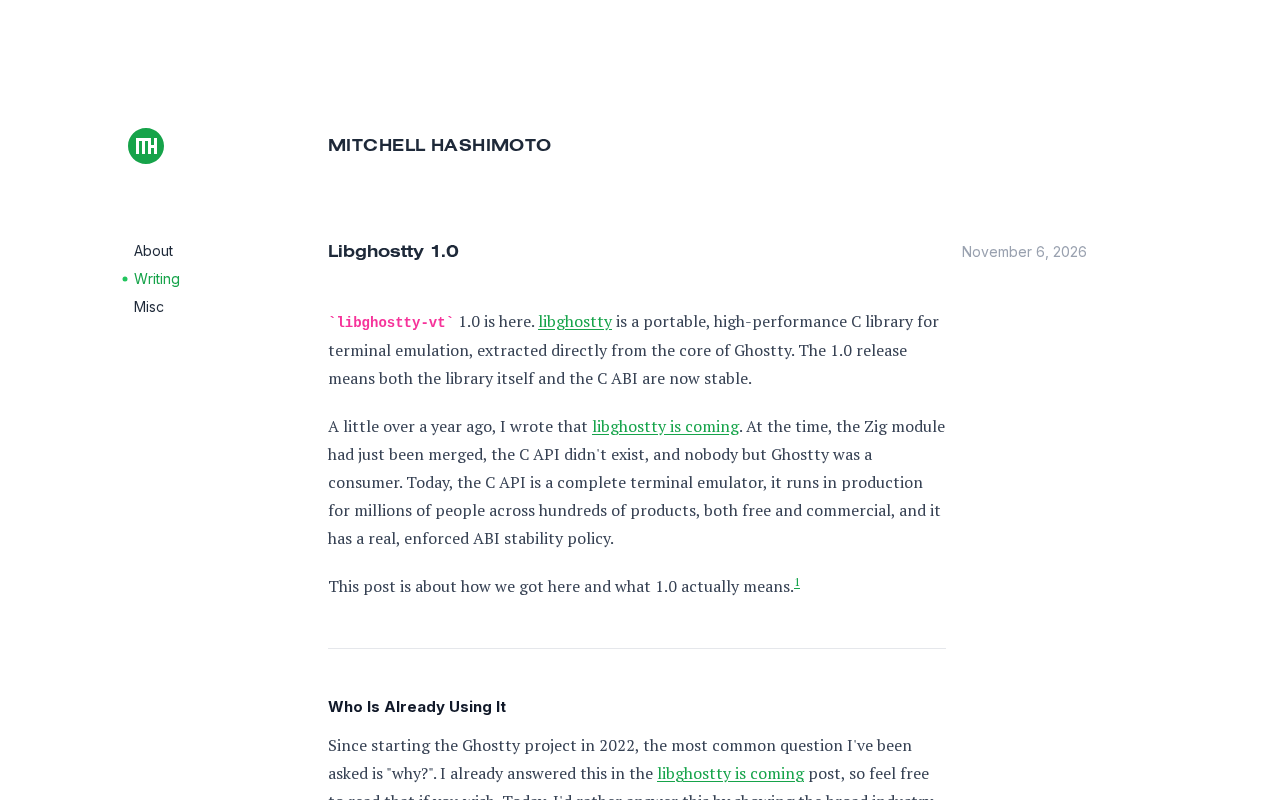
Developers in the terminal toolchain space have just hit a notable milestone: Mitchell Hashimoto has released Libghostty 1.0. The name is familiar to anyone following the terminal emulator ecosystem, but the "Lib" prefix signals that the architectural split of the Ghostty project has entered a substantive phase.
From Terminal Application to Reusable Core Library
Ghostty first entered the public eye as a "fast, native, feature-rich" terminal emulator, and the independent release of Libghostty changes how it positions itself. The core logic has been extracted into a standalone library, with the terminal application becoming just one consumer built on top of it.
The value of this split lies in redrawing the boundaries of reuse. Terminal emulation looks like a vertical domain, but its internals—PTY management, the rendering pipeline, input handling, config parsing—are meaningful to any tool that needs embedded terminal capabilities. Libghostty exposes these capabilities as a library, so external projects no longer have to reimplement a terminal core from scratch.
In the original post, Hashimoto explicitly frames 1.0 as the starting point for a stable external interface. For a library, the significance of 1.0 isn't the number of features but the API commitment—downstream projects can build on it without worrying that interfaces will change arbitrarily.
PTY (pseudo-terminal) is the key abstraction layer between a terminal emulator and the operating system. In Unix systems, TTY originally referred to physical terminal devices, while a PTY consists of a master/slave pair: the terminal emulator holds the master end, and the shell or programs running inside access the slave end. The master forwards input and output byte streams, while the slave responds to ioctl calls like a real terminal would—window size queries (TIOCGWINSZ), terminal mode switching (termios), and so on. This mechanism lets a terminal emulator provide full terminal semantics—job control, signal delivery (Ctrl-C generates SIGINT), line editing, echoing—without actually driving hardware. By incorporating PTY management into the core library, Libghostty means consumers no longer have to handle master/slave lifecycles, resize propagation, and cleanup when child processes exit; they only need to focus on presenting the byte stream in the UI layer.
API stability commitments have a precise meaning in library versioning semantics. Semantic Versioning (SemVer) dictates that 1.0.0 marks the public API as stable; any subsequent breaking change must be reflected through a major version bump, and within the 1.x series only backward-compatible features or bug fixes may be added. For libraries with a C ABI or cross-language bindings, this commitment also involves binary compatibility concerns like struct layout, enum values, and symbol visibility—ABI breaks are often more insidious than source breaks, potentially causing downstream programs to crash suddenly before relinking. So Libghostty treating 1.0 as a "stable starting point for the external interface" is effectively a predictable change contract for downstream projects—and that's the first signal the community checks when assessing "can I build on this?"
The Engineering Considerations Behind the Split
Extracting core logic from an application is rarely a purely aesthetic choice; it's usually driven by real needs.
Multi-platform support is one key driver. Ghostty needs to cover different environments like macOS and Linux, where UI layers and system integration differ significantly. Putting platform-agnostic core logic in Libghostty, with the UI layer handling only platform-specific parts, lets a single terminal core serve multiple frontends and reduces duplicate maintenance.
Another consideration is embedded scenarios. Terminal capabilities are a hard requirement in many development tools, but they don't need Ghostty's full UI. A stable core library lets these projects choose to "take just the kernel" rather than pulling in the entire terminal application as a dependency.
This architectural approach has precedents in editors, IDEs, and remote development tools. Libghostty's release means terminal emulators are now following the same modularization path.
The terminal rendering pipeline is one of the most complex subsystems inside a terminal emulator. It must parse the byte stream from the PTY into escape sequence instructions, maintain an attributed character grid (cell grid), then composite to screen through font rasterization, glyph caching, cursor and selection drawing, and scroll region updates. Modern implementations typically use the GPU (Metal, OpenGL, Vulkan) for batched drawing, but graphics APIs and compositor behavior vary significantly across platforms. When abstracting the rendering pipeline into a core library, a "renderer interface" is usually designed, with each platform frontend providing a concrete backend, while the core library handles grid state, dirty region computation, and draw command generation. This way, the macOS frontend and Linux frontend can share the same terminal semantics and update strategy, only swapping out the final compositing layer—keeping behavior consistent while lowering multi-platform maintenance costs.
Community Reaction and Areas of Focus
The release drew 331 points and 52 comments on Hacker News—a moderately popular technical release topic. The focus in the comments offers a window into what developers truly expect from projects like this.
For a core library release, discussion typically centers on a few directions: whether the interface design is stable enough, whether cross-platform behavior is consistent, and how costly it is to embed into existing toolchains. The answers to these questions won't all be revealed on release day—they need to be verified after downstream projects actually integrate.
One signal worth noting: discussion around Libghostty focused more on "can I build things with this" than "is the terminal emulator itself good to use." This precisely shows that the library positioning has been understood and accepted by the community—the evaluation criteria have shifted from product experience to engineering usability.
Impact on the Terminal Ecosystem
Terminal emulators have long been a category with a relatively fixed product form, with each implementation maintaining its own full stack. By opening up the core layer, Libghostty could have an impact in two directions.
First, it lowers the barrier to adopting terminal capabilities. Projects that need embedded terminals no longer have to handle the complex details of PTY, escape sequence parsing, and rendering synchronization themselves—the core library takes on that work. Second, it raises the quality baseline for terminal core implementations: when multiple frontends share the same core, bug fixes and performance improvements in the core layer benefit all consumers.
Of course, library-ization also brings new engineering responsibilities. Interface evolution after 1.0 requires a more careful compatibility strategy, since any breaking change propagates downstream. Hashimoto releasing 1.0 as a stable starting point shows this responsibility has been factored into expectations.
Embedded terminals and "terminal emulator applications" are two different integration forms. In embedded scenarios, the host program (such as an IDE, note-taking tool, CI panel, or remote collaboration client) often occupies only a small area of the interface, requiring the terminal core to support non-fullscreen sizes, dynamic resize, multiple concurrent instances, coexistence with the host event loop, and even windowless offscreen rendering. This requires the core library to provide fine-grained control: explicit tick/draw calls, injectable PTY backends, configurable input mapping—rather than taking over the entire application lifecycle like a standalone terminal. Libghostty's emphasis on "taking just the kernel" is precisely to cover these needs excluded by full terminal applications—turning terminal capabilities into components the host program can orchestrate, rather than a standalone program that monopolizes the process.
Summary
The significance of Libghostty 1.0 isn't the version number itself, but the formal realization of the Ghostty project's shift from a single terminal application to a "core library + multiple frontends" structure. For the terminal ecosystem, it provides a reusable core layer; for developers, it opens a new option: don't reinvent the terminal wheel—build on a library that promises stability. What's worth watching next is how quickly real integration cases appear, and how the core library performs in real-world projects.
One-line Summary
Ghostty's core logic is split into the standalone library Libghostty 1.0, with a commitment to interface stability.
Paragraph Summary
The release of Libghostty 1.0 marks the Ghostty project's shift from a single terminal emulator to a "core library + multiple frontends" architecture. Core logic has been extracted into a standalone reusable library covering PTY management, the rendering pipeline, input handling, and config parsing, while the terminal application itself is demoted to just one consumer. The main drivers are multi-platform support and embedded scenarios: a platform-agnostic core serves multiple UI frontends, reducing duplicate maintenance, and tools needing embedded terminals can take just the kernel without pulling in the full application. The significance of 1.0 lies in the API stability commitment rather than feature count—downstream projects can build on it without worrying that interfaces will change arbitrarily. Community discussion focuses on engineering usability rather than product experience, showing the library positioning has been accepted. The release is expected to lower the barrier to adopting terminal capabilities and raise the quality baseline of core implementations.
Related articles
 Tech Frontiers
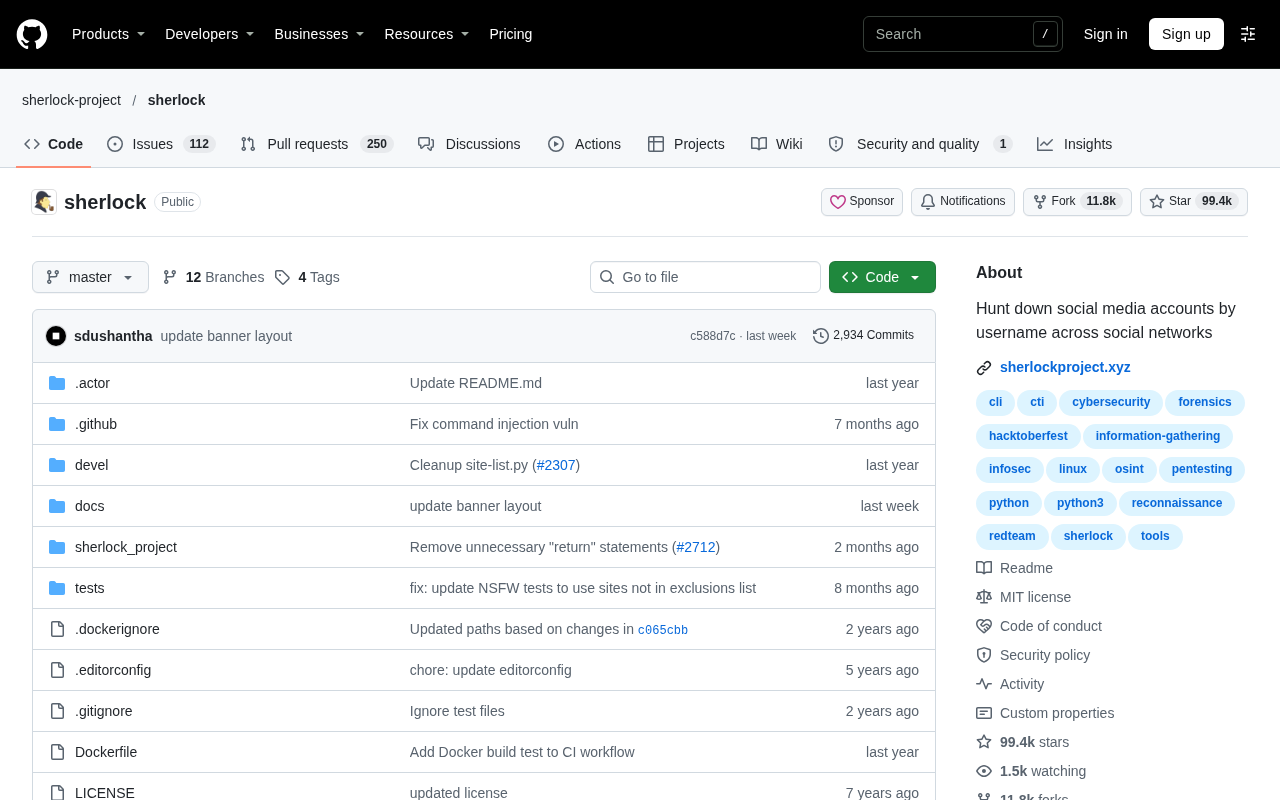
Sherlock: An Open-Source Tool for Tracking Usernames Across Social Networks
Sherlock is an open-source Python tool that tracks social accounts across networks by username. This article covers its core features, why developers love it, typical use cases, and privacy compliance considerations.
 Tech Frontiers
GitHub Daily·Nov 07: Agent-Ready and Context Compression
GitHub Trending Nov 07: meta's agent-ready design system astryx, billion-context's 5x context compression, sherlock nearing 100k stars, plus local-first localthings and bare-metal GPU orchestration nvke.
 Tech Frontiers
Buoyant Open-Sources Kinference: An Inference Control Plane for vLLM on K8s
Buoyant open-sources Kinference, an inference control plane for vLLM on Kubernetes, with declarative routing, KV-cache-aware load balancing, and per-tenant metrics—claiming 95% lower median TTFT in official benchmarks.