LibreChat: A Complete Guide to the Open-Source Self-Hosted Multi-Model AI Chat Platform

LibreChat is an open-source multi-model AI chat platform supporting self-hosting and all major AI models.
LibreChat is an open-source ChatGPT alternative with 36,000+ Stars, supporting unified access and free switching between mainstream AI models including GPT, Claude, Gemini, and DeepSeek. The project integrates MCP protocol, LangChain framework, code interpreter, and Artifacts among other advanced features, provides enterprise-grade multi-user permission management, supports Docker self-hosted deployment, and is suitable for individual developers, enterprise teams, and AI researchers.
Project Overview
LibreChat is a full-featured open-source ChatGPT alternative that has accumulated over 36,000 stars and 7,400+ forks on GitHub. Built with TypeScript, it positions itself as a self-hostable multi-model AI chat platform that is compatible with virtually all major AI models and providers.
For users and enterprises looking to break free from single-platform lock-in while prioritizing data privacy and flexible customization, LibreChat stands as one of the most mature open-source options available today.
Core Features
Multi-Model Support and Free Switching
LibreChat's greatest highlight is its extensive model compatibility. The current AI model market is highly fragmented—OpenAI's GPT series excels at general reasoning and code generation, Anthropic's Claude stands out in long-context processing and safety alignment, Google's Gemini has unique advantages in multimodal understanding, and open-source models like DeepSeek are competitive in cost-effectiveness and specific language tasks. Each model has its strengths and limitations, and no single model can cover all use cases. This "model fragmentation" problem is precisely the core pain point LibreChat aims to solve.
Currently supported models and platforms include:
- OpenAI Series: GPT-5, o1, Responses API, DALL-E-3
- Anthropic: Full Claude model lineup
- Google: Gemini, Vertex AI
- Open-Source Models: DeepSeek, Mistral
- Cloud Services: Azure OpenAI, AWS Bedrock
- Aggregation Platforms: OpenRouter, Groq
Users can freely switch between different AI models within the same conversation interface, eliminating the need to jump between multiple platforms. This unified entry point design not only improves usage efficiency but also makes it convenient to directly compare how different models perform on the same task. For professional users who need to select the optimal model based on task characteristics, this flexibility means no longer needing to maintain separate subscriptions and interfaces for each model—just bring your own API keys and pay per usage to orchestrate the entire model ecosystem.
Agents and MCP Protocol Integration
LibreChat integrates AI Agents functionality and the MCP (Model Context Protocol). MCP is an open protocol standard officially released by Anthropic in late 2024, designed to solve the standardization problem of AI model interaction with the external world.
Before MCP, every AI application needed custom integration code for each external tool, resulting in massive duplication of effort and compatibility issues. MCP defines a unified client-server architecture: AI applications act as MCP clients initiating requests, while external tools and data sources serve as MCP servers providing capabilities. The protocol standardizes interaction formats for tool descriptions, parameter passing, and result returns, enabling any MCP-compliant tool to be plug-and-play with any MCP-supporting AI application. Similar to how the USB protocol unified hardware interfaces, MCP is unifying AI's "software interfaces."
Through MCP support, users can seamlessly connect various external tools, databases, and APIs into the conversation flow, dramatically expanding the AI assistant's capability boundaries. For example, connecting to local file systems, querying databases, and calling third-party services can all be completed directly within a conversation. As the MCP ecosystem rapidly expands, more and more tool providers are publishing MCP server implementations, and LibreChat users can directly benefit from this growing tool ecosystem.
Code Interpreter and Artifacts
LibreChat includes a built-in code interpreter that supports writing and executing code directly within conversations, similar to ChatGPT's Code Interpreter. It also implements interactive content generation similar to Claude Artifacts.
Artifacts is an innovative interaction mode that Anthropic introduced for Claude in mid-2024. Traditional AI conversations can only output plain text, but Artifacts allow AI to generate independently viewable and interactive content components—such as runnable code snippets, SVG graphics, React components, and HTML pages. These components are presented in a separate panel alongside the conversation interface, and users can interact with them directly (clicking buttons, entering data) rather than merely reading code text. This mode greatly enhances AI's practicality in creative design, prototyping, data visualization, and similar scenarios, upgrading AI from a "text generator" to an "interactive content creation tool."
LibreChat brings this capability into the open-source ecosystem, where AI can output interactive components like charts and webpage previews, delivering a smoother experience in creative and development scenarios.
Enterprise-Grade Security and Multi-User Management
LibreChat provides a comprehensive multi-user authentication and permission management system:
- User registration and login management
- Role-based permission hierarchy
- Centralized API key management
- Strict conversation data isolation
This mechanism makes LibreChat suitable not only for personal use but also for team collaboration and enterprise-grade private deployment scenarios.
Technical Architecture Analysis
LangChain Framework Integration
The project integrates the LangChain framework at its core, providing powerful orchestration capabilities for complex AI workflows. LangChain is one of the most popular LLM application development frameworks today, created by Harrison Chase in 2022. Its core value lies in providing a standardized abstraction layer that encapsulates LLM calls, prompt management, memory systems, tool calling, and other common patterns into composable modules.
The concept of "chain calling" (Chain) refers to linking multiple processing steps together to form a workflow—for example, first retrieving relevant documents, then injecting document content into prompts, and finally calling the model to generate an answer (i.e., the RAG pattern). LangChain also provides an Agent mechanism that allows models to autonomously decide which tools to call and in what order to execute them, enabling more complex autonomous reasoning processes.
Leveraging LangChain, LibreChat implements chain calling, context memory management, tool calling, and other advanced features that go far beyond simple API proxy forwarding. This means LibreChat is not just a chat interface but a platform with the underlying capability to build complex AI workflows.
OpenAPI Actions and Functions
LibreChat supports OpenAPI specification-based Actions and Functions calling. OpenAPI (formerly Swagger) is the industry-standard specification for describing RESTful APIs. Through a single JSON or YAML schema file, you can fully describe an API's endpoints, parameters, request/response formats, and other information. When an AI model receives this schema, it can "understand" how to call the API—knowing what parameters to pass and what return results to expect.
Users can extend AI capabilities by defining OpenAPI schemas, enabling models to call custom external API services. This design philosophy aligns with OpenAI's GPTs ecosystem but is completely open-source and controllable, free from platform restrictions. Enterprises can expose internal API systems to AI through standard schemas without uploading API descriptions to third-party platforms, avoiding the risk of interface information leakage.
Self-Hosted Deployment Options
As an open-source project, LibreChat has been extensively optimized for self-hosting. It supports one-click Docker deployment, allowing users to run it on their own servers with complete control over data flow.
Data compliance is one of the core challenges enterprises face when adopting AI tools. The EU's GDPR (General Data Protection Regulation) requires that personal data processing must have a clear legal basis, and data subjects have the right to request deletion of their data. China's MLPS (Multi-Level Protection Scheme) imposes comprehensive requirements ranging from physical security to data security for information systems at different security levels. When using SaaS-based AI services, user input data (which may contain trade secrets, customer information, code, etc.) passes through third-party servers, creating data leakage and compliance risks.
Self-hosted solutions keep all data processing within the enterprise's own infrastructure—data never leaves the domain, fundamentally solving this problem. Docker containerized deployment significantly lowers the technical barrier to self-hosting, enabling small and medium-sized enterprises to quickly set up private AI platforms. For enterprises with data compliance requirements, this is crucial.
Practical Feature Highlights
- Full-Text Search: Supports full-text search across conversation history for quickly locating previous conversations
- Presets: Save commonly used model configurations and system prompts for one-click switching between different use cases
- Conversation Branching: Create branch conversations from any message node to explore different response directions
- File Upload and Analysis: Supports uploading documents, images, and other files for analysis and processing
Use Case Analysis
Individual Developers
Developers who frequently use multiple AI models can manage all models through a single interface with LibreChat, saving the cost and hassle of subscribing to multiple platforms. Just bring your own API keys and pay per usage for a more economical approach. Compared to separately subscribing to ChatGPT Plus ($20/month), Claude Pro ($20/month), and other services, calling through APIs on a per-usage basis can typically save over 50% in costs.
Small and Medium Enterprise Teams
After self-hosting LibreChat, enterprises can provide their teams with a unified AI assistant entry point while ensuring sensitive data doesn't leak externally. Through API key management features, administrators can monitor usage and control cost expenditure. Role-based permission hierarchy also ensures different departments can only access models and features within their permission scope, meeting internal information isolation requirements.
AI Researchers
Researchers can leverage the multi-model switching feature to quickly conduct model comparison experiments and performance evaluations under identical conditions, significantly improving research efficiency. The unified conversation interface eliminates interference from UI differences across platforms, making comparative testing more fair and efficient.
Conclusion
LibreChat represents an important direction in open-source AI tool development—consolidating fragmented AI capabilities into a unified, controllable platform. With an active open-source community (36,000+ Stars), comprehensive feature coverage, and enterprise-grade security design, it has become the benchmark project in the self-hosted AI chat platform space.
As the AI model ecosystem continues to flourish, the value of aggregation platforms like LibreChat will become increasingly prominent. It frees users from being locked into a single vendor, enabling flexible access to the capabilities of the entire AI ecosystem and truly achieving model freedom. In today's era of fierce model competition, having an open-source, controllable, universally compatible unified entry point may hold more strategic value than betting on any single model.
Related articles
 Product Reviews
The Programmer's Desk Setup Guide: Building a Workspace That Feels Like Home
Discover how programmers build productive, comfortable workspaces. From multi-monitor setups to ergonomic design, explore the desk philosophy that drives focus and flow.
 Product Reviews
Qoder vs Cursor Real-World Comparison: Which $20/Month AI IDE Is Better?
Hands-on comparison of Qoder vs Cursor AI IDEs: Agent autonomy, human interaction count, and architecture decisions. Qoder needed only 2 interactions vs Cursor's 8.
 Product Reviews
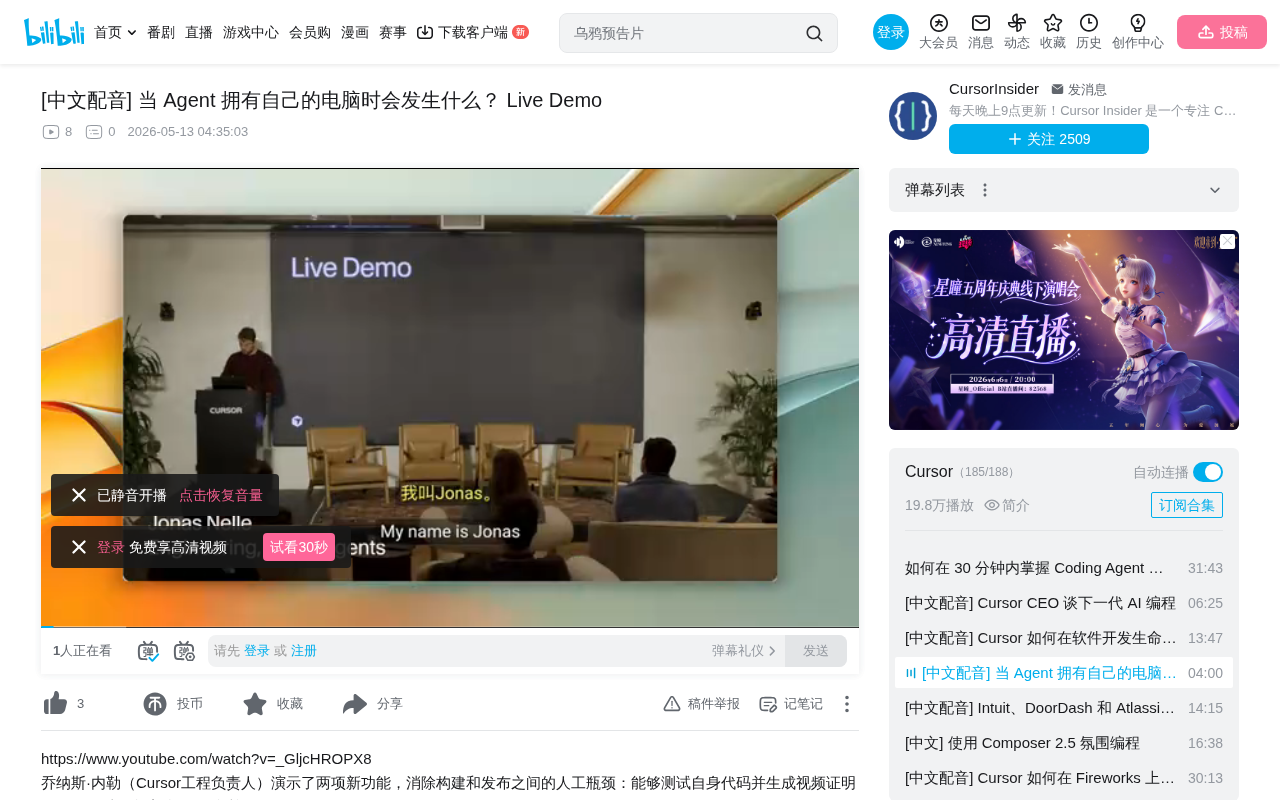
Cursor Cloud Agent Demo: Eliminating Bottlenecks Across the Entire Software Development Lifecycle
Deep analysis of Cursor's Cloud Agent demo showing how cloud VMs, automated test artifacts, and a full-chain control plane systematically eliminate human bottlenecks across the software development lifecycle.