LibreChat: An Open-Source Chat Platform That Connects All AI Models Through One Interface

LibreChat is an open-source self-hosted AI chat platform providing unified access to all major AI models
LibreChat is an open-source project with 36,500+ GitHub stars that provides a unified interface to access virtually all mainstream AI models including GPT-5, Claude, Gemini, and DeepSeek. It integrates cutting-edge features like AI Agents, MCP protocol, Code Interpreter, and Artifacts, supports enterprise-grade multi-user permission management and Docker one-click deployment, making it one of the best open-source AI platform solutions balancing data privacy with feature completeness.
Project Overview
LibreChat is a powerful open-source enhanced ChatGPT clone that has earned over 36,500 stars on GitHub with nearly 7,500 forks, making it one of the most active and feature-complete open-source AI chat platforms available today. Built with TypeScript, it supports self-hosted deployment, providing individuals and enterprises with a unified multi-model AI interaction interface.
TypeScript is a superset of JavaScript developed by Microsoft. By introducing a static type system, it catches type errors at compile time, significantly improving code reliability and maintainability for large-scale projects. For a full-stack project like LibreChat where frontend and backend coexist, using TypeScript means the frontend (typically React-based) and backend services (Node.js-based) can share type definitions and toolchains, reducing type inconsistency issues in data exchange between the two layers. More importantly, TypeScript's widespread adoption in the open-source community means that choosing it as the primary development language substantially lowers the barrier for community contributors—developers can understand and modify the code without learning a new language. This is one of the technical foundations that enables LibreChat to attract numerous contributors and maintain high activity levels.
Self-hosted refers to deploying software on servers controlled by the user, rather than relying on third-party cloud services. In the AI domain, self-hosting carries particular significance: sensitive enterprise data (such as internal documents, customer information, and business strategies) never passes through third-party platform servers, fundamentally eliminating the risk of data leakage. Additionally, self-hosting means users have complete customization rights over the system—they can adjust features, set access policies according to their needs, and remain unaffected by commercial platform feature limitations or pricing changes.
In today's era of flourishing large language models, users often need to switch between multiple platforms to use different AI models. LibreChat's core value proposition is: one interface to access all mainstream AI models, while maintaining data privacy and control.
Core Feature Highlights
Unified Multi-Model Access
LibreChat supports an impressive lineup of models and service providers, covering virtually all major AI providers:
- OpenAI Series: GPT-5, o1 reasoning models, Responses API, DALL-E-3 image generation
- Anthropic: Claude model series
- Google: Gemini, Vertex AI
- Open-Source Models: DeepSeek, Mistral
- Cloud Services: Azure OpenAI, AWS Bedrock
- Aggregation Platforms: OpenRouter, Groq
The Responses API is a next-generation interface launched by OpenAI in early 2025, designed to replace the traditional Chat Completions API as the primary interface going forward. Unlike the Chat Completions API, which primarily handles single-turn or multi-turn conversations, the Responses API natively supports tool calling, web search, file retrieval, and other Agent capabilities. Developers no longer need to manually orchestrate tool-calling loop logic—the API itself can automatically handle multi-step tool execution workflows. Furthermore, the Responses API introduces more flexible context management mechanisms, supporting state persistence across multiple calls, providing a cleaner development experience for building complex AI Agent workflows. LibreChat's support for the Responses API means users can experience OpenAI's latest Agent capabilities immediately.
Users can freely switch between different AI models within the same conversation, which is extremely practical in real-world use—for example, using GPT-5 for creative writing, switching to Claude for code review, then using DeepSeek for Chinese-language tasks, all seamlessly connected. Behind this multi-model switching capability lies a unified API abstraction layer design: although different model providers each have their own interface specifications and parameter formats, LibreChat standardizes them into a consistent calling interface through a middleware layer, so users don't need to worry about underlying differences.
The technical challenges of implementing this unified abstraction layer are far more complex than they appear on the surface. API differences across providers manifest at multiple levels: streaming response data formats vary—OpenAI uses Server-Sent Events (SSE) format, while some providers may use WebSocket or other protocols; token counting methods differ due to different tokenizers used by each model—the GPT series uses tiktoken while Claude uses a proprietary tokenizer, directly affecting context length calculations and cost estimates; multimodal input handling (such as images and files) also follows different specifications—some require Base64-encoded inline transmission, while others need files uploaded to object storage first with URLs passed instead. LibreChat employs an architecture design similar to the Adapter Pattern, implementing dedicated adapters for each provider that encapsulate these differences internally while exposing a unified interface contract to the upper application layer, achieving true "develop once, run on multiple models."
Agents and MCP Protocol Support
LibreChat has integrated AI Agents functionality and MCP (Model Context Protocol) protocol support.
AI Agents represent an important evolutionary direction for large model applications. Their core distinction from ordinary chat lies in their "autonomous decision-making → execution → feedback" loop capability. A typical Agent workflow is: receive user goal → analyze task → select appropriate tools → execute operations → evaluate results → decide next action. Unlike simple question-and-answer interactions, Agents can autonomously plan multi-step tasks and dynamically adjust strategies based on intermediate results during execution. OpenAI's Function Calling and Anthropic's Tool Use are both underlying technologies that support Agent capabilities.
MCP is an open standard protocol officially released by Anthropic in late 2024, with design inspiration similar to LSP (Language Server Protocol) in the programming world. LSP uses a standardized protocol to give any editor code completion, navigation, and other capabilities, while MCP allows any AI model to access external tools, databases, APIs, and other resources through a unified interface. MCP adopts a client-server architecture where AI applications act as clients initiating requests, and MCP servers encapsulate specific tool capabilities. This decoupled design means developers only need to write tool adaptations once, and all MCP-supporting AI platforms can use them. LibreChat's support for MCP means it's not just a chat tool, but an extensible AI work platform.
Through Agents, users can build AI assistants with autonomous decision-making capabilities, combined with OpenAPI Actions and Functions to implement complex automated workflows.
Code Interpreter and Artifacts
The project includes a built-in Code Interpreter that supports executing code directly within conversations, similar to ChatGPT Plus's feature of the same name. The code interpreter typically runs in a sandbox environment, supporting instant execution of languages like Python. Users can have AI write and run data analysis scripts, generate visualizations, process uploaded files, and more—transforming AI from "can only talk" to "can talk and do."
A sandbox is a critical security isolation technology, particularly important in AI code execution scenarios. When users ask AI to write and run code, that code is inherently untrusted—it may contain malicious operations, infinite loops, or resource exhaustion attacks. Sandboxes ensure security through multiple layers of mechanisms: filesystem isolation restricts code to accessing only designated directories, preventing reading or tampering with sensitive host system files; network access restrictions prevent code from sending data externally or launching attacks; CPU and memory resource quotas prevent individual execution tasks from exhausting server resources; execution time limits ensure that infinite loops and similar issues don't cause service hangs. Common sandbox implementation approaches include Docker container isolation, lightweight virtualization solutions like gVisor, and seccomp-based system call filtering. LibreChat's code interpreter relies on these security mechanisms to ensure platform-wide security while providing powerful execution capabilities.
Meanwhile, the Artifacts feature allows AI-generated code, documents, and other content to be displayed and edited independently, providing an interactive experience similar to Claude Artifacts. The design philosophy behind Artifacts is to extract AI-generated "works" (such as complete code files, HTML pages, SVG graphics, Markdown documents) from the conversation flow and present them in an independent panel where users can directly edit, preview, and download them, significantly improving the efficiency of AI-assisted creation.
Enterprise-Grade Security and Multi-User Management
LibreChat provides a comprehensive secure multi-user authentication system supporting:
- User registration and login management
- Role-based permission control
- Centralized API key management
- Conversation data isolation
This makes it suitable not only for individual use but also fully capable of meeting team and enterprise deployment needs. Administrators can centrally manage API keys and control different users' access permissions to different models. In enterprise scenarios, this centralized key management is particularly important—enterprises only need to maintain one set of API keys, distributing them to different departments and employees through LibreChat's permission system, avoiding key leakage risks while enabling unified monitoring and control of API usage and costs.
Technical Architecture and Ecosystem
Technology Stack
LibreChat adopts a modern full-stack technical architecture, primarily developed in TypeScript. The frontend provides a user interface highly similar to ChatGPT, while the backend integrates the LangChain framework to handle complex AI call chains.
LangChain is one of the most popular frameworks for building large language model applications, created by Harrison Chase in 2022. Its core philosophy is abstracting LLM calls into composable "chains," allowing developers to link prompt templates, model calls, output parsing, tool usage, and other steps into complex processing pipelines. LangChain provides a unified model interface abstraction layer, making it possible to switch between different AI providers by simply changing configuration without rewriting business logic. Additionally, it includes built-in advanced features such as memory management, document retrieval (RAG), and Agent decision loops, greatly reducing the development cost of building complex AI applications.
RAG (Retrieval-Augmented Generation) is one of the most important technical paradigms in enterprise AI applications today. While large language models possess broad general knowledge, they have two inherent limitations: knowledge staleness due to training data cutoff dates, and inability to access enterprise private data. RAG addresses these by retrieving relevant document fragments from external knowledge bases before model inference and injecting them as context into the prompt, allowing the model to generate answers based on the most current and accurate information. A typical RAG pipeline includes: document chunking → vectorization (Embedding) → storage in a vector database → semantic retrieval when users ask questions → sending retrieved results along with the question to the LLM. LangChain provides out-of-the-box component support for the entire RAG pipeline, which also lays the technical foundation for LibreChat to expand into advanced features like enterprise knowledge base Q&A in the future.
LibreChat's choice of LangChain as its core framework ensures both development efficiency and a lower barrier to entry for community contributors.
Practical Feature Matrix
Beyond core model access capabilities, LibreChat provides a rich set of practical features:
- Message Search: Quickly locate information within massive conversation histories
- Presets: Save frequently used model configurations and system prompts for one-click reuse. System prompts are hidden instructions sent to the model that define the AI's role, behavioral boundaries, and output style—a core technique in Prompt Engineering
- Conversation Branching: Support for creating new conversation branches from any message node. This design borrows the branching concept from version control systems (like Git)—in traditional linear conversations, if users are unsatisfied with an AI response, they can only regenerate or start over. Conversation branching allows users to "fork" new conversation paths from any point in the history while preserving the original conversation. This design is particularly suited for exploratory tasks, such as having AI analyze the same problem from different angles, or trying new creative directions while preserving the original approach, forming a tree-like thought exploration structure
- Import/Export: Support for conversation data backup and migration
LibreChat vs. Similar Open-Source Projects
In the open-source AI chat platform space, LibreChat's main competitors include Open WebUI, ChatBox, and others. Open WebUI (formerly Ollama WebUI) focuses on local model management and interaction, deeply integrating with local inference engines like Ollama; ChatBox positions itself as a lightweight desktop client, emphasizing a simple out-of-the-box experience.
Ollama is a local large model inference engine that has rapidly gained prominence in recent years, greatly simplifying the process of running open-source large models on personal computers—users need only a single command to download and run open-source models like Llama, Mistral, and Gemma without manually handling model weight downloads, quantization conversion, inference framework configuration, and other tedious steps. One of Ollama's core technologies is model quantization, which compresses model parameters from 32-bit or 16-bit floating-point numbers to 8-bit, 4-bit, or even lower precision integer representations, dramatically reducing VRAM usage and computational requirements. For example, a 7-billion parameter model requires approximately 14GB of VRAM at FP16 precision, but only about 4GB after 4-bit quantization, making it runnable on consumer-grade GPUs or even CPUs. The core advantages of local inference are completely offline operation, zero API costs, and absolute data privacy, though the tradeoff is that model capabilities are typically weaker than commercial closed-source models, and certain hardware requirements apply. Open WebUI's deep integration with Ollama makes it the preferred interface for local model users, while LibreChat focuses more on connecting to various commercial and open-source models via API—the two serve complementary roles.
In comparison, LibreChat's differentiating advantages are:
- Broadest Model Coverage: Supports virtually all mainstream and emerging AI models
- Most Complete Feature Set: From Agents to MCP, from code interpreter to Artifacts, it offers the richest feature matrix
- High Community Activity: 36,500+ stars and a continuously active development pace demonstrate the project's vitality
- Enterprise-Ready: Comprehensive multi-user management and security mechanisms
Docker Deployment and Getting Started Guide
LibreChat supports one-click Docker deployment, and for developers with basic operations experience, setup can typically be completed within 30 minutes. The advantage of Docker containerized deployment is packaging the application and all its dependencies into standardized runtime units, eliminating the "works on my machine" environment discrepancy problem. LibreChat's Docker Compose configuration files come with predefined orchestration relationships for components like the database (MongoDB) and application services—users only need to configure API keys and other environment variables to launch the complete service.
LibreChat's choice of MongoDB as the data storage layer has technical merit. MongoDB is a document-oriented NoSQL database that stores data in JSON-like BSON format. Unlike traditional relational databases (such as MySQL and PostgreSQL) that require predefined strict table schemas, MongoDB's schema is flexible and mutable. This characteristic is particularly important in AI chat platform scenarios: different models may return vastly different response structures—some include tool call results, some include image generation links, some carry token usage statistics, and some include Chain of Thought intermediate steps. With MongoDB, this heterogeneous data can be stored directly as nested documents without needing separate tables for each model's response format or frequent schema modifications. Additionally, MongoDB's query and index support for nested documents makes conversation history retrieval (such as filtering by model type or querying by time range) more efficient. For tree-like data structures like conversation branches, a document database's flexibility also has clear advantages over relational databases.
The project documentation is comprehensive and community support is active—solutions can be found for virtually any issue encountered.
For individual developers or small-to-medium teams looking to build a private AI assistant platform, LibreChat is currently one of the most recommended open-source solutions. It avoids the risk of exposing sensitive data to third-party platforms while offering access to virtually all mainstream AI model capabilities at minimal cost.
Summary
LibreChat represents an important direction for open-source AI tools: don't build models—build the unified gateway to models. This positioning is analogous to what browsers are to websites, or what operating systems are to applications—as underlying AI models continue to iterate and update, a stable, flexible interaction layer becomes the most dependable infrastructure for users. In today's era of rapid AI model evolution, a flexible, open, self-hostable unified interaction platform will only grow in value over time. Whether you're a heavy AI user, a developer, or an enterprise IT decision-maker, LibreChat is worth your attention and experimentation.
Key Takeaways
- LibreChat is an open-source enhanced ChatGPT clone with 36,500+ stars, supporting unified access to virtually all mainstream AI models including GPT-5, Claude, Gemini, and DeepSeek
- The project has integrated cutting-edge features like AI Agents, MCP protocol, Code Interpreter, and Artifacts, evolving from a chat tool into an extensible AI work platform
- It provides enterprise-grade secure multi-user authentication with role-based permission control and API key management, suitable for private team and enterprise deployment
- Built on TypeScript and LangChain with Docker one-click deployment support, active community, and comprehensive documentation, offering a low barrier to entry
- Its core value lies in "one interface for all models," delivering a unified multi-model AI interaction experience while maintaining data privacy
Related articles
 Product Reviews
The Programmer's Desk Setup Guide: Building a Workspace That Feels Like Home
Discover how programmers build productive, comfortable workspaces. From multi-monitor setups to ergonomic design, explore the desk philosophy that drives focus and flow.
 Product Reviews
Qoder vs Cursor Real-World Comparison: Which $20/Month AI IDE Is Better?
Hands-on comparison of Qoder vs Cursor AI IDEs: Agent autonomy, human interaction count, and architecture decisions. Qoder needed only 2 interactions vs Cursor's 8.
 Product Reviews
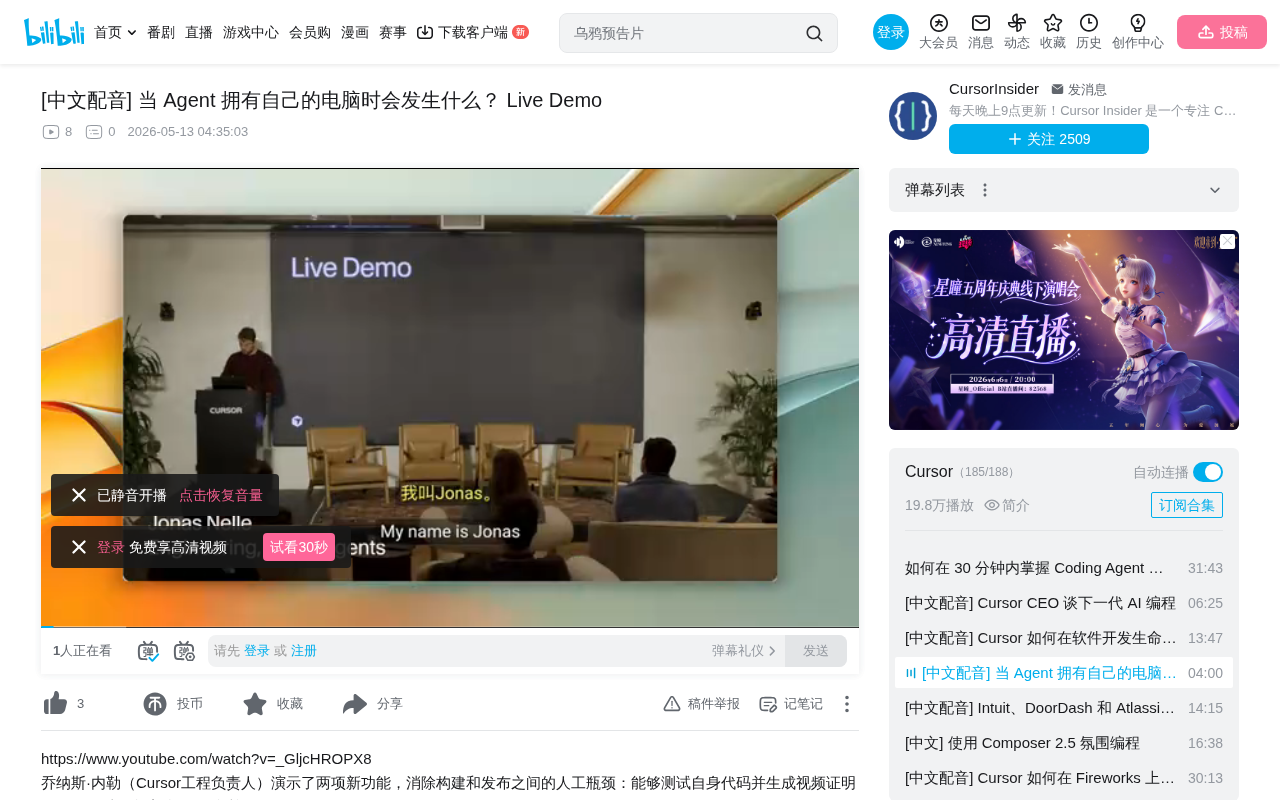
Cursor Cloud Agent Demo: Eliminating Bottlenecks Across the Entire Software Development Lifecycle
Deep analysis of Cursor's Cloud Agent demo showing how cloud VMs, automated test artifacts, and a full-chain control plane systematically eliminate human bottlenecks across the software development lifecycle.