LibreChat: Complete Guide to Deploying and Using the Open-Source Multi-Model AI Chat Platform

LibreChat is an open-source multi-model AI chat platform supporting self-hosting and seamless model switching.
LibreChat is an open-source AI chat platform with 36.5K GitHub Stars that integrates mainstream models like OpenAI, Claude, and Gemini into a unified interface with real-time model switching during conversations. The project features Agents, MCP protocol support, Code Interpreter, and Artifacts functionality, along with enterprise-grade multi-user management and one-click Docker deployment, making it the most comprehensive self-hostable open-source ChatGPT alternative available.
Project Overview
LibreChat is a powerful open-source enhanced ChatGPT clone that has earned over 36,500 Stars on GitHub with 7,485 Forks, making it one of the most active open-source AI chat platforms available today. Built with TypeScript and supporting self-hosted deployment, it provides individuals and enterprises with a unified multi-model AI interaction interface.
In today's landscape where large language models are flourishing, users often need to switch back and forth between multiple platforms like ChatGPT, Claude, and Gemini. LibreChat was created to solve exactly this pain point — it integrates mainstream AI models into a single unified interface, allowing you to freely switch between different models within the same conversation window. It's arguably the best open-source ChatGPT alternative available.
Core Features
Multi-Model Support with Seamless Switching
LibreChat's greatest highlight is its extensive model compatibility. It supports virtually all mainstream AI models, including OpenAI (GPT-5, o1), Anthropic (Claude), Google (Gemini, Vertex AI), DeepSeekAd, Mistral, Groq, and more. Users can also access additional models through aggregation services like OpenRouter.
OpenRouter is an AI model aggregation gateway service that unifies models from dozens of AI providers under a single API endpoint. Developers only need one API Key to access hundreds of models from companies like OpenAI, Anthropic, Meta, and Cohere. OpenRouter's core value lies in its unified billing, automatic failover, and model routing capabilities — when one provider's service becomes unavailable, requests are automatically routed to other available providers. This aggregation model significantly reduces the engineering complexity of multi-model integration and serves as one of the key infrastructure components enabling LibreChat to quickly support new models.
More importantly, LibreChat supports real-time AI model switching during conversations. For example, you can start with GPT-4o for brainstorming, switch to Claude for long-form writing, and then use DeepSeek for code review — all without leaving the current conversation interface. This flexibility in multi-model switching is extremely practical in real-world workflows.
Agents and MCP Protocol
LibreChat integrates Agents functionality, allowing users to build AI assistants with autonomous decision-making capabilities. The project also supports the MCP (Model Context Protocol), an open standard introduced by Anthropic to standardize how AI models interact with external tools and data sources.
The MCP protocol was born from a deep industry need. Before MCP, every AI application that needed to connect to external tools (such as databases, file systems, or API services) required custom integration code, creating an M×N complexity problem — M AI applications interfacing with N tools required M×N adapters. MCP reduces this complexity to M+N by defining a unified client-server architecture: AI applications only need to implement the MCP client protocol, and tool providers only need to implement the MCP server protocol, enabling automatic interoperability. The protocol supports three core primitives: Resources (resource exposure), Tools (tool invocation), and Prompts (prompt templates). It has already been adopted by mainstream AI products like Cursor, Windsurf, and Claude Desktop, and is becoming the de facto standard for the AI Agent ecosystem.
With MCP protocol support, LibreChat can connect to various external tools and services, greatly expanding the capability boundaries of AI assistants. You can have AI directly access databases, call APIs, manipulate file systems, and more, achieving true AI workflow automation. This feature is particularly important for developers looking to build custom AI Agent workflows.
Code Interpreter and Artifacts
LibreChat includes a built-in Code Interpreter that supports executing code directly within conversations, which is extremely useful for data analysis, algorithm verification, and similar scenarios. Additionally, the project supports Artifacts functionality similar to Claude's, enabling real-time preview and editing of generated code, documents, and other content in a conversation sidebar — a WYSIWYG experience that significantly boosts development efficiency.
Artifacts is an interaction innovation that Anthropic introduced to Claude in mid-2024, representing a paradigm upgrade for AI conversation interfaces. In traditional AI chat interfaces, generated code, documents, charts, and other content are mixed within the chat message stream, making it difficult for users to independently edit and iterate on them. Artifacts separates these "independently existing creations" from the conversation flow, presenting them in independent panels within a sidebar that supports real-time preview, editing, and version management. Users can directly modify code in the Artifacts panel and see execution results, or edit SVG graphics with live preview. This "conversation + canvas" dual-pane interaction mode has become the standard paradigm for next-generation AI products, and LibreChat's support for this feature keeps its user experience on par with commercial products.
Enterprise-Grade Security and Multi-User Management
LibreChat provides a comprehensive secure multi-user authentication system supporting multiple authentication methods. This makes it suitable not only for personal use but also for team and enterprise-level self-hosted deployments. Administrators can configure different model access permissions and usage quotas for different users, ensuring reasonable resource allocation and cost control.
Technical Architecture Highlights
Rich Integration Capabilities
LibreChat has a remarkably rich technology stack:
- LangChain Integration: Leverages the LangChain framework for complex AI workflow orchestration
- DALL-E-3 Support: Generate images directly within conversations
- OpenAPI Actions: Supports defining custom actions through OpenAPI specifications
- Functions: Allows AI to call predefined functions to complete specific tasks
- Responses API: Supports OpenAI's latest Responses API interface
LangChain is currently the most popular framework for building large language model applications, created by Harrison Chase in 2022. Its core philosophy is to modularize the LLM application building process — through abstract components like Chains, Agents, Memory, and Retrieval, developers can assemble complex AI workflows like building blocks. For example, a typical RAG (Retrieval-Augmented Generation) pipeline can be quickly implemented through LangChain's Document Loader → Text Splitter → Embedding → Vector Store → Retriever → LLM Chain pipeline. LibreChat's LangChain integration means it can leverage the framework's rich toolchain and community ecosystem to implement advanced features such as multi-step reasoning, tool call orchestration, and conversation memory management.
Responses API is a next-generation API interface launched by OpenAI in March 2025, designed to replace the previous Chat Completions API as the primary interface going forward. Compared to the older interface, the Responses API natively integrates tool calling (Web Search, File Search, Code Interpreter), multi-turn conversation state management, and structured output capabilities, eliminating the need for developers to manually manage conversation history and tool calling logic. It also introduces the concept of "built-in tools," where AI can autonomously decide within a single request whether to search the web, read files, or execute code, dramatically simplifying the development complexity of Agent-type applications. LibreChat's support for the Responses API means users can directly benefit from OpenAI's latest Agent capabilities.
Cloud Service Compatibility
The project supports mainstream cloud platforms like Azure OpenAI Service and AWS, allowing enterprise users to leverage their existing cloud service subscriptions to deploy and use LibreChat without configuring separate API keys. This flexible cloud integration approach reduces migration costs for enterprises.
Azure OpenAI Service is Microsoft's enterprise-grade service that brings OpenAI models to the Azure cloud platform. Compared to using the OpenAI API directly, Azure OpenAI Service provides enterprise-level security guarantees — data is processed within Azure's regional data centers, is not used for model training, and supports enterprise security features like virtual network isolation, private endpoints, and Azure Active Directory authentication. For enterprises already using the Azure ecosystem, accessing LibreChat through Azure OpenAI Service allows them to reuse existing compliance audit, cost management, and identity authentication systems, avoiding the introduction of new vendor management overhead.
Comparison with Similar Projects
In the open-source AI chat platform space, LibreChat faces competition from projects like Open WebUI and ChatGPT-Next-Web. In comparison, LibreChat's advantages are primarily reflected in the following areas:
- Broadest Model Coverage: Supports virtually all mainstream AI models on the market, making it a truly multi-model chat platform
- Most Comprehensive Features: From Agents and MCP to Code Interpreter, its feature matrix is the most complete
- Enterprise-Grade Capabilities: Multi-user management and permission controls are more mature, suitable for team collaboration
- High Community Activity: 36K+ Stars and a continuously active development pace ensure long-term project sustainability
However, it's worth noting that Open WebUI offers a smoother integration experience with local models (like Ollama), while ChatGPT-Next-Web has advantages in lightweight deployment. Which project to choose depends on your specific use case.
Ollama is an open-source tool focused on running large models locally. It packages model downloading, quantization, and inference serving into a Docker-like streamlined command-line experience — users simply execute ollama run llama3 to start a Llama 3 inference service locally. Ollama supports GGUF-format quantized models and can run open-source models ranging from 7B to 70B parameters on consumer GPUs or even CPU-only environments. Open WebUI's deep integration with Ollama makes it the preferred frontend for local model use cases, while LibreChat, although it also supports Ollama, has its core strengths oriented more toward multi-source aggregation management of cloud API models.
Deployment and Usage Recommendations
LibreChat supports one-click Docker deployment, making the setup process relatively straightforward for users with some technical background. With just a Docker environment and the appropriate API Keys prepared, deployment can be completed within minutes. Here are some typical use cases:
- Individual Users: Centrally manage API Keys for multiple AI models, use all models in one interface, and eliminate the hassle of switching between platforms
- Small Teams: Share AI resources, centrally manage usage costs, and avoid budget overruns through quota controls
- Enterprise Deployment: Self-host in private environments to ensure data security and compliance while enjoying multi-model capabilities
Self-hosting is becoming increasingly important in the AI application domain, driven by multiple factors. First is data privacy and compliance requirements — regulations like GDPR and China's Data Security Law require that sensitive data not leave specific geographic regions, creating compliance risks when enterprises use third-party SaaS AI services. Second is cost control — when API call volume reaches a certain scale, self-hosting combined with bulk API discounts is often more economical than per-call pricing. Third is customization needs — enterprises need deep customization of AI systems, including connecting internal knowledge bases, customizing review rules, and integrating internal systems. LibreChat's self-hosting capability perfectly addresses these needs, with all user conversation data stored on their own servers and API Keys never routed through any third party.
LibreChat's Docker deployment is based on Docker Compose orchestration, typically consisting of multiple containers including the application service, MongoDB database, and optional vector database (such as Meilisearch). The project provides detailed docker-compose.yml templates and .env environment variable configuration files. Users only need to fill in API Keys from various model providers and basic configuration parameters, then execute docker compose up -d to complete the deployment. For production environments, it's recommended to use Nginx reverse proxy for HTTPS encryption, configure persistent storage volumes to prevent data loss, and set up regular MongoDB backup strategies.
Conclusion
LibreChat represents the highest standard of open-source AI chat platforms. It's not merely a ChatGPT clone but rather a fully-featured multi-model AI interaction platform. As the MCP protocol gains wider adoption and the AI Agent ecosystem develops, LibreChat's value will become even more apparent.
For individuals and organizations looking to run a unified AI interface on their own infrastructure, LibreChat is undoubtedly one of the most noteworthy open-source options available today. If you're searching for a self-hostable ChatGPT alternative with multi-model switching support, LibreChat is an excellent place to start.
Related articles
 Product Reviews
The Programmer's Desk Setup Guide: Building a Workspace That Feels Like Home
Discover how programmers build productive, comfortable workspaces. From multi-monitor setups to ergonomic design, explore the desk philosophy that drives focus and flow.
 Product Reviews
Qoder vs Cursor Real-World Comparison: Which $20/Month AI IDE Is Better?
Hands-on comparison of Qoder vs Cursor AI IDEs: Agent autonomy, human interaction count, and architecture decisions. Qoder needed only 2 interactions vs Cursor's 8.
 Product Reviews
Cursor Cloud Agent Demo: Eliminating Bottlenecks Across the Entire Software Development Lifecycle
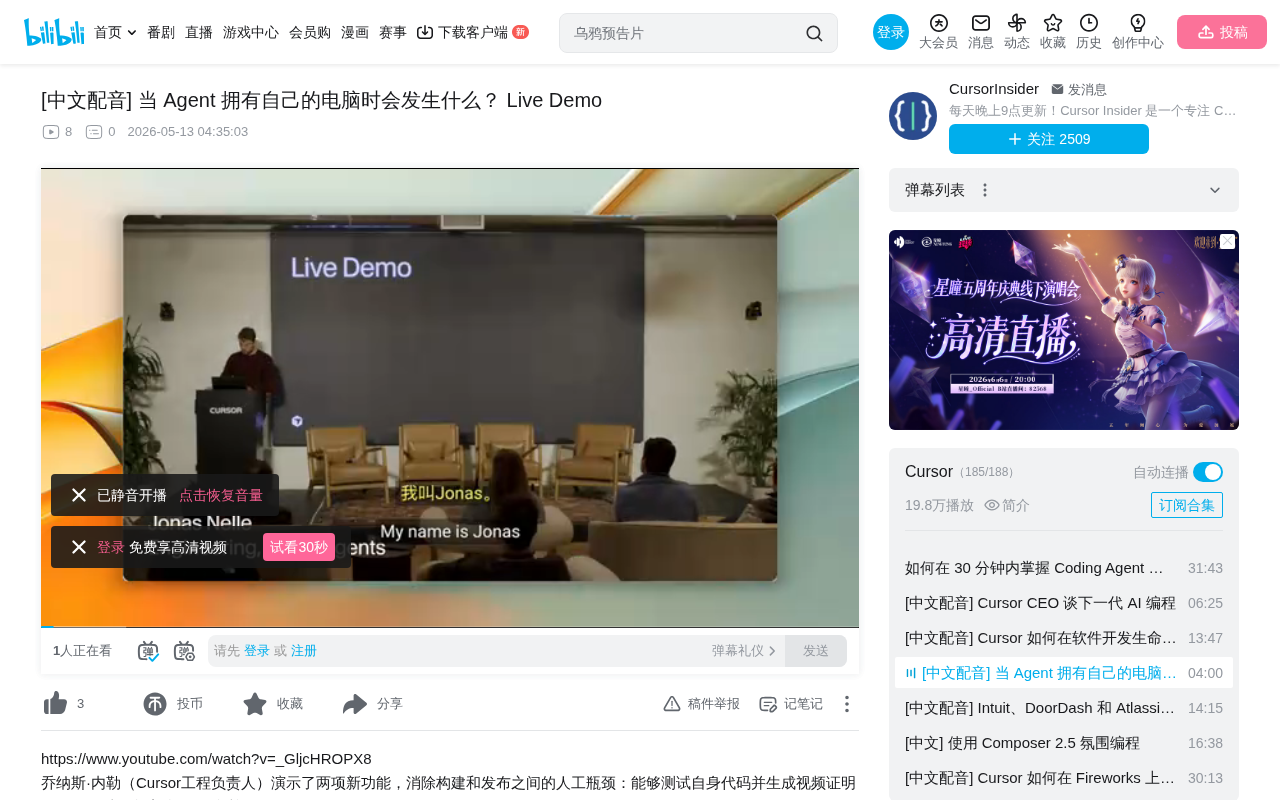
Deep analysis of Cursor's Cloud Agent demo showing how cloud VMs, automated test artifacts, and a full-chain control plane systematically eliminate human bottlenecks across the software development lifecycle.