LibreChat: Complete Guide to the 36K Star Open-Source ChatGPT Alternative

LibreChat is an open-source self-hosted AI chat platform supporting unified access to multiple models
LibreChat is an open-source ChatGPT alternative with 36K+ GitHub Stars, built with a TypeScript full-stack architecture. It supports unified access to virtually all mainstream AI models including GPT-5, Claude, Gemini, and DeepSeek. The project integrates cutting-edge features like Agents, MCP protocol, Code Interpreter, and Artifacts, offers enterprise-grade multi-user permission management, and supports Docker self-hosted deployment—helping users escape vendor lock-in while achieving data sovereignty and cost control.
LibreChat Project Overview
LibreChat is a feature-rich open-source ChatGPT clone that has earned over 36,500 Stars on GitHub with 7,485 Forks, making it one of the most active open-source AI chat platforms today. Built with a TypeScript full-stack architecture and supporting self-hosted deployment, it provides individual developers and enterprise teams with a fully controllable AI conversation solution.
TypeScript is a superset of JavaScript developed by Microsoft that significantly improves code maintainability and development efficiency for large-scale projects through its static type system. "Full-stack" means both the frontend (user interface) and backend (server logic) are developed using the same language, enabling shared type definitions and data models between front and back ends, reducing type inconsistency issues during API integration. This technology choice also lowers the barrier for community contributors—mastering just one language is enough to participate in full-stack development, which is one of the technical foundations behind LibreChat's ability to rapidly accumulate a large number of contributors.
GitHub Stars and Forks are two core metrics for measuring open-source project influence. Stars are similar to social media "likes," reflecting developer community interest and approval; Forks indicate how many developers have copied the project's codebase to their own accounts, typically meaning they plan to modify, contribute code, or build upon the project. 36,500 Stars places it at a top-tier level on GitHub (for reference, React has about 230K Stars, Vue.js about 210K Stars), demonstrating that LibreChat has achieved widespread community recognition and practical adoption.
Against the backdrop of rising commercial AI product prices and growing data privacy concerns, LibreChat offers a pragmatic path to "controlling your own AI gateway"—you no longer need separate paid subscriptions for each AI provider, nor worry about conversation data being stored by third parties. The demand for self-hosting is growing rapidly, driven primarily by three factors: first, growing awareness of data sovereignty, especially with regulations like the EU's GDPR and China's Data Security Law imposing strict restrictions on cross-border data transfer and third-party storage; second, enterprise security concerns about AI conversation content (which may contain trade secrets or customer data); and third, the need for granular cost control—under the SaaS subscription model, users cannot control the efficiency of underlying resource utilization.
Deep Dive into Core Features
Multi-Model Unified Access: Manage All AI from One Interface
LibreChat's most compelling selling point is its extensive model compatibility. It supports virtually all mainstream AI models and providers:
- OpenAI Series: GPT-5, o1, Responses API, DALL-E-3
- Anthropic: Full Claude model lineup
- Google: Gemini, Vertex AI
- Open-Source Models: DeepSeek, Mistral
- Cloud Services: Azure OpenAI, AWS Bedrock
- Aggregation Platforms: OpenRouter, Groq
This means you can freely switch between different AI models within a single unified interface without jumping between multiple platforms. For developers and researchers who need to compare different models' performance side by side, this multi-model aggregation capability offers tremendous practical value.
From a technical implementation perspective, different AI providers' APIs have significant differences in request formats, authentication methods, streaming response handling, and error code definitions. For example, OpenAI uses Bearer Token authentication and SSE (Server-Sent Events) streaming, Anthropic's Claude API uses a custom x-api-key header with a different message format, and Google's Gemini API is based on Google Cloud's OAuth authentication system. LibreChat's abstraction layer must handle these differences, mapping different providers' APIs into a standardized internal data structure while managing each provider's different rate limits, retry strategies, and error recovery mechanisms. The engineering complexity of this Adapter Pattern is considerable and represents one of LibreChat's core technical moats.
It's worth noting that vendor lock-in is a longstanding structural problem in the IT industry, referring to situations where users become deeply dependent on a particular technology vendor, making migration costs prohibitively high. In the AI space, different model providers have varying API formats, billing methods, and feature sets—once users build workflows and accumulate data around a specific platform, switching costs become very steep. LibreChat's abstraction layer design encapsulates the differences between underlying model providers, delivering a unified interaction experience to users and architecturally eliminating vendor lock-in risk.
Agents and MCP Protocol Support
LibreChat stays at the cutting edge of AI development, having integrated Agents and MCP (Model Context Protocol) support.
AI Agents represent one of the core development directions for large language model applications. Their essence is giving AI models the ability to autonomously plan and execute multi-step tasks. Unlike traditional single-turn Q&A, Agents can decompose complex tasks into subtasks, autonomously decide which tools to invoke and in what order, and dynamically adjust subsequent strategies based on intermediate results. This concept entered public awareness with the AutoGPT explosion in 2023, and after rapid iteration in 2024, has moved from proof-of-concept to actual production deployment. OpenAI's Assistants API, Anthropic's Tool Use, and Google's Gemini Function Calling all represent major vendors' investments in Agent capabilities. LibreChat's Agent support means users can build AI assistants on the platform that autonomously complete complex workflows, not merely engage in simple Q&A conversations.
MCP is a model context protocol formally proposed and open-sourced by Anthropic in late 2024, designed to establish a standardized communication protocol for interactions between AI models and external tools/data sources. Before MCP, every AI application that needed to integrate external tools (such as database queries, file operations, API calls) required custom integration code, resulting in massive duplication of effort and compatibility issues. MCP adopts a client-server architecture: AI applications act as MCP clients making requests, while external tools expose capability descriptions and invocation interfaces through MCP servers. This design is similar to how the USB protocol standardizes hardware devices—as long as a tool follows the MCP specification, any MCP-supporting AI application can plug-and-play with it. MCP has now gained support from OpenAI, Google, Microsoft, and other major vendors, rapidly becoming the de facto standard for AI tool invocation. LibreChat's native MCP support enables AI assistants to connect to external tools and data sources, dramatically expanding their capability boundaries—for example, letting AI directly read databases, operate file systems, or call third-party APIs.
Combined with the LangChain framework, OpenAPI Actions, and Functions capabilities, users can build complex AI workflows that allow AI to not just chat, but execute actual operational tasks. LangChain is one of the most popular frameworks for building LLM applications, providing a modular component library that helps developers chain together large language models with external data sources, memory systems, tool invocation, and other capabilities to construct complex AI application pipelines. Its core concepts include Chain (chained invocations), Agent (autonomous decision-making entities), Memory (conversation memory management), and Retrieval (retrieval-augmented generation). OpenAPI Actions and Functions are two key mechanisms for enabling AI models to call external APIs: Functions allow developers to describe available function signatures and parameter formats to the model, which then determines when to invoke a function during conversation and generates structured call parameters; OpenAPI Actions automatically parse RESTful API documentation based on the OpenAPI specification, converting API endpoints into tools the model can invoke. The combination of these mechanisms enables AI assistants in LibreChat to break free from pure text conversation and directly interact with enterprise internal systems and third-party services.
Code Interpreter and Artifacts Interactive Panel
LibreChat includes a built-in Code Interpreter that supports writing and running code directly within conversations, delivering an experience essentially identical to ChatGPT Plus's feature of the same name.
The project also supports Artifacts—an interactive content display feature first introduced by Claude. Artifacts was originally launched by Anthropic in June 2024 alongside Claude 3.5 Sonnet, fundamentally changing the interaction paradigm of AI conversations. In traditional chat interfaces, all AI-generated content is presented as a linear message stream, with code, documents, charts, and other structured content mixed into conversation text, making independent manipulation difficult. Artifacts extracts these structured outputs into a separate side panel, supporting real-time preview (such as HTML page rendering and SVG graphic display), online editing, and version iteration. This design upgrades AI chat from a "conversation tool" to a "collaborative workbench"—users can continuously iterate on a code project or document within the conversation without repeatedly switching between chat windows and external editors, dramatically improving efficiency for content creation and code development.
Enterprise-Grade Security and Multi-User Permission Management
LibreChat provides a comprehensive multi-user authentication system supporting multiple users on the same instance simultaneously. Administrators can assign different model access permissions and usage quotas to different users, ensuring both flexibility and granular cost control.
This feature is critical for team and enterprise scenarios—IT departments can centrally manage API keys to prevent key leakage risks while using quota mechanisms to prevent API costs from spiraling out of control.
Technical Architecture and Self-Hosted Deployment
The project uses TypeScript full-stack development, with a frontend providing a user interface highly similar to ChatGPT, requiring virtually no learning curve. It supports Docker one-click deployment, allowing teams with basic ops experience to go from zero to usable in typically just ten to fifteen minutes.
Docker is a containerization technology that packages an application and all its dependencies (runtime environment, system libraries, configuration files, etc.) into a standardized container image, ensuring the application runs identically in any environment. "One-click deployment" typically means the project provides a pre-configured docker-compose.yml file—users only need to execute a single docker compose up command to automatically pull images, create container networks, and launch databases and application services. LibreChat typically uses MongoDB as its data storage layer, a technically sound choice—MongoDB is a document-oriented NoSQL database that stores data in JSON-like BSON format, naturally suited for storing flexibly structured AI conversation data. Different models' response formats, metadata fields, and tool invocation records may all have different data structures, and document databases can flexibly store this heterogeneous data without requiring predefined rigid table schemas. Additionally, MongoDB's horizontal scaling capabilities (sharded clusters) provide a solid foundation for future user growth. Docker Compose's orchestration capabilities dramatically reduce deployment complexity, enabling teams without deep ops experience to quickly set up production-ready instances.
The core advantages of self-hosting LibreChat include:
- Complete Data Sovereignty: All conversation records are stored on your own servers, meeting data compliance requirements
- Controllable Costs: Use each provider's API keys with pay-per-use billing directly, avoiding subscription premiums. Currently, mainstream AI providers offer two billing models: subscriptions (like ChatGPT Plus at $20/month) and API pay-per-use (billed by actual Token consumption). Tokens are the basic units of text processing for large language models, not simply equivalent to a character or word—in English, one Token corresponds to roughly 4 characters or 0.75 words; in Chinese, one character is typically encoded as 1-2 Tokens. API billing is split between input Tokens (the user's prompt) and output Tokens (the model's response), with output Token pricing typically 2-4x higher due to greater computational demands. Taking GPT-4o as an example, API pricing is approximately $2.5/million input Tokens and $10/million output Tokens. In a typical conversation where a user sends a 500-word question (~700 input Tokens) and the model replies with 1000 words (~1400 output Tokens), the cost is approximately $0.016—less than 2 cents. An average user's actual monthly API consumption may be only a few dollars, far below subscription fees. LibreChat's self-hosted model lets users connect directly to APIs, bypassing subscription premiums, making it particularly suitable for scenarios with fluctuating usage volumes or needs across multiple models.
- Highly Customizable: Freely configure model combinations, plugins, and automated workflows based on business requirements
- No Vendor Lock-in: Switch or add model providers at any time without being restricted to a single platform
LibreChat vs. Similar Open-Source Projects
In the open-source AI chat interface space, LibreChat's main competitors include Open WebUI, ChatGPT-Next-Web, and other projects.
Open WebUI (formerly Ollama WebUI) is deeply integrated with the Ollama local model runtime framework. Ollama is a tool that lets users run open-source large language models (such as Llama, Mistral, Qwen, etc.) locally on their computers with one click, enabling AI conversation experiences without GPU cloud services. Open WebUI's core advantage lies in local-first experience—all data and computation happen on the user's own device, completely independent of external APIs. However, this also means its breadth of cloud-based commercial model integration doesn't match LibreChat's. The positioning difference between the two reflects two paths in the open-source AI community: Open WebUI focuses on "local-first," while LibreChat focuses on "multi-source aggregation."
Here are LibreChat's differentiating advantages:
| Comparison Dimension | LibreChat | Open WebUI | ChatGPT-Next-Web |
|---|---|---|---|
| Model Coverage | Nearly all major providers | Focused on Ollama local models | Primarily OpenAI |
| MCP Protocol Support | ✅ Native support | Partial support | ❌ |
| Agents | ✅ | ✅ | ❌ |
| Code Interpreter | ✅ | ❌ | ❌ |
| Multi-User Management | ✅ Comprehensive | ✅ Basic | ❌ |
| GitHub Stars | 36K+ | 70K+ | 46K+ |
Overall, LibreChat leads in feature completeness and enterprise-grade capabilities, making it particularly well-suited for use cases requiring multi-model aggregation and team collaboration.
LibreChat Use Cases
- Individual Developers: Manage multiple AI model API keys from a single interface, eliminate platform-hopping, and save on subscription fees
- Small to Medium Teams: Quickly build an internal AI assistant platform with unified management of member permissions and API spending
- Enterprise Users: Deploy AI services in private environments to meet data security and compliance audit requirements
- AI Researchers: Rapidly compare output quality and response speed across different models under identical conversation conditions
Conclusion: Why Choose LibreChat
LibreChat represents an important direction for open-source AI tools: don't build the model, build the gateway. As large model capabilities become increasingly commoditized, whoever can provide better model orchestration capabilities and user experience will occupy a key position in the AI application layer.
With its comprehensive multi-model aggregation capabilities, rapid adoption of cutting-edge technologies like MCP and Agents, mature enterprise-grade features, and continuous iteration backed by an active community of 36K+ Stars, LibreChat has become the benchmark project for self-hosted AI chat platforms.
If you're looking for an open-source solution that breaks free from single AI vendor lock-in and truly puts you in control of your data sovereignty, LibreChat is one of the most worthwhile options to try today.
Key Takeaways
- LibreChat is an open-source ChatGPT alternative with 36K+ Stars, supporting unified access to virtually all mainstream AI models including GPT-5, Claude, Gemini, and DeepSeek
- The project integrates cutting-edge features like Agents, MCP protocol, Code Interpreter, and Artifacts, leading similar open-source projects in feature completeness
- It provides enterprise-grade multi-user authentication and permission management, supports Docker self-hosted deployment, and meets data privacy and cost control needs
- Built with TypeScript full-stack development, its interface closely resembles ChatGPT with minimal learning curve and high community activity
- Its core positioning is as a "unified AI model gateway," helping users escape single-vendor lock-in and achieve flexible model orchestration
Related articles
 Product Reviews
The Programmer's Desk Setup Guide: Building a Workspace That Feels Like Home
Discover how programmers build productive, comfortable workspaces. From multi-monitor setups to ergonomic design, explore the desk philosophy that drives focus and flow.
 Product Reviews
Qoder vs Cursor Real-World Comparison: Which $20/Month AI IDE Is Better?
Hands-on comparison of Qoder vs Cursor AI IDEs: Agent autonomy, human interaction count, and architecture decisions. Qoder needed only 2 interactions vs Cursor's 8.
 Product Reviews
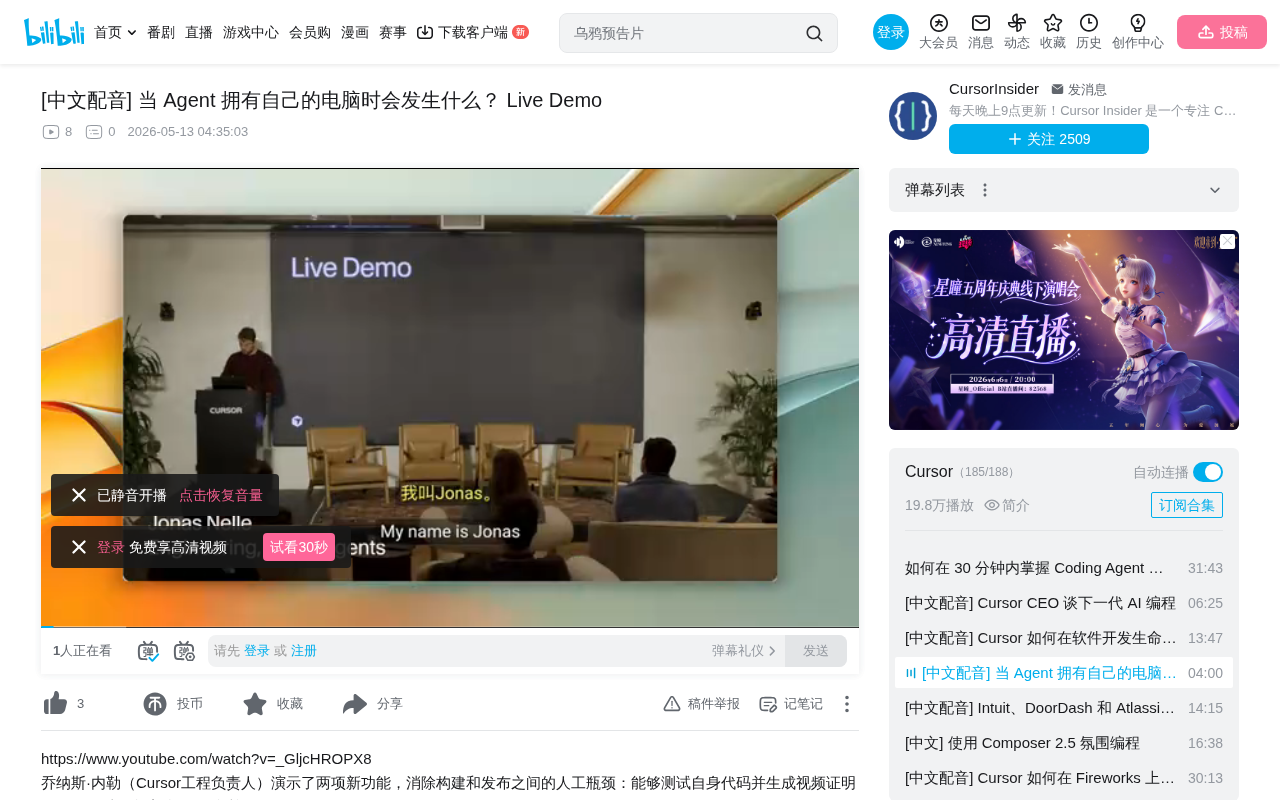
Cursor Cloud Agent Demo: Eliminating Bottlenecks Across the Entire Software Development Lifecycle
Deep analysis of Cursor's Cloud Agent demo showing how cloud VMs, automated test artifacts, and a full-chain control plane systematically eliminate human bottlenecks across the software development lifecycle.