LineageOS 24.0 Released: The Open-Source Android System Giving Old Devices a New Lease on Life

LineageOS 24.0 released, extending life for officially abandoned devices, but the custom ROM ecosystem faces three real constraints.
LineageOS 24.0 has been officially released based on a new generation of Android baseline, continuing the CyanogenMod legacy and providing near-stock AOSP systems and security updates for devices abandoned by manufacturers. It emphasizes reducing bloatware and maintains discussion momentum in technical communities like Hacker News. However, the third-party ROM environment has deteriorated significantly: higher bootloader unlocking thresholds limit potential users, closed-source hardware drivers make experiences like cameras hard to match official systems, and integrity checks like Play Integrity may render banking and payment apps unusable. The article notes its target audience is mainly old-device enthusiasts, privacy-conscious users, and developers, while ordinary users must weigh unlocking feasibility, device maintenance status, and app compatibility. The long-term value of open-source ROMs lies in preserving an update channel for the Android ecosystem independent of manufacturer will.
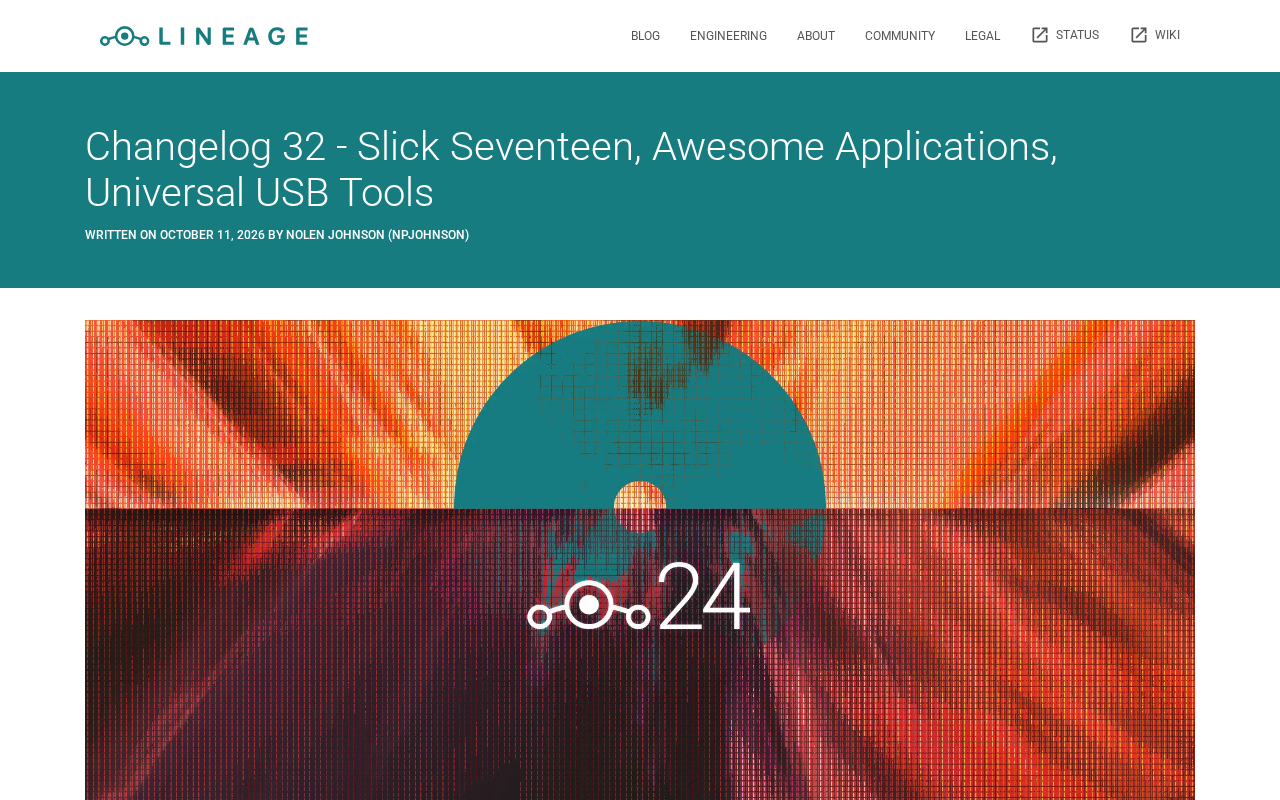
LineageOS 24.0 has been officially released. This third-party ROM project built on the Android Open Source Project (AOSP) updated its official changelog, quickly sparking a discussion on Hacker News with around 200 points and 57 comments. For users who have long followed Android custom systems, this is more than just a version number bump — it means a large number of devices abandoned by manufacturers can once again run a new system with a near-stock experience.
What Exactly Is LineageOS
LineageOS is the successor to CyanogenMod, which once dominated the custom ROM scene. After the CM project was discontinued amid commercialization struggles and team turmoil, community members took over the code and infrastructure, continuing under the LineageOS name. Its core value lies in two things: first, porting the latest version of Android to devices that manufacturers have already abandoned; second, adding a set of practical enhancements on top of a near-AOSP foundation, without preinstalled manufacturer bloatware.
For many users, a mid-range phone from two or three years ago hasn't actually become obsolete in terms of performance after the manufacturer stops security updates — the lag and risks mainly come from stagnation at the system level. LineageOS offers exactly this "life extension" path — using a community-maintained approach to bring security patches and new features back to old hardware. This is also why it has maintained discussion momentum in technical communities like Hacker News.
AOSP stands for Android Open Source Project, the Android open-source codebase led and maintained by Google. It is the upstream source of all Android systems, containing core code such as the framework layer, system services, and runtime, released under permissive licenses like Apache. Any manufacturer or community can freely download, compile, and distribute systems based on AOSP.
However, AOSP itself is not the same as the Android that users get. Google's GMS (Google Mobile Services, including the Play Store, push notifications, etc.) is a closed-source component that requires licensing to preinstall, and manufacturer-customized interfaces, camera algorithms, and drivers are also not part of AOSP. Therefore, AOSP provides a "bare" system skeleton, and third-party ROMs like LineageOS build on this skeleton, separately handling how users can obtain Google services (usually by flashing GApps packages themselves). Understanding this clarifies why LineageOS can release new versions independently of manufacturers, and also explains why it doesn't come with Google apps by default.
The Significance of the 24.0 Update
Looking at the project's naming logic, LineageOS version numbers have always closely tracked the AOSP Android version mainline. 24.0 corresponds to a new generation of Android baseline, meaning old devices can leap over manufacturer update ceilings and directly gain the underlying features and security fixes of the new version.
The changelog typically covers three categories: adaptation adjustments to the underlying kernel and device trees, regression fixes after porting to the new Android baseline, and additions or removals of the project's own features. Since a large number of volunteers maintain device branches for different models in a distributed manner, each version release comes with upgrades for a batch of devices and the phasing out of some older models. This rhythm of "devices in and out" is the norm for the LineageOS community ecosystem.
The Realistic Situation of the Custom ROM Ecosystem
Beyond the discussion buzz, it must be acknowledged that the survival environment for third-party ROMs is vastly different from the heyday of CyanogenMod. Several real changes are worth noting:
Unlocking thresholds have risen. Mainstream manufacturers have become more conservative about bootloader unlocking — some brands require cumbersome application processes or even block it entirely, which limits the potential user base from the source.
Hardware adaptation has become harder. Modern phone modules such as cameras, basebands, and displays are highly dependent on manufacturers' closed-source drivers and proprietary frameworks. Without source code, communities find it very difficult to match the official system experience, and camera quality is often the most obvious shortcoming after flashing.
Security models have tightened. Google continues to advance verification mechanisms like Play Integrity, and many banking, payment, and streaming apps detect system integrity, potentially becoming unusable after flashing a third-party ROM. This creates an awkward situation: flashing for security updates, yet potentially sacrificing some app availability due to integrity checks.
These constraints are not unique to LineageOS but are challenges faced by the entire open-source Android customization field.
Bootloader is the first program that runs after a device powers on, responsible for verifying and loading the operating system. Manufacturers typically lock it, only allowing signed official systems to run, to prevent malicious firmware. Unlocking the bootloader is a prerequisite for flashing third-party ROMs, but unlocking wipes device data, triggers security warnings, and may affect warranty or services that rely on hardware-level verification (such as payments and DRM video).
Play Integrity is a device integrity verification API provided by Google, replacing the earlier SafetyNet. Apps can use it to determine whether a device is running an officially certified system, whether it is rooted, and whether the bootloader is unlocked. Security-sensitive apps like banking, payment, and streaming widely integrate this mechanism, and once a device is detected as "non-compliant," they will restrict or even refuse to run. This is precisely the core contradiction facing custom ROM users: third-party ROMs inherently cannot pass official certification, making some apps unavailable. Although the community has solutions like Magisk to hide root, the offense-defense battle continues to escalate, making stability hard to guarantee.
Who Is Still Suited for LineageOS
Despite the higher barriers, LineageOS still has a clear target audience. First, users who love old devices and want to squeeze out the remaining value of their hardware, especially models that have been officially discontinued but are still in good hardware condition; second, users who value privacy and want to escape manufacturer preinstalls and data collection; third, developers and enthusiasts who use custom ROMs as a platform for learning and testing.
For ordinary users, whether it's worth flashing requires weighing three key factors: whether unlocking can be done smoothly, whether the target device has active maintainers, and whether frequently used apps depend on integrity verification. The official LineageOS changelog and the device support lists on community forums are the first-hand references for determining whether a device is usable.
The Long-Term Value of Open-Source Android
The release of LineageOS 24.0 is essentially a community relay: devices abandoned by manufacturers are taken over and maintained by the open-source community. Its significance goes beyond letting old phones run a new system — it preserves an update channel for the Android ecosystem that is independent of manufacturer will. In an era where e-waste issues and device longevity are increasingly discussed, this persistence itself has value — even if it will always be aimed at the minority of users willing to tinker.
One-line Summary
LineageOS 24.0 is released, extending the life of officially abandoned old devices, but the custom ROM ecosystem faces three real constraints.
Paragraph Summary
LineageOS 24.0 has been officially released based on a new generation of Android baseline, continuing the legacy of CyanogenMod and providing near-stock AOSP systems and security updates for devices no longer supported by manufacturers. It focuses on reducing preinstalled bloatware and maintains discussion momentum in technical communities like Hacker News. However, the survival environment for third-party ROMs is far worse than before: higher bootloader unlocking thresholds limit potential users, closed-source hardware drivers make experiences like cameras hard to match official systems, and integrity checks like Play Integrity may render banking and payment apps unusable. The article points out that its target audience is mainly old-device enthusiasts, privacy-conscious users, and developers, while ordinary users need to weigh unlocking feasibility, device maintenance status, and app compatibility. The long-term value of open-source ROMs lies in preserving an update channel for the Android ecosystem that is independent of manufacturer will.
Related articles

Workbuddy for Absolute Beginners: How a Desktop AI Agent Fits Into Real Workflows
A beginner's guide to the Workbuddy desktop AI agent: installation, claiming credits, file management, and building automated workflows—compared with CodeX for fit and cost, helping professionals shift from AI question-askers to AI managers.

OpenAI's New Agent Stack: Computer Use, Decisions API, and Ultra-Fast Workflows
OpenAI Dev Day unveiled a new agent stack: Computer Use outperforms humans, Decisions API delivers ultra-low-latency classification via Luna, Agents API opens the same Computer Use capabilities, and GPT-6.1 Sol costs only one-seventh of Astra. Core updates, benchmark data, and developer insights.

Liang Wenfeng Open-Sources DeepInfo Inference Framework, Takes On U.S. Ban
DeepSeek open-sources its DeepInfo inference framework after its models, featuring GPU/CPU cross-pipelining, small-model prediction with large-model verification, and full Huawei Ascend and NVIDIA chip support—facing the U.S. federal ban head-on. This article analyzes its significance for AI deployment and open-source strategy.