Lingque AI Agent Framework: A Self-Controlled Solution for Private Deployment

Lingque: an open-source private AI Agent framework emphasizing data sovereignty and self-control
Lingque is a Python-based private AI Agent framework developed by the LDPrompt team, featuring "fully self-controlled" and "private" deployment that addresses data security and privacy concerns inherent in cloud-dependent AI Agent solutions. The framework offers core capabilities including tool use, memory management, task planning, and multi-model support, suitable for personal productivity, enterprise private deployment, and AI research. While still in early stages and facing challenges like ecosystem maturity and local model performance bottlenecks, the self-controlled direction holds significant long-term value.
Project Overview
In an increasingly crowded AI Agent market, an open-source project called "Lingque" (灵雀) has caught people's attention. Developed by the LDPrompt team, it's a fully self-controlled private AI Agent framework built on Python, currently with 61 Stars on GitHub. While the star count is still modest, its positioning around "self-controlled" and "private" precisely addresses the core pain points in current AI application deployment — data security and personalized customization.
Why Do We Need Self-Controlled AI Agents?
The Real-World Dilemma of Data Privacy
Most mainstream AI Agent solutions today rely on cloud-based LLM APIs, which inevitably require users' prompts, conversation content, and business data to be transmitted to third-party servers. For individual users, this means potential privacy data leakage risks; for enterprise users, the outflow of core business data is an unacceptable security concern.
In recent years, data privacy incidents have become frequent. From OpenAI's ChatGPT being temporarily banned in Italy over data compliance issues, to Samsung employees leaking trade secrets by inputting internal code into ChatGPT — these cases serve as warnings that transmitting sensitive data to third-party AI services carries real risks. In China, the implementation of the Data Security Law and the Personal Information Protection Law has imposed strict requirements on cross-border data transfers, turning private deployment from an "optional" choice into a "mandatory" one.
The Lingque framework emphasizes "fully self-controlled" — users can run the entire Agent system in local or private deployment environments, keeping data within their domain and models private, fundamentally solving data security issues.
The Deeper Need for Customization
Generic AI Agent platforms typically offer standardized functional modules, but every individual and every team has unique workflows and requirements. The word "private" reflects another core philosophy of Lingque — enabling every user to have an AI assistant that truly belongs to them, rather than a one-size-fits-all generic tool.
Technical Features of the Lingque Framework
The Natural Advantages of the Python Ecosystem
Lingque chose Python as its development language — a pragmatic choice. Python boasts the richest AI/ML ecosystem, from LangChain to LlamaIndex, from Transformers to various local model inference frameworks. The Python ecosystem provides solid infrastructure for building AI Agents, and developers can easily integrate Lingque with existing Python AI toolchains.
Specifically, Python's dominance in AI is reflected not just in the number of libraries, but in the maturity of the entire toolchain. LangChain is currently the most popular LLM application development framework, offering core abstractions like chain calls, Agents, and Retrieval-Augmented Generation (RAG). LlamaIndex focuses on data indexing and retrieval, helping developers connect private data with LLMs. The Transformers library, maintained by Hugging Face, provides a unified interface for thousands of pre-trained models. Additionally, local inference frameworks like vLLM and Python bindings for llama.cpp make it possible to run large models on consumer-grade hardware. These mature toolchains provide ample room for extending and integrating with the Lingque framework.
Core Capabilities of the Agent Framework
As an Agent framework, Lingque's value lies not just in conversational ability, but in its orchestration and scheduling capabilities. The fundamental difference between an AI Agent and a traditional chatbot is "autonomy" — Agents can perceive their environment, formulate plans, execute actions, and adjust strategies based on feedback. This concept originates from the BDI (Belief-Desire-Intention) architecture in artificial intelligence. Modern LLM-based Agents typically adopt the ReAct (Reasoning + Acting) paradigm, where the model first reasons at each step, then decides what action to take, forming a "think-act-observe" loop.
A mature AI Agent framework typically needs the following capabilities:
- Tool Use: The ability to call external APIs, execute code, manipulate files, etc. Tool-calling capability breaks through the limitations of pure text generation, enabling Agents to interact with the real world
- Memory Management: Support for short-term conversational memory and long-term knowledge accumulation. This addresses the limited context window problem of LLMs, typically implemented through vector databases that store historical information and retrieve relevant content when needed
- Task Planning: The ability to decompose complex tasks into executable sub-steps. Common planning strategies include Tree of Thoughts, Plan-and-Solve, and others, giving Agents the ability to handle complex multi-step tasks
- Multi-model Support: Compatibility with different large language models, supporting flexible switching between local and cloud-based models
The Lingque framework implements these capabilities under the premise of "self-controlled," providing users with a fully controllable AI Agent runtime environment.
What Scenarios Is Lingque Suited For?
Personal Productivity Enhancement
For tech enthusiasts and independent developers, Lingque can serve as the core engine for personal knowledge management, code assistance, and daily task automation. All data is stored locally, eliminating privacy leakage concerns.
Enterprise Private Deployment
For enterprises with strict data security requirements, Lingque offers a lightweight private AI Agent solution. Compared to deploying a full enterprise-grade AI platform, a flexible Agent framework may be more suitable for small and medium teams to quickly implement AI capabilities.
Research and Experimentation
For AI researchers, the Lingque framework provides a freely modifiable and experimental Agent environment, facilitating exploration of different Agent architecture designs and prompt engineering strategies.
Development Prospects and Challenges
The Lingque project is still in its early stages — 61 Stars and 6 Forks indicate that community attention is still building. The main challenges the project faces include:
- Documentation and Ecosystem Maturity: The success of open-source projects largely depends on documentation quality and community activity
- Differentiated Competition with Mature Frameworks: The AI Agent framework landscape is highly competitive. LangChain dominates with its first-mover advantage and massive community ecosystem, though it's also criticized for over-abstraction and frequent API changes. Microsoft's AutoGen focuses on multi-Agent collaborative dialogue, suited for building complex multi-role systems. CrewAI features role-playing and task delegation. Additionally, frameworks like Semantic Kernel and Haystack each have their own focus areas. In this landscape, Lingque chose "self-controlled" and "private" as its differentiation entry point, avoiding direct competition with general-purpose frameworks and instead serving the niche market with strong demands for data sovereignty
- Local Model Performance Bottlenecks: Being fully self-controlled means potentially relying on local models, where inference performance and quality remain limiting factors. Taking current mainstream open-source models as examples, a Llama 3 70B parameter model requires at least 40GB of VRAM for smooth operation, exceeding the capacity of most consumer-grade GPUs. Quantization techniques (such as GPTQ, AWQ, and 4-bit quantization in GGUF format) can reduce VRAM requirements to 1/4 of the original, but with some accuracy loss. Additionally, inference speed is a bottleneck — local 7B models typically generate at 20-50 tokens per second, while cloud APIs can achieve 100+ tokens per second. However, with the emergence of hardware-optimized inference frameworks like Apple MLX and Intel OpenVINO, along with advances in model distillation techniques, smaller models are rapidly approaching larger model performance on specific tasks
Nevertheless, the "self-controlled" direction itself holds long-term value. As domestic Chinese LLM capabilities continue to improve and local inference technologies are optimized, private Agent frameworks like Lingque will see greater development opportunities.
Conclusion
Lingque represents an important direction in AI Agent development — moving from cloud dependency to self-control, from generic services to personal customization. Although the project is still in its early stages, its philosophy aligns with the growing demand for data security and AI sovereignty. For developers who follow AI Agent technology and value data privacy, Lingque is an open-source project worth keeping an eye on.
Related articles
 Product Reviews
The Programmer's Desk Setup Guide: Building a Workspace That Feels Like Home
Discover how programmers build productive, comfortable workspaces. From multi-monitor setups to ergonomic design, explore the desk philosophy that drives focus and flow.
 Product Reviews
Qoder vs Cursor Real-World Comparison: Which $20/Month AI IDE Is Better?
Hands-on comparison of Qoder vs Cursor AI IDEs: Agent autonomy, human interaction count, and architecture decisions. Qoder needed only 2 interactions vs Cursor's 8.
 Product Reviews
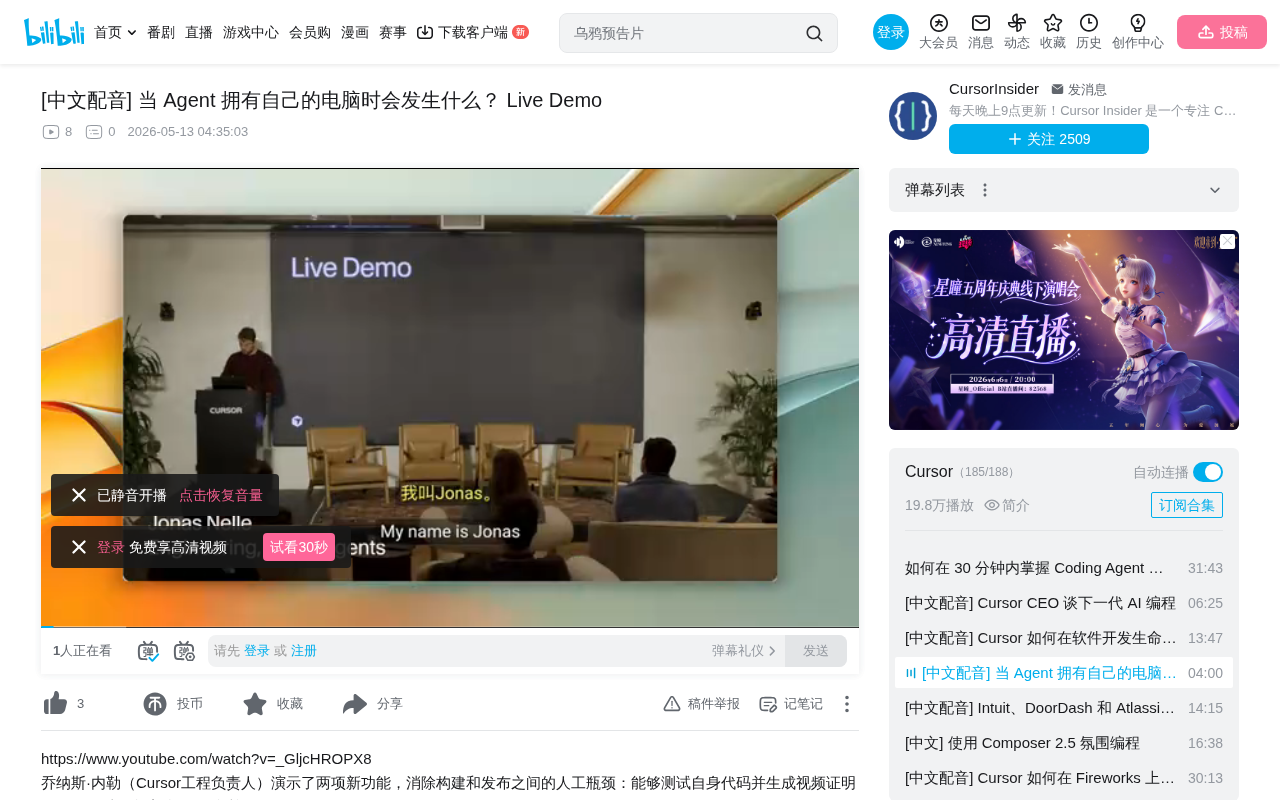
Cursor Cloud Agent Demo: Eliminating Bottlenecks Across the Entire Software Development Lifecycle
Deep analysis of Cursor's Cloud Agent demo showing how cloud VMs, automated test artifacts, and a full-chain control plane systematically eliminate human bottlenecks across the software development lifecycle.