LLM Application Development: A High-Paying Career Guide for Ordinary People

LLM application development doesn't care about your background and pays well; ordinary people can break in by learning through doing.
The article highlights LLM application development as a high-paying AI role that doesn't care about your background, with fresh graduate salaries reaching 35K/month and SP offers up to 600K, as major companies compete for talent. The role focuses on implementing models in real business scenarios—building RAG knowledge bases, transforming Agent workflows, evaluating models, and controlling costs. Companies value the ability to solve business pain points and turn vague requirements into live systems. The path for ordinary people is learning by doing: start with processes around you and build working tools as a portfolio. The future gap depends on who gets applications working in real scenarios first.
LLM Application Development: A High-Paying Career Guide for Ordinary People
Recently, a discussion about LLM application development roles has drawn attention on platforms like Bilibili: fresh graduates are being offered salaries of 35,000 RMB per month, with top SP offers reaching 600,000 RMB. ByteDance, Meituan, and Alibaba are all competing for talent, and Tencent's HC (headcount) has remained open. More importantly, this role doesn't require published papers, 300 LeetCode problems, or a 985 master's degree—it may be the AI position in recent years that cares least about your background.
This sounds like a joke, but behind it lies the AI era's repricing of a certain capability. What exactly is LLM application development? How can ordinary people break into it? This article breaks down this high-paying path based on the original video content.
LLM Application Development: Not Training Models, But Making Them Run
Many people are intimidated the moment they hear "LLM application development," assuming they need to understand the Transformer architecture and know how to tune and train models. In reality, this role doesn't involve training models—it's about applying models to real business scenarios and making them actually work.
Specifically, the work includes: building a RAG knowledge base for the company that can query internal documents; transforming processes like customer service, order review, and reporting into Agent workflows; determining which model to use at which step and which tasks shouldn't be given to models at all; and figuring out how to evaluate results, control costs, and make a Demo withstand real concurrency.

According to the video, ByteDance, Meituan, and Alibaba are all competing for this kind of talent, and Tencent's HC has remained open. This shows that market demand for people who can implement LLM applications is extremely strong.
RAG (Retrieval-Augmented Generation) is a technical architecture that lets LLMs "look up information before answering." Its core process: split internal company documents and knowledge bases into chunks and convert them into vectors stored in a database; when a user asks a question, the system first retrieves the most relevant chunks from the database, then feeds these chunks as context to the LLM, allowing the model to generate answers based on this real material. Compared to letting the model answer "from memory," RAG significantly reduces hallucinations, ensures answers are traceable, and allows the knowledge base to be updated at any time without retraining the model. Building a RAG knowledge base typically involves document parsing, text splitting, vector embedding, similarity retrieval, and prompt assembly—it's one of the most common application forms for LLM deployment today.
Agent workflows refer to a way of working where LLMs don't just passively answer but can autonomously plan steps, call tools, and execute multi-step tasks. An Agent typically consists of an LLM as the "brain," combined with tool calling (e.g., search, database queries, sending emails), memory mechanisms, and task planning capabilities. In business scenarios, transforming processes like customer service, order review, and reporting into Agent workflows means breaking down tasks that originally required multiple manual steps into a chain of subtasks the model can execute: the model decides what to do next, calls the appropriate tool, and decides the next step based on the returned result until the task is complete. This requires developers to design clear process boundaries, exception handling, and human fallback mechanisms to ensure the Agent is stable and reliable in real business—not just working in a Demo.
Why Is This Role Valuable? Capturing the Boss's Real Pain Points
The most valuable aspect of LLM application development is that it addresses the boss's real pain points: how to implement business use cases? How to standardize processes? How to turn vague requirements into systems that can go live?
People who only know how to call APIs often lack this ability. They can get a Demo running but can't solve complex problems in real business. Application developers need to understand the business, design processes, evaluate models, control costs, and ensure system stability—these are the reasons companies are willing to pay high salaries.
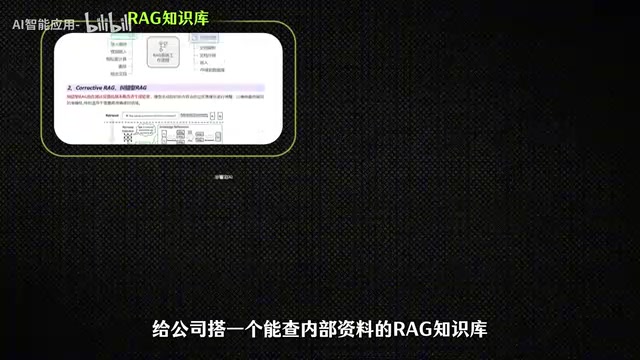
The video mentions that transforming processes like customer service, order review, and reporting into Agent workflows is one of the core tasks. This requires developers to understand both technology and business, and to translate vague requirements into implementable solutions.
The gap between calling APIs and deploying applications is essentially the gap between "getting it to run" and "getting it to go live." Calling an API takes just a few lines of code to get a model to return a result, but real business systems also face: response latency and stability under concurrent requests, cost control from token consumption, fallback and validation when model output is uncontrollable, compliance and security for sensitive data, and establishing an evaluation system. Application developers need to solve these engineering problems one by one and encapsulate model capabilities into reliable product features. This is exactly why companies are willing to pay high salaries for application development roles—what's lacking isn't people who can call APIs, but people who can turn model capabilities into stable business systems.
How Can Ordinary People Break In? Three Words: Learn by Doing
Don't wait for schools to offer courses, and don't wait for companies to arrange training. The video's advice is: ask yourself right now—is there any process in the work I'm doing that could be redone with an LLM?
Even if it's just a small tool that works: turning three years of department documents into a Q&A assistant, or cutting a weekly report that takes two hours down to ten minutes. As long as it actually runs, it's your first portfolio piece and your ticket to this fast train.
This "learn by doing" approach emphasizes practice over theory. Getting something to work in a real scenario is more valuable than completing a Transformer course.
The role of a portfolio in application development hiring differs from traditional algorithm roles that look at papers and competition results. LLM application development roles place more emphasis on candidates' understanding of business and engineering implementation ability, and a portfolio is the most direct proof of that ability. A small working tool—such as a Q&A assistant based on internal documents or a script that automatically generates weekly reports—demonstrates the complete chain of requirement breakdown, technology selection, prompt design, result debugging, and cost trade-offs. Through the portfolio, interviewers can judge whether a candidate has actually solved problems hands-on, rather than just watched tutorials. For career changers or people without a formal CS background, a real, runnable project often impresses recruiters more than a degree.
The Future Gap: Who Gets It Working in Real Scenarios First
The video concludes by pointing out that the future gap won't be determined by who finishes the Transformer course first, but by who gets things working in real scenarios first. LLM application development is a field that emphasizes hands-on practice, and practical ability matters far more than theoretical knowledge.

For those who want to break into the field, now is the best time. Find a pain point around you, use an LLM to solve it, and build a small working tool—then you can write the most convincing project experience on your resume.
Conclusion
LLM application development has opened a high-paying door for ordinary people. It doesn't care about your background or require papers—it values implementation ability. Through "learning by doing," starting with small processes around you and building working projects, you can seize this wave of AI opportunity. The future belongs to those who get applications working in real scenarios.
One-line Summary
LLM application development doesn't care about your background and pays well; ordinary people can break in by learning through doing.
Paragraph Summary
The article points out that LLM application development is a currently high-paying AI role that doesn't care about your background. Fresh graduate salaries can reach 35,000 RMB per month, with SP offers up to 600,000 RMB, and major companies like ByteDance, Meituan, Alibaba, and Tencent are all competing for talent. The role doesn't involve training models but rather implementing them in real business scenarios, including building RAG knowledge bases, transforming Agent workflows, evaluating models, and controlling costs. What companies truly value is the ability to solve business pain points and turn vague requirements into systems that can go live—people who only know how to call APIs are not up to the task. The path for ordinary people to break in is "learning by doing": start with processes around you and build small working tools as a portfolio. The future gap depends on who gets applications working in real scenarios first, not who finishes Transformer theory first.
Related articles

Coinbase Engineer: How to Determine Whether an AI Agent Can Operate Unattended
Coinbase engineer Evan Kormos shares an engineering method for judging whether an AI agent can run unattended: model processes with DAG/DCG, replace output comparison with statistical evaluation, and hand over control in three phases—supervision, sampling, and exception handling.

WorkBuddy Beginner's Guide: How AI Agents Automate Office Tasks
WorkBuddy tutorial: learn how this desktop AI agent workbench automates files, organizes data, and generates documents, compared with LLMs and Codex, plus a beginner path and cost analysis.

Doubao Work in Practice: Three Modes That Let AI Actually Get Work Done
Doubao Work practical tutorial: from chat mode to Work Mode Lite and Pro, explaining the logic for choosing among three modes with real office task demonstrations. Even complete beginners can learn to use an AI agent to handle local files, organize materials, and generate documents.