Looking Back at Hacker News Two Years Ago: A Time Travel Through a Tech Community
Hacker News' Front feature sparked a nostalgic discussion, reflecting the evolution of content trends and discussion atmosphere in the tech community.
The article uses Hacker News' Front historical page feature (front?day=date) as an entry point, introducing a user's post saying that looking back at the front page two years ago feels "like entering another, better universe"—the post gained 223 points and 134 comments. The article sorts out several explanations in the comments for "better": two years ago the front page had more in-depth technical discussions and open-source shares rather than a flood of AI news; the discussion atmosphere was less cynical; limited items brought a sense of information completion. It also notes divergent community reactions: some consider nostalgia a psychological projection, with changes stemming more from external tech environments like the AI wave. Finally, it distills three insights for content creators: historical data can be used for topic analysis, community nostalgia reflects misalignment in content supply, and low-cost, high-resonance narratives have spreadability.
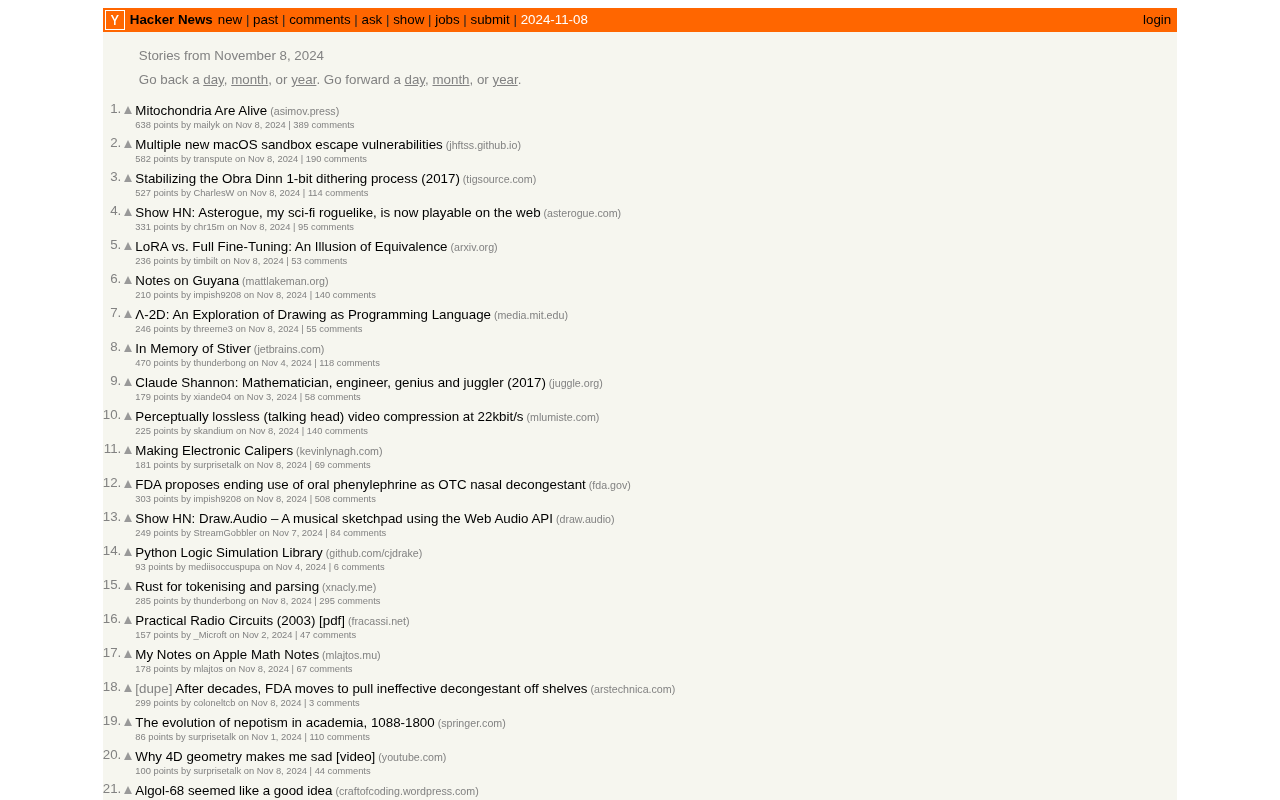
In the flood of information, we rarely get a chance to truly look back. But Hacker News' "front" feature (accessed via news.ycombinator.com/front?day=date) offers a unique time-machine experience. Recently, a user posted under the title "Going back to Hacker News two years ago feels like entering a different, better universe," sparking a lively discussion with 223 points and 134 comments. This is more than nostalgia—it reflects the evolution of the tech community's ecosystem, content trends, and discussion quality.
How to "go back in time": the hidden mechanics of HN Front
Hacker News doesn't heavily promote its historical page feature, but via the URL parameter front?day=YYYY-MM-DD, users can view the top-ranked stories from any given day. The poster chose a day two years ago (the original link points to November 8, 2024, though "two years ago" in the title is relative to the posting time).
This browsing method differs from the regular "past" page—the latter sorts in reverse chronological order, while the Front page preserves that day's ranking logic, points, and comment counts, as if freezing the community consensus of that moment in amber. For researchers or content creators, this is an excellent sample for observing tech hotspot cycles and the rise and fall of topics.
Hacker News' ranking algorithm (often called the "gravity" algorithm) is key background for understanding the significance of the Front page. Designed by Paul Graham in the early days, its core idea is that a post's score decays over time, roughly inversely proportional to its age, approximated by the formula score / (age + 2)^1.8, where age is measured in hours. This means a new post with few votes can briefly outrank an older high-vote post; and an older high-vote post that doesn't keep getting votes will quickly drop in ranking. Thus, the final composition of each day's front page is the combined result of "votes × time decay," not simply "most popular." What the Front page freezes is exactly this computed ranking snapshot, so it reflects not only the content itself but also the rhythm of community voting and the attention window of that day—this is the technical basis for it being "community consensus amber."
Why "another, better universe"?
The "better universe" in the title is a subjective feeling, but the widespread resonance in the comments reveals several possible reasons.
Differences in content depth
Multiple commenters pointed out that two years ago the HN front page featured more in-depth technical discussions, open-source project shares, and engineering practice retrospectives, rather than today's flood of AI news or product launch announcements. One user wrote: "Back then the front page still had posts about compiler optimization and database internals; now it's all 'some AI company raises funding.'" This comparison isn't a denial of the value of AI topics but reflects a shift in attention allocation.
Contrast in discussion atmosphere
Other comments mentioned that early HN comment sections leaned more toward matter-of-fact technical debate rather than taking sides or personal attacks. While this "nostalgia filter" may beautify the past, the repeatedly mentioned "less cynical" does point to a perceptible change in community culture.
HN's community governance mechanisms deserve background context, because changes in discussion atmosphere are often attributed to rules, yet the rules themselves have been quite stable. HN's core guidelines include: avoid clickbait, encourage substantive technical discussion, oppose pure emotional venting, and it has flag (report) and vouching (trust voting) mechanisms to adjust content visibility. Moderators dang and sctb have long intervened manually, deleting or downranking violating comments. Additionally, HN's "showdead" option lets users see downranked comments, which is both a transparency mechanism and shapes implicit community expectations of "what should be said." Therefore, the "less cynical" change perceived by commenters more likely stems from shifts in user composition and external issues rather than changes in the rule text—which also explains why some remind us that "every era has people complaining HN isn't what it used to be."
Perception of information density
The poster's description of HN Front as a "better universe" may also stem from a psychological backlash in the era of information overload: two years ago the front page had a limited number of items, each filtered by community votes, making it easier for users to get the satisfaction of "finishing reading." Today's information feeds are infinite-scroll and real-time updated, bringing anxiety along with them.
"Information overload" here is not merely rhetorical but has a measurable community context. The HN front page typically shows only about 30 stories, each with points and comment counts, allowing users to browse in a relatively short time and form a sense of closure—"I've read it all." In contrast, modern information feeds (including social media and news aggregators) use infinite scroll and algorithmic recommendations, with near-infinite content supply, structurally depriving people of the sense of completion. "Information foraging theory" in psychology points out that when information density in an environment exceeds an individual's processing capacity, people turn to more conservative filtering strategies, accompanied by rising anxiety. The poster's description of the old front page as a "better universe" is essentially nostalgia for a "limited and filtered information set"—this nostalgia points to information architecture, not simply content quality.
Community reaction: nostalgia and self-reflection coexist
Among the 134 comments, views were not unified. Some users strongly agreed, sharing their habit of using HN Front for "archaeology"; others reminded that every era has its anxieties, and two years ago people also complained "HN isn't what it used to be." This divergence itself is interesting—it shows that the "better universe" is more a psychological projection than an objective fact.
Some commenters noted that HN's ranking algorithm and community guidelines haven't fundamentally changed; what changed is the external tech environment: the AI wave sweeping everything, startup valuation logic being reshaped, and the boundary between open source and commercial becoming increasingly blurred. These macro factors seep into community discussions, changing the weight of topics.
Implications for tech content creators
This discussion offers several practical insights for content creators.
First, historical data is a rich mine for topic selection. By comparing HN front pages at different points in time, you can identify which topics have long-tail value and which are just short-term noise.
Second, community sentiment is a barometer for product and content strategy. When users start longing for "the good old days," it often means the current content supply is misaligned with their expectations.
Third, the "better universe" narrative itself has传播力 (spreadability). The poster evoked collective memory with a simple URL operation—this low-cost, high-resonance content format is worth learning from.
Conclusion: the time machine reflects the present
Hacker News' Front feature is like a mirror, reflecting not only the front page of two years ago but also the collective mindset of current community members. Tech communities are always reshaping themselves in flux, and the value of looking back is—it lets us more clearly choose the next story to vote for.
One-line Summary
Hacker News' Front feature sparked a nostalgic discussion, reflecting the evolution of content trends and discussion atmosphere in the tech community.
Paragraph Summary
The article uses Hacker News' Front historical page feature (front?day=date) as an entry point, introducing a user's post saying that looking back at the front page two years ago feels "like entering another, better universe"—the post gained 223 points and 134 comments. The article sorts out several explanations in the comments for "better": two years ago the front page had more in-depth technical discussions and open-source shares rather than a flood of AI news; the discussion atmosphere was less cynical; limited items brought a sense of information completion. It also notes divergent community reactions: some consider nostalgia a psychological projection, with changes stemming more from external tech environments like the AI wave. Finally, it distills three insights for content creators: historical data can be used for topic analysis, community nostalgia reflects misalignment in content supply, and low-cost, high-resonance narratives have spreadability.
Related articles
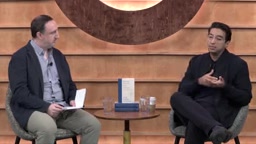
Yung Pueblo on Self-Awareness: A 365-Day Guide to Inner Transformation
Yung Pueblo shares his new book Journey's 365-day self-awareness structure on Talks at Google, discussing meditation, intuition, co-leadership in relationships, and gratitude practices.

FBI and USDA Hit by Cyberattacks: Critical Infrastructure Security Alarms Sound Again
FBI and USDA reportedly hit by cyberattacks; the FBI was breached for the second time in recent months, this time targeting the National Crime Information Center (NCIC). This article analyzes the incident details, NCIC's strategic value, and common security challenges facing government agencies.
How Do UK Grid Battery Storage Systems Make Money?
How UK grid battery storage makes money: stacking frequency response, capacity market, and wholesale arbitrage revenue, plus operational trade-offs and market risks.