Yung Pueblo on Self-Awareness: A 365-Day Guide to Inner Transformation

Yung Pueblo awakens from trauma and addiction, sharing meditation, intuition, and relationship wisdom through a four-element 365-day structure.
In a Talks at Google interview, Yung Pueblo (Diego Perez) recounts his journey from immigrating to the U.S. from Ecuador and hitting rock bottom with childhood anxiety and college substance abuse, to transforming through meditation and self-awareness. His new book Journey uses a fire, wind, earth, and water elemental structure across 365 days, emphasizing that change can happen at any moment, not just on New Year's Day. He meditates two hours daily, deliberately keeps distance from his phone, believes tension is inversely proportional to creativity, and argues a calm mind doesn't mean less ambition. Between intuition and external advice, he distinguishes inner guidance from professional learning; in relationships he advocates co-leadership and letting go of the desire to win, replacing blame with taking turns describing perspectives. Gratitude and accountability are daily cores, and letting go requires daily repeated practice. His final advice: make friends with change and make awareness a daily practice.
From Trauma to Awakening: Yung Pueblo's Path of Transformation
In a Talks at Google interview, author Yung Pueblo (born Diego Perez) shared his journey from immigrating to the United States from Ecuador, enduring material hardship and psychological trauma, to ultimately finding his way out of life's lowest point through meditation and self-awareness. His new book, Journey: The Year That Changes Everything, uses a 365-day structure to guide readers in cultivating self-awareness and inner calm in their daily lives.
Pueblo was born in Guayaquil, Ecuador, and immigrated to the U.S. with his parents at age four. He recalled that his parents argued constantly over paying rent and covering basic living expenses, an environment that left him filled with anxiety, stress, and fear from an early age. "I didn't know anyone who meditated, and I didn't know anyone who had a therapist," he said. During college, these accumulated deep patterns evolved into alcohol and drug abuse, eventually bringing him to the brink of death.
At rock bottom, he realized he had ended up there because he had been running from his emotions. "I'm here because I was running from my emotions." He threw away the hard drugs and began taking long walks, working out, and hiking. A year later, he started meditating. This turning point became the foundation for his later writing and teaching.
Meditation is a mental practice that trains attention and awareness through specific techniques, with common forms including breath focus, body scanning, and open monitoring. Neuroscience research shows that regular meditation can strengthen the prefrontal cortex's regulation of the amygdala, thereby improving emotional regulation, reducing anxiety levels, and enhancing focus. Pueblo's description of "sitting with one's thoughts" falls under open monitoring meditation, which emphasizes observing present-moment experience without judgment rather than suppressing thoughts. This mechanism explains why, during silent walks, his tension would "evaporate" and spark creative thinking—when the default mode network and executive control network collaborate more effectively, associations and insights emerge more readily.
The Elemental Structure: Transformation Doesn't Only Happen on New Year's Day
Journey is divided into chapters based on four elements—fire, wind, earth, and water—rather than arranged linearly by month. Pueblo explains that major changes don't only happen on January 1st; heartbreak, transformation, or major decisions can arrive at any moment. The book is therefore designed as a guide you can "pick up whenever you're ready for change."
Fire represents the energy to make major changes; wind symbolizes flexibility and adaptability; earth corresponds to balance—stepping out of black-and-white thinking to see the gray areas; and water is about nourishing yourself and nourishing relationships. Pueblo notes that these elements are ever-present in human history, from ancient Chinese philosophy to Buddhist philosophy to indigenous cultures—humanity has always been fascinated by the elements.
This structure allows readers to choose the chapter that matches their current needs rather than being bound by a calendar. Pueblo emphasizes that this book is not a five-minute quick fix, but an invitation for readers to repeatedly make "skillful choices" each day, gradually making good actions second nature.
The four elements (fire, wind, earth, water) are a classic framework in ancient natural philosophy for explaining the composition of the world. The Greek philosopher Empedocles proposed the four roots theory, holding that all things are composed of fire, air, water, and earth. In Buddhist philosophy, the "four great elements" (earth, water, fire, wind) refer to the fundamental properties of matter, emphasizing impermanence and aggregation. Although Chinese traditional five-element theory differs with the inclusion of wood and metal, it similarly explains change through the generation and overcoming of elements. Pueblo borrows this cross-cultural symbol not to assert literal material composition, but to use it as a metaphorical classification of psychological and behavioral patterns—giving the abstract process of inner transformation a perceptible imagery anchor that helps readers locate what they need in different states of mind.
Meditation, Technology, and Attention: Reclaiming Calm in a Digital World
Pueblo meditates for two hours every day, during which he doesn't touch his phone at all. He also takes long walks and deliberately avoids holding his phone during conversations. He shared "the coolest thing": a few months ago, he tried walking without listening to podcasts, simply sitting with his thoughts. "I felt that tension of wanting something, and then I gave it space, and it evaporated, it dissolved. And right after that, my brain started producing poetry."
He points out that creativity is inversely proportional to tension: the more tense the mind, the less creativity. Tension is essentially clinging—a deep attachment to what we like or an aversion to what we dislike. "The most powerful mind is a calm mind, but that doesn't mean less ambition." He cites the Buddha as an example: the Buddha's goal was to end suffering, which is tremendous ambition, yet he wasn't anxious in the process—after failing many times, he simply restrategized.
For those working in fast-paced environments, Pueblo suggests redefining "slowing down": it's not about reducing ambition, but ensuring energy flows toward the most important goals. He admits that in 2024 and 2025, driven by the scarcity mindset from his childhood poverty, he said "yes" to every opportunity, only to find his energy scattered. He later learned to say "yes" only to things that aligned with his skills, values, and intuition.
Intuition and Control: Distinguishing Inner Guidance from External Advice
Pueblo describes intuition as "a calm wave lapping at the shore"—steady and unhurried, not frantic, not like "I want more ice cream" or "I'm afraid of this." Intuition typically pushes you out of your comfort zone and into a new chapter of life. He mentions that intuition guided him to write, to move to New York, and to marry his wife.
But he also emphasizes that in certain domains, seeking external guidance is necessary. He cites his friend Bradley Horowitz (who served as a VP of Product at Google and helped build teams including Gmail) as an example: in the realm of investing, he listens carefully to Bradley's advice, but that's separate from intuition. Intuition tells him to build things with people he loves, while specific knowledge comes from learning from experts.
Regarding the scope of control, Pueblo believes the key to maturity is understanding that "the only thing you can truly control is your own actions." Trying to control others damages relationships, because love is based on freedom. He and his wife have been together for 18 years and married for 11; he has watched her continually evolve. "I'm just present, and I'm lucky to be so close." He compares life to a giant blank canvas on which we paint with our actions. "That's enough to design a beautiful life."

Conditioned reflex, originally a Pavlovian term for classical conditioning, refers to the phenomenon where a neutral stimulus, after repeated pairing with an unconditioned stimulus, can alone elicit a response. In psychology and neuroscience, the concept extends to emotional and behavioral patterns: traumatic experiences can form deep emotional conditioned reflexes, causing individuals to automatically experience anxiety, avoidance, or hypervigilance in similar situations. Pueblo's statement that "allowing the harm to keep compounding in the mind creates deep conditioning" refers precisely to this learned association. Mindfulness practice works by interrupting the automatic chain between stimulus and response, allowing old associations to gradually fade through repeated awareness and establishing new, more adaptive response patterns.
Co-Leadership and Conflict Transformation in Relationships
In the "water" chapter, Pueblo explores relationships as "co-leadership." Every couple has a unique "relationship culture," like a small universe based on both partners' needs and preferences. He and his wife divide responsibilities across different domains: she handles taxes, he manages investments—each stepping up where they excel and stepping back when needed.
He offers a key mindset: happiness comes from within. A partner can help joy arise and support the conditions for happiness, but if you're unwilling to accept your partner's love, it's hard to embrace the beauty of the present moment. When both partners activate happiness from within, it actually becomes easier to create supportive external space for each other.
Regarding arguments, Pueblo believes in letting go of the desire to "win." "If both people want to win, no one wins." Even if one person is completely right, resentment accumulates on both sides. Their approach is to take turns sharing "how the event unfolded on my side"—without blame, only description. When you see the part of the other person's perspective you were missing, the tension dissipates. "Active compassion is stepping out of your own perspective and seeing what happened from another person's point of view."
Gratitude and Accountability: The Core of Daily Practice
Pueblo considers gratitude one of the best habits—not only in good times but especially in hard times. He reminds himself: to have access to water, food, relative safety, and shelter, from the macro perspective of human history, "I hit the lottery." At the same time, there are still people in the world lacking these basic conditions, so gratitude must be balanced.
Regarding accountability, he distinguishes between "happening to you" and "happening with you." Even if others have done something objectively wrong, we are still responsible for what happens in our own minds. If we allow the harm to keep compounding in our minds, it creates deep conditioning that obstructs our own happiness. Moreover, the person who harmed you may no longer be alive—healing can only come from within.
"Letting go is not a one-time event," he says. "The mind is built on repetition." You need to teach yourself again and again: I feel tension, let it go, there is no threat here. This daily practice is precisely the purpose of Journey's 365-day structure—change is a repeated daily choice, not an overnight miracle.
One Actionable Tip: Make Friends with Change
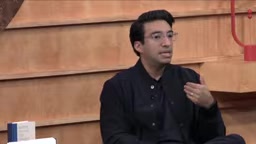
At the end of the interview, Pueblo's daily action tip for the audience is: build a good relationship with change at the intellectual level. "Don't let change become your enemy; don't be afraid of change. Treat change as a game, as a gift—change gives you the ability to experience, it gives you life." He says that now when he's with his parents, he tries to put his phone away, to listen carefully and absorb their stories, because he doesn't know how much longer such connection will last.
"Change shouldn't scare you—it should inspire you to live in the present." This may be the most concise footnote to Journey: not the pursuit of a perfect life without storms, but maintaining awareness within the storms, repeatedly choosing skillful actions, and making inner calm a daily practice.
Related articles

FBI and USDA Hit by Cyberattacks: Critical Infrastructure Security Alarms Sound Again
FBI and USDA reportedly hit by cyberattacks; the FBI was breached for the second time in recent months, this time targeting the National Crime Information Center (NCIC). This article analyzes the incident details, NCIC's strategic value, and common security challenges facing government agencies.

How Do UK Grid Battery Storage Systems Make Money?
How UK grid battery storage makes money: stacking frequency response, capacity market, and wholesale arbitrage revenue, plus operational trade-offs and market risks.
Riemann Hypothesis Formally Verified in Lean? Joint Statement Sparks Heated Debate
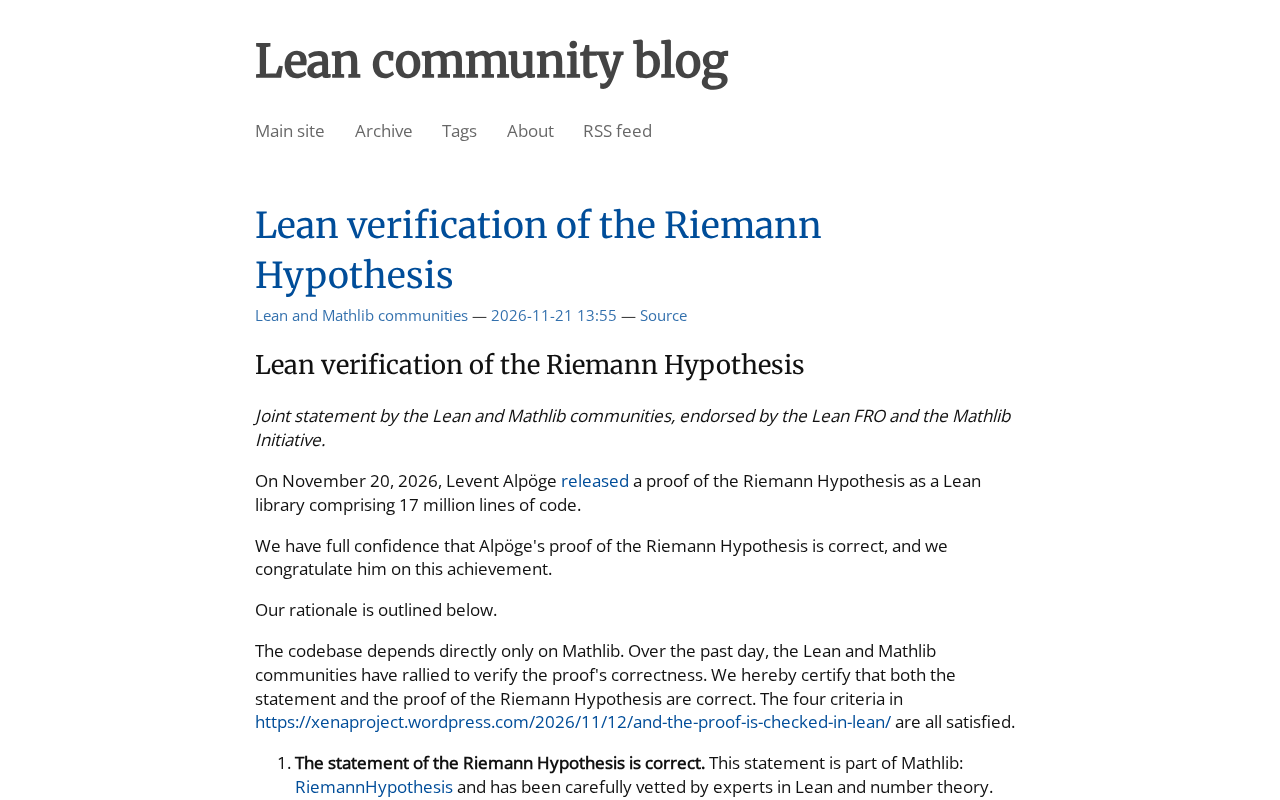
The Lean community blog published a joint statement on formal verification of the Riemann Hypothesis, sparking heated discussion on Hacker News with 359 points and 263 comments. This article analyzes the background of Lean and mathlib formal verification, polarized community reactions, and why one should not conclude the Riemann Hypothesis has been proven before reading the original text.