Lucid Partners with Bolt to Target European Robotaxi Market
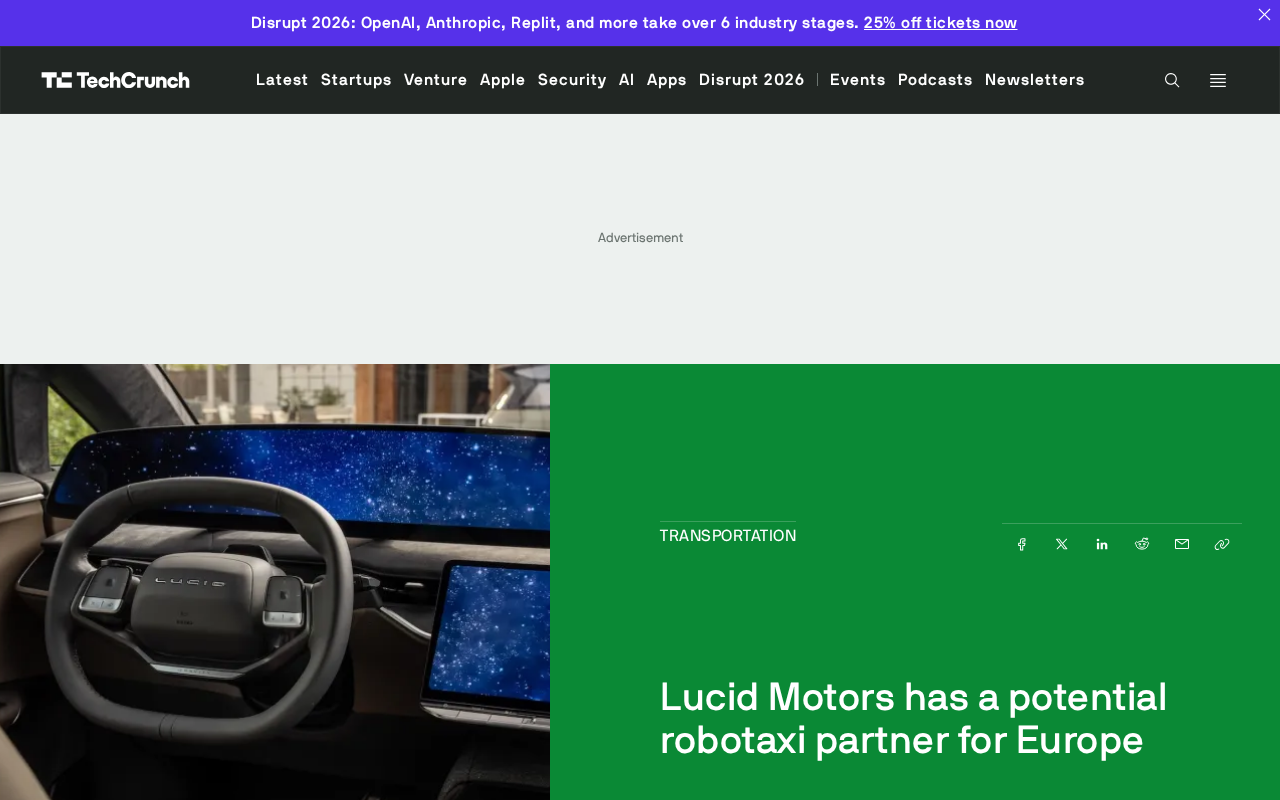
Lucid Motors and Bolt agree on intent to explore European Robotaxi services, but no vehicle orders yet.
Lucid Motors is exploring a partnership with European mobility platform Bolt to launch autonomous ride-hailing (Robotaxi) services in Europe, using a model where Lucid supplies the hardware and Bolt handles operations. Bolt's established dispatch systems, user base, and local expertise offer Lucid a ready-made entry point into European urban mobility. However, the deal remains at the letter-of-intent stage with no vehicle orders signed, and real deployment still faces hurdles including autonomous tech readiness, country-by-country regulatory approvals, and commercial negotiations — making this more a strategic signal than an imminent product launch.
Lucid Eyes European Autonomous Mobility
Electric vehicle maker Lucid Motors is searching for a European partner to advance its Robotaxi ambitions. According to reports, Lucid has reached a letter of intent with European mobility platform Bolt to explore autonomous ride-hailing services in the European market. One important caveat, however: no concrete vehicle orders have been placed yet.
This partnership reflects a broader trend of premium EV manufacturers trying to move beyond traditional vehicle sales into Mobility-as-a-Service. For Lucid, aligning with a platform that already has a large user base and established operational network across Europe represents a relatively measured path into the Robotaxi space.
Founded in 2007 and headquartered in California, Lucid Motors entered the premium EV sedan market with its flagship Lucid Air, which once held the record for the longest EPA-rated range among production electric vehicles. Saudi Arabia's sovereign wealth fund (PIF) is Lucid's largest shareholder with over 60% ownership, providing the company with relatively strong financial backing — though also drawing geopolitical scrutiny to its strategic moves. Lucid's annual sales volume remains modest compared to mainstream rivals like Tesla and BMW. Expanding into Robotaxi mobility services is widely seen as a key strategic attempt to open new revenue streams beyond vehicle sales and achieve greater brand-level scale.
Why Bolt as a Partner
Bolt is one of Europe's leading mobility platforms, with operations spanning ride-hailing, shared mobility, and food delivery across Europe and select emerging markets. For automakers looking to enter the Robotaxi market, partnering with a platform like Bolt means direct access to an existing dispatch system, user traffic, and urban operational capabilities — without having to build a mobility network from scratch.
This division of labor — where the automaker provides the hardware and the platform handles operations — is becoming the mainstream model for commercializing autonomous driving. Compared to Tesla's approach of building its own Robotaxi network, Lucid's choice to partner with an established platform reduces the risks and costs of early market entry.
Bolt was founded by Estonian entrepreneur Markus Villig in 2013 (originally under the name Taxify) and is headquartered in Tallinn. It now operates in approximately 50 countries and over 600 cities across Europe, Africa, and Latin America, with more than 100 million registered users. Unlike Uber, Bolt has long focused on Europe and emerging markets — environments known for complex regulatory landscapes and fragmented local markets — accumulating deep localization expertise along the way. Its multi-vertical portfolio spanning ride-hailing, e-scooters, bike-sharing, and food delivery forms a relatively complete urban mobility ecosystem. For Lucid, which has no existing mobility infrastructure in Europe, this is effectively a ready-made "city access pass" — including regulatory relationships with local governments, driver and fleet management systems, and user behavior data that a new entrant might otherwise take years to build independently.
Partnership Still in Early Stages
It's important to keep expectations grounded: this collaboration remains at the letter-of-intent stage. The original report explicitly notes that no vehicle orders have been placed. This means there is still a considerable distance between signing an agreement and actually having Lucid vehicles operating as Robotaxis — including the maturation of autonomous driving capabilities, regulatory approvals across individual European countries, and negotiations over specific commercial terms.
In other words, this looks more like a declaration of strategic direction than an imminent product launch. For observers tracking progress in the autonomous driving industry, the real milestone to watch for is whether substantive vehicle procurement agreements and operational timelines emerge down the road.
Europe's autonomous driving regulatory framework is among the most complex in the world. At the EU level, the General Data Protection Regulation (GDPR) imposes strict constraints on vehicle data collection, while permission to operate autonomous vehicles on public roads is largely governed by individual member state legislation. Germany was the first to pass commercial L4 autonomous driving regulations in 2021, and France, the UK (now legislating independently post-Brexit), and others are gradually establishing their own testing and commercialization licensing regimes. This means that even if Lucid and Bolt finalize a commercial agreement, they would still need to obtain operating licenses from local regulators in each target city — a process that could take years in aggregate. This is precisely why the article emphasizes that "there is still a considerable distance" before real-world deployment.
What This Means for the Industry
From a broader perspective, Lucid's move once again confirms the deepening convergence between the automotive industry and mobility platforms. As autonomous driving technology edges toward commercialization, it is increasingly difficult for any single automaker to independently manage the full chain of manufacturing, operations, and customer acquisition — making partnerships with mobility platforms nearly inevitable.
Europe represents both a stringent regulatory environment for autonomous driving and a critical battleground for new energy and smart mobility. Whoever manages to close the commercial loop on Robotaxi services in Europe first stands to gain a significant edge in the next wave of mobility competition. Lucid and Bolt's initial engagement is still just a starting point — but it's one worth watching closely.
Related articles

Neovim Reportedly Has ~$800K in Bitcoin Donations Sitting Untouched
A Neovim user discovered ~$800K in Bitcoin sitting untouched in the project's donation wallet since 2023, sparking debate about open-source crypto fund governance.
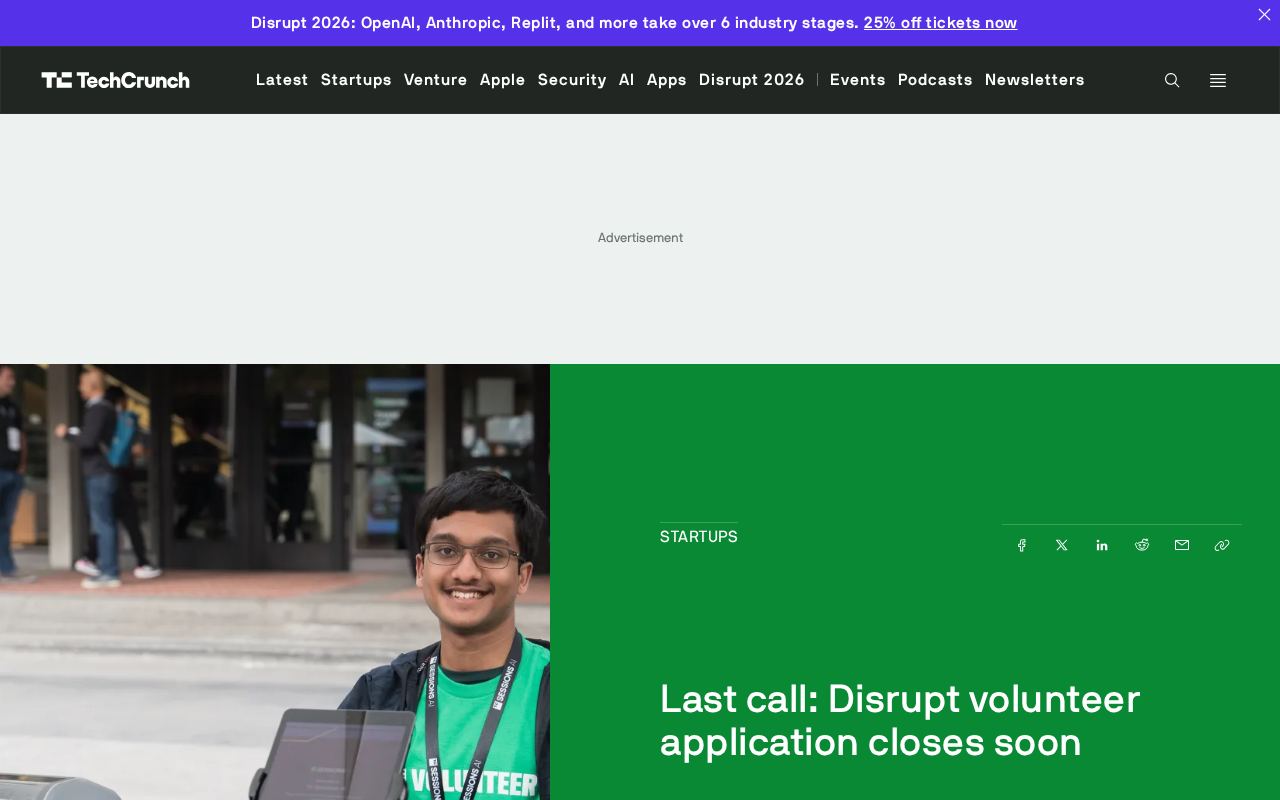
TechCrunch Disrupt 2026 Volunteer Applications Closing Soon
TechCrunch Disrupt 2026 volunteer applications are closing soon. Apply now through official channels for a chance to access one of tech's most influential startup conferences.
REVERSAL-BENCH: A Reversibility Benchmark for Reset-Free Reinforcement Learning
REVERSAL-BENCH introduces a continuous reversibility parameter ρ and a reset oracle to benchmark reset-free RL across five physics engines and eight manipulation settings, exposing the reset-free RL cliff.