Lula and Brazil's Election: How Anti-Trump Rhetoric Became a Campaign Ace

Lula flips age and Trump pressure from liabilities into campaign assets through sovereignty rhetoric and workout videos.
Brazilian President Lula has made "standing up to Trump" his signature rallying cry, framing Trump's tariff policies as an assault on Brazilian sovereignty — and watching his approval ratings climb each time he does. Meanwhile, the program draws a "Brazilian Biden" parallel: both are center-left pragmatist career politicians facing age-related scrutiny. Unlike Biden, Lula responds proactively, posting workout videos on social media to reframe his 80 years as an inspirational "still going strong" narrative. Both strategies point to the same core logic of political communication in the attention economy: emotional mobilization and image-building now outweigh policy arguments.
Brazilian President Lula has turned "standing up to Trump" into the most electrifying rallying cry on the campaign trail. This is more than a political gesture — it's becoming a significant variable shaping the outcome of Brazil's upcoming election. Based on Last Week Tonight's analysis of Lula and the Brazilian political landscape, this article unpacks the campaign logic and image strategy of this 80-year-old political veteran.
Sovereignty Narrative: Making Trump the Best Campaign Surrogate
Lula has repeatedly hammered on the theme of Brazilian sovereignty at his rallies. He has publicly declared: "In Brazil, we don't accept anyone interfering in our affairs, because Brazil is capable of taking care of itself." He even claims to have warned Trump directly over the phone — don't meddle in Brazilian elections, or you will lose.
There's a real political payoff behind this tough talk. Every time Lula attacks Trump's tariff policies and frames them as an assault on Brazilian sovereignty, his approval ratings tick noticeably upward. In other words, Trump's pressure has become a tool Lula uses to mobilize domestic public opinion and consolidate nationalist sentiment. For an incumbent facing fierce competition, that's a favorable political trade.
This "external threat, internal mobilization" logic has deep historical roots in Latin America. From the anti-American movements of the 20th century to the 21st-century "Pink Tide," left-wing leaders have long used U.S. interventionism as a narrative framework to rally domestic voters. Lula himself, during his first presidency from 2003 to 2010, frequently spoke on behalf of the "Global South" on the international stage, accumulating significant anti-hegemony political capital. The Trump administration's tariff policies have objectively handed this narrative ready-made material: when Trump announced sweeping tariffs on multiple countries in 2025, Brazil — a major agricultural and industrial exporter — was hit hard. The real economic damage means the sovereignty narrative isn't just rhetoric; it's backed by constituencies with concrete grievances. That's the structural reason why approval ratings rise in step with Lula's condemnations.
The "Brazilian Biden" Concern
The program draws attention to a subtle parallel: if Bolsonaro evokes Trump, then Lula is somewhat reminiscent of Joe Biden.
The similarities go beyond age. Lula is a quintessential career politician with a center-left pragmatist governing style: he prioritizes social welfare programs while simultaneously backing oil extraction in the Amazon region and pursuing deforestation-reduction policies. This "hedging both sides" balancing act is classic old-school pragmatic politics, but it can come across as ideologically ambiguous to voters in a polarized environment.
The more pressing issue is age. As a genuinely elderly candidate, Lula must directly address doubts about his stamina and capacity to govern. The program notes, however, that he has been far more proactive on this front than Biden ever was — not dodging the question, but leaning into it conspicuously.
The connection between Bolsonaro and Trump is more than a stylistic analogy. The two have publicly endorsed each other on multiple occasions, shared campaign advisors, and adopted nearly parallel strategies around "election fraud" narratives. After losing in 2022, Bolsonaro similarly refused to concede, and his supporters stormed Brazil's Congress in Brasília on January 8, 2023 — an event strikingly similar to the January 6, 2021 attack on the U.S. Capitol. This context has led international observers to frame the Lula-versus-Bolsonaro contest as a broader symbolic struggle between democracy and authoritarianism. It also explains why Lula's anti-Trump posturing resonates with domestic voters far beyond pure economic concerns — it simultaneously activates collective memories of the 2022 political crisis.
Workout Videos: An Image-Building Experiment at 80
Lula's approach to the age question is refreshingly direct. This former factory worker told a rally crowd: "If you live according to nature's rules, you can cut your medical bills in half. That's why, dear comrades, I'm in such great shape." His secret? Exercise.
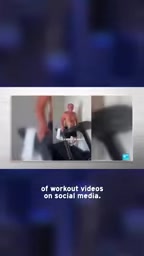
Over recent months, Lula has been posting workout videos on social media with regularity. The program describes these clips with a touch of bemusement as "very weird" — imagine scrolling through Brazilian social media and suddenly seeing an 80-year-old head of state working out. The approach undeniably breaks the mold of how traditional political figures present themselves.
From a communications standpoint, this is a high-risk, high-reward personal branding strategy. In the social media era, a leader's relatability and sense of vitality often reach young voters more effectively than policy arguments ever could. By proactively transforming his age from a liability into content centered on "still going strong," Lula is essentially using content marketing to offset concerns about his physical condition.
The New Battleground of Political Communication
Lula's two-pronged approach — using sovereignty rhetoric externally to harness anti-Trump sentiment, and using workout videos internally to manage his personal image — ultimately points to the same underlying logic: in an attention economy driven by social media, emotional mobilization and image-building carry increasing weight.
Trump's threat of interference, which could have been a source of external pressure, has been successfully reframed by Lula as a catalyst for domestic unity. Age, which should be a vulnerability, has been packaged as an inspirational narrative. Whatever the eventual election outcome, the ability to convert every potential negative into a communications asset is itself a case study in modern political campaigning worth paying attention to.
Of course, whether these strategies actually translate into votes still depends on how Brazilian voters feel about the economy and social issues in their daily lives. There's often a significant gap between short-term fluctuations in public opinion and long-term voting intentions.
The strategies Lula employs draw on a combination of "Agenda Setting" and "Framing Theory" in communications scholarship: by controlling which issues enter the public conversation (sovereignty threats, personal health) and providing specific interpretive frames for those issues (anti-hegemony national hero, vigorous pragmatic elder statesman), his campaign team proactively shapes voters' cognitive environment rather than reactively responding to opponents' attacks. It's worth noting that Brazil is one of the countries with the highest social media penetration rates in the world. WhatsApp was used extensively to distribute political messaging during the 2018 election, and the short-video ecosystems of YouTube and TikTok have profoundly influenced how voters are reached. Lula's workout video strategy is fundamentally an adaptation to this media landscape — using platform-native content formats to lower the barrier to distribution, and turning snippets of a political figure's daily life into shareable emotional content.
Related articles

Kimi K3.1 Hands-On Test: Open-Source Model Nears Opus, Video Generation Steals the Show
Kimi K3.1 completed motion graphics, 3D rendering, mini-games, and video generation in a live test. Analysis of its 2.8T MoE architecture, gap vs Opus/GPT, and hidden video generation.

Sam Altman: Why Life's Biggest Advice Should Still Come from Humans
OpenAI CEO Sam Altman on the limits of AI advice: AI can talk you out of an impulsive email, but life's biggest advice should still come from humans.

"Black October": Did AI Uncover 3% of All Critical Vulnerabilities Ever?
A Reddit post claims 3% of all critical software vulnerabilities ever were found in the past month, dubbed 'Black October.' We break down the statistical issues, how AI-assisted code auditing accelerates discovery, and how developers should respond.