Lyft Pays $272 Million to Settle Driver Classification Lawsuit

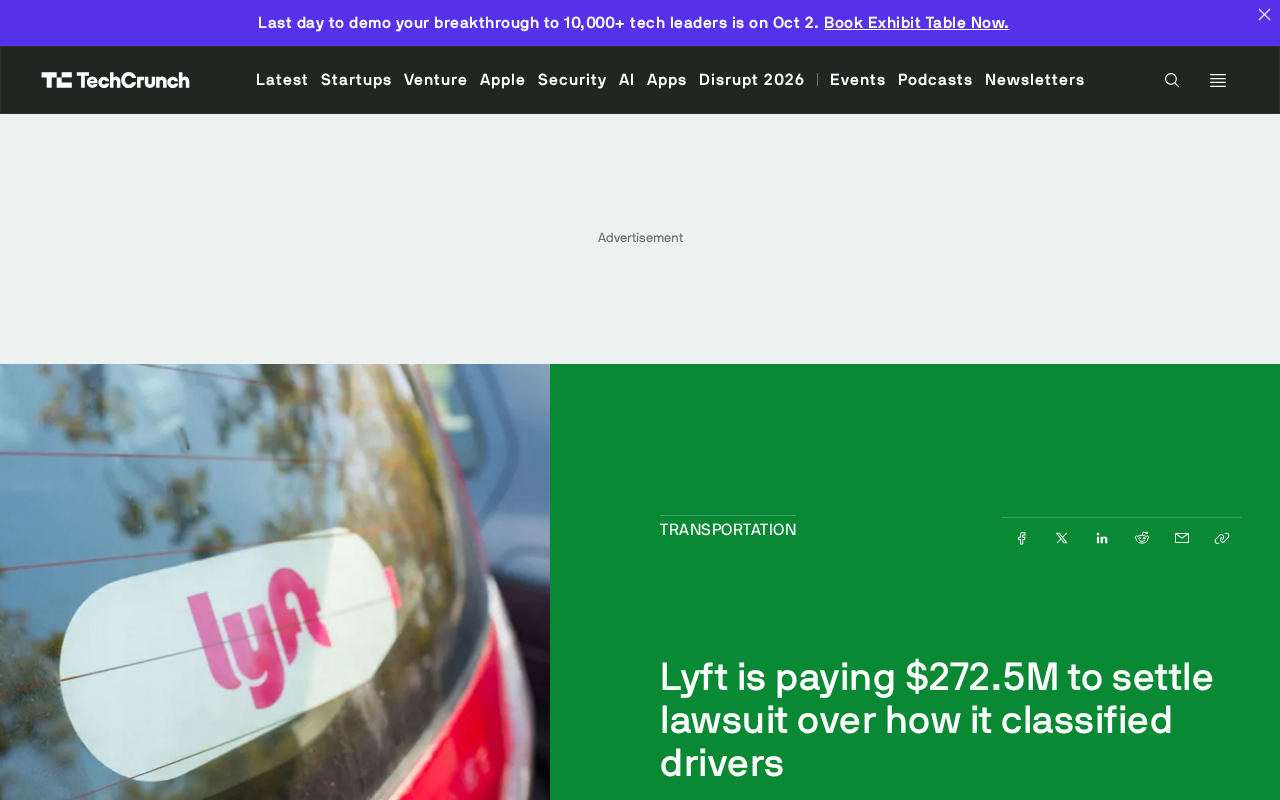
Lyft pays $272.5M to settle a 2020 class-action over whether its drivers should be employees or independent contractors.
Lyft has agreed to pay $272.5 million to resolve a class-action lawsuit originating in 2020, centered on whether platform drivers should be classified as independent contractors or employees — a distinction with major implications for minimum wage, benefits, and workers' compensation, and one that can raise labor costs by 30–40%. Legislative battles like California's AB5 kept classification rules in flux around 2020, creating substantial historical legal exposure for platforms. With rules since settling in platforms' favor, Lyft opted for a lump-sum settlement to close this chapter — a cautionary signal to the entire gig economy that legal uncertainty during periods of regulatory change can carry a very high price tag.
Overview
Lyft has agreed to pay $272.5 million to settle a class-action lawsuit centered on driver classification. The case dates back to 2020, when the question of whether gig economy workers should be classified as "independent contractors" or "employees" remained unresolved — a defining issue hanging over the entire industry.
Today, drivers for ride-hailing and delivery platforms are broadly classified as independent contractors. This settlement, in essence, closes the book on legal disputes left over from a period when those classification rules had yet to be clearly established.
Why Driver Classification Matters
Whether a driver is classified as an "independent contractor" or an "employee" directly determines the costs and obligations a platform must bear. As employees, drivers are generally entitled to minimum wage protections, overtime pay, workers' compensation, unemployment insurance, and various benefits. As independent contractors, most of these protections do not apply — significantly reducing a platform's operating costs.
For platforms like Lyft and Uber, which depend heavily on large driver networks, how drivers are classified goes to the heart of business model viability. A reclassification as employees would drive labor costs substantially higher — which is precisely why gig economy companies have fought so hard on legal and policy fronts for so long.
Determining whether a worker is an "independent contractor" or an "employee" involves different legal tests across countries and states. At the U.S. federal level, the "Economic Reality Test" is commonly used, examining the degree of a worker's economic dependence on a platform. California, meanwhile, once applied the more stringent "ABC Test." These varying frameworks mean the same platform can face very different legal conclusions depending on the jurisdiction. For platforms found to be employers, beyond direct benefit costs, they would also need to pay the employer-side FICA payroll tax, carry workers' compensation insurance, and comply with laws governing collective bargaining rights — with total labor cost increases estimated at 30% to 40%.
The Legacy of 2020
What makes this lawsuit notable is its timing. Around 2020, the rules governing gig worker classification were still deeply uncertain, with regulatory frameworks, court rulings, and local legislation all in flux. The controversy was not unique to Lyft — it was a systemic challenge facing the entire industry.
As the rules gradually clarified — with gig drivers broadly established as independent contractors — the legal foundation of this older case shifted. Lyft's choice to settle for $272.5 million avoids the risk of protracted litigation while drawing a line under this piece of unresolved history.
Around 2020, California's AB5 was the central flashpoint in this dispute. The law took effect in January 2020 and applied a strict "ABC Test" to determine worker status: unless a platform could prove that a worker was entirely independent in how they performed their work, that the work fell outside the platform's core business, and that the worker independently operated a similar business, the worker would be classified as an employee. This posed a direct threat to Uber and Lyft, which together spent roughly $200 million backing Proposition 22 in the November 2020 ballot, ultimately securing an exemption that preserved the independent contractor status of ride-hailing drivers. At the federal level, the Department of Labor's interpretation of independent contractor standards also tightened and shifted during the Biden administration, making the legal environment around 2020 particularly complex. It was precisely during this window of unsettled rules that Lyft's legal exposure was most concentrated.
Implications for the Industry
The size of this settlement reflects the reality that gig economy platforms may still be paying for past practices when it comes to labor compliance. Even though the current classification framework is relatively favorable to platforms, historical legal risk has not fully dissipated.
For the gig economy as a whole, driver classification remains a sensitive issue touching on cost structures, regulatory policy, and social equity. Lyft's settlement is a reminder to the industry that disputes arising during periods of regulatory transition can ultimately be settled at a steep price. As the regulatory environment continues to evolve, how platforms balance operational efficiency with worker rights will remain a long-term challenge.
Related articles

DeepCell: One-Click AI Generation of Documents, Spreadsheets, and Slides
DeepCell tops Product Hunt with one-click generation of documents, spreadsheets, and slides, using the .deepcell format for linked updates, designed for System 2 tasks like modeling and sales reviews.

Doneas: 15-Minute Daily Accountability Calls That Keep Indie Developers From Procrastinating
Doneas is a daily accountability tool for indie developers: plan tasks on Monday, join a 15-minute call with five builders each day, and log deliveries on a public progress page. This article analyzes its core mechanics, effectiveness, and potential issues around retention and matching.

Fastlane 2.0: Fully Automated AI Ad Campaigns, From Creative to Optimization
Fastlane 2.0 is an AI ad automation tool: enter your website and it learns your brand, generates video and image ads, and runs and optimizes them on Meta, TikTok, Instagram, and YouTube.