M6 MacBook Pro May Be the Last of Its Kind: Apple's Laptop Design Watershed Approaches

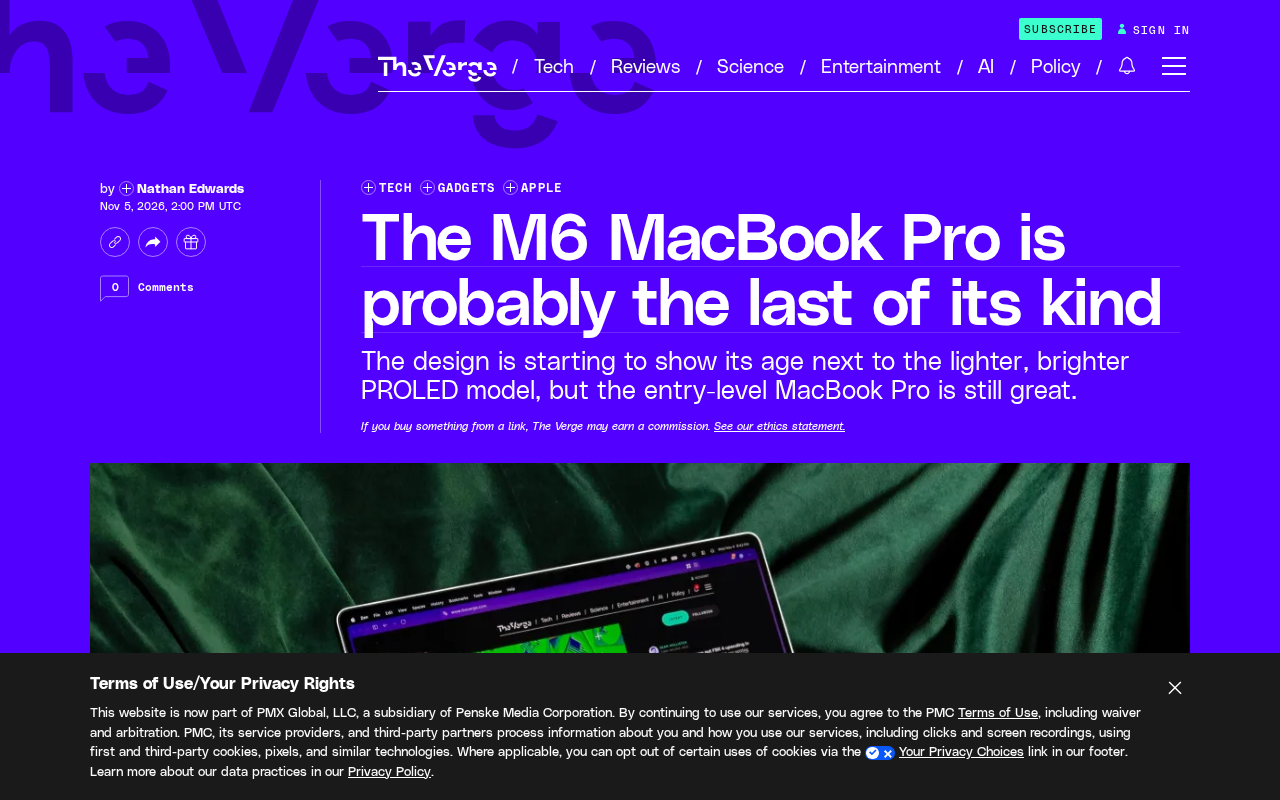
Apple will launch both the M6 MacBook Pro and an all-new thin-and-light OLED touchscreen MacBook Pro on November 6; the former may be the swan song of the old design.
The article analyzes the two MacBook Pros Apple is about to launch on November 6. The M6 MacBook Pro is seen as the last chip upgrade for the current chassis, while the all-new model unveiled the same day features a thinner, lighter body and an OLED touchscreen, which the report suggests will likely become the standard form of MacBook Pro for years to come. The author notes that the inertia of design cycles is far longer than chip cycles, and the M6 sits exactly at the transition point between the old design's exit and the new form's takeover. For users holding out to buy, the article advises treating "immediate need" and "pursuit of the next-generation form" as two independent decision lines, and emphasizes that what is truly worth watching is how Apple manages the transition between the two product lines in the same launch—more revealing of future plans than the M6's performance itself.
A Routine Update That May Mark the End of an Era
Apple has announced it will launch the new M6 MacBook Pro on November 6. Judging by the naming and release cadence, this is just another routine chip upgrade. But foreign media reports offer a thought-provoking assessment: the M6 MacBook Pro is very likely "the last of its kind."
The reason: on the same day, Apple will also unveil a "brand-new" MacBook Pro—thinner, lighter, and equipped with a beautiful OLED touchscreen. The report explicitly states that this new machine "is very likely what every new MacBook Pro will look like in the coming years." In other words, on November 6, Apple will present the intersection of two product lines: the M6 model, which continues the existing design language, and the all-new form factor that points to the future.
The M6 MacBook Pro is thus given a special identity: it is not the beginning of a new era, but the closing chapter of the old one.
Two Product Lines, Two Design Philosophies
M6: The Last Chip Dividend of the Current Chassis
Based on the source description, the M6 MacBook Pro continues the overall form factor of the current MacBook Pro, with core changes concentrated at the chip level. For professional users, this is still a meaningful performance iteration—the M-series chips have built a reputation for energy efficiency and graphics capability in creation, compilation, rendering, and other scenarios.
But its historical significance lies not in performance, but in being "the last one." When Apple is already prepared with a new, thinner, lighter chassis featuring an OLED touchscreen, continuing to buy the old-form flagship laptop essentially means paying for a design language that is about to be replaced.
[!NOTE]
Background Knowledge: M-Series Chips and the Unified Memory Architecture
The M-series chips are Apple's family of custom ARM-architecture chips that have been gradually replacing Intel processors since 2020. They use a Unified Memory Architecture, in which the CPU, GPU, and neural engine share the same high-bandwidth memory, giving them an advantage in energy efficiency and graphics performance. As an iterative model, the M6 is expected to continue this design philosophy, improving performance within the same chassis through process upgrades and core count adjustments. For professional users, this means longer battery life and lower heat output under workloads such as video editing, code compilation, and 3D rendering, but the exterior, ports, and screen specifications will not change. This "chip dividend" is a common way value is extracted at the end of an old chassis's life cycle.
The All-New MacBook Pro: OLED Touchscreen and Thinner, Lighter Design
Although the report's description of this new machine is brief, it is highly information-dense: "thinner, lighter," "beautiful OLED touchscreen." These three features together point to a structural adjustment of the MacBook Pro product line—OLED means higher contrast, purer blacks, and thinner modules; a touchscreen may redefine the boundary between macOS and finger interaction; and the thinner, lighter design means Apple has found a new engineering balance in cooling, battery, and port layout.
The report's wording—"very likely what every new MacBook Pro will look like in a couple of years"—further reinforces this judgment: the new design is not a special edition, but the next-generation standard form.
[!NOTE]
Background Knowledge: OLED vs. Mini-LED and the Touchscreen Question
OLED (organic light-emitting diode) screens are fundamentally different from the Mini-LED backlit LCDs used in current MacBook Pros: each OLED pixel emits its own light, enabling near-infinite contrast, true blacks, and faster response times, while eliminating the backlight module, which helps reduce body thickness. However, OLED in laptops still needs to address burn-in risk, peak brightness, and lifespan issues. Adding a touchscreen involves the interaction logic of macOS—Apple has long maintained a division of labor in which iPadOS handles touch and macOS handles keyboard and mouse. If the MacBook Pro adopts a touchscreen, it may mean macOS will add a touch-optimized layer, or at least support some touch gestures. The thinner, lighter design requires rebalancing cooling (vapor chamber or graphene solutions), battery energy density, and the number of ports—a systemic engineering adjustment.
Why the "Last of Its Kind" Deserves Serious Attention
The Inertia of Design Cycles Is Longer Than Chip Cycles
Chips are updated every year, but the life cycle of a chassis often lasts for years. Once Apple switches to the new chassis with an OLED touchscreen and thinner, lighter design, the existing design will, like the Unibody and Retina before it, become a quickly turned page of history. The M6 MacBook Pro happens to sit exactly at this transition point, and its collectible value and practical value need to be considered separately.
[!NOTE]
Background Knowledge: The Evolution of the MacBook Pro Chassis
The MacBook Pro chassis history can be traced back to the 2006 Unibody aluminum unibody design; after the introduction of the Retina display in 2012, the chassis was largely continued; in 2016 it shifted to USB-C ports and the butterfly keyboard; and in 2021 it returned to MagSafe, HDMI, and other ports while adopting a notch display. Each chassis transition has been accompanied by major changes in ports, cooling, and keyboard structure, and once a new chassis is established, it typically lasts 4–5 years. Therefore, when the report says the new design "is very likely what every new MacBook Pro will look like in the coming years," it means Apple is preparing to start a new chassis cycle, and the current chassis that houses the M6 will enter the end of its life. The inertia of this design cycle is far longer than the annual chip update, giving the "last generation of the old chassis" landmark significance in product history.
The Time Window for Purchase Decisions Is Narrowing
If you need a MacBook Pro right now to get work done, the M6 remains a reasonable choice; but if you have higher expectations for screen quality, portability, or interaction, the appeal of waiting for the new chassis will be significantly stronger. The report does not provide specific specifications or pricing for the new machine, which means early adopters will have to bear some information uncertainty.
Editorial View: Watershed Products Are Often Underestimated
In the history of technology products, "the last generation of an old design" is often seen as unremarkable at launch and only reveals its landmark significance in retrospect. The M6 MacBook Pro will likely experience the same fate: its chip is strong, but its body language is on its way out.
What is truly worth watching is how Apple handles the relationship between the two product lines in the same launch on November 6—whether it sells them in parallel, transitions gradually, or lets the new design directly take over the high-end positioning. This answer says more about Apple's plans for the MacBook Pro over the next few years than the M6's benchmark scores.
For users holding out to buy, the advice is to treat "I need it now" and "I want the next-generation form factor" as two independent decision lines, rather than being swayed by the "last of its kind" label. After all, the line in the report—"very likely what every new MacBook Pro will look like in the coming years"—is the most critical signal from this launch.
One-line Summary
Apple will launch both the M6 MacBook Pro and an all-new thin-and-light OLED touchscreen MacBook Pro on November 6; the former may be the swan song of the old design.
Paragraph Summary
The article analyzes the two MacBook Pros Apple is about to launch on November 6. The M6 MacBook Pro is seen as the last chip upgrade for the current chassis, while the all-new model unveiled the same day features a thinner, lighter body and an OLED touchscreen, which the report suggests will likely become the standard form of MacBook Pro for years to come. The author notes that the inertia of design cycles is far longer than chip cycles, and the M6 sits exactly at the transition point between the old design's exit and the new form's takeover. For users holding out to buy, the article advises treating "immediate need" and "pursuit of the next-generation form" as two independent decision lines, and emphasizes that what is truly worth watching is how Apple manages the transition between the two product lines in the same launch—more revealing of future plans than the M6's performance itself.
Related articles
 Tech Frontiers
MuJoCo: An Analysis of DeepMind's Open-Source General-Purpose Physics Simulator
An in-depth analysis of Google DeepMind's open-source physics simulator MuJoCo: high-performance C++ kernel, MJCF modeling format, contact solving principles, MJX GPU acceleration, and robot reinforcement learning use cases.
 Tech Frontiers
Claude API Quick Start: The Official Quickstarts Project Collection
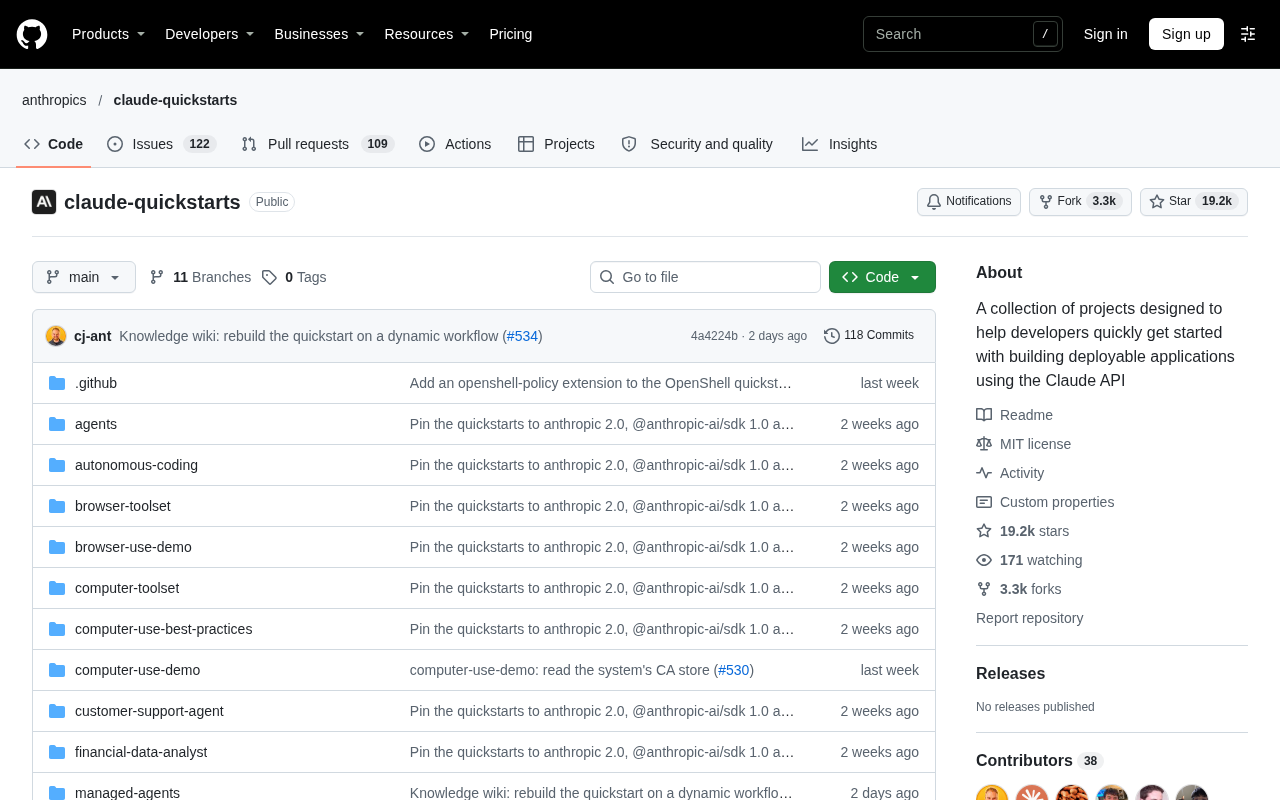
Anthropic's official claude-quickstarts project collection helps developers quickly build deployable apps with the Claude API. Nearly 20k stars, Python-based, great for beginners and prototyping.
 Tech Frontiers
AI Agents Connecting Directly to APIs: Which Calls Can Be Safely Allowed?
AI agents can call any API, but the real challenge is deciding which calls can be safely allowed. This article analyzes allowance decisions from three dimensions—intent matching, least privilege, and controllable impact—and argues that the control layer should sit outside the agent, combined with audit traceability to build a trustworthy API call governance mechanism.