macOS 27 Golden Gate Now Available: New Siri AI and Liquid Glass Upgrades
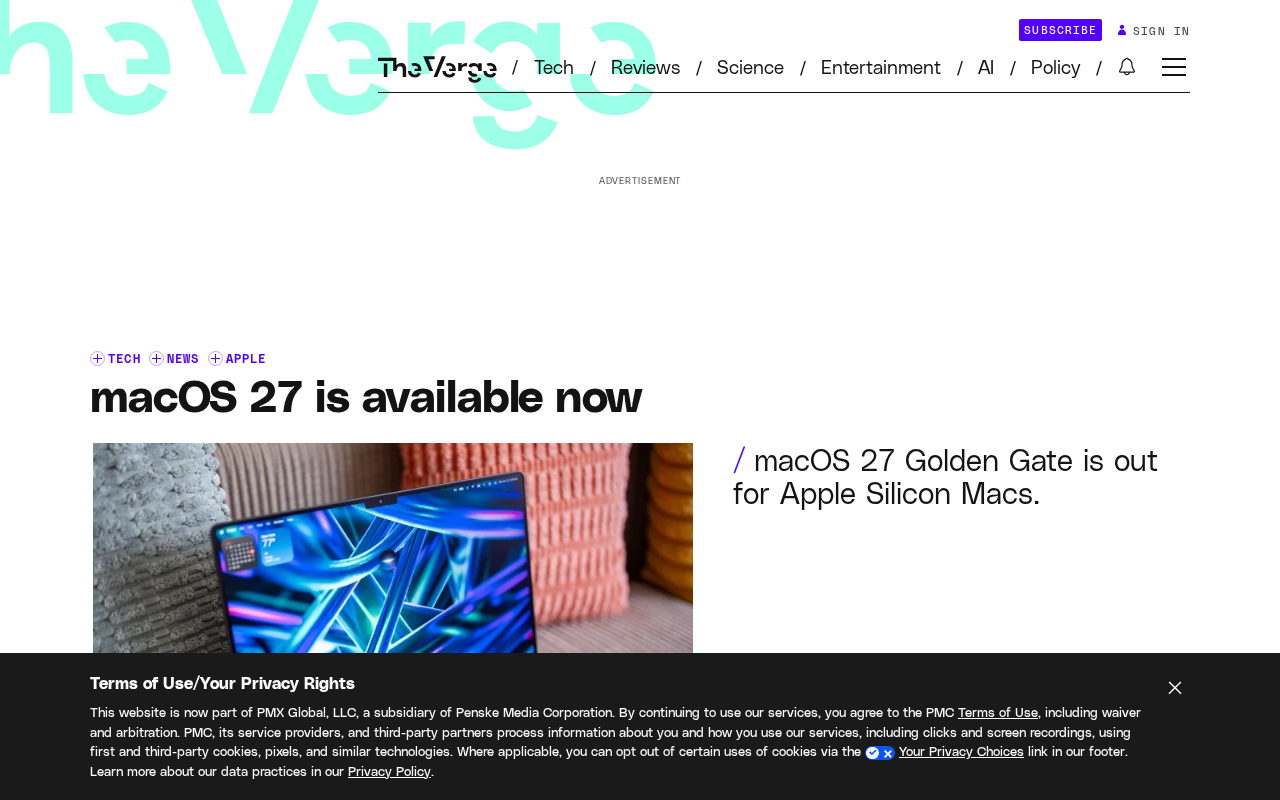
macOS 27 Golden Gate launches with new Siri AI and Liquid Glass upgrades, exclusively for Apple Silicon Macs.
Apple has officially released macOS 27 Golden Gate, compatible only with Apple Silicon Macs — marking the end of major update support for Intel machines, whose final significant release was macOS Tahoe. The headline feature is a rebuilt Siri AI assistant with expected improvements in natural language understanding, contextual dialogue, and cross-app task handling. The update also brings further Liquid Glass visual refinements and claimed system performance gains. Apple Silicon users have strong reasons to upgrade, though those prioritizing stability may want to wait for the first patch release.
Apple officially rolled out the macOS 27 Golden Gate update this Monday. The release introduces a redesigned Siri AI assistant, Liquid Glass interface refinements, performance improvements, and more. Notably, this update is exclusive to Macs running Apple Silicon — Intel-based Mac users will not be able to upgrade.
Apple Silicon Exclusive — The End of the Intel Mac Era
The compatibility requirements for macOS 27 send a clear message: Apple's support for Intel Macs has officially come to a close. According to reports, last year's macOS Tahoe was already the final major update for Intel machines. This means users still on Intel Macs will only receive security patches going forward, with no access to new features.
Since Apple began its transition to in-house silicon in 2020, this shift has been years in the making and is now complete. For long-time users, it's both the inevitable outcome of hardware evolution and a reminder that older devices are reaching the end of their lifecycle. Anyone wanting the full macOS 27 experience will need to consider upgrading to an Apple Silicon device.
Apple Silicon is Apple's line of in-house chips, introduced in 2020 and built on ARM architecture — starting with the M1. Compared to the Intel x86 chips used previously, Apple Silicon delivers significant advantages in power efficiency and performance density, and enables deep hardware-software co-optimization. When Apple announced the transition at WWDC 2020, it promised "at least two years" of support for Intel Macs — support that ultimately extended through macOS Tahoe in 2024. Every Mac currently sold (MacBook Air, MacBook Pro, Mac mini, Mac Studio, Mac Pro, and iMac) now ships with an M-series chip, marking the completion of the Apple Silicon transition.
A Reimagined Siri AI: The Headline Feature
Among the many new features in macOS 27, the rebuilt Siri AI assistant is undoubtedly the most high-profile. Apple has been making aggressive moves in generative AI in recent years, and integrating more powerful AI capabilities into its system-level voice assistant marks a significant step — positioning Siri less as a command-response tool and more as an intelligent interaction partner.
While specific details about Siri's new capabilities haven't been fully spelled out, Apple's broader product strategy suggests the upgrade will likely focus on natural language understanding, contextual conversation, and cross-app task handling. For users who rely on their Mac for daily work, a smarter system assistant translates directly into a smoother, more productive experience.
Liquid Glass Interface and Performance Gains
Beyond AI, macOS 27 also brings further refinement to the Liquid Glass visual language. This design style is defined by its translucent, fluid UI elements, and this update polishes the look further — making the overall aesthetic feel more cohesive and refined.
Apple has also claimed performance improvements. On Apple Silicon, system-level hardware-software co-optimization tends to deliver noticeable real-world gains in areas like battery life and responsiveness. That said, the actual extent of these improvements will need to be verified by independent testing.
Liquid Glass is Apple's new design language, unveiled alongside iOS 26 and macOS 26 at WWDC 2025. Defined by dynamic translucency and light-refracting UI elements, it's widely regarded as the most significant visual overhaul since iOS 7's flat design shift. The concept draws on the optical properties of glass and liquid in the physical world, giving UI elements a flowing, refractive quality that shifts with the content behind them. macOS 27 Golden Gate represents a continuation and deepening of this design language on the desktop, with detail-level refinements and stability fixes compared to its initial release.
Should You Upgrade Now?
For Apple Silicon Mac users, macOS 27 offers plenty of reasons to upgrade — especially for those eager to get hands-on time with the new Siri AI. Intel Mac users, on the other hand, don't need to agonize over it: this update simply isn't for you, and staying on macOS Tahoe is the right call.
As a system update centered on AI as its key selling point, how macOS 27 actually performs in practice will ultimately come down to how reliable and useful Siri AI proves to be in everyday use. For users who prioritize stability, it's worth waiting for the first patch release before upgrading.
Related articles

Deep Dive into Agent Eval Harnesses: Build vs. Buy?
A deep dive into the four core components of an agent eval harness — Cases, Runner, Capture, and Graders — with practical guidance on when to build vs. adopt existing frameworks.
Getting Started with Krea 2 Image Generation: A Beginner's Guide to LoRA and Checkpoints
A beginner's guide to Krea 2 image generation: how to start with free open-source workflows, understand LoRA vs Checkpoint on Civitai, and achieve consistent realistic image generation.

Nintendo 'Customer Appreciation' Sale: Switch Games and Accessories Price Cuts Roundup
Nintendo's Customer Appreciation sale discounts Switch games and accessories at Amazon, Best Buy, Walmart, and its digital store — funded by tariff refunds. Ends Sept 26.