Major Shift in the OpenAI-Microsoft Partnership: What Does Non-Exclusive Licensing Mean?
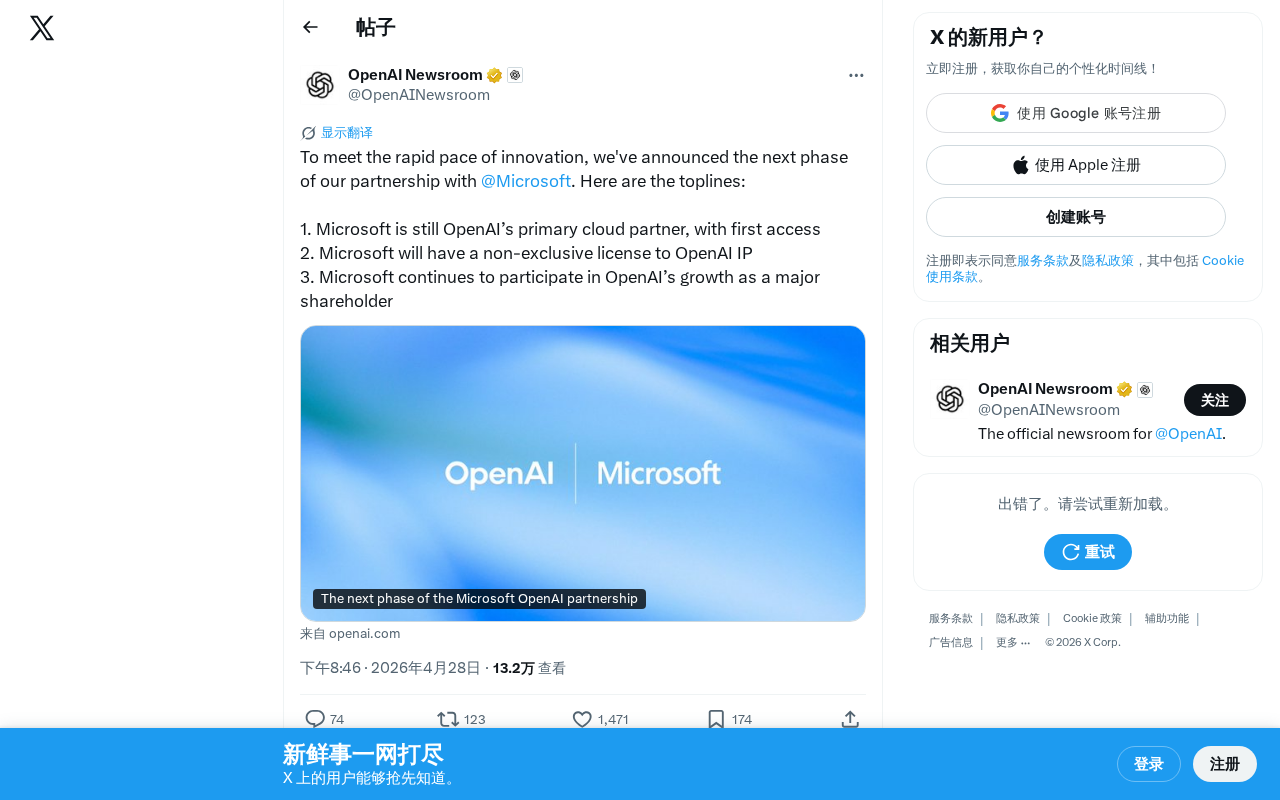
OpenAI redefines its Microsoft partnership, shifting IP licensing from exclusive to non-exclusive.
OpenAI has announced its partnership with Microsoft is entering a new phase, with three core changes: Microsoft remains the primary cloud partner with first access rights, but IP licensing shifts from exclusive to non-exclusive, and Microsoft continues as a major shareholder. The most critical change is the non-exclusive license, which allows OpenAI to license its technology to other cloud providers, breaking free from single-platform lock-in and paving the way for global expansion and a potential future IPO.
OpenAI has officially announced that its partnership with Microsoft is entering a new phase. This adjustment marks a redefinition of the boundaries between the two parties after years of deep integration. Three core changes in the terms reflect a deeper evolution in the AI industry landscape.
Three Core Changes in the OpenAI-Microsoft Partnership
OpenAI outlined three key points in its official statement:
First, Microsoft remains OpenAI's primary cloud partner with first access rights. This means Azure continues to be the preferred infrastructure platform for deploying and training OpenAI models, and Microsoft maintains its leading position in accessing OpenAI's latest technologies.
Second, Microsoft will hold a non-exclusive license to OpenAI's intellectual property. This is a critically important change in wording — "non-exclusive" means OpenAI can now license its technology to other partners without being constrained by Microsoft's exclusivity terms.
Third, Microsoft continues to participate in OpenAI's growth as a major shareholder. Microsoft's investor status and financial return mechanisms remain in place, but the partnership framework is clearly more flexible.
Historical Background of the OpenAI-Microsoft Partnership
The OpenAI-Microsoft partnership began in 2019, when Microsoft first invested $1 billion in OpenAI and secured exclusive rights to commercialize OpenAI's technology on Azure. In 2021 and 2023, Microsoft made additional investments, reportedly totaling over $13 billion, and held approximately 49% of OpenAI's profit-sharing interests. This deep integration provided OpenAI with critical computing power support in the early stages — Microsoft supplied large-scale GPU clusters for model training while also helping OpenAI rapidly reach enterprise customers through the Azure OpenAI Service.
However, as OpenAI's valuation soared to $157 billion by late 2024 and the company pushed forward with its structural transition to a Public Benefit Corporation (PBC), the original exclusivity terms began to become an institutional barrier to its global commercial expansion. This renegotiation of the partnership framework was both a proactive move by OpenAI to secure greater commercial autonomy and a necessary step to demonstrate independent commercial value to capital markets and pave the way for a future IPO. Microsoft's "measured concession" was essentially trading partial exclusivity rights for clearer, more sustainable shareholder interest arrangements under the new corporate structure.
From Exclusive to Non-Exclusive: The Critical Shift in OpenAI's IP Licensing
Among these three changes, the second — the shift from exclusive to non-exclusive IP licensing — is undoubtedly the most significant.
In the intellectual property domain, the distinction between an Exclusive License and a Non-Exclusive License carries profound commercial implications. An exclusive license means the licensee (previously Microsoft) is the sole entity authorized to use the technology within the agreed scope — even the technology owner itself may face restrictions. A non-exclusive license, on the other hand, allows the technology owner to simultaneously authorize the same technology to multiple partners, creating a competitive multi-party licensing landscape. For OpenAI, this shift means its core model technologies (such as GPT-4o, the o-series reasoning models, etc.) are no longer "locked in" to a single platform and can be simultaneously deployed and commercialized across multiple cloud infrastructures.
Looking back at the previous partnership framework, Microsoft held extremely strong exclusivity rights over the commercialization of OpenAI's technology. This deep integration helped OpenAI secure much-needed funding and computing power in the early days, but as OpenAI's valuation skyrocketed to hundreds of billions of dollars, these restrictive terms clearly no longer served OpenAI's strategic interests.
The establishment of non-exclusive licensing means OpenAI has gained significantly greater commercial freedom. It can now establish partnerships with Google Cloud, AWS, Oracle, and other cloud service providers, deploying models across a broader range of infrastructures. This cannot be overlooked when it comes to OpenAI's ability to expand its enterprise customer market and reduce dependence on a single platform.
Microsoft's Gains and Losses in This Adjustment
On the surface, Microsoft appears to have made considerable concessions. But upon deeper analysis, Microsoft's core interests have not been fundamentally undermined.
Core advantages Microsoft retains: Microsoft remains the "primary cloud partner" with "first access" rights, meaning the latest models and capabilities will still debut on Azure first. The time-gap barrier created by this "first access" privilege should not be underestimated — take GPT-4 as an example: the model was made available to enterprise customers through the Azure OpenAI Service in March 2023, while access on other platforms lagged by several months. For industry clients in finance, healthcare, legal, and other sectors highly sensitive to AI capabilities, being first to access the latest models represents a significant competitive advantage. By deeply integrating OpenAI's latest capabilities into its product portfolio — Microsoft 365 Copilot, GitHub Copilot, Azure AI Studio, and more — Microsoft converts this time-gap advantage into differentiated competitiveness for its enterprise SaaS products. Even if other cloud providers gain access to OpenAI models in the future, Microsoft's first-mover advantage in product integration depth and enterprise customer relationships will remain difficult to replicate in the short term. Additionally, as a major shareholder, Microsoft will continue to benefit from OpenAI's valuation growth.
Microsoft's long-term strategic considerations: Microsoft may have already recognized that excessive lock-in would actually constrain OpenAI's growth rate, ultimately impacting its own investment returns. A freer, more competitive OpenAI serves Microsoft's shareholder interests better in the long run. Furthermore, Microsoft has been ramping up its own internal AI R&D investment, gradually reducing its technological dependence on OpenAI.
Impact on the AI Competitive Landscape and Cloud Computing Market
This partnership adjustment will have far-reaching implications for the entire AI industry.
Intensified cloud computing market competition: The current global cloud computing market features a three-way standoff among AWS (approximately 31% market share), Azure (approximately 25%), and Google Cloud (approximately 11%). After obtaining non-exclusive licensing, the most direct beneficiaries may be Google Cloud and Oracle Cloud Infrastructure (OCI) — OpenAI already signed a large-scale computing power procurement agreement with Oracle in 2024. A Multi-Cloud Strategy not only helps OpenAI reduce dependency risk on a single vendor but also drives down computing procurement costs through inter-platform competition. This will break Azure's monopoly position in hosting GPT-series models and push the cloud computing market into a new competitive cycle.
Benefits for the AI developer ecosystem: With greater commercial flexibility, OpenAI may introduce more diversified partnership models and pricing strategies — a positive signal for developers and startups relying on the OpenAI API. For enterprise customers, being able to call OpenAI's native models directly within their existing cloud environments will significantly reduce data migration costs and compliance risks. More platform options mean lower switching costs and stronger bargaining power.
A paradigm shift in industry partnerships: This adjustment also reflects that in mega-scale AI partnerships, "flexibility" is replacing "exclusivity."
Related articles
Meta Muse Hits 900K Downloads in Six D…
Meta Muse Hits 900K Downloads in Six Days: The AI Agent Era Has Officially Arrived
Meta's AI agent Muse hit 902K downloads in 6 days, topping US App Store and Google Play charts above ChatGPT and Claude. A deep dive into Muse's capabilities and the AI Agent race.
 Industry Insights
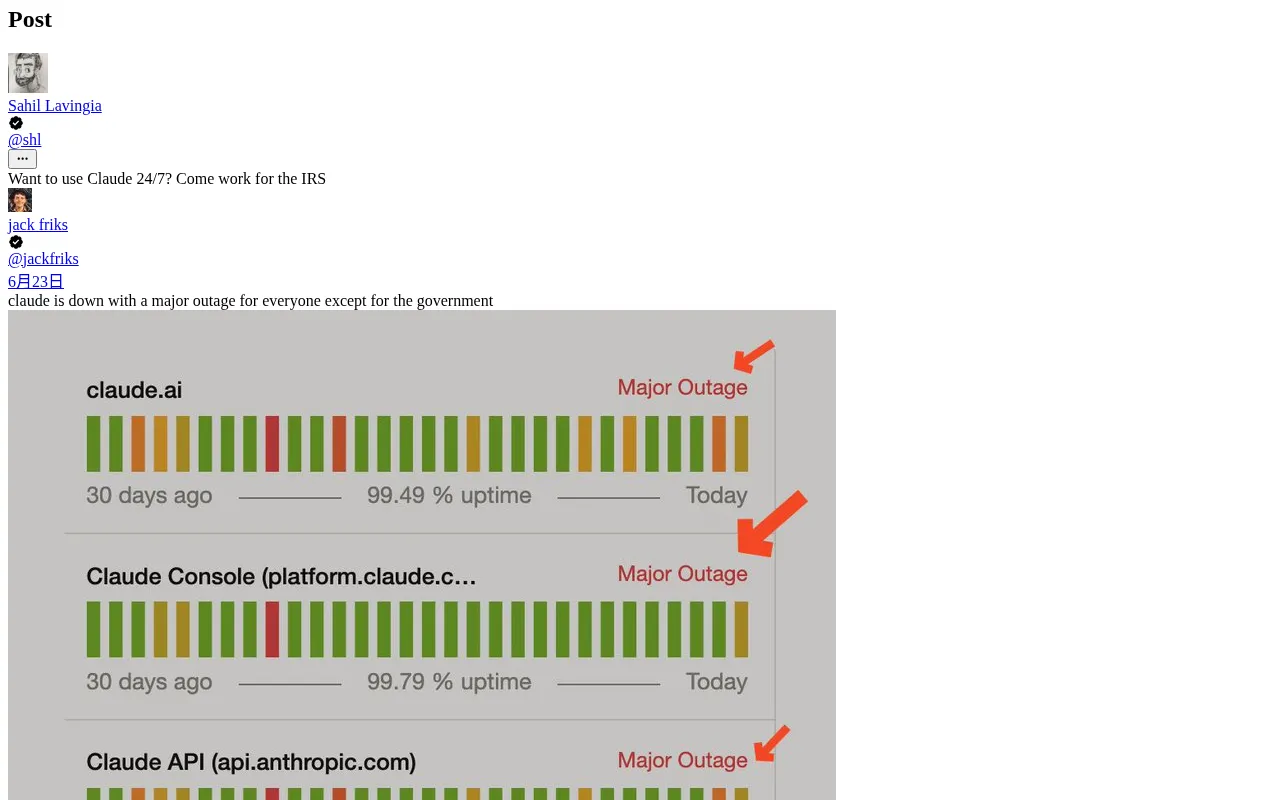
IRS Fully Embraces Claude AI, Accelerating Federal Government's AI Adoption
The IRS is recruiting staff with 24/7 Claude AI access, marking Anthropic's breakthrough into the federal government. Explore the strategic implications and tax use cases.
 Industry Insights
The IRS Mobile App Debate: A Trust Crisis in Government Digital Transformation
The IRS's proposed mobile app has sparked heated debate. This article analyzes the core arguments, exploring data security, privacy, and the trust crisis in government digital transformation.