Manus AI Tutorial: The Three-Layer Expression Method to Triple Your Efficiency (With 19 Real-World Scenarios)
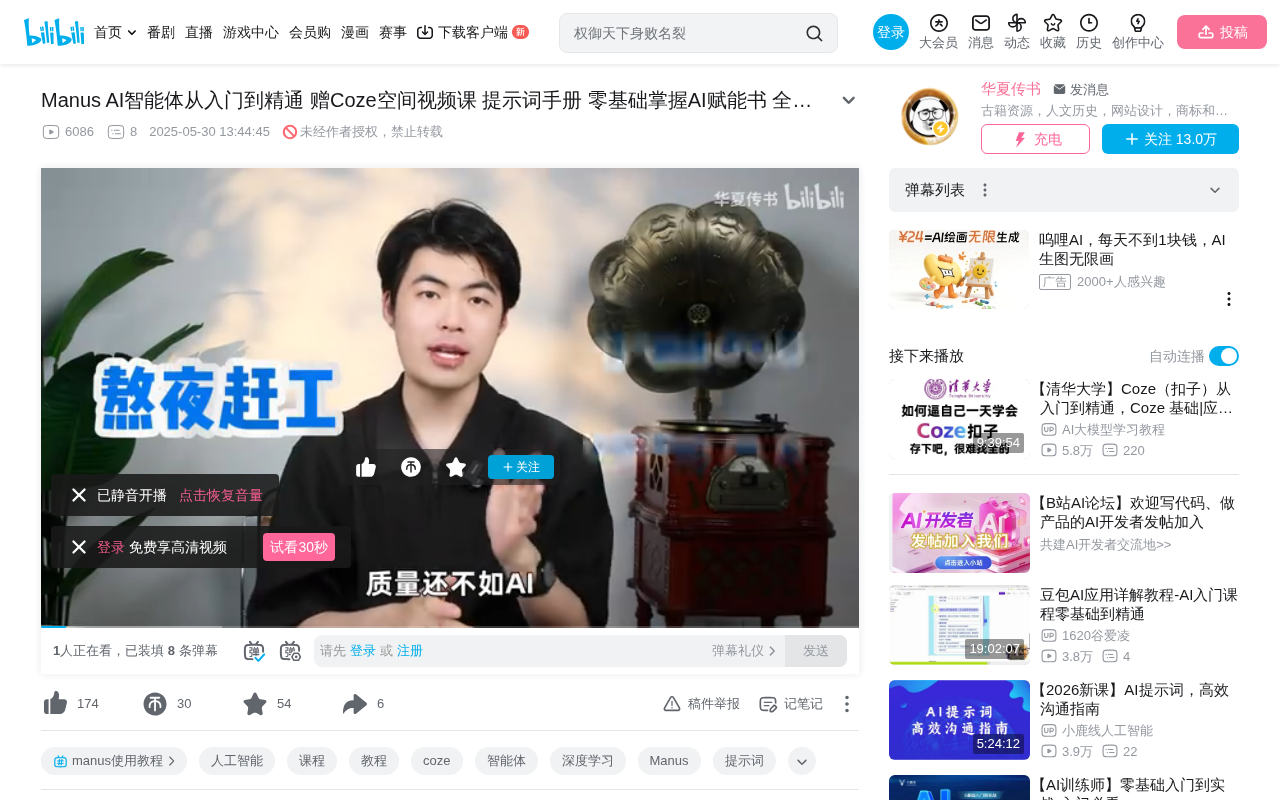
Master the Three-Layer Expression Method to triple your efficiency with Manus AI Agent.
Manus AI is an AI Agent that leaps from conversational to executable AI, automatically completing complex tasks like PPT generation, data analysis, and creative design from a single natural language instruction. The key to using Manus effectively is mastering the Three-Layer Expression Method: define goals, provide context, and specify execution details. The article emphasizes adopting a collaboration mindset toward AI tools and systematically learning foundational methodologies like prompt design and task decomposition to sustainably unlock AI productivity.
Why You Should Pay Attention to Manus AI Agent
AI tools are proliferating, yet many people still face an awkward predicament: they know AI is powerful, but they just can't seem to "make it work." They grind away overtime late into the night, only to produce results inferior to what AI can generate in minutes.
Where's the problem? It's not about your ability—it's the lack of a systematic method for collaborating effectively with AI.
Manus AI Agent was designed to solve exactly this problem. Unlike traditional AI chat tools, Manus doesn't just "understand" what you mean—more crucially, it can directly take action and get things done for you. This leap from "comprehension" to "execution" makes it stand out as exceptionally practical among AI tools.
To understand Manus's positioning, you first need to distinguish between two concepts: AI chatbots and AI Agents. Traditional chatbots are essentially "question-and-answer" dialogue systems—users can only receive text responses, and all subsequent execution still requires manual effort. AI Agents, on the other hand, possess capabilities for autonomous planning, tool invocation, and multi-step execution. They can perceive their environment, formulate plans, call external tools (such as browsers, code interpreters, file editors, etc.), autonomously connect multiple steps, and ultimately deliver a complete work product. This concept originates from Agent architecture research in artificial intelligence. Since 2023, with the rapid advancement of large language model capabilities, AI Agents have quickly moved from academic concepts to real-world products—and Manus is a representative product of this wave.
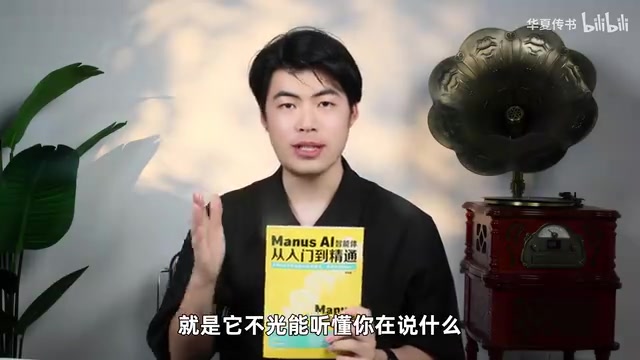
Manus AI's Core Capabilities: One Sentence Drives Fully Automated Execution
Multi-Scenario Task Automation
What makes Manus truly impressive is its fully automated task execution capability. You only need to describe your requirements in one natural language sentence, and it can handle the following types of work:
- Reporting tasks: Automatically generate PPTs, charts, and written presentation drafts
- Data analysis: Output complete data analysis reports with visualization charts
- Creative content: Video planning, poster design, marketing creative proposals
- Technical development: Mini-game development, product prototype building, etc.
Complex workflows that previously required switching between multiple tools and several steps can now be handled end-to-end with Manus.
Behind this "one-sentence driven" capability lies the synergistic breakthrough of several key technologies: Function Calling enables large models to proactively invoke external APIs and tools; Chain-of-Thought reasoning allows models to decompose complex problems into multiple logical steps; and the ReAct (Reasoning + Acting) framework enables models to take action while reasoning and dynamically adjust strategies based on execution feedback. It's the maturity of these underlying technologies that enables Manus to truly leap from "understanding language" to "executing tasks," rather than merely providing text suggestions.
Intelligent Task Decomposition
Another highlight of Manus is its automatic task decomposition. When facing a complex requirement, it automatically breaks the large task into individually executable small steps, forming a clear execution path. For project management and daily work planning, the efficiency gains from this feature are highly tangible.
This capability involves Automated Planning technology from the AI field. When a user inputs a high-level goal, the system leverages the reasoning capabilities of large language models to decompose it into a task tree—where each leaf node is an independently executable atomic operation. This approach draws from the Work Breakdown Structure (WBS) concept in project management, while incorporating AI's dynamic adjustment capabilities: when a subtask fails or produces unexpected results, the agent can automatically correct the execution path of subsequent steps without requiring the user to issue new instructions. This means you're not dealing with a rigid script-execution tool, but rather a flexible, adaptive intelligent assistant.
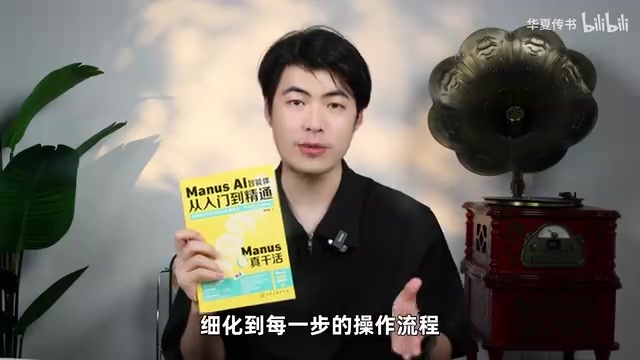
The Three-Layer Expression Method: Prompt Techniques for Precise Manus Execution
Many people get poor results from AI tools, and the root cause lies in their "prompts." You think you've explained things clearly, but AI might understand something completely different.
Here it's worth introducing the concept of Prompt Engineering. It's an emerging practical discipline that arose alongside large language models, focusing on how to guide AI models to produce more accurate, expectation-aligned outputs through carefully designed input text. Research shows that the same AI model can produce outputs varying by orders of magnitude in quality depending on prompt quality. Structured Prompting is an important branch that emphasizes organizing instructions through clear frameworks and hierarchies, rather than relying on vague natural language descriptions.
Based on practical experience, the key to using Manus effectively lies in mastering a Three-Layer Expression Method. This prompt design approach is a practical paradigm of structured prompting, with simple underlying logic:
Layer 1: Define the Goal
Clearly tell Manus what end result you want. The more specific the goal, the more precise AI's output will be. Vague goals (like "help me make a plan") cause AI to deviate during the comprehension phase, and all subsequent execution steps will drift from your expectations.
Layer 2: Provide Context
Supply sufficient background information and constraints to help Manus understand your true intent. Context includes but isn't limited to: who the audience is, what the usage scenario is, and what known conditions and constraints exist. The output quality of large language models is highly correlated with the richness of contextual information.
Layer 3: Specify Execution Details
Clearly define format, style, length, steps, and other specific requirements to reduce rework. This layer essentially sets "acceptance criteria" for the AI, giving it a clear reference framework during execution.
Three-Layer Method in Practice
For example, suppose you want Manus to create a quarterly report PPT.
Bad example: "Help me make a PPT."
Correct approach (organized by three-layer structure):
- Goal Layer: Create a Q2 sales department quarterly report PPT
- Context Layer: Presenting to company executives, emphasizing performance growth highlights and next quarter's plan
- Execution Details Layer: Keep it under 15 slides, include key data charts, clean and professional business style
With this structured expression approach, Manus can accurately understand your requirements and directly output results close to delivery standards. Many users have reported that after adopting this method, their work efficiency improved by over 3x.

Manus in Practice: 19 Scenarios Covering Work and Side Projects
Workplace Efficiency Scenarios
In daily work, Manus can help you quickly complete various high-frequency tasks. Combined with prompts designed using the Three-Layer Expression Method, work that previously took hours can often be done in minutes. Common application scenarios include:
- Weekly/monthly report auto-generation: Input key data and work highlights, directly output properly formatted reports
- Competitive analysis reports: Specify analysis dimensions and competitor lists, automatically complete information gathering and comparison
- Meeting minutes organization: Extract core discussion points, automatically summarize action items and responsible parties
- Project proposal framework building: Quickly generate structurally complete proposal drafts based on project objectives
Side Income Scenarios
For those looking to build side income with AI, Manus offers significant potential in content creation, design output, and automation workflow building. The key is finding the intersection of AI capabilities and market demand, such as:
- Batch-generating social media visual content
- Building automated content distribution workflows
- Quickly creating marketing materials and proposal templates
- Providing data analysis services for small and medium businesses
It's worth noting that the core competitive advantage in AI side businesses isn't about "knowing how to use a specific tool"—it's about whether you can combine AI capabilities with domain-specific professional knowledge to form differentiated services. Tool operations alone are easily replicated, but the combination of "industry insight + AI execution power" is the real moat.
Supporting Learning Resources
Learning resources around Manus AI are already quite abundant, mainly including:
- 210-minute video course: Covering systematic instruction on mainstream AI tools including Manus, ChatGPT, MidJourney, etc.
- Coze workspace course: Further expanding intelligent agent building and automation workflow capabilities
- Prompt handbook: Providing verified ready-to-use prompt templates that you can apply immediately
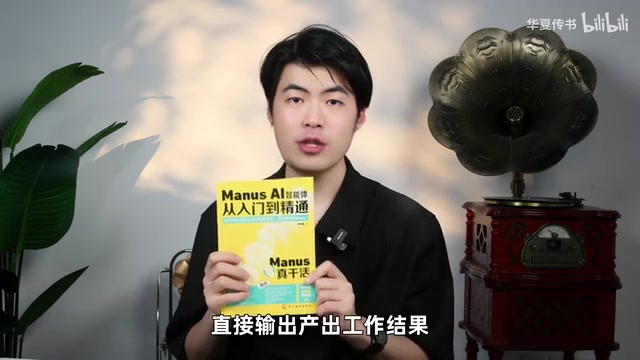
How to Properly View AI Agent Tools Like Manus
Collaboration Mindset Matters More Than Replacement Mindset
AI Agents like Manus aren't here to "steal jobs"—they serve as your efficient collaboration partners. The real value lies in division of labor: you handle thinking and decision-making, AI handles execution and output. Those who establish this human-AI collaboration model early will have increasingly obvious competitive advantages in the workplace.
Human-AI Collaboration has become a core topic in enterprise digital transformation worldwide. A McKinsey 2024 research report indicates that by 2030, approximately 70% of enterprises will embed AI collaboration into their core business processes. The key to this collaboration model isn't AI completely replacing humans, but achieving "cognitive division of labor"—humans focus on higher-order cognitive tasks requiring creativity, empathy, and strategic judgment, while AI handles repetitive execution work like information retrieval, data processing, and formatted output. Research from Stanford's Human-Centered AI Institute (HAI) also shows that teams adopting a collaborative mindset produce comprehensive output quality over 40% higher than teams that either rely purely on AI or don't use AI at all. This means that learning to collaborate with AI is itself a core workplace skill worth investing in.
Low Entry Barrier—The Key Is Systematic Learning
While Manus's features are powerful, the learning curve isn't steep. What truly requires time investment is systematically mastering the methodology of prompt design and task decomposition, rather than randomly trying things here and there. Once the core methods are in place, application scenarios can be continuously expanded, making the return on investment quite worthwhile.
Here's a learning strategy worth emphasizing: master the universal methodology first, then dive into specific tools. The underlying logic of prompt design (how to clearly express requirements, how to provide effective context, how to set output standards) is universal across all large language model-powered tools. Whether you end up using Manus, ChatGPT, Claude, or other emerging AI products in the future, this methodology transfers directly.
Foundational Skills Last Longer Than Specific Operations
AI tools iterate at breakneck speed—a button you learn today might change next month. But foundational thinking approaches—how to precisely express requirements, how to decompose complex tasks, how to evaluate AI output quality—these skills don't become obsolete and are worth your focused time investment to refine.
From a broader perspective, these foundational skills are essentially extensions of metacognition—the ability to "think about how you think." In the AI era, being able to clearly transform vague ideas into structured instructions, being able to judge which parts of AI output are reliable and which need human verification, being able to quickly locate problems and adjust strategies when AI makes mistakes—the value of these abilities will continue to grow as AI tools become more widespread, because the more people use AI, the scarcer those who can "use AI well" become.
Conclusion: Mastering Methodology Is Key to Truly Using Manus AI Well
Manus AI Agent represents an important direction in AI tool evolution from "conversational" to "executable." For those looking to boost work efficiency through AI, rather than blindly trying various new tools, it's better to first solidify the fundamentals of prompt design and task decomposition.
The core value of the Three-Layer Expression Method is this: it provides a reusable communication framework that enables you to quickly get started with any AI tool and issue precise instructions. Whether you're a new hire or a team manager, mastering this method will help you truly unlock the productivity potential of Manus AI Agent.
Try issuing an instruction to Manus using the Three-Layer Expression Method right now, and experience the efficiency difference for yourself.
Key Takeaways
- Manus AI Agent's core advantage lies in not only understanding natural language but also automatically executing tasks and delivering complete work products
- The Three-Layer Expression Method (Goal Layer, Context Layer, Execution Details Layer) is the key methodology for getting AI to execute tasks efficiently
- Manus covers multiple scenarios including PPT generation, data analysis, creative design, and game development, with intelligent task decomposition capabilities
- Systematically learning prompt design and task decomposition methods delivers more sustained efficiency gains than randomly trying AI tools
- The correct positioning of AI Agents is as efficient collaboration partners—humans handle thinking and decisions, AI handles execution and output
Related articles
 Tutorials
ChatGPT Plus Subscription Guide: Are GPT-5.5, image-2, and Codex Worth the Upgrade?
A detailed look at ChatGPT Plus features — GPT-5.5, image-2, and Codex — with a Plus vs Pro comparison and a complete step-by-step subscription guide for users outside the US.
 Tutorials
Harness AI Engineering in Practice: Using Claude Code to Master Enterprise-Level E-Commerce Development
Deep dive into Harness AI Engineering: master enterprise e-commerce development with Claude Code using the Rules, Skills, Wiki, and Changes framework.
 Tutorials
Cursor + Codex Dual-IDE Collaboration: A Practical Methodology for Open-Source Project Customization
A complete methodology for open-source project customization based on real-world experience, detailing the Cursor+Codex dual-IDE workflow, seven-stage process, MVP validation, and AI source code reading techniques.