Manus Hands-On Review: Testing a General-Purpose AI Agent Across Three Real-World Scenarios

Manus is the world's first general-purpose AI Agent that autonomously plans, executes tasks, and delivers complete results.
Manus, released by the Monica team, claims to be the world's first general-purpose AI Agent. Unlike vertical agents requiring preset workflows, it dynamically plans execution paths for any task, autonomously invokes tools, and delivers complete results. In testing, Manus produced a history analysis report and a Tesla stock deep analysis (with interactive Dashboard) in minutes. On the GAIA benchmark, it scored 86.5%, 70%, and 57.7% across three difficulty levels, far exceeding competitors. However, the product remains invitation-only, with scalability and commercialization yet to be proven.
What Is Manus, the Product That Took the Internet by Storm Overnight
In 2024, the Monica team released a product called Manus, claiming it to be the world's first general-purpose AI Agent. An AI Agent is a core concept in artificial intelligence, referring to an intelligent system capable of perceiving its environment, making autonomous decisions, and taking actions to achieve specific goals. Compared to traditional Large Language Models (LLMs), an Agent can do more than generate text responses—it possesses a complete closed-loop capability of "perception-planning-action-feedback." Since 2023, as foundational models like GPT-4 and Claude have made capability leaps, the industry has begun exploring how to build Agent frameworks on top of these models, shifting AI from passive responses to proactive execution. Stanford University's "Generative Agents" experiment and the AutoGPT open-source project are early explorations in this direction. The emergence of Manus can be seen as an important milestone of this technical approach moving from the lab to productization.
Unlike the vertical-domain agents we're familiar with, Manus focuses on being "general-purpose"—whether you need in-depth market research, tedious batch file processing, personalized travel planning, or professional data analysis, it can think independently, plan systematically, invoke various tools in a virtual environment, write and execute code, operate web applications, and ultimately deliver complete task outcomes rather than just suggestions or answers.
It's worth noting that Monica is a company focused on AI productivity tools, having started with a Chrome browser AI assistant extension and accumulated deep insights into user needs for AI-assisted workflows. The Monica extension supports calling multiple large language models for web summarization, writing assistance, translation, and other functions, with millions of users worldwide. It's precisely this deep understanding of users' real work scenarios that laid the foundation for product design and engineering implementation of their general-purpose AI Agent.
In other words, AI is evolving from a "conversational assistant" to a "task executor." Next, let's examine how this general-purpose AI Agent actually performs through three real test scenarios.
Manus Test Scenario 1: Analysis Report on Characteristics of Different Eras in Human History
For the first test, we posed an open-ended question to Manus: "Analysis of the characteristics of different eras in human history."
After receiving the request, Manus first decomposed and analyzed the problem, then broke it into multiple execution steps—including file creation, web searches, and information aggregation. The entire process was completed autonomously without any human intervention.
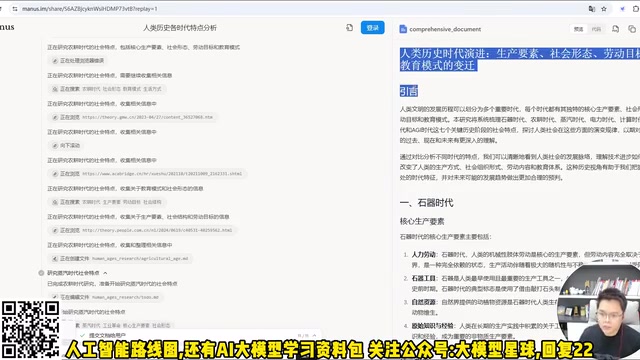
The final output was a remarkably complete and well-structured report. Imagine if you were a language arts teacher or history researcher tasked with creating such a courseware or research report—gathering materials, organizing the framework, and writing the content would take at least three to five days. Manus completed all of this in under five minutes.
This case doesn't appear particularly complex, but it fully demonstrates Manus's comprehensive capabilities in information retrieval, content organization, and report generation—which is precisely the core value of a general-purpose AI Agent. The end-to-end delivery capability demonstrated here is key to understanding Manus's value. End-to-end delivery refers to the full-process automation from receiving input to producing the final usable result, with no human intervention or tool-switching needed in between. Behind this lies the coordination of several key technologies: Task Planning is responsible for decomposing complex goals into executable sub-task sequences; Tool Use/Function Calling enables the model to operate browsers, execute Python code, read and write files, etc.; and the Self-Reflection mechanism allows the Agent to continuously check intermediate results during execution and adjust strategies when necessary.
Manus Test Scenario 2: Tesla Stock Deep Analysis and Data Visualization
The second case is more professionally demanding: a deep analysis of Tesla stock, covering financial data, market sentiment, industry trends, and multiple other dimensions.
After receiving the request, Manus similarly decomposed the problem first, then searched for relevant web data and created analysis files on a local server. During execution, it automatically generated professional content including financial statements and SWOT analysis charts. SWOT analysis is one of the most classic analytical frameworks in strategic management, proposed by Harvard Business School professor Kenneth Andrews in the 1960s. SWOT stands for Strengths, Weaknesses, Opportunities, and Threats. By systematically examining these four dimensions, it helps decision-makers comprehensively assess the internal and external environment of a company, project, or investment target. In financial analysis, SWOT analysis is often combined with financial ratio analysis, industry benchmarking, and other methods to form a complete investment research report. Manus's ability to automatically generate SWOT analysis charts indicates that it not only possesses data scraping capabilities but has also internalized professional analytical methodologies.

The final output wasn't just a written report (Tesla Stock Analyst Report), but also an interactive data Dashboard website that allows viewing Tesla's various data metrics from multiple dimensions.
For a financial analyst, fully producing such a report would take at least a week. If you also needed to develop a data visualization website, that would require bringing in a technical team for collaboration. Manus compressed all of this into just a few minutes—this kind of end-to-end delivery capability is truly impressive.
What's the Fundamental Difference Between General-Purpose AI Agents and Vertical Agents
Many people ask: over the past two years, numerous Chinese companies have been building agent products—various Bots on platforms like Coze, Kouzi Yuanqi, Zhipu, etc.—so what makes Manus worthy of being called a "disruptive product"?
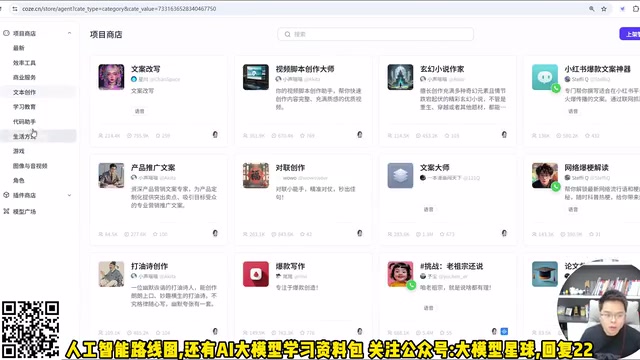
The key difference lies in generality. Most agents currently on the market are essentially vertical agents—developers need to build workflows and define the agent's behavioral boundaries in advance. These platforms represent the mainstream form of today's AI agent ecosystem—workflow orchestration platforms. Their core approach is to let developers connect large language models with external APIs, databases, plugins, and other tools through a visual interface following predefined processes, creating agents for specific scenarios. For example, a "resume screening Bot" might have a fixed pipeline of "receive resume → call OCR for parsing → extract key information → match against job requirements → output score." A "stock analysis assistant," for instance, has preset stock analysis workflows and external plugin integrations behind it. Once a user's question exceeds the preset scope, the agent degrades to simple Q&A from a "bare model." The advantage of this approach is strong controllability and low deployment cost, but the disadvantage is equally obvious: each new scenario requires manually redesigning the workflow, the agent's capability boundaries are entirely determined by the developer's presets, and it lacks generalization ability for unknown tasks.
Manus's breakthrough is: regardless of what direction your question comes from, it can solve it with professional and systematic methods. It doesn't rely on preset workflows but dynamically plans execution paths based on each specific task. To draw an analogy, it's like Jarvis from Iron Man—a super-agent with personalized capabilities that can handle problems across different dimensions just like a human.
From Tool to Partner: The Critical Leap of AI Agents
The logic of traditional agents is "humans define the process, AI executes the process," while Manus's logic is "humans state the goal, AI autonomously plans and executes." This is a critical step in the evolution of AI Agents from tool to partner, and the most fundamental difference between general-purpose agents and vertical agents.
GAIA Benchmark: Manus's Authoritative Report Card
Manus's capabilities aren't only demonstrated through showcase examples—it also performs impressively on authoritative benchmark tests.
GAIA (General AI Assistants) is a general assistant capability benchmark testing system proposed by Meta AI, HuggingFace, and other teams in 2023, containing over 400 carefully designed questions. Unlike traditional single-capability tests in math or programming, GAIA focuses on testing practical problems that are conceptually simple but require multi-step solutions, requiring AI to possess comprehensive capabilities including web search, tool invocation, programming, file processing, and mathematical computation.
The design philosophy of the GAIA benchmark is fundamentally different from traditional AI evaluations. Traditional evaluations (such as MMLU, HumanEval, etc.) focus on testing model capabilities in specific knowledge domains or programming tasks, with questions that often have standard answers and can be automatically scored. GAIA's core insight is: tasks that are conceptually simple for humans but tedious to execute are precisely the best litmus test for AI's practical utility. For example, "Find the university where the 2023 Nobel Prize in Physics laureate did their undergraduate studies, and calculate that university's current undergraduate tuition"—this question is trivially easy for humans to understand, but to answer correctly, AI needs to perform multi-step web searches, cross-source information verification, data extraction, and calculation. GAIA's three difficulty levels are primarily divided by the number of required steps and tool-calling complexity: Level 1 typically requires 1-3 steps, Level 2 requires 5-8 steps, and Level 3 may require 10+ steps involving multiple tools working in coordination.
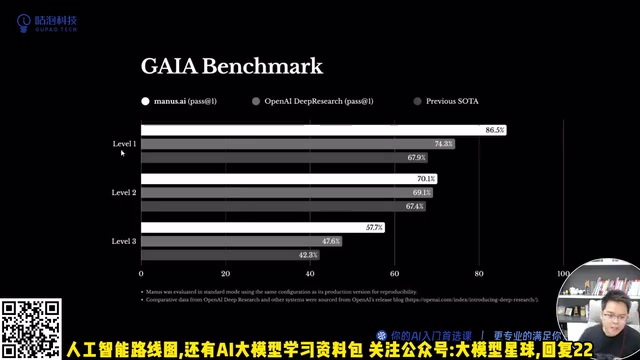
GAIA is divided into three difficulty levels, and Manus's test scores are as follows:
| Level | Manus Score | Comparison |
|---|---|---|
| Level 1 | 86.5% | Far surpasses OpenAI Deep Research |
| Level 2 | 70.0% | Significantly ahead of similar AI Agent products |
| Level 3 | 57.7% | Maintains clear advantage at highest difficulty |
For reference, humans achieved an average success rate of about 90% on the GAIA test in 2023, while the then-strongest GPT-4 barely reached 15% on Level 1. Manus has already approached human-level performance on Level 1—this rate of progress is quite remarkable.
A Sober Look: Manus's Limitations and Room for Future Development
While Manus's performance is eye-catching, we need to maintain rational judgment:
- No public beta yet: Manus currently operates on an invitation system. What the public has seen is mainly official Use Case demonstrations, and stability and accuracy under large-scale user scenarios remain to be verified.
- Reliability concerns for complex tasks: The 57.7% on Level 3 means nearly half of high-difficulty tasks still cannot be completed—there's still a considerable distance from true "general intelligence."
- Balancing cost and efficiency: General-purpose Agents require extensive computational resources and external tools, making commercialization paths and usage costs unavoidable practical concerns.
That said, from DeepSeekAd at the beginning of the year to Manus in March, the AI Agent field achieved a qualitative leap in just three months. DeepSeek is an open-source large language model series released by Chinese AI company DeepSeek in early 2025, whose DeepSeek-R1 achieved reasoning capabilities close to GPT-4o at extremely low training costs, causing enormous waves in the global AI community. DeepSeek's breakthrough is primarily reflected in two aspects: first, dramatically reducing model training and inference costs through Mixture of Experts (MoE) architecture and innovative training strategies; second, demonstrating performance comparable to closed-source top-tier models on mathematical reasoning, code generation, and other tasks. DeepSeek's emergence shattered the industry consensus that "only burning money can produce good large models," while Manus demonstrates another possibility at the Agent level—even as underlying model capabilities trend toward homogenization, there's still enormous innovation space at the Agent architecture and task execution layer. The emergence of general-purpose Agents marks AI's transition from "being able to chat" to "being able to work," and its impact across all industries will be profound.
AI Is Moving From Chatting to Actually Getting Things Done
Manus gives us a glimpse of the ultimate form of a general-purpose AI Agent—an intelligent entity that can understand any task, autonomously plan execution paths, invoke various tools, and deliver complete results. It's not perfect yet, but the direction is very clear.
For every professional, the transformation brought by AI is no longer a distant concept but a reality that's rapidly materializing. Proactively understanding and embracing AI Agent technology may be the most worthwhile direction for personal capability development right now.
Key Takeaways
- Manus is the world's first general-purpose Agent product, capable of autonomously planning and executing various complex tasks, delivering complete results rather than just providing suggestions
- Unlike traditional vertical agents, Manus requires no preset workflows, can dynamically handle problems in any direction, achieving a qualitative shift from tool to partner
- In the GAIA benchmark test, Manus achieved 86.5%, 70%, and 57.7% across three difficulty levels, far surpassing competitors including OpenAI
- Test scenarios covered history analysis report generation and Tesla stock deep analysis, demonstrating comprehensive capabilities in information retrieval, data analysis, code execution, and visualization
- The product is currently still invitation-only; stability at scale and commercialization paths remain to be verified
Related articles
 Product Reviews
The Programmer's Desk Setup Guide: Building a Workspace That Feels Like Home
Discover how programmers build productive, comfortable workspaces. From multi-monitor setups to ergonomic design, explore the desk philosophy that drives focus and flow.
 Product Reviews
Qoder vs Cursor Real-World Comparison: Which $20/Month AI IDE Is Better?
Hands-on comparison of Qoder vs Cursor AI IDEs: Agent autonomy, human interaction count, and architecture decisions. Qoder needed only 2 interactions vs Cursor's 8.
 Product Reviews
Cursor Cloud Agent Demo: Eliminating Bottlenecks Across the Entire Software Development Lifecycle
Deep analysis of Cursor's Cloud Agent demo showing how cloud VMs, automated test artifacts, and a full-chain control plane systematically eliminate human bottlenecks across the software development lifecycle.