Maryland Governor Wes Moore: Democrats Must Act Fast on the Cost of Living

Moore urges Democrats to stop studying and act now on the cost of living, and criticizes Congress and lax AI oversight.
Maryland Governor Wes Moore outlined the Democratic Party's post-midterm direction on the Vox podcast. He argued Democrats should prioritize the cost of living and act immediately on housing and child care, criticized Congress for failing to exercise its war powers over Iran, backed AI development "with guardrails" and Maryland's strict data center rules, pushed a four-point immigration consensus among governors, and set child poverty as a hard test for any 2028 Democratic nominee.
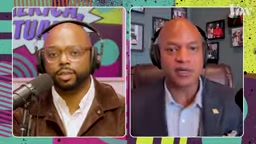
After the U.S. midterm elections, Democrats secured what many described as a "blue wave" victory. But after the win, the party's internal consensus is far from clear: should the priority be tackling the cost of living, holding Trump accountable, or regulating AI? On the Vox podcast America, Actually, Maryland Governor Wes Moore—who won reelection by a landslide 30-point margin—gave his answer in the interview: stop doing more studies and just get to work.
A "Black and Brown Wave"
Moore described the election results as a profound voter realignment. He noted that the Black vote and the Latino vote shifted significantly, calling it in his words a "Black and Brown wave"—communities that "took their destiny into their own hands in a very powerful way."
According to the program, the election will result in five Black governors in the United States, whereas Moore had previously been the only Black governor in office. He recalled a conversation with former Massachusetts Governor Deval Patrick: in 250 years of American history, only three Black people had previously been elected governor. Patrick had lamented that he "was number two, and only started thinking about number three after leaving office." Moore said he made a pledge then never to let that happen again.

U.S. midterm elections are held every two years, with all House seats, about one-third of Senate seats, and numerous governorships and state legislature positions up for election. They are usually seen as a referendum on the sitting president. The "blue wave" mentioned here is a political term referring to a wave in which Democrats make major gains in votes and seats nationwide—"blue" being the symbolic color of the Democratic Party. U.S. gubernatorial elections are staggered from the presidential election cycle, so gubernatorial results are often used to observe both parties' organizational strength and shifts in voter composition at the local level. In recent years, the share of Black, Latino, and Asian American voters in key swing states has risen, making "voter realignment" a core topic in both parties' strategic analysis.
Cost of Living: Democrats' Number One Issue
Moore made clear that lowering the cost of living is voters' top concern and the area where Trump has been punished most severely. When asked what one thing Democrats should do, his answer was blunt: "Actually move fast on these things. Stop doing more studies, stop producing ten-year research reports."
He cited Maryland's practice as an example: through executive orders and legislative changes, speeding up affordable housing construction, promoting transit-oriented development, and using state-owned land for direct development. On child care, Maryland made the largest investment in its state history—because the fact that "people are spending 30 to 40 percent of their paychecks on child care" is itself "crazy."
But he also drew a clear line between state and federal responsibilities: no governor can influence gas prices; that requires Washington to stop "fighting stupid wars" and stop "illegal tariff policies."
Who Is the "Villain" Behind Rising Prices?
The interview included a pointed question: the left has a clear narrative—corporate capital drives up the cost of living, so taxation is the policy engine. So in the centrist story, who is the villain?
Moore's answer was that "there are a whole bunch of villains." He first pointed to "crazy profiteering" in Washington, criticizing the federal government for stripping people of health insurance while individuals line their own pockets. But he quickly added that corporations are equally to blame: "companies willing to extract profit from people who are living almost paycheck to paycheck." He rejected the extreme formulation that "billionaires should not exist," but admitted that he "does lose sleep over the number of billionaires in society," and even more so "over the number of children growing up in poverty."
The Iran War and Congressional Dereliction of Duty
As a veteran who served in Afghanistan and led soldiers of the 82nd Airborne Division, Moore has a personal understanding of the cost of war. He was blunt: the new Democratic-led Congress "should not continue funding a war that Americans overwhelmingly believe is not in their interest," and "should never have funded it in the first place."
His core argument centers on constitutional power: the president has no authority to launch war unilaterally; only Congress holds that power. But "this Congress is too enamored with the president's aura—they are not leaders, they are cheerleaders." He called on Congress to exercise its power in the "first hundred hours"—not the first hundred days—to end the conflict.
On Israel, Moore maintained a delicate balance: he acknowledged that Israel is a democratic ally, but stressed that "I don't believe in unconditional aid to any country," and stated clearly that under Bibi Netanyahu "war crimes have occurred" and multiple red lines have been crossed.

Article I, Section 8 of the U.S. Constitution grants Congress the power to declare war, while the president as commander-in-chief holds military command authority. The 1973 War Powers Act requires the president to notify Congress within 48 hours of initiating military action and to obtain congressional authorization within 60 days, otherwise troops must be withdrawn. However, successive presidents have often cited the 2001 and 2002 Authorizations for Use of Military Force (AUMF) as legal basis for overseas operations, substantially diluting Congress's actual war-declaration power. The "Congress reduced to cheerleaders" that Moore criticizes refers precisely to Congress effectively endorsing the president's military actions through continued appropriations, rather than actively exercising its constitutional oversight and authorization functions.
AI and Data Centers: Guardrails Cannot Be Absent
On AI, Moore's stance is "cautiously optimistic." He sees potential in health care and education, but stresses that "there must be guardrails." He criticized the Trump administration's approach as "hands-off," and noted that even tech executives themselves do not believe industry self-regulation can solve the problem.
Maryland has issued one of the strictest data center guidelines in the country: data centers must pay for all energy and upgrade costs themselves, must not pollute air or water, and must hire local union workers. At the same time, the state government has made clear that if local jurisdictions choose to pause or ban data centers, the state level will "never override" them.
Responding to the question of why regulation came so late, Moore explained: most existing data centers came online before he took office, but during his tenure the scale and impact of data centers grew exponentially, while the federal government simultaneously withdrew all guardrails—"so that can't happen in Maryland."

Data centers are large facilities that support AI training and cloud computing, and their energy and water consumption is staggering. A large AI data center can use as much electricity as tens of thousands of homes, and its cooling systems also consume large amounts of water, often sparking disputes over rising local electricity prices, water scarcity, and noise pollution. The United States currently has no unified federal regulations on data center energy efficiency or siting; regulation falls mainly to state and local governments. Residents' opposition movements have emerged in Virginia's "data center corridor," Arizona, Georgia, and elsewhere, and some jurisdictions have begun pausing approvals for new projects. Maryland's guidelines require companies to bear grid upgrade costs, reflecting a "beneficiary pays" regulatory approach.
Immigration: Four-Point Consensus Among Governors of Both Parties
Moore revealed that, as chair of the National Governors Association, he helped forge consensus among Democratic and Republican governors on immigration: first, the border must be secure; second, violent criminals must be removed and held accountable; third, states should have greater autonomy over work permits (the permits needed by Maryland chicken farms and crab pickers differ from those needed by Oklahoma ranches); fourth, a path to citizenship must be created for people who have lived in the United States for years or even decades.
He explicitly opposed abolishing ICE, but supported "reforming this lawless agency." Maryland has barred ICE from authorizing local law enforcement agencies to enforce immigration law on its behalf, and has prohibited federal agents from wearing masks in the state—"unless you're undercover or it's for religious reasons, there's no reason to wear a mask. This isn't Halloween."
ICE (U.S. Immigration and Customs Enforcement), under the Department of Homeland Security, is responsible for immigration enforcement, detention, and deportation. In recent years, ICE's cooperation with local law enforcement agencies (such as 287(g) agreements) has sparked controversy; critics argue this leads local police to effectively enforce federal immigration law, eroding immigrant communities' trust in police. Some states and cities have therefore adopted "sanctuary" policies limiting local cooperation with ICE. The National Governors Association (NGA) is the core coordination platform for U.S. governors of both parties, with a rotating chairmanship; its functions include promoting cross-state policy consensus and lobbying the federal government. Moore's push for immigration consensus as NGA chair represents an attempt to find state-level room to operate within polarized politics.
2028? Moore Won't Say, but He Draws a Line
When the host pressed on whether he would run for president, Moore did not answer directly, emphasizing only that he "still has a lot of work to do in Maryland." But he offered a clear litmus test: any Democratic nominee must "have a serious plan to address child poverty"—child care, preschool, apprenticeships, the earned income tax credit, and the child tax credit, all of which are essential. "If you're not serious about these things, you are not a serious person ready to lead this country."
One-line Summary
Moore urges Democrats to stop studying and act immediately on the cost of living, and criticizes congressional dereliction and the lack of AI regulation.
Paragraph Summary
Maryland Governor Wes Moore outlined the Democratic Party's direction after the midterms on the Vox podcast. He argued that the election produced a realignment wave of Black and Latino voters, and that Democrats should make the cost of living their top issue—stopping long-term studies and directly advancing housing and child care policy. He criticized Congress for being enamored with the president's aura and failing to exercise its constitutional war powers, calling for an end to funding the Iran war. On AI, he supports development "with guardrails" and described Maryland's strictest-in-the-nation data center guidelines. On immigration, he pushed governors of both parties toward a four-point consensus. Moore also set addressing child poverty as a hard standard for any 2028 Democratic nominee.
Related articles
 Tech Frontiers
MuJoCo: An Analysis of DeepMind's Open-Source General-Purpose Physics Simulator
An in-depth analysis of Google DeepMind's open-source physics simulator MuJoCo: high-performance C++ kernel, MJCF modeling format, contact solving principles, MJX GPU acceleration, and robot reinforcement learning use cases.
 Tech Frontiers
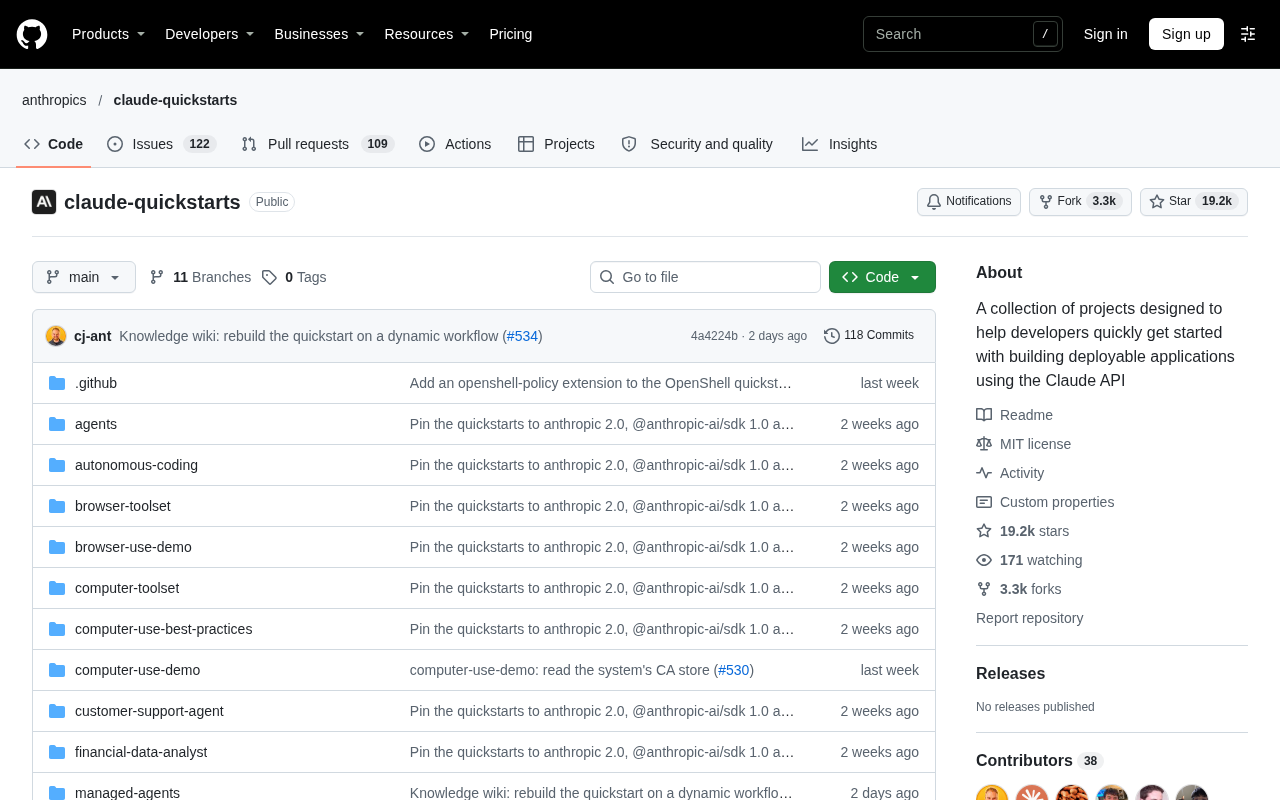
Claude API Quick Start: The Official Quickstarts Project Collection
Anthropic's official claude-quickstarts project collection helps developers quickly build deployable apps with the Claude API. Nearly 20k stars, Python-based, great for beginners and prototyping.
 Tech Frontiers
AI Agents Connecting Directly to APIs: Which Calls Can Be Safely Allowed?
AI agents can call any API, but the real challenge is deciding which calls can be safely allowed. This article analyzes allowance decisions from three dimensions—intent matching, least privilege, and controllable impact—and argues that the control layer should sit outside the agent, combined with audit traceability to build a trustworthy API call governance mechanism.