Mascofast: An AI Tool That Turns Text into Animated Mascots — A New Option for Developer Brand Design
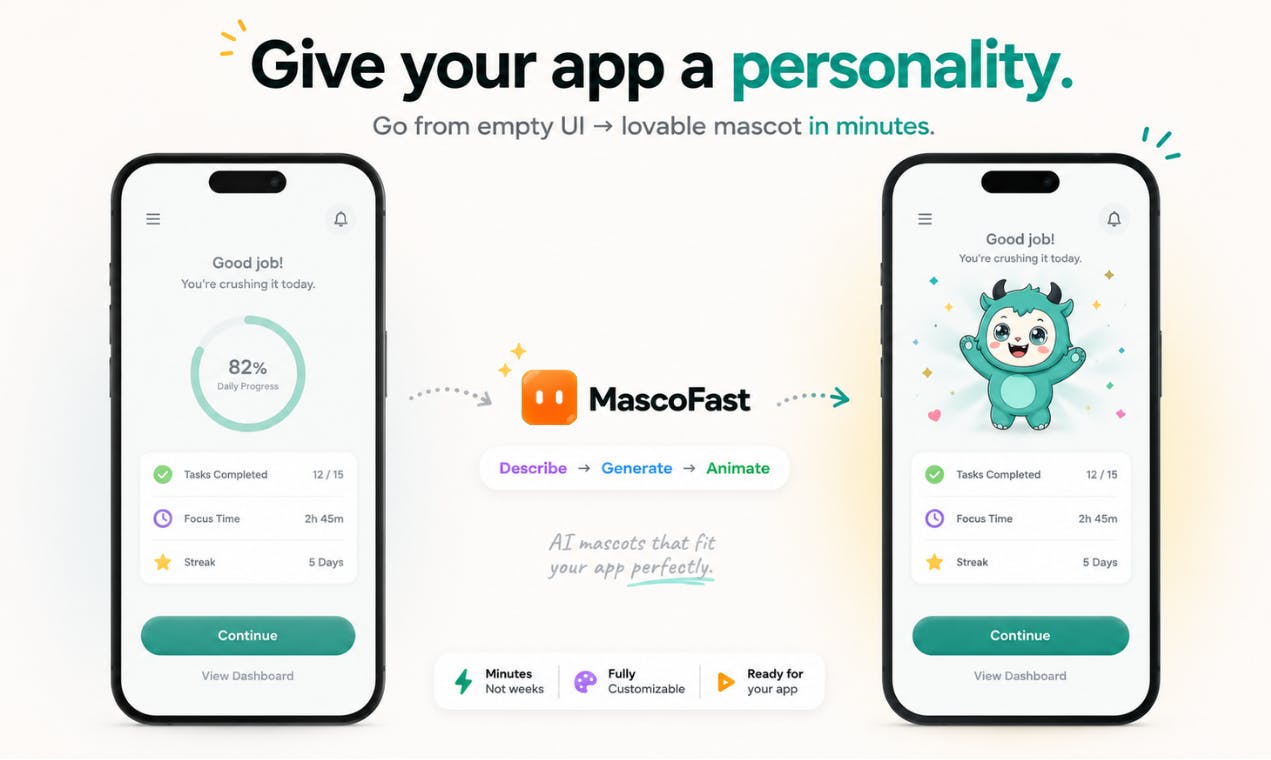
Mascofast uses AI to turn text descriptions into animated mascots with transparent backgrounds for developers.
Mascofast is a newly launched AI tool that generates brand mascots from text descriptions, targeting indie developers and SaaS teams. It offers an end-to-end pipeline covering character generation, refinement, multi-pose animation creation, and transparent background asset export. By focusing on the vertical mascot niche rather than general-purpose image generation, it aims to make brand characters accessible and affordable for small teams.
From a Simple Description to a Finished Mascot
In apps, games, and SaaS products, a distinctive mascot can become a memorable brand anchor. In marketing theory, brand mascots are classified as the core vehicle of "brand anthropomorphism" strategies — research shows that brands with mascots achieve approximately 41% higher emotional connection with consumers compared to those using text or graphic logos alone. From the early Michelin Man (1898) to recent tech-world examples like GitHub's Octocat, Linux's Tux penguin, and Go's Gopher, mascots have become a key differentiator for technology brands. This is especially true in the developer tools and SaaS space, where a recognizable character can significantly lower the cognitive barrier for users engaging with abstract products, while naturally driving higher share rates on social media.
But for developers and small teams, designing a usable character from scratch typically requires hiring an illustrator, going through rounds of feedback and iteration — a process that's neither cheap nor fast. Mascofast, which recently launched on Product Hunt, aims to use AI to transform this workflow — with the promise of "text to animated mascot in just minutes."
According to its official description, Mascofast can turn a simple idea into a production-ready mascot character, covering the entire pipeline from generation to refinement to export. The product has received 9 upvotes on Product Hunt, ranking 16th on its launch day. Built by developer Dik Jain, it's categorized under Design Tools, SaaS, and Developer Tools.
Mascofast Core Features: An End-to-End Character Production Pipeline
Mascofast doesn't position itself as just another "AI image generator." Instead, it builds a complete end-to-end workflow around the specific use case of mascot creation.
AI Character Generation and Refinement
Users simply input a text description to generate a distinctive character. This capability builds on the rapid advancement of Diffusion Model technology in recent years — after Stable Diffusion went open source in 2022, text-to-image generation entered an explosive growth phase. However, general-purpose models have an inherent weakness in character consistency: the same character generated under different prompts often shows significant variations in facial features and body proportions, a problem known in the industry as "Character Drift." The mainstream technical approaches to solving this include IP-Adapter (injecting character features via reference images), LoRA fine-tuning (lightweight training on a small number of samples), and ControlNet (precisely controlling character poses through skeletal pose maps).
After generation, the tool also supports further refinement and adjustment of the character's appearance to better match brand identity. This "generate first, then iterate" approach avoids the common pain point of uncontrollable one-shot generation results.
Multi-Pose and Animation Creation
Unlike many AI tools that can only output static images, Mascofast emphasizes the ability to create multiple poses and animations for the same character. This means developers can obtain a set of assets with consistent appearance but varied poses, rather than disconnected individual images. Mascofast's emphasis on "multi-pose generation with consistent appearance" most likely employs character-locking techniques similar to IP-Adapter or LoRA to ensure visual consistency across different actions.
For products that need to use mascots repeatedly across onboarding screens, loading animations, and marketing campaigns, image consistency is crucial.
Transparent Background Asset Export
The feature most aligned with developer needs is Mascofast's support for exporting assets with transparent backgrounds, ready for direct use in UI interfaces, user onboarding flows, marketing materials, and product experiences.
Transparent background export may seem simple, but it actually involves Semantic Segmentation and Matting techniques in AI image post-processing. Traditional Alpha Matting algorithms struggle with edge hair and semi-transparent areas, while recent deep learning-based solutions like MODNet and RVM (Robust Video Matting) can achieve pixel-level precise separation. Export formats are typically PNG (supporting Alpha channels) or WebP; for animated assets, this may involve APNG, Lottie JSON, or Sprite Sheet formats. Lottie format deserves special attention — open-sourced by Airbnb, it stores animations as JSON vector data, resulting in extremely small file sizes with lossless scaling, and has become the de facto standard for lightweight animations on mobile and web. Transparent backgrounds eliminate the hassle of post-production masking, allowing assets to seamlessly integrate into various interface scenarios.
A Differentiated Position Aimed at Developers
The current market is flooded with AI image generation tools, from general-purpose options like Midjourney and DALL·E to a growing array of character design platforms. Mascofast operates at a critical juncture where AI tools are diverging from "general-purpose" toward "vertical-scenario" specialization. General-purpose tools like Midjourney (valued at over $10 billion) and OpenAI's DALL·E 3 are powerful but lack deep integration for specific workflows. Meanwhile, a wave of vertical-focused players is emerging: Scenario.gg for game assets, IconifyAI for icon design, Looka for logo generation, and more. These tools share a common trait — they embed AI generation capabilities into complete business pipelines rather than stopping at the single-point function of "generating an image."
Mascofast differentiates itself by going deep into the vertical scenario of "mascots" and explicitly positioning itself as a developer-friendly tool. Its choice of the "mascot" niche aligns with the SaaS product methodology of "going narrow and deep" — by covering the complete pipeline from generation to export, it builds a stronger scenario-specific moat than general-purpose tools.
What it solves isn't "can I create a good-looking image" but rather "can I quickly obtain a complete set of character assets ready to ship." From character generation to poses, animations, and transparent asset export, the entire process is designed as a seamless pipeline, reducing the cost of developers switching between multiple tools and manually processing assets.
For indie developers and small SaaS teams, this "cost reduction and efficiency boost" value proposition is especially compelling. Brand mascots used to be something only well-resourced large companies would seriously invest in, and tools like Mascofast have the potential to turn it into a standardized, affordable capability for everyone.
Issues Worth Considering Before Use
As a product that just launched, Mascofast currently has relatively limited community feedback (9 upvotes, 2 comments). Its actual generation quality, animation smoothness, and the controllability and consistency of character images still require validation from more real users.
Additionally, "generate finished assets in minutes" is an attractive promise that deserves cautious evaluation. Whether AI-generated characters can truly meet "production-ready" standards, and whether they can satisfy brand requirements for uniqueness and copyright ownership, are key aspects potential users need to carefully assess before adoption.
"Production-ready" has clear industry standards in the design asset domain: assets need sufficient resolution (typically at least 300dpi for print, 72dpi for screen display), proper color modes (RGB for digital, CMYK for print), clean layer structure, and complete copyright licensing. Copyright ownership of AI-generated content remains in a legal gray area globally — the U.S. Copyright Office has explicitly stated that purely AI-generated images are not eligible for copyright protection, though AI-assisted works involving "sufficient human creative control" can receive copyright. The EU and China have slightly different judicial practices — a 2023 ruling by the Beijing Internet Court leaned toward recognizing copyright for AI-generated images. For enterprise users, using AI-generated mascots as core brand visual assets requires careful review of the tool's terms of service regarding ownership of generated content, scope of commercial licensing, and clauses related to potential infringement risks from training data.
Summary
Mascofast represents a typical direction of AI tools going deep into vertical scenarios — rather than pursuing breadth, it thoroughly addresses the complete workflow of one specific task: mascot design. For developers struggling with the cost of visual identity design, it offers an imaginative shortcut: from a single sentence to a full set of animated mascot assets.
Whether it can truly deliver on its promise of "minute-level production readiness" remains to be tested by time and user feedback. But at the very least in approach, Mascofast precisely targets a real pain point for indie developers and small teams when it comes to brand visual assets.
Related articles
Gemini 2.0 Flash Coding Test: AI-Driven 3D Game Development from Start to Finish
Hands-on review of Gemini 2.0 Flash coding with SVG animation, Three.js 3D scene, and FPS game tests. Excellent code quality, spatial modeling, and cost efficiency with Antigravity CLI.
Understanding Context Windows: The Real Reason Your AI Coding Assistant Performs Poorly
Deep dive into how context windows impact AI coding Agents. Learn what context windows are, why bigger isn't better, how to manage Claude Code context, and optimization strategies for MCP servers and rules files.
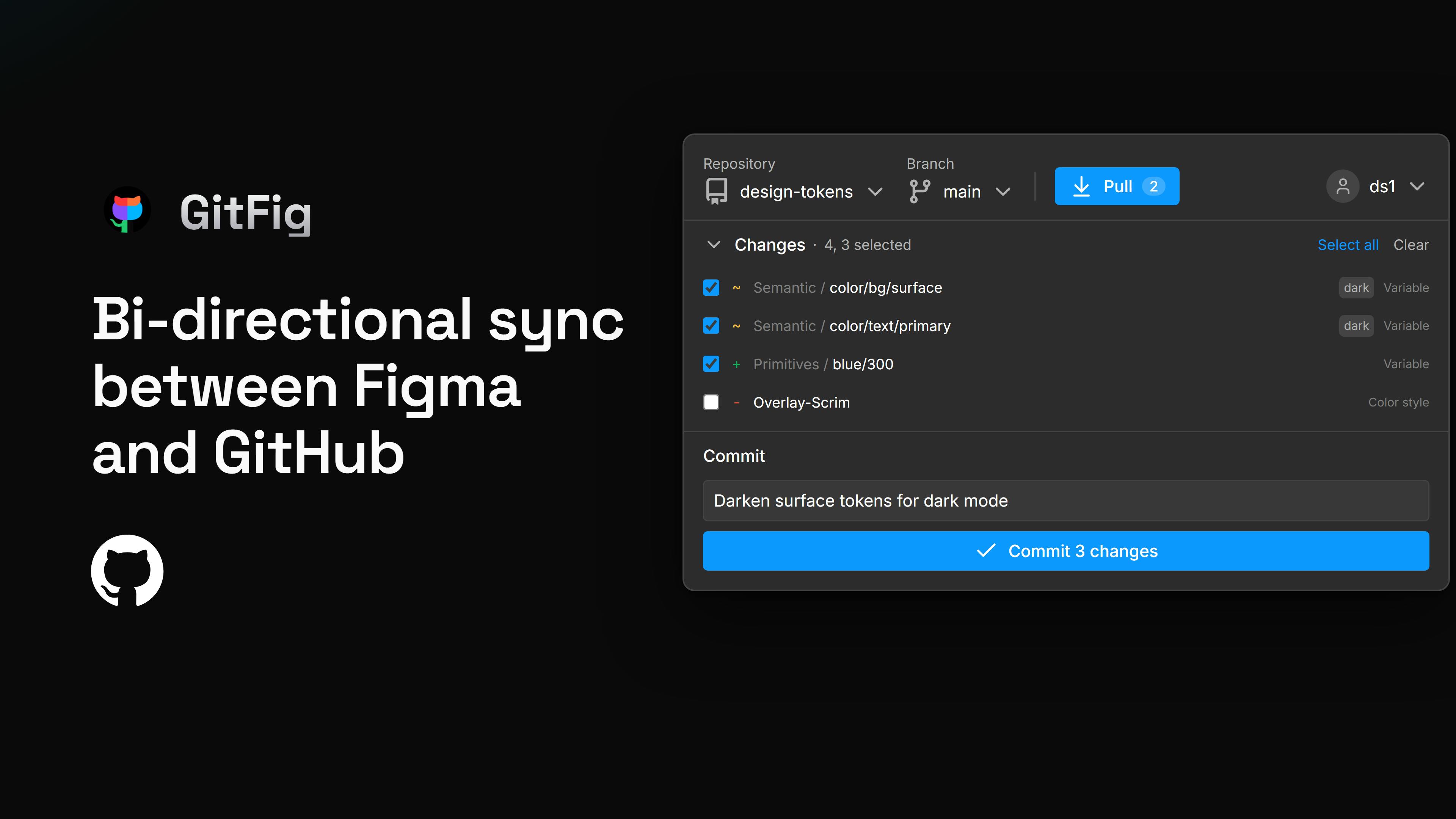
GitFig: Git Version Control and Bidirectional Design Token Sync in Figma
GitFig is a Figma plugin enabling bidirectional design token sync with GitHub. Designers can branch, commit, and create PRs directly in Figma.