Mastering Claude Code: Five Hardcore Strategies to Transform It from Intern to Architect

Five expert strategies to transform Claude Code from a reckless intern into a disciplined virtual architect.
This article presents five hardcore strategies for mastering Claude Code: managing context rot with /compact and claude.md, using Plan Mode before coding, enabling self-testing via the Chrome extension, leveraging Git Worktree for parallel development, and implementing enterprise-grade security with hooks and sandboxing. These techniques help developers treat Claude Code as an autonomous agent rather than a chatbot.
Many developers, after using Claude Code for a few days, feel like it's an enthusiastic but reckless intern — it seems great at first, but gradually starts hallucinating and code quality nosedives. If you've had this experience, it's not that the tool is bad — it's that you're using it wrong.
This article systematically covers hardcore strategies from top overseas developers and Anthropic's internal teams, helping you transform this "clumsy intern" into a true virtual architect.
Cognitive Shift: Claude Code Is Not a Chatbot — It's an Autonomous Agent
The biggest difference between a novice and an architect lies in their understanding of Claude Code's true nature.
Traditional assistive tools (like Copilot) merely offer suggestions beside your editor, but Claude Code is fundamentally different — it's an autonomous agent that can directly take over your terminal and reach into your project to get work done.
An Autonomous Agent is an important paradigm in AI that differs from traditional conversational AI. Traditional chatbots use a request-response model: the user asks, the AI answers, and the interaction ends. Autonomous agents, however, possess the complete closed-loop capability of perceiving their environment, formulating plans, executing actions, observing results, and iteratively correcting course. As an agent, Claude Code can read the file system, execute shell commands, modify code, run tests, and autonomously decide its next steps based on test results — this is fundamentally different from GitHub Copilot's line-level completion suggestions within an editor.
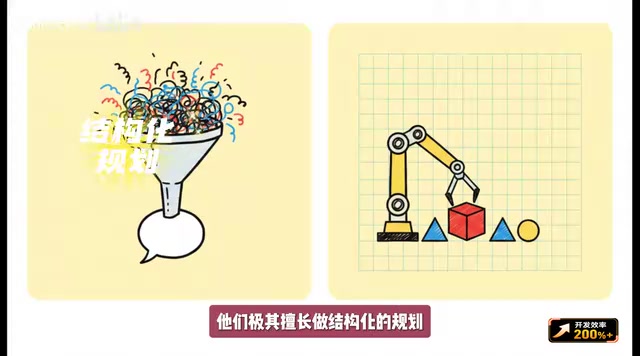
An architect would never dump thousands of lines of requirements into a single dialog box — they do extremely rigorous structured planning. So the core insight is: It's not here to chat with you — it's here to actually write code.
Managing Context Rot: Prevention Is Always Better Than Cure
What Is Context Rot?
When a conversation reaches approximately 50% of memory capacity, the AI starts cutting corners. Its working memory gets stuffed with outdated fragments, it begins repeating ineffective suggestions, and code quality completely collapses.
From a technical perspective, a large language model's Context Window is similar to human working memory — it has a strict capacity limit. While Claude's context window can reach 200K tokens, as conversation accumulates, the attention weights on earlier information gradually decay — this is what academia calls the "Lost in the Middle" phenomenon. When the context is filled with irrelevant information, the model's accuracy in retrieving key constraints drops significantly, manifesting as "forgetting" previous instructions or repeating previously corrected mistakes. This explains why your Claude Code suddenly "gets dumb" later in long conversations.
Iron rule: Never wait until it gets dumb to clean up its memory.
Three Rules You Must Strictly Follow
First, execute the /compact command immediately after completing each logical module. It compresses the previous lengthy chat history into the most essential summary, instantly freeing up massive context space. The underlying mechanism of this command is to have the model perform a summarization pass on the current conversation, condensing thousands of tokens of raw dialogue into a few hundred tokens of structured summary while preserving key decision points and code state information.
Second, start a new session for new tasks. Never mix bug fixing and code refactoring in the same session. If you want to ask an unrelated quick question mid-task, use the /bty command so you don't pollute the main context.
Third, establish your project's "constitution file" — claude.md. Write in your tech stack and absolute no-go errors. Too lazy to write it manually? Just type /init and let Claude generate the first draft itself.

The design philosophy of claude.md is similar to coding standards documents in team development, but it's specifically optimized for AI consumption. Claude Code automatically loads this file as part of system-level instructions at the start of every session, so it continuously influences the AI's behavior patterns throughout the entire session. A good claude.md should include: framework versions used in the project, naming conventions, prohibited APIs or patterns, and project-specific architectural constraints.
Critical note: Don't turn this file into a rambling essay. Keep it under 200 lines, write only project-specific rules, and don't let it waste precious context space.
The Golden Workflow: Plan First, Execute Second, Verify Last
Plan Mode Is the Core
Many people jump straight in with "build me a login page" — that's an absolute disaster. True experts always plan before acting.
Press Shift + Tab in the terminal to switch to Plan Mode, where the model must first organize its thoughts and generate a written roadmap for you. For extremely complex requirements, you can even add the UltraSync directive to enable deep thinking mode. The essence of Plan Mode is forcing the model to perform "Chain-of-Thought" reasoning before generating code, decomposing complex tasks into manageable sub-steps. Research shows that this reason-first-execute-later pattern significantly reduces error rates in complex tasks for large language models, because it forces the model to establish global awareness before taking action.
As the legendary Eddie Osman said: "The human as a bottleneck is a feature, not a bug." Given AI's terrifying code generation speed, even a tiny logical error compounds at a rate you simply cannot keep up with fixing. Break big tasks into small ones, run them independently in clean windows — that's the right approach.
Verification: Let AI Test Its Own Code
Here comes the most important technique in this entire article — never painstakingly debug yourself; give Claude the ability to self-test its code.
Especially for frontend developers, I strongly recommend installing Claude Code's official Chrome browser extension. Once installed, Claude literally "opens its eyes": it can open web pages like a real test engineer, click buttons, read console errors, then go back and fix the code until the bug is completely eliminated. This extension's technical implementation is based on browser automation protocols (similar to Puppeteer/Playwright), providing Claude Code with a visual feedback channel — the AI is no longer "blind-coding" but can observe the actual runtime effects of its code, forming a complete "write-run-observe-fix" feedback loop.

There's another pitfall to avoid: AI loves over-engineering. After you get working code, type a /simplify command to force it to strip away all the fancy, unnecessary abstractions, leaving you with the cleanest, most minimal core code. The reason behind this is that large language models are exposed to massive enterprise codebases during training, which often contain complex design patterns and abstraction layers. The model tends to "mimic" this style, introducing unnecessary factory patterns, strategy patterns, etc., even for simple tasks. The /simplify command essentially prompts the model to re-evaluate the necessity of every layer of abstraction.
Parallel Automation: Breaking the Single-Thread Bottleneck
The Git Worktree Black Magic
The clone-worktree command can instantly spin up completely isolated directories and branches. Imagine: you can have five terminal windows open simultaneously — one dedicated to refactoring legacy code, another running tests, and yet another checking logs — all running in parallel with absolutely zero git conflicts.
Git Worktree is a feature introduced in Git 2.5 that allows checking out multiple working directories from the same repository, each corresponding to a different branch. Unlike traditional git clone or git stash, worktrees share the same .git object database, making creation extremely fast with virtually no additional disk space usage. In AI-assisted development scenarios, this means you can assign each Claude Code instance its own independent worktree, each working on different branches, completely avoiding file lock conflicts and uncommitted change interference. Finally, merge the results from each branch via git merge or PRs, achieving a truly parallel development pipeline.
Custom Skills and Batch Commands
Create a .claude/skills folder in your project and write your daily repetitive tasks (like test workflow specifications) as markdown files and drop them in. After that, just type a simple custom command and Claude will automatically execute complex workflows following the fixed routine. The Skills mechanism draws design inspiration from Ansible Playbooks and CI/CD Pipelines in the DevOps domain — codifying repeatable workflows as declarative documents to achieve "write once, execute repeatedly" automation.
What about massive-scale refactoring tasks? Use the /batch command — it can instantly summon dozens of parallel sub-agents, each AI working in its own clean context box, running tests, and ultimately submitting dozens of parallel PRs simultaneously. That's what a real AI development team looks like. This architecture is essentially the "Fan-out/Fan-in" parallel computing pattern applied to software development: the main agent handles task decomposition and result aggregation, while sub-agents execute independently without interfering with each other.
Enterprise-Grade Security: Putting Reins on the AI
Giving an AI physical terminal operation privileges carries terrifying destructive potential. If it "glitches" and executes a delete command, or prints out passwords from environment variables, the consequences are unthinkable. This isn't paranoia — in Prompt Injection attack scenarios, maliciously crafted code comments or file contents could induce the AI to perform unintended operations. Therefore, permission control for AI agents must follow the Principle of Least Privilege.

Permission Matrix Configuration
Explicitly configure denial of dangerous commands (like rm -rf, chmod 777, direct production database operations, etc.) while allowing it to automatically execute routine tests. This ensures security without constantly popping up confirmation dialogs that break your flow state. The permission matrix design should follow a whitelist principle: deny all operations by default, and only explicitly allow verified-safe command sets.
Multi-Layer Defense
- Pre-tool-use hooks scripts: The moment the AI attempts to read files containing secrets, immediately intercept and throw an error. The Hooks mechanism borrows from Git Hooks and interceptor design patterns in CI/CD pipelines. In Claude Code's architecture, whenever the agent prepares to invoke a tool (such as reading a file or executing a command), the system first triggers predefined hook scripts for security checks. This is similar to the Middleware pattern in web applications — requests must pass through a series of validation layers before reaching core processing logic. This design implements the "Zero Trust" security principle: even if the AI itself has no malicious intent, external constraints prevent accidental dangerous operations.
- Sandbox mode: When handling unfamiliar high-risk code, directly restrict network and system permissions. Sandbox technology uses kernel-level mechanisms like Linux namespaces and seccomp-bpf to confine the AI's operations to an isolated environment, ensuring that even worst-case scenarios won't affect the host system.
- Regular audits: Use CC Safe tools to scan configurations and check whether dangerous backdoors were accidentally left open.
Three Efficiency Power Moves
Finally, here are three extremely useful efficiency tips:
- Power Move #1: First thing every morning, type
claude -cto instantly restore yesterday's complete context from when you left off — no need to re-explain the background. This feature relies on Claude Code's session persistence mechanism — it serializes and stores the compressed context state locally, then deserializes it on the next startup, letting you seamlessly continue your previous workflow. - Power Move #2: When facing extremely long documents or screens full of error logs, don't summarize them yourself — just select all, copy, and paste into the terminal. It'll parse everything crystal clear. Claude's 200K context window shows enormous advantages in these scenarios — it can digest tens of thousands of log lines at once, quickly pinpoint critical error information and provide fix suggestions, at an efficiency that humans reading line by line simply cannot match.
- Power Move #3: Use the
/voicecommand and hold the spacebar for voice input. Fun fact — most of Anthropic's senior engineers normally talk directly to their terminal to write code. Voice output speed is over three times faster than typing. Voice input is particularly suited for describing high-level design intentions and requirements, because natural language expression flows more freely in spoken mode without typing speed limiting the divergence of thought.
Summary
Core strategy recap:
- Use
/compactand theclaude.mdfile to firmly control context rot - Before writing code, press
Shift+Tabto switch to Plan Mode and think it through - Install the Chrome extension to let it test its own code
- Use Git Worktree for multi-threaded parallel development
- Use hooks scripts and sandboxing to lock sensitive data in a vault
A tool's ceiling is always determined by the user's understanding. Will you continue treating Claude Code as a mediocre chatbot, or will you harness your virtual architect team with engineering thinking? The answer depends on the actions you start taking today.
Related articles

Disaster and Glory of the Apollo Program: The History We Must Revisit Before Returning to the Moon
From the fatal Apollo 1 fire to Apollo 8's daring lunar orbit to Apollo 11's successful landing—revisiting the disasters, fears, and compromises of the Apollo program and their lessons for today's return to the Moon.
Netflix Trust Exercise Turns Into Firing Trap: Where Are the Boundaries of Corporate Trust?
A Netflix employee was fired after sharing private info in a trust exercise. We analyze the risks of corporate trust exercises and how employees can protect themselves.

AMD CDNA5 Architecture Deep Dive: Technical Evolution and the AI Computing Competition Landscape
Deep analysis of AMD's CDNA5 architecture covering Chiplet packaging upgrades, HBM memory evolution, and low-precision compute optimization, examining how AMD challenges NVIDIA's AI chip dominance.