Matter and OpenADR Partnership: A Key Breakthrough for Connecting Smart Homes to the Grid

Matter and OpenADR partner to let smart appliances easily participate in grid demand response.
The Connectivity Standards Alliance (CSA) and the OpenADR Alliance have announced a partnership to integrate the Matter smart home standard with the OpenADR grid demand response protocol. The collaboration bridges the "last mile" from the smart grid to home devices, enabling consumers to participate in demand response programs simply by purchasing Matter-compatible appliances — dramatically lowering the barrier to entry and laying the groundwork for large-scale virtual power plant adoption.
Two Major Standards Organizations Announce Collaboration
This week, the Connectivity Standards Alliance (CSA) — the organization behind Matter, the smart home interoperability standard — and the OpenADR protocol team, responsible for grid-to-home signal transmission, officially announced a partnership agreement. The collaboration aims to make it easier for connected home appliances to participate in Demand Response (DR) programs, marking a significant step toward simplifying and popularizing smart energy management.
What Are Matter and OpenADR?
Matter: The "Universal Language" of Smart Homes
Matter is a smart home interoperability standard developed under the leadership of the Connectivity Standards Alliance (CSA), designed to solve the long-standing device compatibility issues that have plagued consumers. Whether a device belongs to the Apple HomeKit, Google Home, or Amazon Alexa ecosystem, as long as it supports the Matter protocol, it can achieve cross-platform connectivity. Matter has already gained support from hundreds of companies, including Apple, Google, Amazon, and Samsung.
At the technical architecture level, Matter is built on IP networks and supports three underlying transport protocols: Wi-Fi, Ethernet, and Thread. Thread deserves special attention — it is a low-power wireless mesh networking protocol launched by the Thread Group alliance in 2014, specifically designed for smart home and IoT devices. Compared to Wi-Fi, Thread consumes extremely low power, enabling battery-powered devices to operate for extended periods. Compared to Bluetooth Mesh, Thread is built on the IPv6 protocol stack, inherently supporting internet-addressable capabilities. Thread networks use a self-healing mesh topology, so a single point of failure won't bring down the entire network. Importantly, Thread itself is only a transport-layer protocol — it does not define application-layer semantics. Matter is the application-layer standard that runs on top of Thread, and the two form a complementary relationship. Devices such as Apple HomePod mini and Google Nest Hub have built-in Thread border router functionality, bridging Thread networks with the home IP network.
Matter's core innovation lies in its "Device Type" specification system — by predefining standardized device models and data models, it ensures that similar devices from different manufacturers can be controlled and queried in a unified manner. Matter 1.0 was officially released in October 2022, initially supporting basic device types such as lights, outlets, and door locks. Matter 1.2 and 1.3 subsequently added high-power appliance types including refrigerators, dishwashers, and air conditioners. Energy Management-related device type specifications were incorporated into the development roadmap during this phase, laying the protocol foundation for the current partnership with OpenADR.
OpenADR: The Bridge Between the Grid and Users
OpenADR (Open Automated Demand Response) is an open communication standard specifically designed for transmitting demand response signals between utility companies and end users. When grid load is too high, utilities can send signals through OpenADR to user devices, requesting a reduction in power consumption. This protocol has been widely deployed by utility companies across North America and many other regions worldwide.
From a technical perspective, OpenADR was originally developed around 2009 under the leadership of Lawrence Berkeley National Laboratory (LBNL) and is currently maintained by the OpenADR Alliance. The mainstream version is OpenADR 2.0. The protocol uses a client-server architecture: utilities operate a "Virtual Top Node" (VTN), while user-side devices or energy management systems serve as "Virtual End Nodes" (VEN), exchanging event notifications, price signals, and control commands via standardized XML or JSON message formats. OpenADR 2.0 is divided into two profiles: Profile A (lightweight, suitable for resource-constrained devices) and Profile B (full-featured, suitable for commercial buildings). Currently, utilities in California, New York, and multiple European countries have deployed OpenADR at scale, but its reach typically stops at the home energy management system (HEMS) or smart meter level, making it difficult to directly reach individual consumer electronics devices — this is precisely the core pain point that this partnership aims to address.
The Core Significance of the Partnership: Bridging the Last Mile
Closing the Technical Gap Between the Smart Grid and Smart Home
Previously, there was a clear technical gap between the smart grid and smart home ecosystems. OpenADR excels at delivering grid signals to the home gateway level, but there has been no unified, standardized solution for how to further distribute these signals to specific smart devices — such as smart thermostats, water heaters, and EV chargers.
Matter fills exactly this gap — it can serve as a unified communication layer for devices within the home, precisely delivering grid demand response commands to every connected device.
Dramatically Lowering the Barrier to Consumer Participation
To understand the value of this partnership, it helps to first understand the evolution of the demand response mechanism itself. Demand response is a power demand-side management mechanism whose core logic is to guide users to voluntarily reduce or shift electricity consumption during grid peak periods through price incentives or direct control signals. The concept originated during the energy crises of the 1970s, but it only became viable for large-scale automated implementation with the proliferation of smart meters and IoT technologies.
The commercialization of demand response has been far more complex than the technology itself. On the regulatory front, the U.S. Federal Energy Regulatory Commission (FERC) issued Order 745 in 2011, requiring wholesale electricity markets to compensate demand response resources at the full locational marginal price — a rule that only took full effect after being upheld by the Supreme Court in 2016. On the technology evolution front, the first generation of demand response relied on manual responses or simple timed controls; the second generation introduced automated control systems (such as direct load control); and the third generation, represented by OpenADR, achieved standardized bidirectional communication. Demand response is broadly divided into two categories: "price-based" (where time-of-use pricing lets users make autonomous decisions) and "incentive-based" (where utilities send control signals directly to user devices). The global demand response market is currently valued at tens of billions of dollars, yet household participation rates remain low. The primary barriers are device fragmentation and configuration complexity — this is precisely where Matter's strategic value comes into play.
For average consumers, participating in demand response programs has typically meant complex device configuration and limited device choices. The convergence of these two standards will bring a fundamental change: users will only need to purchase Matter-compatible smart appliances to automatically gain the ability to participate in grid demand response — no additional specialized equipment or complex setup required.
Far-Reaching Impact on the Industry
Accelerating Virtual Power Plants and Distributed Energy Management
As the share of renewable energy continues to grow, grid volatility is also increasing. If millions of smart home devices could coordinate their response to grid signals, it would create a massive "Virtual Power Plant" effect.
A Virtual Power Plant (VPP) is a system that uses a software platform to aggregate dispersed distributed energy resources — including rooftop solar panels, home battery storage, electric vehicles, and adjustable appliances — to participate in electricity market dispatch as a unified entity. Unlike traditional power plants, a virtual power plant has no physical generation facilities; its "generation" capacity comes from the precise reduction and shifting of electricity loads.
Implementing a virtual power plant requires coordination across multiple technology layers: at the sensing layer, Advanced Metering Infrastructure (AMI) and device sensors provide real-time electricity consumption data; at the communication layer, OpenADR handles signal transmission from the grid to the home gateway, while Matter handles endpoint control from the gateway to devices; at the computing layer, cloud aggregation platforms package dispersed device flexibility resources into tradable electricity products; at the market layer, aggregators serve as intermediaries selling these resource packages to grid dispatch authorities. Australia's Tesla Virtual Power Plant project is one of the largest residential VPP cases to date, having aggregated over 4,000 homes equipped with Tesla Powerwalls to provide frequency regulation services in the South Australian grid. According to estimates by the Rocky Mountain Institute (RMI), water heaters, air conditioners, and EV chargers in U.S. homes alone could theoretically provide over 200GW of flexible capacity — equivalent to the installed capacity of hundreds of mid-sized natural gas power plants. The integration of Matter and OpenADR has the potential to extend VPP participation from commercial buildings and professional users to ordinary households, enabling a truly universal "virtual power plant for all."
Related articles
Meta Muse Hits 900K Downloads in Six D…
Meta Muse Hits 900K Downloads in Six Days: The AI Agent Era Has Officially Arrived
Meta's AI agent Muse hit 902K downloads in 6 days, topping US App Store and Google Play charts above ChatGPT and Claude. A deep dive into Muse's capabilities and the AI Agent race.
 Industry Insights
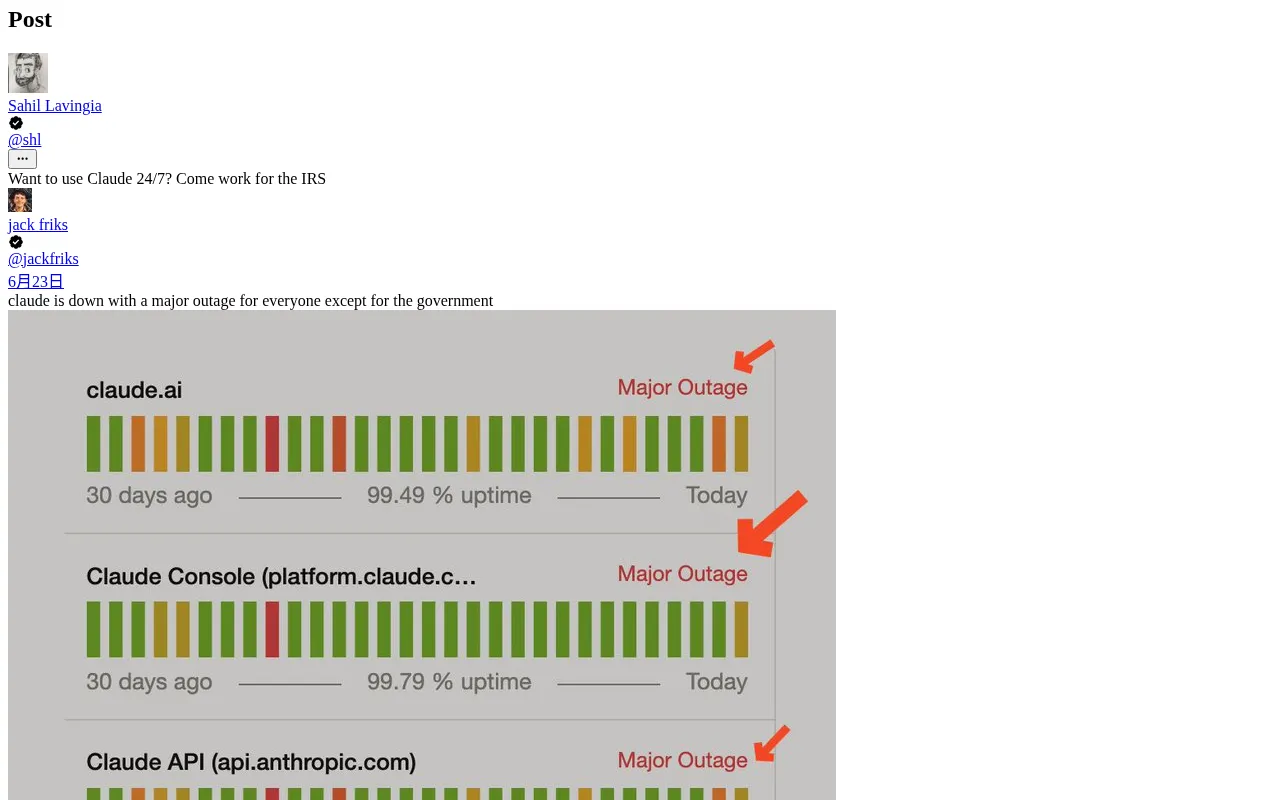
IRS Fully Embraces Claude AI, Accelerating Federal Government's AI Adoption
The IRS is recruiting staff with 24/7 Claude AI access, marking Anthropic's breakthrough into the federal government. Explore the strategic implications and tax use cases.
 Industry Insights
The IRS Mobile App Debate: A Trust Crisis in Government Digital Transformation
The IRS's proposed mobile app has sparked heated debate. This article analyzes the core arguments, exploring data security, privacy, and the trust crisis in government digital transformation.