MCP Gateway Connects Odoo: Letting Claude and ChatGPT Safely Operate ERP

Cyanovex's MCP Gateway securely connects AI like Claude to Odoo's live data, enabling both Q&A and operations, with risky changes requiring manager approval.
Cyanovex launches MCP Gateway, connecting AI tools like Claude, ChatGPT, and Cursor to Odoo's real-time data via a QR code wizard, enabling AI to execute operations beyond Q&A. Core features include enterprise-grade governance: high-risk write operations require manager approval with before/after comparison, per-model permissions with sensitive field masking, complete audit logs, token cost monitoring, and OAuth 2.1 security. It also offers 22 scheduled pre-built Agents and embedded Odoo assistants. While lowering AI adoption barriers, rollback and industry adaptability still need real-world verification.
Title
MCP Gateway Connects Odoo: Letting Claude and ChatGPT Safely Operate ERP
Meta Description
Cyanovex launches MCP Gateway, safely connecting Claude, ChatGPT, and Cursor to Odoo. It supports real-time data Q&A, approval-gated operation execution, fine-grained permissions, audit logs, and 22 pre-built Agents, balancing AI efficiency with enterprise compliance.
Article Content
Enterprise teams use AI for help every day, but the real answers are often locked inside Odoo—sales pipelines, invoices, customer records. Cyanovex's MCP Gateway attempts to bridge this gap: securely connecting AI tools like Claude, ChatGPT, and Cursor to Odoo's real-time data, enabling AI to not just "answer questions" but actually "take action."
Connection Method: Low-Barrier Integration via QR Code
The onboarding process for MCP Gateway is designed to be quite lightweight. Open the Connect Wizard, select the AI application to connect, follow the link or scan the QR code, then enable Odoo in the AI application's connector settings. The entire process requires no complex API debugging and is relatively friendly for non-technical teams.
Once connected, users can ask questions directly in natural language. For example, "What are our top five open opportunities?" Claude will query Odoo and provide an answer from live data.
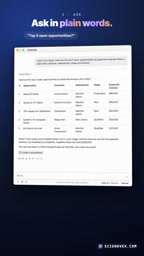
Beyond Q&A: AI Can Execute Operations, But With Human Oversight
The real detail here is AI's "action capability." Users can ask Claude to "schedule a call for tomorrow and log an internal note," and Claude will request confirmation before invoking the tool. Once confirmed, the call record will be attached to the corresponding opportunity in Odoo. When asked to generate a dashboard, the AI will build it directly in Odoo's AI Creations menu—for example, placing three charts on the same page.
Control of risky operations is the core selling point of this solution. When AI initiates a change that could affect data, the update is held in an approval inbox where managers can see an exact "before/after" comparison. Only after approval does Odoo actually apply the change. This "human-in-the-loop" design strikes a balance between AI automation and enterprise compliance requirements.
Human-in-the-Loop (HITL) is a mechanism in automated system design that involves humans at key decision points for confirmation. It is typically categorized by depth of intervention: post-hoc log review only, item-by-item approval before execution, and interception only when risk rules are triggered. MCP Gateway adopts a hybrid model of "pre-approval for write operations + free passage for read operations," which is a relatively strict form. The opposite is "Human-on-the-Loop," where the system executes automatically and humans take over only in exceptions. The cost of HITL is sacrificing some automation efficiency for controllability, making the interaction design of the approval inbox critical—if every query requires confirmation, users will quickly abandon it; if interception rules are too loose, risks will slip through. Industry consensus suggests setting approval policies graded by operation reversibility and impact scope rather than a one-size-fits-all approach.
Permissions, Auditing, and Cost: The Enterprise Governance Trio
The three questions enterprises care about most—what AI can touch, what it did, and how much it cost—all have corresponding mechanisms in MCP Gateway.
Fine-grained permission control: Read, create, write, and delete permissions can be set individually per model, and sensitive fields can be masked. Complete audit logs: Every invocation records which tool was used, by which user, how long it took, and what the result was. All content created by AI is listed in one place and can be removed with one click. Cost visibility: Supports bringing your own OpenAI or Anthropic API Key, with monitoring of token consumption and expenses.
On the security front, the solution includes OAuth 2.1, hashed API Keys, rate limiting, and every invocation follows Odoo's own access rules.
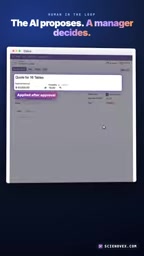
In practical scenarios, questions like "Which customers owe us money?" can be answered directly—20 unpaid invoices, amounts, and days overdue can all be presented in seconds.
OAuth 2.1 is a revised draft of the OAuth 2.0 authorization framework (currently being standardized by the IETF). Key changes include: mandatory use of PKCE to prevent authorization code interception attacks, removal of the implicit grant flow and password flow, requiring exact redirect URI matching, and stricter constraints on how tokens are transmitted. For scenarios like AI gateways that need to access third-party systems on behalf of users, OAuth 2.1 ensures tokens don't fall into the hands of man-in-the-middle attackers and that permission scopes can be precisely limited. The accompanying "hashed API Key" means the server stores only the hash of the key rather than plaintext, so even if the database is breached, the key cannot be directly recovered—consistent with standard password storage practices. Rate limiting is used to prevent brute-force enumeration after credential theft or cost overruns from abuse.
Pre-built Agents and Odoo's Built-in Assistant
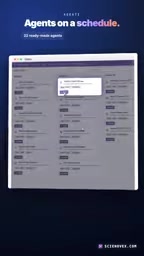
MCP Gateway provides 22 out-of-the-box Agents that run immediately after installation and provide executive summaries, and can also be scheduled to run automatically in the background.
Within Odoo, the same assistant is embedded into collaboration workflows. Click "Ask AI" to ask questions in natural language, see the AI's reasoning progress, and get answers from live data. For high-risk operations like deletion, the AI will ask first, and users can confirm or cancel directly in the message—only clicking confirm will execute.

Mention AI Assistant in any chatter, and it will reply with an internal note on that record. For any message, you can one-click "summarize from here," draft a reply, or create a follow-up activity. Type /summarize in a team channel to organize decisions, open issues, and assignments. Voice dictation for questions, read-aloud answers, and "Hey Odoo" wake word are also supported.
Practical Significance for Enterprise AI Adoption
MCP (Model Context Protocol), as an open protocol for connecting AI to external systems, is becoming the common language for enterprise integration. The value of MCP Gateway lies in packaging the protocol-layer possibilities into a governable product: AI can read and write ERP, but with clear boundaries, operation traces, and controllable risks.
For SMEs already deeply using Odoo, such gateways lower the barrier to AI adoption while retaining approval and audit levers. However, it's worth noting that the risk of AI directly operating business systems always exists—the actual user experience of the approval inbox, rollback capability for mistaken operations, and the adaptability of the 22 pre-built Agents across industry scenarios all still need real-world deployment to verify.
MCP (Model Context Protocol) was proposed and open-sourced by Anthropic in late 2024, aiming to define a unified invocation specification between AI models and external data sources and tools. Before MCP, connecting to each system (database, CRM, file service) often required developing separate plugins or writing custom API glue code; MCP abstracts these capabilities into tools and resources exposed by "servers," so AI clients only need to implement the protocol once to discover and invoke them. It is often analogized as "the USB-C interface for the AI world." In the ecosystem, clients like Claude and Cursor already natively support it, and the community has produced numerous MCP Servers for different systems. For enterprises, the significance of MCP is shifting integration from point-to-point custom development to standardized plug-and-play. But precisely because the protocol itself only specifies "how to invoke," governance capabilities like permissions, approvals, and auditing must still be supplemented by the gateway layer.
One-line Summary
Cyanovex's MCP Gateway securely connects AI like Claude to Odoo's live data, enabling both Q&A and operations, with risky changes requiring manager approval.
Paragraph Summary
Cyanovex launches MCP Gateway, which connects AI tools like Claude, ChatGPT, and Cursor to Odoo's real-time business data via a QR code wizard, upgrading AI from merely answering questions to executing operations. Users can query sales pipelines, accounts receivable, and other data in natural language, and instruct AI to schedule calls, log notes, and generate dashboards. The solution's core is enterprise-grade governance: high-risk write operations enter an approval inbox where managers review before/after comparisons before taking effect; it supports per-model read/write/delete permissions and sensitive field masking; provides complete invocation audit logs, centralized management of AI-created content, and token cost monitoring; and employs OAuth 2.1, hashed API keys, and rate limiting for security. Additionally, it includes 22 pre-built Agents that can be scheduled, and integrates Ask AI, chatter mentions, message summarization, and voice interaction within Odoo. The article argues that such gateways lower the barrier to enterprise AI adoption, but rollback of mistaken operations and industry adaptability still await real-world deployment verification.
Related articles

Prompt Engineering for Beginners: From Writing Prompts to Engineering Thinking
Starting from the essence and four functions of prompts, this article systematically explains the six-step process, four success criteria, learning value, and practical limitations of prompt engineering to help you build a complete understanding.

Anthropic Launches Nasdaq IPO: AI Giant's Listing and Risk Disclosures
Anthropic officially launches its Nasdaq IPO under ticker ANT, with market valuation expected to potentially exceed SpaceX's record. The prospectus devotes nearly 100 pages to AI risks, while first-half revenue grew over 14x but net losses widened sharply, reigniting the AI bubble debate.

Rust cURL Clone Uses 4,832 unsafe Blocks—Is the Memory Safety Myth Broken?
A Rust cURL clone uses 4,832 unsafe keywords, challenging Rust's memory safety narrative. We analyze what unsafe really means, compare Fil-C, and examine rewrite motives.