MCP vs API: Why Do AI Agents Need the MCP Protocol?

MCP is the standard protocol for AI agents to call external tools, complementing APIs rather than replacing them.
Using a currency exchange scenario, this article clarifies the essential difference and collaborative relationship between APIs and MCP. APIs define the communication contract between an application and a specific service (parameters, authentication, response format) — a mature model in traditional software development. When AI agents need to connect with large numbers of external tools, writing custom integration code for each service doesn't scale. MCP (Model Context Protocol) was created to solve this: an open standard protocol that lets AI applications discover and invoke external tools and data in a unified way, much like a USB port for the AI world. MCP servers still call traditional APIs behind the scenes for actual communication — the two are layered collaborators, with APIs handling service connectivity and MCP handling standardized discovery and invocation of capabilities by AI.
If APIs already allow different applications to communicate with each other, why do we need MCP servers? Aren't they doing the same thing? The answer is no — and understanding the difference is crucial for anyone learning about AI Agents.
As large language models evolve from simple question-answering tools into agents capable of invoking external capabilities, MCP (Model Context Protocol) is becoming a critical link connecting AI to the real world. Using a simple currency exchange example, this article breaks down the essential differences between APIs and MCP, and how they work together.
First, Understanding APIs: How Applications Communicate
Imagine you're building a Python application that needs to connect to an exchange rate server to get the real-time conversion rate between AUD and USD. The currency exchange service provides an API endpoint — essentially an address your application can call to perform a specific operation.
Beyond the address, an API also defines a set of rules: what parameters you need to provide, how authentication works, and what kind of response you can expect. In simple terms, an API defines how your application communicates with a specific service.

This mechanism works well in traditional software development — it's the foundation of how applications connect across the internet. But when AI enters the picture, things start to get complicated.
Bringing AI Into the Picture: The Problem Emerges
Suppose you ask an AI assistant: "What's the current exchange rate between AUD and USD?" The problem is that the AI model doesn't automatically know how to access a currency exchange service. We need to give the AI agent a way to use external capabilities.
One approach is to write custom code telling the AI agent: when you need exchange rate information, call this API endpoint, provide these parameters, authenticate this way, and then use the result to form your answer. This works.
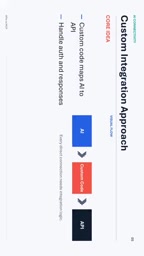
But problems quickly arise. What if you want the AI agent to do far more than just that? You want it to search the web, operate databases, retrieve information from CRM systems and various other tools, and do much more on top of that. You'd need a way for the AI application to understand "what tools are available and how to use them." Writing custom integration logic for every single tool clearly doesn't scale. MCP was created to solve exactly this problem.
This challenge is known in the industry as "tool integration fragmentation." Before MCP, OpenAI introduced Function Calling, which allowed developers to declare available functions when calling the API, letting the model decide whether to invoke them. However, Function Calling is a platform-proprietary solution. Different AI frameworks (LangChain, AutoGPT, various commercial assistants) each have their own tool integration specifications, forcing the same external service to be integrated repeatedly for different AI platforms. What MCP aims to solve is precisely this "every platform has its own standard" inefficiency — through an open protocol, tool providers only need to build an MCP server once to be callable by all MCP-compatible AI applications.
Enter MCP: The "USB Port" for AI Applications
MCP is a standard protocol that allows AI applications to discover and interact with external tools, data, and resources.
A fitting analogy: think of MCP as the USB port for AI applications. Instead of building a completely different integration interface for every tool, you use a universal protocol to connect AI applications to a wide variety of services.

With MCP, an AI application can connect to an MCP server and discover the tools it provides. Back to the exchange rate example: instead of requiring the AI to understand all the technical details of a currency exchange API, we expose a simple tool — say, named "get current exchange rate." The AI simply requests this tool via MCP.
The MCP server then handles all the technical details behind the scenes: it calls the actual currency exchange API, provides the required parameters and authentication, retrieves the exchange rate, and returns the result to the AI application. The complexity is completely hidden from the AI.
The Key Insight: MCP and APIs Are Not Substitutes — They Collaborate
Here's an easily overlooked but important point — MCP servers still use API endpoints behind the scenes.
In the example above, the currency exchange API still handles the actual communication with the currency exchange service. MCP doesn't replace the API; it simply provides AI applications with a standardized way to discover and use that capability.

So what's the essential difference between the two? Think of it this way:
- An API says: "This is how you communicate with my service."
- MCP says: "This is a standard way for AI applications to discover and use the tools and data I expose."
In other words, APIs are about the communication contract between developers and applications, while MCP is about AI applications "discovering and invoking" capabilities. APIs connect to services; MCP gives AI applications a standardized way to use them. They have complementary roles.
Why This Matters to You
Once you understand this distinction, MCP becomes much easier to grasp. Its value lies in solving the "fragmentation" problem in the AI agent ecosystem — when an agent needs to connect with hundreds or thousands of tools, a unified protocol offers far superior scalability compared to custom one-off integrations.
For developers building AI agents, MCP means lower integration costs and stronger tool interoperability. For tool and service providers, exposing an MCP server is equivalent to making your capabilities "plug-and-play" discoverable across the entire AI application ecosystem. This is the deeper meaning of the "USB port" analogy: the network effects that come from standardization.
Understanding the respective roles of APIs and MCP is an important foundation for entering the AI agent space. They aren't competitors — they each operate at different layers, working together to support AI's ability to engage with the external world.
Background
MCP was officially released and open-sourced by Anthropic in November 2024, and is now supported by major AI applications including Claude Desktop and Cursor. The protocol itself is based on JSON-RPC 2.0 and defines three core primitives: Tools (functions the AI can call), Resources (data the AI can read, such as files and database records), and Prompts (reusable prompt templates). An MCP server can expose all three types of capabilities simultaneously. When an AI application (called an MCP Host, such as Claude Desktop) starts up, it proactively sends a "capability discovery" request to configured MCP servers, retrieving the names and descriptions of all available tools. The large language model can then autonomously decide when to call which tool based on natural language semantics — and this is the core difference between MCP and directly calling APIs: the decision of which tool to use shifts from hard-coded developer logic to the model's own reasoning capabilities.
Related articles

Gemini 4 Argon Hands-On: AI Builds Board Games, Constructs Temples, and Trains Robots Autonomously
Gemini 4 Argon hands-on roundup: AI autonomously builds a desk racetrack and temple in Blender, writes a ray tracing engine, trains a humanoid robot to sink 7 shots, plus API pricing and developer access.

The Magic Octagonal Coin: Why Only 9% of People Can Predict Its Flip?
Only 9% of people can correctly predict the Magic Octagon coin flip. This article explains its spatial rotation mechanism, common cognitive pitfalls, and a new hypothesis based on Relevance Theory, exploring the limits of human spatial reasoning.

Sam Altman: AI Is Entering the Era of Scientific Discovery — Math Breakthroughs Will Replicate in Biology and Energy
Sam Altman says AI is entering the era of scientific discovery — math breakthroughs will replicate in biology, materials science, and energy to help develop new drugs and energy sources.