Mechanism's First Switch 2 Case, the Basecase, Hands-On: Modular Design Finally Arrives

Mechanism launches its first Switch 2 case, the Basecase, at $49, built around a modular mount ecosystem.
While most accessory makers hold back on Switch 2, Mechanism has launched its first case, the Basecase, at $49. Its snap-on shell integrates with Mechanism's modular mount ecosystem for desktop, bed-head, and car use. The article examines the reasons for industry caution and argues the price is justified for users who need mount functionality, while basic-protection buyers can find cheaper alternatives.
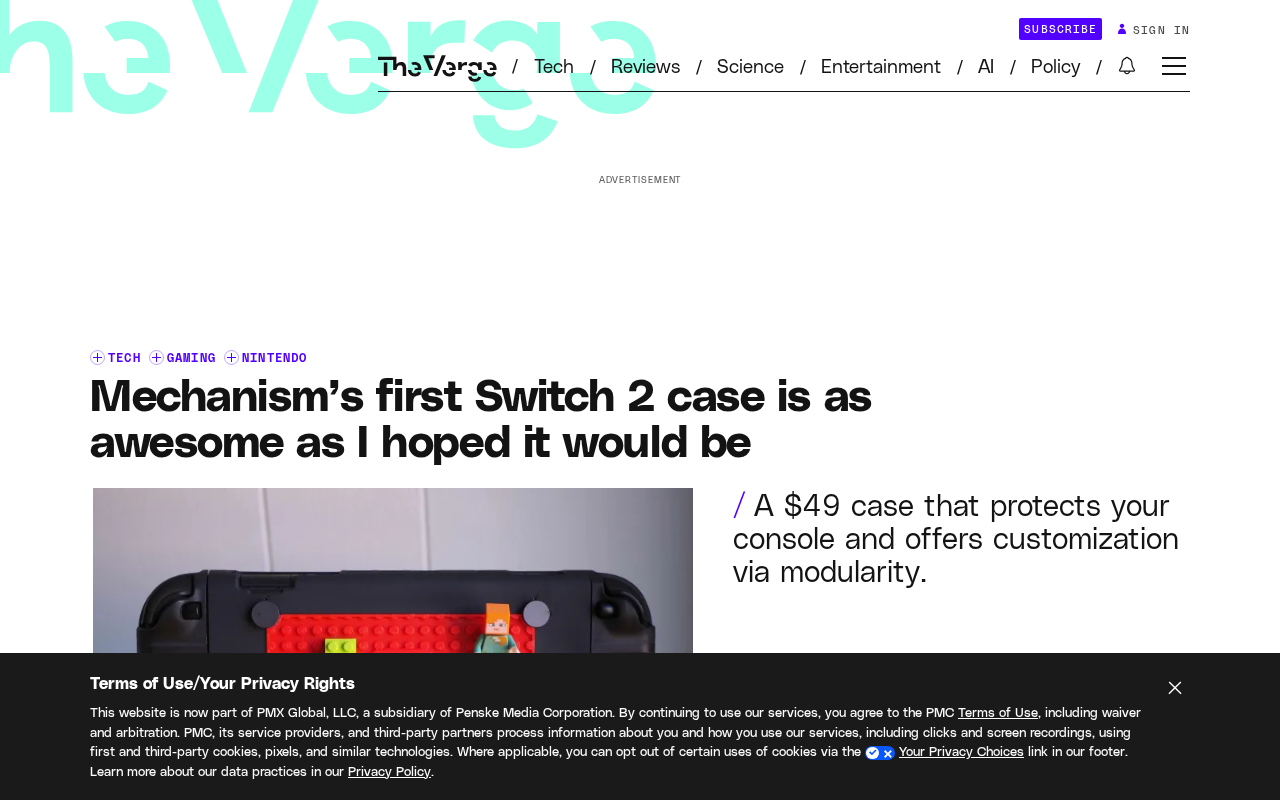
After the Nintendo Switch 2 launched, most accessory makers slowed down their release schedules. But well-known peripheral brand Mechanism, after several delays, has finally launched its first Switch 2 case — the Basecase. Priced at $49, this snap-on shell plugs directly into Mechanism's modular mount ecosystem, letting the Switch 2 be used in all sorts of ways.
Why Are Most Manufacturers Holding Back?
The Switch 2's size and port changes have led many accessory makers to take a wait-and-see approach. According to The Verge, most companies have postponed their case release plans, likely waiting for the install base to stabilize or to avoid design risks. Against this backdrop, Mechanism's Basecase stands out — it doesn't simply copy the previous generation, but instead transplants the company's mature modular approach directly.
Install base is a key metric that determines whether accessory makers invest in new product development. For products like cases and mounts that require tooling and mass production, upfront mold costs and certification expenses are high. Only once console sales reach a certain scale can accessory makers turn a profit by spreading out costs. In the early days of the Switch 2's launch, the install base was not yet stable, making it hard for manufacturers to accurately estimate market demand; rushing into production could mean inventory pile-up risks. In addition, details like the new console's dimensions, ports, and thermal design are often not fully disclosed before launch. Third-party manufacturers need physical units in hand before they can precisely cut molds, which is another reason accessories generally lag behind console launches. Historically, when the original Switch, PS5, and other consoles launched, similar launch-window accessory droughts occurred, typically taking three to six months to gradually fill out.
The Modular Mount Is the Real Selling Point
The Basecase is essentially a snap-on shell, but its true value lies in compatibility with Mechanism's existing mount accessory lineup. You can secure the Switch 2 to a desk, a bed headboard, or even in a car — all using the same snap-on system.
This design philosophy is completely different from an ordinary case: a regular case only handles drop and scratch protection, while the Basecase is more like a physical dock. For users who already own other Mechanism accessories, this case is an almost mandatory addition.
A modular snap-on ecosystem refers to a design system in which a unified physical interface standard allows different accessories to be freely combined and swapped. Taking Mechanism's products as an example, the core is a standardized snap-on interface: the back of the case has specific slots or magnetic attachment points, while accessories like desk mounts, bed-head clamps, and car mounts have corresponding snap-on protrusions. Users simply snap the Switch 2, together with its case, into any mount to quickly secure it, with no extra tools or adapters needed. This approach has mature precedents in camera accessories (such as Peak Design's Capture system) and phone magnetic ecosystems (such as MagSafe). Its advantages are lower repeat-purchase costs and higher accessory reuse, but the trade-off is that users are locked into a single brand's ecosystem — once you choose Mechanism, future accessories will most likely also have to come from the same brand.
Is $49 Worth It?
At $49, the price sits in the mid-to-high-end range among Switch 2 cases. Considering that it incorporates a modular snap-on structure rather than being a simple TPU or hard plastic shell, the price is actually justifiable. Of course, if you don't need any mount functionality, there are certainly cheaper options on the market.
The original author's assessment of the Basecase was "as awesome as I hoped it would be," indicating that the real-world experience met expectations. Although the delays were frustrating, the finished product appears to have been worth the wait.
TPU (thermoplastic polyurethane) is an elastic material commonly used in phone and game console cases. It combines the flexibility of rubber with the processability of plastic, has a relatively low cost, and provides basic drop and scratch protection. Hard plastic shells (such as PC polycarbonate), by contrast, are thinner, lighter, and more transparent, but have limited cushioning ability. The Basecase's $49 price is clearly higher than ordinary TPU cases (usually $10–20). Its premium mainly comes from the mold precision of the modular snap-on structure, structural strength testing, and compatibility validation with mount accessories. For an ordinary case, users pay a one-time material cost; for a modular shell, users are effectively paying for entry into an entire accessory ecosystem. Therefore, whether it's worth it depends on how often users need mount functionality, rather than simply comparing the material cost of the shell itself.
Who Should Buy It?
- Users who already own Mechanism's mount ecosystem: buy it directly; it's a seamless expansion.
- Players who often need to prop up their Switch 2: more stable than third-party universal mounts.
- Users who only want basic protection: you can wait for a cheaper alternative.
Mechanism's entry may prompt other manufacturers to accelerate their Switch 2 accessory release schedules. For players, competition is always a good thing.
One-line Summary
Mechanism launches its first Switch 2 case, the Basecase, priced at $49, centered on a modular mount ecosystem.
Paragraph Summary
While most accessory makers remain cautious about the Switch 2, well-known peripheral brand Mechanism has beaten them to market with its first case, the Basecase, priced at $49. The snap-on shell's core selling point is not protection alone, but integration with Mechanism's existing modular mount ecosystem, allowing use with desktop, bed-head, car, and other mounts. The article analyzes why manufacturers are holding back, suggesting it may be related to an unstable install base and design risks. After several delays, the Basecase's real-world experience met the author's expectations, earning the verdict "as awesome as I hoped it would be." At $49, it sits in the mid-to-high-end range and is suited to users who already own Mechanism accessories or need mount functionality; those who only need basic protection can choose a cheaper alternative. Mechanism's entry may push other manufacturers to accelerate their Switch 2 accessory releases.
Related articles

Chain of Thought Isn't Just for AI: How Humans Can Use CoT to Improve Thinking Quality
Chain of Thought isn't just a prompt trick for large models. Starting from a Hacker News discussion, this article analyzes why CoT works for human thinking too, breaks down actionable ways to transfer it, and highlights the key differences between human CoT and machine CoT.
Cloudflare Teams Up with OpenAI: Closi…
Cloudflare Teams Up with OpenAI: Closing the Loop from Vulnerability Discovery to Defense with AI
Cloudflare uses OpenAI Daybreak to investigate security vulnerabilities and generate reviewable remediation plans, while developers use Codex to boost coding efficiency and quality.

Orca Multi-Agent Orchestration in Practice: A Guide to Parallel Collaboration with Claude and Codex
Orca is Stable AI's free open-source agent workbench supporting 34 agents like Claude Code and Codex in parallel. Learn its Git worktree isolation, multi-model orchestration, and mobile management.