Meituan CatPaw Hands-On Review: Is the Free GLM-5.2 Coding Tool Worth It?

Meituan's CatPaw offers free GLM-5.2 coding access but is plagued by frequent network failures.
Meituan's CatPaw AI coding tool offers free access to the powerful GLM-5.2 model — a rare perk in a market where official quotas are scarce. Hands-on testing confirms the model delivers genuine coding quality, but frequent network request failures and an unverifiable quota reset mechanism seriously undercut the experience. CatPaw is best treated as a low-cost way to try GLM-5.2, not a production-ready Cursor or CodeBuddy replacement.
Meituan CatPaw Hands-On Review: Is the Free GLM-5.2 Coding Tool Worth It?
The AI coding tool market is getting increasingly crowded. From Cursor abroad to Alibaba's CodeBuddy at home, most products have converged on a remarkably similar feature set. A clear product hierarchy has emerged: international players like Cursor and GitHub Copilot dominate the high end, while Chinese tech giants have formed their own first tier — Alibaba's CodeBuddy (formerly Tongyi Lingma), Baidu Comate, and Tencent Cloud AI Code Assistant among them. The core architecture across all these tools is nearly identical: VSCode or JetBrains plugin frameworks, code completion (FIM, Fill-in-the-Middle), conversational programming, and autonomous Agent task execution. Differentiation has shifted away from "does it have the feature" toward "how strong is the underlying model" and "how reliable is the service."
Into this landscape, Meituan has quietly entered the ring with its own AI coding tool: CatPaw (酷爪). Its biggest selling point is straightforward — it offers free access to the highly sought-after GLM-5.2 model. For developers who can't get GLM-5.2 quota through official channels but want to experience a top-tier domestic LLM for coding, that's a genuinely compelling proposition. This article, based on hands-on testing from a Bilibili content creator, gives you a clear picture of what CatPaw actually delivers — and the frustrating pitfalls that come with it.
Free GLM-5.2: Real Deal or Just Hype?
CatPaw's core competitive edge lies in its model strategy. It currently offers free access to GLM-5.2 — the latest iteration of Zhipu AI's (backed by Tsinghua University) General Language Model series. Unlike GPT's architecture, the GLM series uses an autoregressive blank-filling pre-training objective with innovations in bidirectional attention mechanisms. It has been specifically fine-tuned for programming tasks including code generation, debugging, and refactoring, and shows strong results on mainstream coding benchmarks like HumanEval and MBPP. Because official Zhipu API quotas are limited and hard to come by, many developers are stuck on a waiting list — which is precisely why CatPaw's free access is so attractive.
According to the hands-on testing, GLM-5.2's performance inside CatPaw is essentially on par with the official version. The tester had it write several complex project modules, including a unified authentication module refactor for a microservices architecture. The verdict: the model genuinely delivers — this is real, production-level quality.
Beyond GLM-5.2, CatPaw also bundles its own in-house LunCat (轮猫) model series, including LunCat Flash and LunCat 2.0. LunCat 2.0 is the flagship of Meituan's proprietary LLM family, and reportedly approaches DeepSeekAd V3 on general Chinese benchmarks like C-Eval and CMMLU. But there's a meaningful gap between "strong general capability" and "strong coding capability." Code generation demands precise syntactic awareness, API recall, and coordinated multi-step logical reasoning — exactly the areas where the GLM series excels thanks to code-specific training. As a result, LunCat 2.0 falls noticeably short of GLM-5.2 for coding tasks specifically, and for writing code, GLM-5.2 is the clearly safer pick. In real engineering scenarios, choosing a specialized code model over a general-purpose one typically yields a 10–30% improvement in task completion rates.

On the feature side, CatPaw covers the standard checklist for modern AI IDEs: Agent-driven programming, code completion, project-level analysis, built-in browser debugging, and more. It also includes a no-code online app generation feature similar to Local — not particularly useful for professional developers, but a nice entry point for non-technical users.
Free Quota: Will 500 Points Last a Full Day?
The free quota is naturally the heart of the offer. CatPaw officially provides 500 points for free, and claims that once the quota is used up, you can reset and claim another round. That sounds generous — but the real-world experience falls short.

For context, Alibaba's CodeBuddy gives 2,000 points per month, which burns through in about two days of heavy use — roughly 1,000 points per day. CatPaw's 500 points would theoretically run out in a single day of intense usage. And yet the tester used it for a full day and never actually depleted the 500 points — though not because the quota was generous.
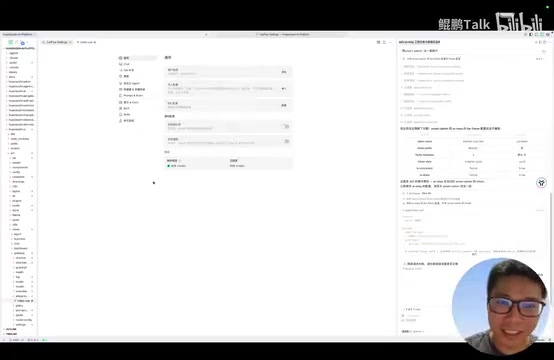
Worth noting: the tester explicitly stated there was no commercial relationship with Meituan — the recommendation was purely driven by the ability to access GLM-5.2 for free. That transparency makes the criticism that follows all the more credible.
The Unavoidable Problem: Frequent Network Request Failures
If free GLM-5.2 is CatPaw's biggest strength, then frequent network request failures are its biggest weakness right now. The reason the tester never burned through the 500 points wasn't quota efficiency — it was because the tool kept throwing errors at critical moments, displaying messages like "Network request failed, please check your connection," even when the local network was perfectly fine.
In AI coding tools, "network request failed" errors usually aren't actual network issues — they're often a symptom of server-side rate limiting. Common rate-limiting strategies include token bucket-based concurrency control, per-session QPS (queries per second) limits, and special throttling for long-context window requests. The failures follow a telling pattern: things work smoothly at first, then once you enter a sustained, high-intensity, high-concurrency usage pattern, something kicks in and breaks the session.

To make matters worse, the official "quota reset" feature also failed to complete during testing due to these same connectivity errors — so whether that mechanism actually works remains unverified.
The workaround that emerged from testing: opening a new chat window usually bypasses the error temporarily, which meant keeping several chat sessions open in rotation. The fact that a new chat window resolves the issue suggests the rate limiting may be applied at the individual session ID level via a sliding window counter, rather than at the account level globally. This kind of infrastructure problem is extremely common in early-stage products, and typically requires server-side architectural improvements — such as finer-grained load balancing and queue management — rather than simply adding more compute capacity. Whether the throttling originates at the IDE client layer or in the backend model gateway remains unclear. Some developers have even suggested that if CatPaw's API could be reverse-engineered and routed through a mature client like Claude Code, the experience might be significantly better.
Overall Verdict: Strong Model, Rough Tool
Placed in the broader AI coding tool landscape, CatPaw is a textbook case of "model capability outpacing tool polish" — and a microcosm of the "model as moat" logic driving the entire industry: whoever can offer a stronger, cheaper, or even free model will stand out in a sea of functionally identical products. The core takeaway is that at this stage, model quality is more decisive than IDE quality. GLM-5.2 keeps CatPaw's actual code output competitive with mainstream domestic tools; the gap shows up in stability and engineering refinement.
In other words, CatPaw's weakness isn't "can it write good code" — it's "can it let you finish writing code without interruption." Frequent errors and an unverifiable reset mechanism will seriously disrupt any professional developer's workflow. For users willing to tolerate occasional errors and lean on workarounds like rotating chat windows, getting free GLM-5.2 access is still a worthwhile trade-off. But if you need a stable, high-efficiency production tool, CatPaw isn't yet a mature replacement for Cursor or CodeBuddy.
Final Thoughts
CatPaw's arrival reinforces a reality playing out across the AI coding tool market: the model is the moat. Whoever provides a stronger, cheaper, or even free model will break through the product sameness. Meituan has played a genuine card with free GLM-5.2 access — but the engineering stability of the product clearly still needs time to mature.
For developers, treat CatPaw as a low-cost entry point to experience GLM-5.2's coding capabilities, not your primary production tool. As for whether that enticing "quota reset" actually delivers — that still needs more users to verify in practice. If you've successfully burned through 500 points and triggered a reset, share your experience.
Related articles

Felix Rieseberg Personal Homepage
Felix Rieseberg's personal homepage sparks attention on Hacker News. This article covers the Slack engineer's technical background, the rise and fall of nativefier, and the value of a developer homepage as a tech calling card.

@ai-sdk/vue 3.0.306 Patch Release Syncs with [email protected] Update
@ai-sdk/vue 3.0.306 released, synced with [email protected]. A routine patch release for the Vercel AI SDK ecosystem with no public API changes; the Vue adapter layer stays version-aligned with the core package.

Gemini 4 Argon API Launches: The Era of Million-Token Output Begins
Google launches Gemini 4 Argon with sparse MoE architecture, up to 1M output tokens, and a 68.90% Vals Index score, available across API, AI Studio, and the Gemini app.