Mellow Kids: A Parenting Sleep App That Goes from Tracking to Interpretation
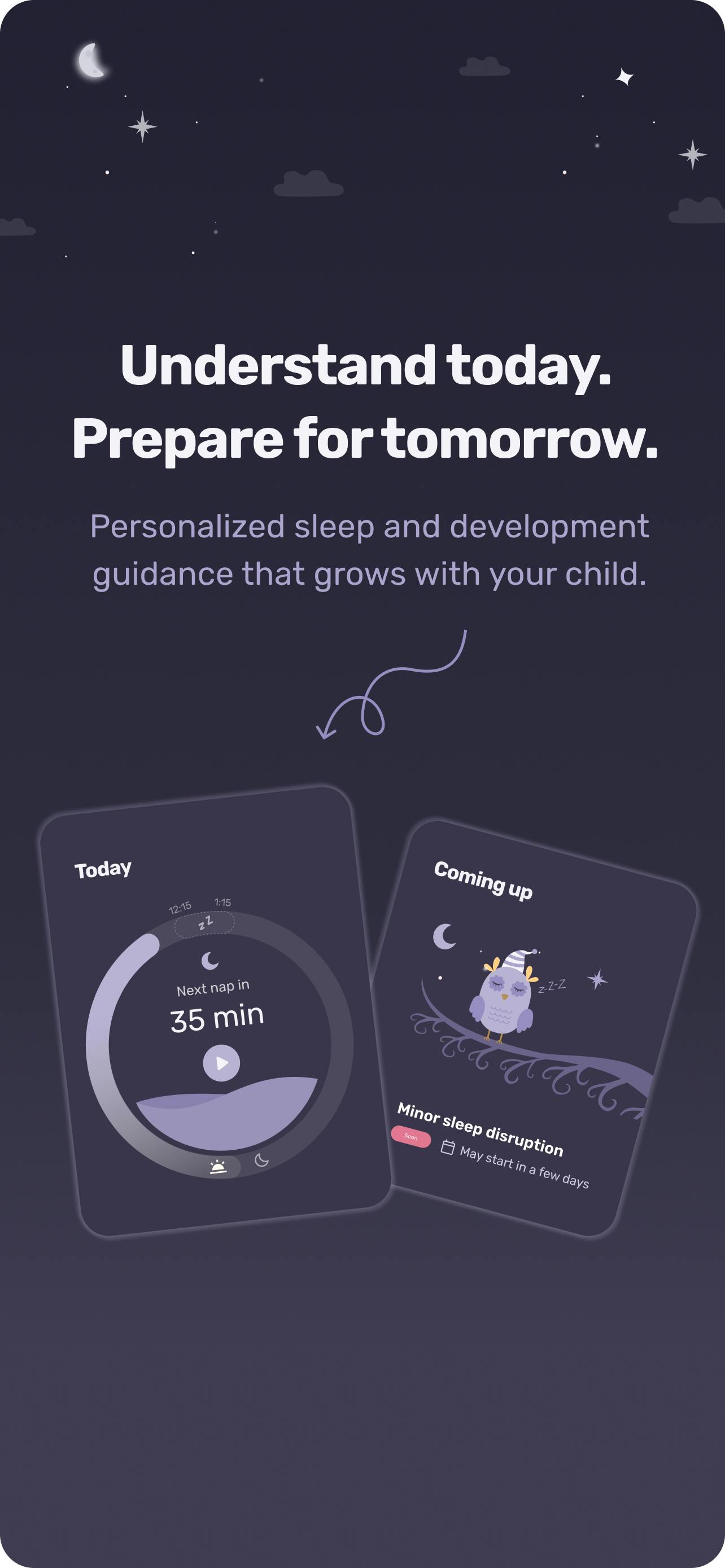
Mellow Kids enters parenting tools with interpretive logic, identifying changes and warning about developmental stages.
Mellow Kids is a parenting app that earned 80 upvotes on Product Hunt, differentiating itself from traditional tracking tools: parents easily log sleep, feeding, and diapers while the app proactively identifies changes and explains why. Its second pillar is advance warnings before sleep pattern or developmental stage transitions. Guidance is labeled evidence-based, covering short naps, separation anxiety, and tantrums. The article notes multi-child tracking isn't shown in materials, explanation accuracy is key to credibility since wrong judgments could delay medical signals, and tracking continuity directly determines insight quality.
Most baby apps only record what happened—feeding, sleeping, diaper changes. Mellow Kids wants to go further: to explain why, and to foreshadow what comes next. This product, which earned 80 upvotes and ranked 10th on Product Hunt, is trying to enter the parenting tools market with an "interpretive" logic.
From "Tracking Tool" to "Interpretation Tool"
Mellow Kids' positioning is clear: it's not just another parenting log app. The official description emphasizes that users only need to easily record sleep, feeding, and diaper activity, and the app will proactively identify changes and explain the reasons—it might be that the routine needs adjustment, or it might simply be that the child is in a phase that will naturally pass.
Behind this is a shift in product thinking. The value of traditional parenting apps lies in "archiving," with parents reviewing data to find patterns themselves; Mellow Kids takes over the pattern recognition and explanation steps, outputting judgments rather than raw data. For new parents with fragmented sleep and no energy for data analysis, this "draw the conclusion for me" experience has a noticeably lower barrier to entry.
Advance Warnings: Turning the "Unknown" into the "Predictable"
The app's second pillar is forward-looking. Before sleep patterns or developmental stages change, Mellow Kids gives parents advance notice so they can mentally prepare for the next phase.
A large part of parenting anxiety comes from "not knowing what will happen next"—is today's poor sleep a one-off, or is a regression period approaching? Advance notice can't eliminate the problem, but it can reduce the sense of lost control that comes with uncertainty. The product makes this a core selling point rather than an attached notification feature.
"Sleep regression" is a common phenomenon in infant sleep development: babies who were already sleeping through the night suddenly experience more night wakings, difficulty falling asleep, and shortened naps at specific months (such as 4 months, 8-10 months, 12 months, 18 months). This is usually related to developmental milestones, such as mastering gross motor skills like rolling over, crawling, and walking, or cognitive and social changes like separation anxiety and language explosions. These phases mostly pass naturally, but duration and intensity vary by child. If parents don't understand this pattern, they may easily assume something is wrong with their parenting approach or suspect the child is unwell. Knowing in advance that "regression periods" exist can help parents attribute temporary sleep fluctuations to developmental progress rather than blaming feeding or routine mistakes, thereby reducing unnecessary anxiety and frequent adjustments.
Evidence-Based Advice, Not Anecdotal Wisdom
Mellow Kids emphasizes that its guidance content is evidence based, covering everything from short naps to separation anxiety to the earliest tantrum phases.
The parenting space is filled with information noise, mixing elder experience, social media posts, and commercial content. Labeling itself "evidence-based" means it's trying to establish a credibility difference—this is both a selling point and a promise that needs to be continuously fulfilled. Whether the app can translate research conclusions into advice that parents can understand and use determines its actual value.
The term "evidence-based" originates from the medical field, meaning that decisions and practices should be based on the best evidence from systematic research rather than personal experience, traditional habits, or anecdotal reports. In parenting contexts, evidence-based means advice should reference pediatric sleep research, empirical literature in developmental psychology, and guidelines from authoritative bodies (such as the American Academy of Pediatrics), while distinguishing levels of evidence strength—conclusions from randomized controlled trials are more reliable than a single expert's experience sharing. For a product, labeling itself evidence-based is not just a marketing tag; it also means the content team needs to continuously track research progress, cite sources for advice, and clearly state uncertainty when evidence is insufficient. At the same time, evidence-based advice needs to be applied with individual differences in mind: population-level statistical patterns don't hold for every child, and the app should avoid absolute language when making judgments and indicate when a pediatrician should be consulted.
Points Worth Noting
Multi-child scenarios not mentioned: The official description consistently revolves around recording and stage judgments for a single child. If a family has multiple children, whether the product can distinguish and track them separately is not evident from the available materials.
The accuracy of "explanations" is the key to success: When the app tells parents "this is a phase, it will pass," if that judgment is wrong, it could delay signals that genuinely require medical attention. Products like this need to be especially careful with their wording.
Tracking burden is proportional to explanation quality: To identify changes, the prerequisite is sufficiently continuous data. The app makes tracking "easy," but whether parents can sustain long-term input directly determines whether the insights are reliable.
"Tracking burden" and "adherence" are common challenges for health apps. In parenting scenarios, parents often operate their phones while their sleep is interrupted at night, and any additional input step can become a reason to give up. If tracking is interrupted for several days, change detection and trend judgments based on continuous data will be distorted, and the explanations the app provides may be built on incomplete samples. Common design responses include: simplifying input (one-tap logging, voice input, syncing with smart devices), tolerating data gaps and marking confidence levels in insights, and using immediate feedback (such as presenting a small conclusion right after logging) to maintain motivation. For a product like Mellow Kids whose core value is interpretation, tracking adherence is not just an experience issue—it directly determines whether its core functionality holds up, and needs sufficient attention in product mechanics.
Summary
Mellow Kids hits a real pain point: parents don't lack data—they lack understanding of the data and what to do next. In the intersection of Health & Fitness and Parenting, it chooses to differentiate through interpretability and foresight rather than piling on tracking features. Whether this direction holds depends on whether it can truly deliver on "evidence-based" in the accuracy of every prompt.
One-line Summary
Mellow Kids enters the parenting tools space with interpretive logic, identifying changes and providing advance warnings about developmental stages.
Paragraph Summary
Mellow Kids is a parenting app that earned 80 upvotes on Product Hunt, positioned differently from traditional tracking tools: parents only need to easily record sleep, feeding, and diaper activity, and the app proactively identifies changes and explains the reasons. Its second pillar is forward-looking warnings, alerting parents before sleep pattern or developmental stage transitions to reduce anxiety caused by uncertainty. Guidance content is labeled as evidence-based, covering short naps, separation anxiety, tantrums, and other phases. The article notes that multi-child tracking capability is not evident in the materials, and that the accuracy of "explanations" is key to the product's credibility—wrong judgments could delay medical attention signals; meanwhile, the continuity of tracking data directly determines insight quality, presenting adherence challenges. Overall, the product hits the real pain point of parents who "don't lack data, but lack understanding."
Related articles

From 0 to 1: Vibe Coding an AI Knowledge Base — A Practical Retrospective and Tech Stack Breakdown
A retrospective on building the AI knowledge base OilBook from scratch with Vibe Coding: Next.js+Neon stack, Oil Dev Skill workflow, Stripe paywall security, interview-style writing, AI-flavor control, and Vercel deployment.

GLM-5.4 Hands-On: Native Vision Meets a New Vibe Coding Workflow
Hands-on with Zhipu GLM-5.4: native vision tested across a 3D product demo, pure-code video generation, and remote-control Vibe Coding, compared with GPT-6.2 and Gemini Neon.

AI and Humans Claim to Prove the Riemann Hypothesis: Machine-Verified, Yet Nobody Can Understand It
Anthropic mathematician and AI Claude claim to prove the Riemann Hypothesis with 17 million lines of Lean code, machine-verified but unreadable by humans. This article analyzes the event, the zero proportion record from 41.6% to 67.2%, and the gap between machine verification and human understanding.