Mem2Fair: Training-Free Online Fairness Control to Free Text-to-Video Generation from Bias
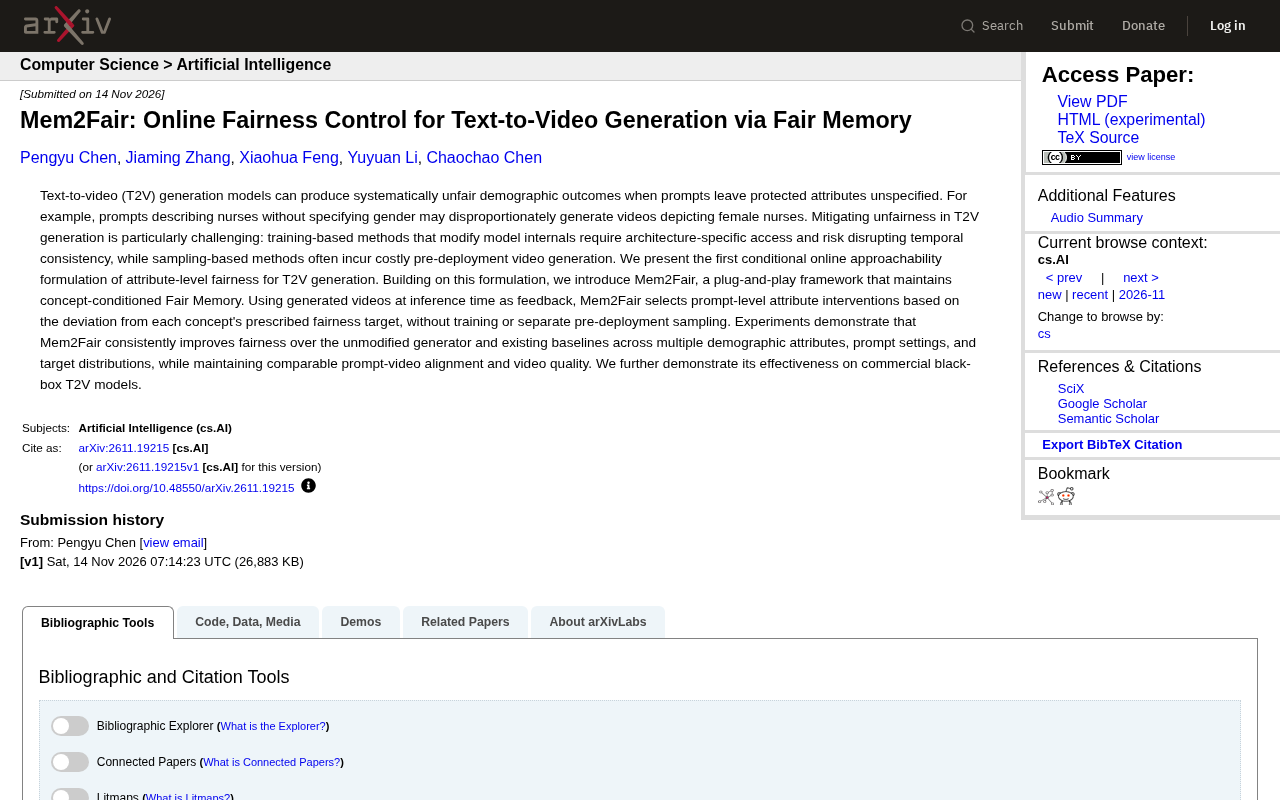
Mem2Fair uses online fair memory to dynamically adjust prompts, achieving training-free attribute fairness control for text-to-video generation.
The article introduces the text-to-video fairness control framework proposed in the paper "Mem2Fair: Online Fairness Control for Text-to-Video Generation via Fair Memory." To address the problem that T2V models systematically output biased content when prompts do not specify attributes such as gender or race, existing training-based methods rely on access to model internals and may disrupt temporal consistency, while sampling-based methods are computationally expensive and struggle to adapt to dynamic prompt distributions. Mem2Fair is the first to formalize T2V attribute-level fairness as a conditional online approachability problem, storing historical intervention effects for each concept through concept-conditioned fair memory and using inference-time video feedback to update prompt intervention strategies in real time, without training or pre-deployment sampling. Experiments show that the method consistently improves fairness across multiple attributes, prompt settings, and target distributions while maintaining video quality and text alignment, and it is validated on commercial black-box T2V models, providing a training-free, plug-and-play, pragmatic path for fairness governance of AI-generated content.
Text-to-video (T2V) models often systematically output biased video content when prompts do not specify protected attributes such as gender or race. For example, when a prompt asks to generate a "nurse" scene, the model may disproportionately produce female nurse figures. This implicit unfairness not only limits the diversity of generated content but may also amplify stereotypes in application scenarios such as advertising and education.
The paper "Mem2Fair: Online Fairness Control for Text-to-Video Generation via Fair Memory" from the research community proposes a novel solution: dynamically adjusting prompts through an online feedback mechanism to achieve attribute-level fairness control without retraining the model.
Why Is T2V Fairness Difficult to Solve?
Existing methods fall mainly into two categories, but each has notable shortcomings.
Training-based methods attempt to eliminate bias by modifying the model's internal parameters or structure. Such methods require access to model architecture details, which is almost infeasible for closed-source commercial models (such as Sora, Runway, etc.); at the same time, modifying internal representations may disrupt the video's temporal consistency, causing frame flickering or incoherent motion.
Sampling-based methods generate a large number of videos during inference and filter for fair results. Although this strategy requires no training, it requires expensive video generation in the pre-deployment stage, has high computational cost, and cannot adapt to dynamically changing prompt distributions.
The paper points out that the core difficulty of T2V fairness control lies in: avoiding intrusion into the model's internals, correcting bias in real time during inference, and not sacrificing video quality or text-video alignment.
Prompt Engineering here does not broadly refer to the skill of writing good prompts, but rather to a class of intervention methods that changes the output distribution of a generative model by systematically modifying the wording of input text, adding or removing attribute descriptors, adjusting word order, or inserting modifiers. Unlike modifying model weights, prompt-level interventions occur entirely outside the black box, do not require access to the model's internal structure, and are therefore also applicable to commercial APIs. However, the effects of prompt interventions are highly nonlinear and concept-dependent: the same gender descriptor added to "nurse" and "engineer" prompts may have completely different effects on the output distribution, and the effects may drift as model versions are updated. Mem2Fair's fair memory is designed precisely to capture this concept-specific intervention effect.
Mem2Fair's Core Mechanism: Conditional Online Approachability
The paper is the first to formalize the T2V attribute-level fairness problem as a conditional online approachability problem. Simply put, the system treats each generation as an online decision, dynamically selecting prompt-level attribute interventions (for example, adding gender or race descriptions to the prompt) based on the deviation between the current generation result and a preset fairness target, thereby guiding subsequent generation distributions toward the fairness target.
Mem2Fair is a plug-and-play framework whose core component is Concept-conditioned Fair Memory. This memory module stores historical intervention effects for each concept (such as "nurse" and "engineer") and updates in real time based on video feedback generated during inference. When the output for a concept deviates from the fairness target, Mem2Fair retrieves and applies the most effective prompt intervention from memory, without additional training or pre-deployment sampling.
The ingenuity of this design lies in: it shifts fairness control from the model level to the prompt level, making it compatible with any black-box T2V model, including commercial APIs.
Online Learning is a branch of machine learning whose core setting is that data arrives sequentially in a stream, and the model must update immediately after each prediction, unlike batch learning where the full dataset is available in advance. In the context of Mem2Fair, each video generation request is equivalent to an online learning round: the system first selects a prompt intervention according to the current policy, then observes the deviation between the generation result and the fairness target, and updates the fair memory accordingly. This paradigm is naturally suited to dynamic bias correction during inference, but it also brings the trade-off between exploration and exploitation—the system needs to balance trying new intervention combinations against reusing known effective interventions, otherwise it may fall into local optima or oscillate frequently.
Experimental Validation: Stable Improvements Across Multiple Attributes and Objectives
The paper conducts experiments on multiple demographic attributes, prompt settings, and target distributions. The results show that Mem2Fair consistently improves fairness over the unmodified generator and existing baselines, while maintaining comparable prompt-video alignment and video quality.
More importantly, the authors validated Mem2Fair's effectiveness on commercial black-box T2V models. This means the framework does not depend on a specific model architecture and has practical deployment value. For enterprises using third-party video generation APIs, Mem2Fair provides a low-cost, auditable means of fairness assurance.
However, the paper also points out the limitations of the current method: updates to the fair memory depend on video feedback during inference, and for long videos or complex scenes, obtaining feedback signals may be delayed; in addition, the effects of prompt interventions may differ across cultural contexts, requiring finer-grained target setting.
Text-Video Alignment measures the degree to which a generated video is consistent with the input prompt in semantics, actions, objects, and temporal logic, usually scored with the help of video-text retrieval models or human evaluation. In fairness interventions, alignment is a key constraint: if attribute words are forcibly inserted into prompts to balance gender or race distributions, the generated content may deviate from the original intent—for example, after rewriting "a nurse working in a ward" into a version with an obvious gender orientation, scene details or actions may drift. Therefore, evaluating a fairness control method cannot rely solely on fairness metrics themselves; it must also confirm that alignment and video quality have not significantly degraded. This is also why Mem2Fair reports multiple types of metrics simultaneously in its experiments.
Implications for AI Content Creators
For content creators who use T2V tools daily, the significance of Mem2Fair lies in reminding us that fairness is not a fixed attribute once a model is released, but something that can be actively managed during use. Even if you use a closed-source commercial model, you can balance output diversity through structured prompt strategies.
From an industry perspective, this research provides a new approach to the compliance of AI-generated content. As regulatory requirements for the fairness of generated content increase, online control frameworks like Mem2Fair may become standard middleware for T2V products—adding a configurable fairness adjustment layer between the model and users.
Of course, the current method is still in the research stage and is still some distance from productization. But its characteristics of being "training-free, plug-and-play, and black-box compatible" have already pointed out a pragmatic path for T2V fairness governance.
One-line Summary
Mem2Fair uses online fair memory to dynamically adjust prompts, achieving training-free attribute fairness control for text-to-video generation.
Paragraph Summary
The article introduces the text-to-video fairness control framework proposed in the paper "Mem2Fair: Online Fairness Control for Text-to-Video Generation via Fair Memory." To address the problem that T2V models systematically output biased content when prompts do not specify attributes such as gender or race, existing training-based methods rely on access to model internals and may disrupt temporal consistency, while sampling-based methods are computationally expensive and struggle to adapt to dynamic prompt distributions. Mem2Fair is the first to formalize T2V attribute-level fairness as a conditional online approachability problem, storing historical intervention effects for each concept through concept-conditioned fair memory and using inference-time video feedback to update prompt intervention strategies in real time, without training or pre-deployment sampling. Experiments show that the method consistently improves fairness across multiple attributes, prompt settings, and target distributions while maintaining video quality and text alignment, and it is validated on commercial black-box T2V models, providing a training-free, plug-and-play, pragmatic path for fairness governance of AI-generated content.
Related articles
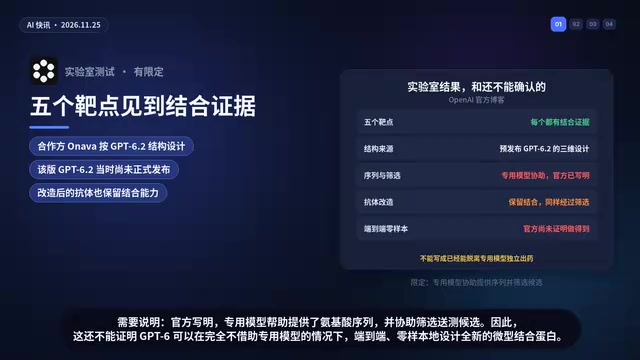
GPT-6 Designs Proteins, Claude Creations Become Apps with One Click, DeepMind Releases New Benchmark
OpenAI says GPT-6 can design protein 3D structures, Anthropic lets Claude creations install as desktop apps, DeepMind's HIP benchmark tests stability on simple questions, Google Workspace opens agent MCP interfaces.
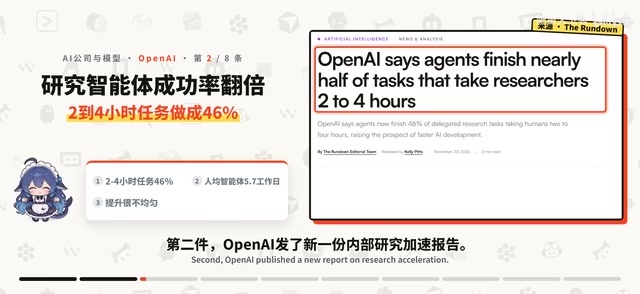
OpenAI Weekly Roundup: GPT-6.2 Rolls Out to ChatGPT, GPT-6 Designs Proteins
OpenAI's week: GPT-6.2 rolls out to ChatGPT, GPT-6 claims independent protein design, agent research share surges, perplexity proposed as a shared metric, and internal safety concerns surface.

Is the Crypto Industry About to "Turn Blue"? The Truth Behind Tech and Politics' Shifting Allegiances
Vergecast discusses whether the crypto industry will shift from the right to the Democrats, revealing the pragmatic nature of tech's politics and the costs of a crypto pivot.