Memorex Code Open-Sourced: Giving Coding Agents Long-Term Memory

Memorex Code open-sources a long-term memory system that gives Coding Agents persistent cross-session recall.
Memorex Code is a newly open-sourced long-term memory system designed for Coding Agents like Cursor and Claude Code. It solves the persistent problem of AI assistants losing all context between sessions by providing automatic memory recall, intelligent deduplication and pruning to save tokens, and local codebase scanning to understand project architecture. The system treats memory as independent infrastructure, enabling cross-tool sharing and automatic evolution of stored knowledge.
A Persistent Problem for AI Coding Users
Anyone who's used Cursor, Claude Code, or other AI coding assistants has probably experienced something like this: you spend half a day carefully teaching the AI about your project architecture, coding conventions, and personal preferences, only to open a new session the next day and find yourself back at square one—as if the AI just rolled off the factory floor. All the context, agreements, and hard-won lessons vanish the moment the old session closes.
This "memory amnesia" is a universal pain point with current AI coding tools. Large language models are inherently stateless—every conversation is a fresh start, and the model doesn't "remember" what you told it last time. This is because the Transformer architecture maintains no internal state across requests during inference. The model receives a complete token sequence as input, processes it, and then "forgets" everything. Even though mainstream models now support context windows of 128K tokens or longer, this only solves the information capacity problem within a single conversation. Once the session closes, nothing is retained by the model. An LLM's "memory" depends entirely on external system design.
The newly open-sourced Memorex Code targets precisely this pain point—it's a long-term memory system built specifically for Coding Agents.
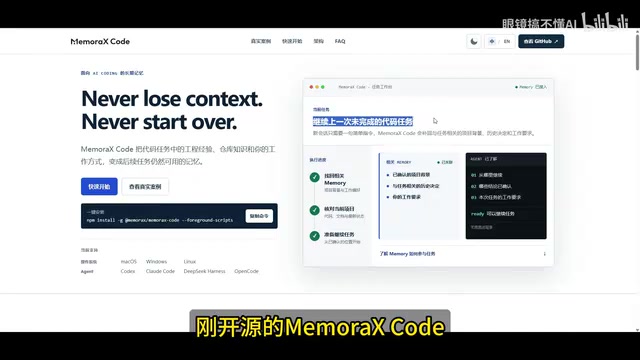
Core Capabilities of Memorex Code
In simple terms, Memorex Code gives AI coding assistants persistent memory that works across sessions and across tools. Its core value breaks down into several dimensions.
No Lost Context Across Sessions and Agents
This is the most straightforward capability. Whether you switch to a new conversation window or migrate from one Agent tool to another, previously accumulated project context won't be lost. You don't need to re-explain the project structure every time, nor repeatedly tell the AI "our coding conventions are like this."
The industry has already seen multiple attempts to solve AI memory problems: Cursor's .cursorrules file lets users manually write project rules, but it's essentially static and requires manual maintenance; Claude's Project Knowledge feature allows uploading reference documents but lacks automatic learning and evolution capabilities; GitHub Copilot's Workspace feature can index repository code but doesn't save cross-session interaction experience. Memorex Code's differentiation lies in extracting memory as an independent infrastructure layer—not tied to any specific AI tool, supporting cross-Agent sharing, and enabling memory content to evolve automatically rather than depending on manual updates.
Automatic Recall of Truly Relevant Memories
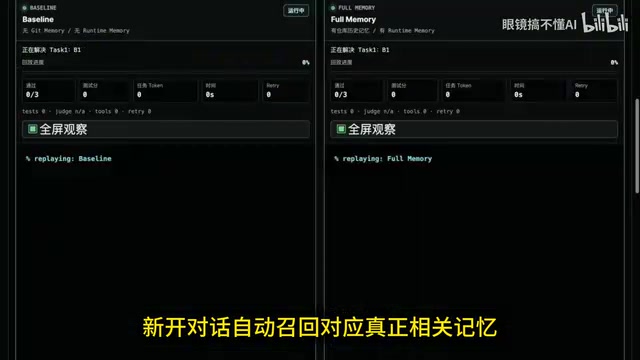
Here's an important detail: Memorex Code doesn't blindly dump all historical information into the context. When a new conversation starts, it automatically recalls corresponding and truly relevant memories rather than indiscriminately piling up historical data.
This is critical because blindly injecting information into the context actually dilutes the model's attention and degrades performance. Research shows that Transformer models exhibit a "Lost in the Middle" phenomenon—when context is too long, the model's attention to information positioned in the middle drops significantly. Additionally, the computational complexity of the self-attention mechanism scales quadratically with sequence length. Blindly increasing context length not only increases inference costs but also reduces response accuracy for key instructions as attention gets dispersed by irrelevant information. Therefore, the core challenge for a memory system isn't "how much to store" but "retrieving the right information at the right time."
Behind Memorex Code's "automatic recall" most likely lies Vector Retrieval technology: historical conversations, code snippets, and project decisions are converted into high-dimensional vectors through Embedding models and stored in a vector database. When a new session begins, the system similarly converts the current question into a vector and uses cosine similarity or Approximate Nearest Neighbor (ANN) algorithms to quickly retrieve the most semantically relevant historical memory fragments. This approach far surpasses keyword matching because it captures semantic-level relevance—for example, if you ask "how to handle user authentication," the system can recall a previous discussion about JWT configuration, even if the two text segments share no common keywords.
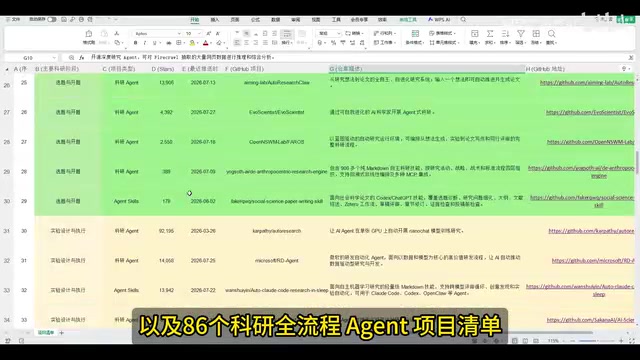
Clever Technical Design Decisions
If it simply stored conversation history and read it back out, that wouldn't add much value—it would actually cause context bloat and token cost problems. Memorex Code incorporates several targeted design choices in this regard.
Automatic Deduplication and Pruning to Save Tokens
The system performs automatic deduplication and pruning of memories, retaining only effective, distilled information. This means it won't occupy redundant context space or consume large amounts of extra tokens from reviewing history. For developers who use AI coding tools long-term, this directly impacts cost control and response quality.
Under current API pricing models, the cost of each LLM call is directly tied to the number of input and output tokens. Taking Claude 3.5 Sonnet as an example, input token pricing runs at several dollars per million tokens. An active AI coding user might generate tens of thousands of tokens in conversation history per day. If all historical information were injected into the context without processing, it would not only quickly approach the context window limit but also incur significant costs. Implementation of automatic deduplication and pruning may include: semantic deduplication (identifying different phrasings that express the same meaning), recency filtering (automatically downweighting outdated information), and summary compression (distilling lengthy conversation records into concise knowledge points).
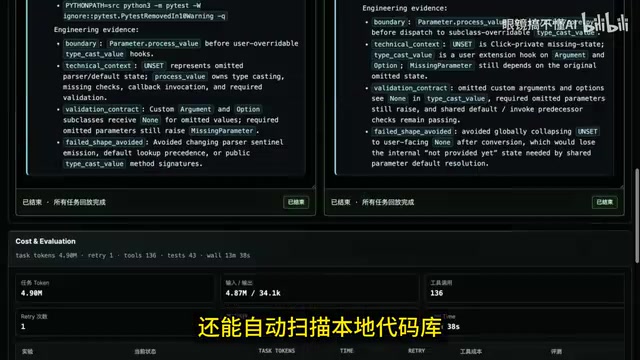
Automatic Local Codebase Scanning to Map Architecture
Beyond remembering conversation content, Memorex Code can automatically scan local codebases to quickly map out project architecture. This is like giving the AI assistant a project "onboarding"—it can autonomously understand the project's directory structure, module relationships, and overall design without you having to walk it through everything manually.
Implementing this capability typically involves multi-layered code analysis techniques. The most basic level includes directory structure parsing and file type identification; more advanced analysis includes AST (Abstract Syntax Tree) analysis, which can extract class inheritance relationships, function call chains, module dependency graphs, and other structured information. Some advanced implementations also combine static analysis tools (like Tree-sitter) to understand code syntax structure, then use LLMs to generate natural language descriptions of the architectural overview. This "code understanding" capability means the AI is no longer groping at individual files like a blind person feeling an elephant—instead, it has a global project perspective and can consider cross-module impacts and overall architectural consistency when making suggestions.
Making Development Experience Truly Accumulate and Reusable
The deeper significance of Memorex Code is that it enables project knowledge, development experience, and personal preferences to persist and be reused across scenarios.
Previously, the rapport you built with AI through repeated interactions was essentially a disposable commodity—use it and throw it away. Now, this experience can be accumulated like assets:
- Project knowledge: Architectural conventions, dependency relationships, historical decisions
- Development experience: Pitfalls encountered during debugging, effective solutions
- Personal preferences: Your preferred code style, naming conventions, technology choices
This accumulated information can flow freely between different sessions and different tools, fundamentally eliminating the repetitive labor of "re-tuning the AI" over and over.
Supporting Resources and Deployment Guide
According to the project description, beyond the tool itself, the project has compiled a complete deployment commands and troubleshooting guide, covering every possible error at each step along with corresponding solutions. This significantly lowers the barrier to entry for developers who want to try it out.
Additionally, the author has prepared a list of 86 full-pipeline research Agent projects, which serves as a valuable reference for users interested in research automation or building end-to-end Agent workflows.
Summary and Outlook
The emergence of Memorex Code reflects a trend in AI coding tools evolving from "single conversations" toward "long-term collaboration." This paradigm shift is analogous to the maturation process of human team collaboration: early code completion was like hiring a temp worker unfamiliar with the project; current Coding Agents are like hiring a highly capable contractor who loses their memory daily; while AI assistants with long-term memory more closely resemble a long-term team member who knows the full picture of the project. Academia refers to such systems as "Life-long Learning Agents" or "Continual Learning Agents," and Memorex Code's engineering implementation is a practical exploration of this research direction.
A truly useful AI coding assistant shouldn't be an "amnesiac genius" every day—it should be a partner that understands you better over time.
Of course, as a newly open-sourced project, its actual effectiveness, stability, and compatibility with different toolchains still require more real-world validation. The accuracy of the memory system—whether "recalled memories are truly relevant"—will be the key factor determining user experience. If recall is inaccurate, it actually introduces noise into the context. The relevance threshold settings in vector retrieval, temporal weighting of memories, and invalidation handling of old memories when project architecture undergoes major changes are all engineering challenges that need continuous optimization.
Nevertheless, abstracting "AI memory" as a standalone infrastructure category and open-sourcing it is a direction worth affirming. For users who rely on AI coding long-term, tools like this are likely to become standard equipment. Interested developers should try it out firsthand using the project's deployment guide.
Related articles

Chain of Thought Isn't Just for AI: How Humans Can Use CoT to Improve Thinking Quality
Chain of Thought isn't just a prompt trick for large models. Starting from a Hacker News discussion, this article analyzes why CoT works for human thinking too, breaks down actionable ways to transfer it, and highlights the key differences between human CoT and machine CoT.
Cloudflare Teams Up with OpenAI: Closi…
Cloudflare Teams Up with OpenAI: Closing the Loop from Vulnerability Discovery to Defense with AI
Cloudflare uses OpenAI Daybreak to investigate security vulnerabilities and generate reviewable remediation plans, while developers use Codex to boost coding efficiency and quality.

Orca Multi-Agent Orchestration in Practice: A Guide to Parallel Collaboration with Claude and Codex
Orca is Stable AI's free open-source agent workbench supporting 34 agents like Claude Code and Codex in parallel. Learn its Git worktree isolation, multi-model orchestration, and mobile management.